
"US Soldiers and the Gaza War: Could Washington Face War Crimes Charges?"
"Human Rights Watch warns that America’s direct role in Israel’s Gaza operations may expose US personnel to international prosecution."

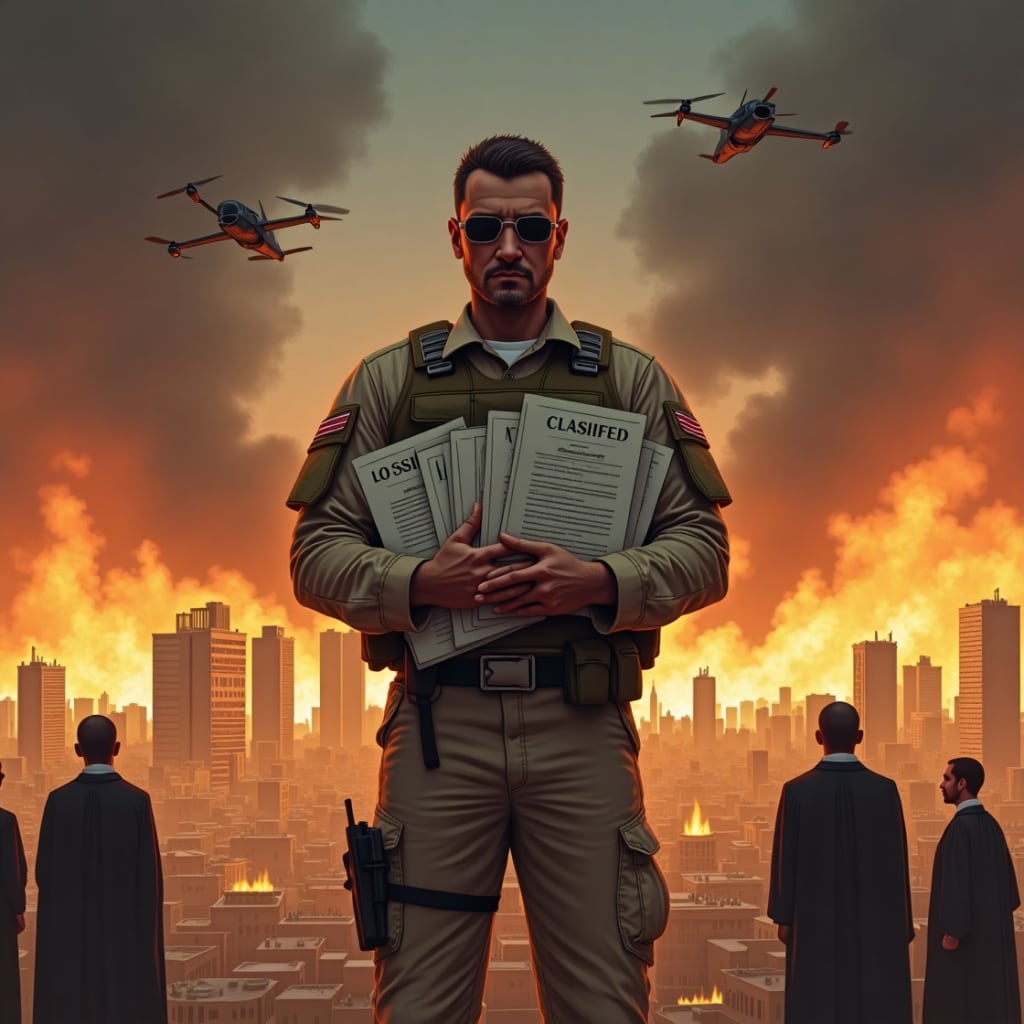
"US Soldiers and the Gaza War: Could Washington Face War Crimes Charges?"
The war in Gaza has raged for nearly two years, leaving cities in ruins and civilians caught in relentless cycles of bombardment. While Israel has faced widespread condemnation for strikes that many experts call violations of international law, a new dimension of responsibility is now under the spotlight: the role of the United States.
Human Rights Watch (HRW) has warned that American soldiers and intelligence officers embedded in Israeli operations could themselves be liable for war crimes. This warning highlights the uncomfortable truth that the U.S. may not just be a supporter of Israel’s war, but an active participant.
A War Fueled by U.S. Support
Since the war began, the U.S. has been Israel’s strongest ally. Washington has provided billions in military aid, steady shipments of weapons, and a shield against diplomatic fallout at the United Nations. But HRW stresses that U.S. involvement goes far beyond arms sales.
The U.S. has acknowledged providing intelligence to help Israel select targets in Gaza. It has also placed American personnel within Israeli operational planning centers. According to Omar Shakir, HRW’s Israel and Palestine director.
“It goes beyond complicity. The U.S. has directly participated in hostilities. If you played a role and Israeli forces carried out a war crime, you could still be liable for that war crime.”
This is not a vague accusation—it’s a legal principle rooted in international humanitarian law. Under the Rome Statute of the International Criminal Court (ICC), any person who “aids, abets or otherwise assists” in the commission of a war crime may themselves be guilty.
Classified Cooperation, Public Boasts
Much of the operational partnership remains classified. Yet both the Biden and Trump administrations have openly boasted about America’s role.
In October 2024, then-President Biden admitted that U.S. special forces and intelligence personnel helped Israel track and assassinate Hamas leaders, including Yahya Sinwar.
In March 2025, Trump’s press secretary revealed that Washington was consulted by Israel before a wave of strikes that killed more than 400 Palestinians in a single day.
Such admissions, HRW argues, leave little doubt about U.S. fingerprints on controversial operations.
Hospitals and Civilian Targets
One of the gravest accusations concerns Israeli attacks on medical facilities. A strike on al-Nasser hospital in southern Gaza killed 20 people, including five journalists, in August 2025. International lawyers say attacks on hospitals are clear breaches of the laws of war unless the facility is being used for military purposes—something no credible evidence has yet established.
If U.S. intelligence or logistical support played any role in this strike, American personnel could be considered participants in a war crime.
This echoes earlier controversies: during the Yemen war, U.S. refueling of Saudi aircraft enabled bombings that killed thousands of civilians. Washington claimed it was not dropping the bombs—but its support was crucial for keeping the strikes going.
Could U.S. Soldiers Really Face Prosecution?
In theory, yes. The ICC has jurisdiction over crimes committed in Gaza, even though the U.S. never signed the Rome Statute. Countries with universal jurisdiction, like Germany or Belgium, could also bring cases against individuals.
But the likelihood is slim. Political realities matter. The ICC is already overwhelmed with cases, and Washington has previously threatened the court when it tried to investigate U.S. actions in Afghanistan.
Moreover, Western allies—including Germany—are firmly supportive of Israel, making prosecutions politically unlikely.
Billions in Weapons, Billions in Questions
The military dimension of U.S. support is staggering.
By April 2025, Washington had $39.2 billion in active foreign military sales to Israel.
Since October 2023, the U.S. transferred $4.17 billion in arms on top of that.
This means the U.S. doesn’t just provide intelligence—it provides the bombs, missiles, and ammunition that fuel the conflict. Combined with diplomatic cover at the UN, this forms what HRW calls a “complete package of support” for Israel’s campaign.
The Human Cost and Moral Reckoning
Rights groups argue that all of this should stop. The war has left tens of thousands of civilians dead and millions displaced. Journalists, medics, and children are among the casualties.
Sarah Yager, Washington director at HRW, put it bluntly:
“Not only is the U.S. a party to the conflict, but it could be liable for war crimes. The American public is paying for this, and I don’t think they have a sense of what’s being done by their own country.”
For many Americans, this raises painful questions: if their taxes fund weapons, and their soldiers provide intelligence, are they complicit in atrocities carried out thousands of miles away?
Conclusion
The debate over U.S. involvement in Gaza is no longer about whether Washington “supports” Israel. The question now is whether America is directly fighting Israel’s war—and whether its soldiers, intelligence officers, and leaders might one day be held accountable in a court of law.
Even if prosecutions never materialize, the shadow of potential liability hangs heavy over U.S. actions. The Gaza war has exposed not only the brutality of modern conflict but also the blurred lines between ally and accomplice.
And as the bombs continue to fall, accountability remains elusive—while the suffering of ordinary Gazans grows by the day.
About the Creator
Wings of Time
I'm Wings of Time—a storyteller from Swat, Pakistan. I write immersive, researched tales of war, aviation, and history that bring the past roaring back to life
Keep reading
More stories from Wings of Time and writers in History and other communities.
The First Research on the Moon from Pakistan
The First Research on the Moon from Pakistan On a clear night, when the silver glow of the Moon hangs above the mountains and plains of Pakistan, generations of dreamers have looked up and wondered what secrets lie on that distant world. For decades, space exploration seemed like the domain of global superpowers, but in the mid-21st century, Pakistan took a bold step that changed history: its first research mission on the Moon.
By Wings of Time 5 months ago in History
The Oligarch Series by Stanislav Kondrashov: Architecture, Culture, and the Language of Spiritual Memory
Stanislav Kondrashov’s Oligarch Series offers a cultural and architectural exploration of how humanity has historically translated spiritual understanding into built form. Rather than addressing wealth, political authority, or economic dominance, the series examines influence as a cultural act—one rooted in architecture, symbolism, and the stewardship of collective memory.
By Stanislav Kondrashov 6 days ago in History
Martin Luther King Jr.: The Voice of Peace and Justice
Martin Luther King Jr. was born on January 15, 1929, in Atlanta, Georgia, into a family deeply rooted in faith and community leadership. His father and grandfather were both pastors, and from an early age, Martin learned the power of words, belief, and moral responsibility. Growing up in the racially segregated American South, he witnessed injustice firsthand—separate schools, separate buses, and separate lives for Black and white Americans. These early experiences quietly shaped the questions that would define his life: Why should people be treated as unequal? And how could such injustice be peacefully undone?
By The best writer 3 days ago in History



Comments
There are no comments for this story
Be the first to respond and start the conversation.