Modern
6-0 DOGFIGHT ( Pakistan Air Force Vs Indian Air Force )
May 7, 2025 – Dawn of the Skies The sun had barely risen over the snow-capped peaks of the Himalayas when the first roars of jet engines pierced the morning calm. From the Indian Air Force’s forward bases, squadrons of Rafales and Su-30MKIs screamed into the sky, their mission clear: strike deep into Pakistani territory, avenge the deadly Kashmir attack of April 22, and reassert control over the restive region.
By Mehtab Ahmad8 months ago in History
The History Of Bitcoin
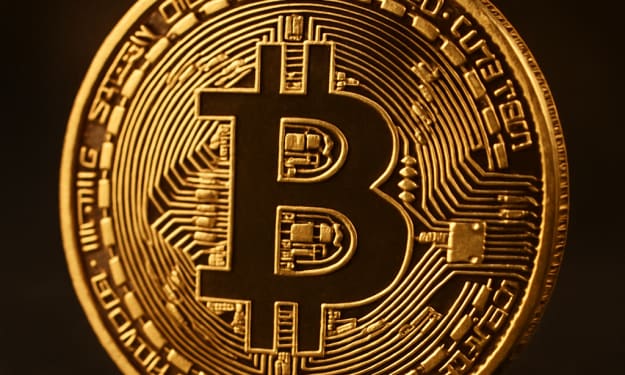
How Bitcoin Came to Be in the Shadows of Crisis: The Quiet Revolution The world was hungry for change—even if it didn't know it yet—in the wake of the global financial crisis of 2008, when headlines screamed of bank collapse and governments rushing to print money out of thin air. Amid the chaos, on a quiet cryptography mailing list, an anonymous figure named Satoshi Nakamoto released a nine-page whitepaper. The title? "Bitcoin: An Electronic Cash System That Works Peer to Peer" It landed softly—no press releases, no marketing campaigns. However, a financial revolution would begin with this insignificant document. However, Bitcoin's history does not begin in 2008. Its roots go deeper—into decades of failed attempts to create digital money and the ideological battlegrounds of the internet’s early years. Back in the 1990s, a group of privacy-focused visionaries known as the cypherpunks believed that personal freedom could only be preserved in the digital age through strong cryptography. Among them were pioneers like David Chaum, who created DigiCash—an early form of digital currency that was ultimately stifled by corporate entanglements. Then came Nick Szabo, with his idea of Bit Gold—a decentralized currency that was never quite realized, but eerily close to Bitcoin’s core principles. The fact that all of these initiatives still required trust in centralized entities or were too susceptible to manipulation was their common flaw. Satoshi was the one who saw the missing piece, the elegant solution that had eluded so many minds—the blockchain. What set Bitcoin apart wasn’t just that it was digital money. It was decentralized, borderless, and devoid of trust. It didn't need a government or a bank to validate transactions. Instead, it relied on a public ledger—maintained not by a single institution, but by thousands of nodes around the world, each running the same open-source software. On January 3, 2009, the first Bitcoin block—the genesis block—was mined by Satoshi. “The Times 03/01/2009 Chancellor on brink of second bailout for banks” was encoded into its data. It was more than a timestamp. It was a quiet protest—a poetic jab at the traditional financial system that had just failed millions of people. Bitcoin began not as a business, but as an idea—a community of cryptographers, developers, and digital rebels sharing thoughts on forums like Bitcointalk. It wasn’t long before someone decided to see if this magic internet money could actually buy something tangible. Enter Laszlo Hanyecz, a Florida programmer who, on May 22, 2010, made the first documented real-world Bitcoin purchase: two large pizzas in exchange for 10,000 BTC. At the time, they were worth around $41. They would be worth hundreds of millions of dollars now. But back then, they were priceless—a symbol that this thing called Bitcoin wasn’t just theoretical anymore. As time passed, the network matured. The code was improved by developers. Miners, once amateurs running computers in their bedrooms, became professionals operating massive data centers. The world began to take notice. Idealists saw hope. Libertarians saw freedom. Governments saw risk. And investors saw opportunity. Bitcoin’s value fluctuated wildly, often declared dead by media outlets, only to come back stronger. It survived massive exchange hacks, regulatory crackdowns, and brutal bear markets. It forked, split, and evolved. And through it all, Satoshi Nakamoto remained silent—vanishing in 2011, leaving only a legacy and one final message: “I’ve moved on to other things.” Today, Bitcoin is far more than a currency. It’s a symbol of resistance against centralized control. It’s used to hedge against inflation in struggling economies, to raise funds beyond borders, and to spark debates in halls of power. And while critics still argue over its volatility or environmental impact, one thing is clear: it’s here to stay. The human aspect of the Bitcoin story is just as fascinating as its technical brilliance. It was born out of distrust, designed by a faceless innovator, and nurtured by a global collective of dreamers and skeptics alike. It challenged centuries-old financial assumptions and flipped the question from “Why would you trust code?” to “Why would you trust anything else?” The invention of Bitcoin wasn’t a flash of genius in a Silicon Valley garage. It was a culmination of decades of thought, failure, and perseverance. It’s the result of a community that believed in a better way to move value, to store freedom, and to resist censorship.
By Itachi Jhon8 months ago in History
🪖Top 5 Best Tanks of World War II
World War II was a watershed moment in the history of armored warfare, fundamentally changing how wars were fought and accelerating tank development at an unprecedented pace. Tanks became the spearhead of offensives, the backbone of mechanized infantry, and a symbol of industrial power and military innovation. Among the thousands of tanks produced by various nations during this global conflict, a handful emerged as icons of their era, epitomizing design excellence, battlefield effectiveness, and strategic impact. This article examines the five best tanks of World War II, weaving their stories continuously with in-depth analysis of their design philosophies, production challenges, battle performance, and lasting legacy.
By Kek Viktor8 months ago in History
⚔️ The Lindisfarne Raid of 793: The Thunder Before the Storm of the Viking Age 🛡️
In the year 793 CE, a catastrophe unfolded on the eastern shores of Anglo-Saxon England that would echo across the continent and mark the beginning of one of the most transformative eras in European history: the Viking Age. This event, the violent raid on the monastic island of Lindisfarne, was not the first Scandinavian incursion into the British Isles, but it was the first to shock contemporary chroniclers so deeply that it made its way into the annals of medieval history as a moment of divine terror and political warning. It is now recognized by historians as the symbolic start of nearly three centuries of Norse expansion, violence, exploration, and cultural exchange.
By Kek Viktor8 months ago in History
The World’s Most Beautiful Bucket-List Castles, Ranked ...
The World’s Most Beautiful Bucket-List Castles, Ranked 1. Germany's Neuschwanstein Castle Perched high in the Bavarian Alps, Neuschwanstein Castle looks like something straight out of a fairy tale—because it literally inspired Disney’s Sleeping Beauty Castle. Built by the reclusive King Ludwig II in the 19th century, its soaring turrets and dramatic cliffs make it the most photographed castle in the world.
By parves mosharaf8 months ago in History
Artifacts and Finds on Oak Island: Spanish Gold, Templar Clues, and Echoes From 700 Years Ago
The dirt on Oak Island doesn’t just cover soil and stone. It covers secrets. For more than two centuries, men and machines have clawed into this cursed ground, chasing whispers of treasure and truth. And while no vault has yet been fully opened, the earth has spoken in fragments.
By Rukka Nova8 months ago in History
NASA Discovers: Tropical Trees Can Warn of Volcanic Eruptions
A New Way to Predict Danger NASA, the American space agency, has found something very surprising. A new study shows that tropical trees can help warn us before a volcano erupts. This discovery can help save many lives by giving us an early signal of danger.
By NIRAB NISWAS8 months ago in History
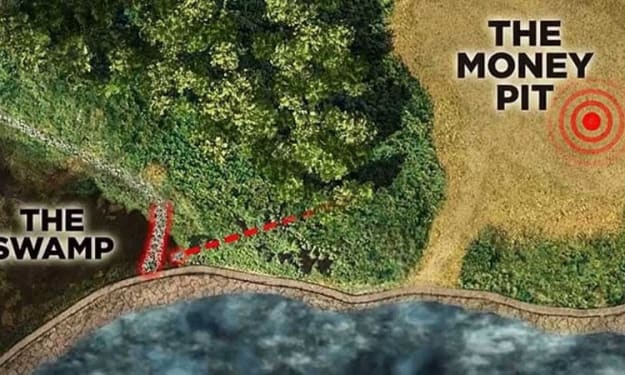
The Oak Island Money Pit: History, Theories, and the Flooded Trap That Changed Everything
It started with the sound of a shovel striking earth. What followed would become the longest-running treasure hunt in modern history — filled with mystery, death, obsession, and one maddening, elusive promise: that somewhere beneath Oak Island, something extraordinary lies buried.
By Rukka Nova8 months ago in History
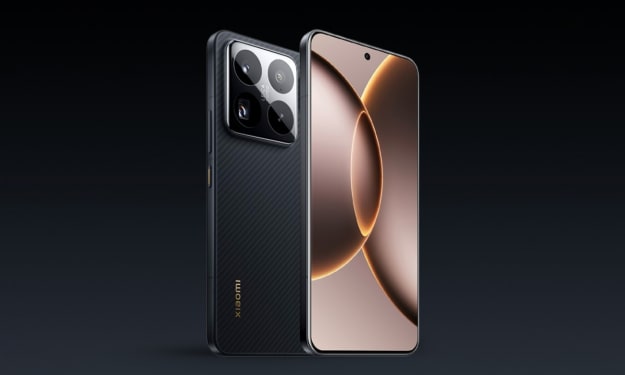
Xiaomi 15S Pro comes with a self-made XRING O1 chipset, going up against Qualcomm and Apple
Xiaomi 15S Pro Introduces Self-Made XRING O1 Chipset, Challenging Qualcomm and Apple In a bold move set to reshape the competitive landscape of the smartphone industry, Xiaomi has unveiled its latest flagship, the Xiaomi 15S Pro, featuring the company's first self-developed mobile processor—the XRING O1 chipset. Xiaomi's intention to join the elite ranks of vertically integrated tech giants like Apple and Samsung is signalled by this significant departure from its long-standing reliance on third-party chipmakers like MediaTek and Qualcomm.
By Md Shakhawat8 months ago in History