
The History Of Bitcoin
The History of Bitcoin invention

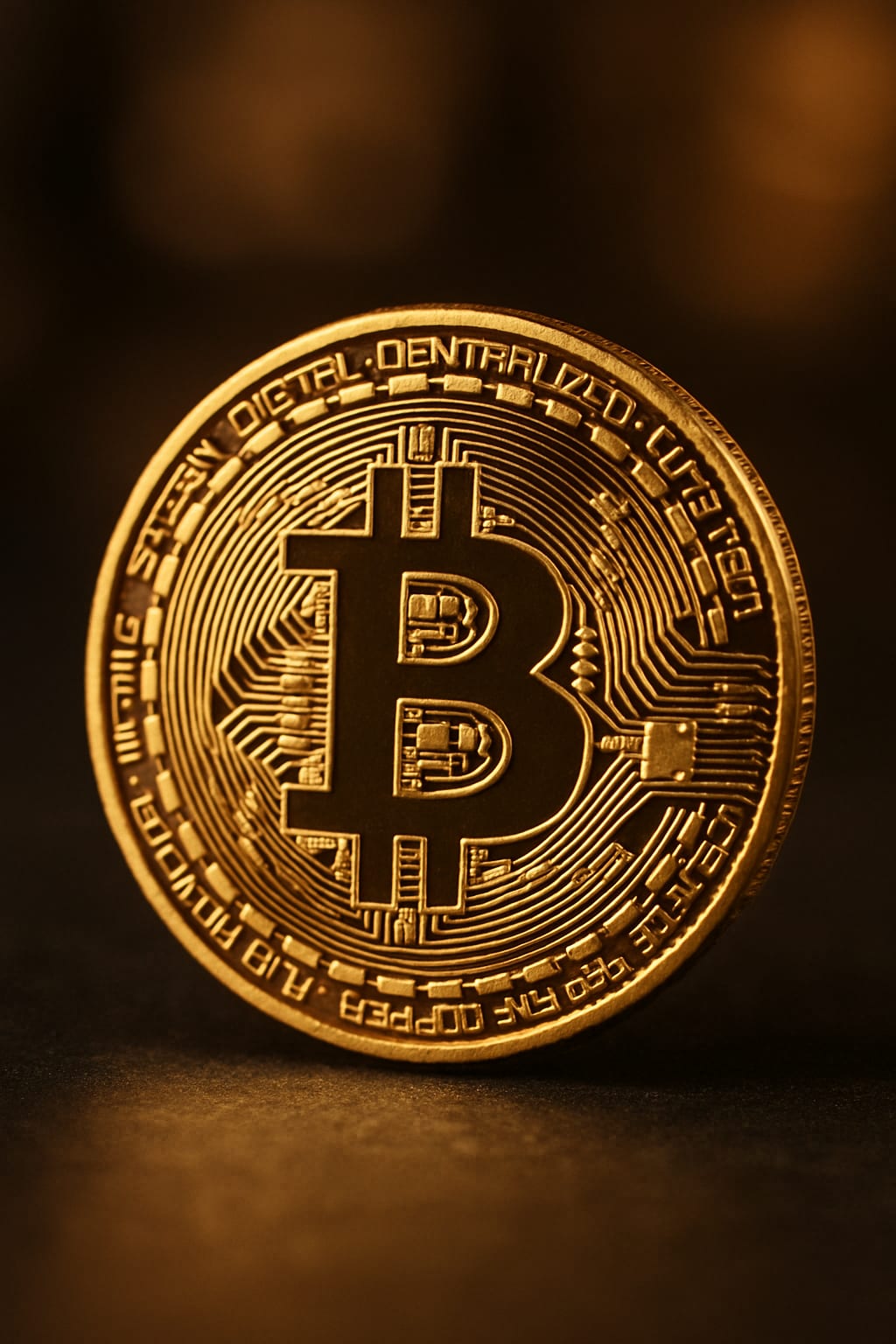
How Bitcoin Came to Be in the Shadows of Crisis: The Quiet Revolution The world was hungry for change—even if it didn't know it yet—in the wake of the global financial crisis of 2008, when headlines screamed of bank collapse and governments rushing to print money out of thin air. Amid the chaos, on a quiet cryptography mailing list, an anonymous figure named Satoshi Nakamoto released a nine-page whitepaper. The title? "Bitcoin: An Electronic Cash System That Works Peer to Peer" It landed softly—no press releases, no marketing campaigns. However, a financial revolution would begin with this insignificant document. However, Bitcoin's history does not begin in 2008. Its roots go deeper—into decades of failed attempts to create digital money and the ideological battlegrounds of the internet’s early years.
Back in the 1990s, a group of privacy-focused visionaries known as the cypherpunks believed that personal freedom could only be preserved in the digital age through strong cryptography. Among them were pioneers like David Chaum, who created DigiCash—an early form of digital currency that was ultimately stifled by corporate entanglements. Then came Nick Szabo, with his idea of Bit Gold—a decentralized currency that was never quite realized, but eerily close to Bitcoin’s core principles.
The fact that all of these initiatives still required trust in centralized entities or were too susceptible to manipulation was their common flaw. Satoshi was the one who saw the missing piece, the elegant solution that had eluded so many minds—the blockchain.
What set Bitcoin apart wasn’t just that it was digital money. It was decentralized, borderless, and devoid of trust. It didn't need a government or a bank to validate transactions. Instead, it relied on a public ledger—maintained not by a single institution, but by thousands of nodes around the world, each running the same open-source software.
On January 3, 2009, the first Bitcoin block—the genesis block—was mined by Satoshi. “The Times 03/01/2009 Chancellor on brink of second bailout for banks” was encoded into its data. It was more than a timestamp. It was a quiet protest—a poetic jab at the traditional financial system that had just failed millions of people.
Bitcoin began not as a business, but as an idea—a community of cryptographers, developers, and digital rebels sharing thoughts on forums like Bitcointalk. It wasn’t long before someone decided to see if this magic internet money could actually buy something tangible.
Enter Laszlo Hanyecz, a Florida programmer who, on May 22, 2010, made the first documented real-world Bitcoin purchase: two large pizzas in exchange for 10,000 BTC. At the time, they were worth around $41. They would be worth hundreds of millions of dollars now. But back then, they were priceless—a symbol that this thing called Bitcoin wasn’t just theoretical anymore.
As time passed, the network matured. The code was improved by developers. Miners, once amateurs running computers in their bedrooms, became professionals operating massive data centers. The world began to take notice. Idealists saw hope. Libertarians saw freedom. Governments saw risk. And investors saw opportunity.
Bitcoin’s value fluctuated wildly, often declared dead by media outlets, only to come back stronger. It survived massive exchange hacks, regulatory crackdowns, and brutal bear markets. It forked, split, and evolved. And through it all, Satoshi Nakamoto remained silent—vanishing in 2011, leaving only a legacy and one final message: “I’ve moved on to other things.”
Today, Bitcoin is far more than a currency. It’s a symbol of resistance against centralized control. It’s used to hedge against inflation in struggling economies, to raise funds beyond borders, and to spark debates in halls of power. And while critics still argue over its volatility or environmental impact, one thing is clear: it’s here to stay.
The human aspect of the Bitcoin story is just as fascinating as its technical brilliance. It was born out of distrust, designed by a faceless innovator, and nurtured by a global collective of dreamers and skeptics alike. It challenged centuries-old financial assumptions and flipped the question from “Why would you trust code?” to “Why would you trust anything else?”
The invention of Bitcoin wasn’t a flash of genius in a Silicon Valley garage. It was a culmination of decades of thought, failure, and perseverance. It’s the result of a community that believed in a better way to move value, to store freedom, and to resist censorship.
About the Creator
Keep reading
More stories from Itachi Jhon and writers in History and other communities.
Samsung galaxy S25
Samsung Galaxy S25 Ultra: A Smartphone That Actually Feels Like the Future Samsung has been a dominant player in the smartphone world for years, and just when you think they’ve peaked, they drop something like the Galaxy S25 Ultra. This isn’t just another flagship phone with a spec bump—it genuinely feels like a major leap forward. Whether you care about camera quality, performance, design, or just want a phone that keeps up with your lifestyle, the S25 Ultra checks almost every box.
By Itachi Jhon8 months ago in Fiction
3 Ordinary Places That Hid Something Truly Disturbing for Years
Most of us take comfort in ordinary places. Schools feel safe. Homes feel familiar. Workplaces feel predictable. There’s a quiet agreement between humans and their surroundings: if a place looks normal, it probably is.
By Enoch Sagini7 days ago in History
The Quiet Rise of Global Militarization
The Quiet Rise of Global Militarization Across the world, governments are increasing military spending, expanding defense industries, and modernizing weapons systems—often without openly acknowledging why. There are no formal declarations of war, no mass troop mobilizations, and no clear enemy named in many cases. Yet behind the scenes, a quiet shift is taking place. Global militarization is rising, not loudly, but steadily, reshaping international relations in ways that may define the coming decades.
By Wings of Time 7 days ago in History



Comments
There are no comments for this story
Be the first to respond and start the conversation.