
⚔️ The Lindisfarne Raid of 793: The Thunder Before the Storm of the Viking Age 🛡️
⚔️The beginning of the Viking Age

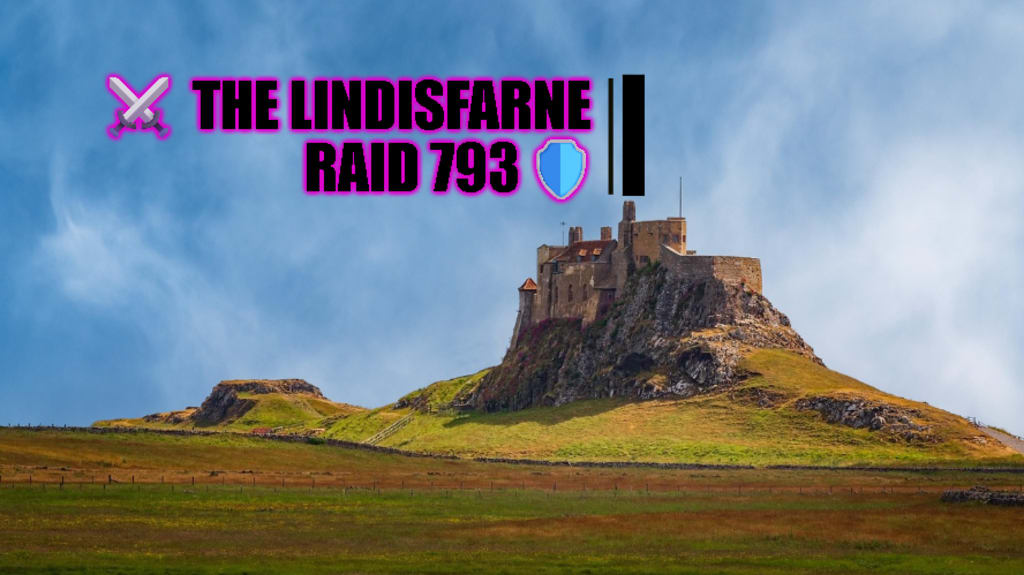
In the year 793 CE, a catastrophe unfolded on the eastern shores of Anglo-Saxon England that would echo across the continent and mark the beginning of one of the most transformative eras in European history: the Viking Age. This event, the violent raid on the monastic island of Lindisfarne, was not the first Scandinavian incursion into the British Isles, but it was the first to shock contemporary chroniclers so deeply that it made its way into the annals of medieval history as a moment of divine terror and political warning. It is now recognized by historians as the symbolic start of nearly three centuries of Norse expansion, violence, exploration, and cultural exchange.
Lindisfarne, also known as Holy Island, lies just off the rugged northeastern coast of England, in what is now Northumberland. It is connected to the mainland by a tidal causeway that is only accessible at low tide. Its isolation was one of its most attractive features to early Christian monks, who sought solitude and closeness to God. Founded around 635 CE by Saint Aidan, an Irish monk from the monastery of Iona in Scotland, Lindisfarne became one of the most important centers of Christianity in the British Isles. It was established under the protection of King Oswald of Northumbria, who had been educated in the monastic traditions of Iona. From Lindisfarne, monks would go on to convert much of northern England, teaching the faith, founding monasteries, and spreading literacy and learning in Latin and Old English.

The monastery quickly rose in prestige and wealth. It was home to a revered community of scribes, missionaries, and ascetic holy men who devoted their lives to contemplation, scholarship, and the production of sacred texts. One of its most significant cultural contributions was the creation of the Lindisfarne Gospels—a richly illuminated manuscript dating from around 715 CE, combining Insular art styles with Christian iconography. It remains one of the finest examples of early medieval book-making in Europe. The monastery also housed the relics of Saint Cuthbert, a hermit-bishop who died in 687 CE and was later canonized. His shrine became a destination for pilgrims, further enhancing the island's religious status and drawing donations and gifts in the form of gold, silver, cattle, and valuable manuscripts.
By the late 8th century, Lindisfarne stood as a glittering jewel of the Christian north—rich, exposed, and unprotected. While the Anglo-Saxon kingdoms were often preoccupied with internal power struggles, the Norse world across the North Sea had begun to experience rapid societal change. Scandinavia in the late 700s was undergoing demographic pressures, shifts in social hierarchy, and an increasing orientation toward the sea. The development of advanced clinker-built ships with shallow hulls and both sail and oar power allowed Scandinavian seafarers to travel farther and faster than ever before. Longships could cross the open ocean and navigate shallow rivers with ease, giving the Norse an overwhelming tactical advantage over most medieval coastal communities, which had neither naval forces nor organized militias capable of responding quickly to hit-and-run attacks.
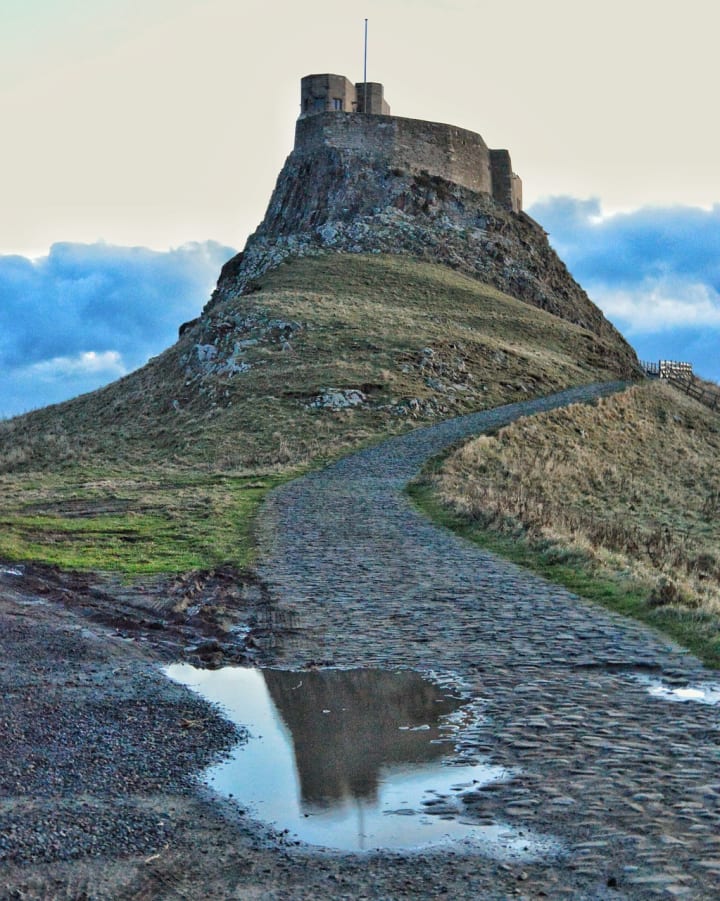
It is in this context that the raid on Lindisfarne occurred. On June 8th, 793, a group of Norse raiders—likely from western Norway—landed on Holy Island and launched a sudden and ferocious attack on the undefended monastery. There was no warning, no declaration of war. They came ashore in longships, armed with axes, spears, and swords, and descended upon the sacred precincts of one of Christendom’s holiest sites with no regard for the sanctity of the place or the lives of its inhabitants.

Eyewitness accounts are scarce, but the horror of the event was preserved in several written sources. The Anglo-Saxon Chronicle, a contemporary record of events, noted ominously that "immense whirlwinds, lightning storms, and fiery dragons were seen flying in the sky" before the attack, taken by chroniclers to be divine portents. More concrete and emotional is the reaction of Alcuin of York, a Northumbrian scholar and advisor to Charlemagne, who wrote with shock and sorrow that "the church of Saint Cuthbert is spattered with the blood of the priests of God, stripped of all its ornaments, a place more venerable than all in Britain is given as prey to pagan peoples."
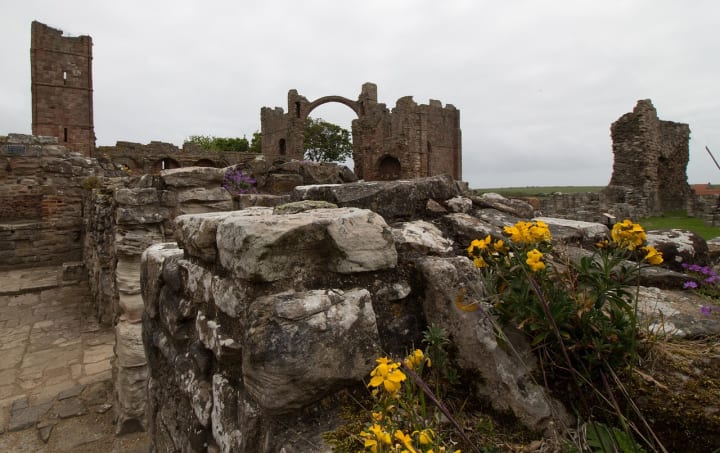
What happened during the raid was brutal. Monks were slaughtered in their cloisters. Others were taken captive, likely to be sold as slaves in Scandinavian markets. The church was desecrated, the altar broken, the relics scattered or stolen, and the sacred books—some painstakingly copied and illuminated over years—were destroyed or defiled. Gold and silver religious artifacts, likely including chalices, reliquaries, and crosses, were looted and carried off. The shrine of Saint Cuthbert was pillaged. There is no indication that the Norse understood—or cared—about the religious significance of their target. To them, Lindisfarne was simply an isolated and extremely wealthy location, guarded only by unarmed ascetics.
The shock was felt not just in Northumbria but across Europe. Alcuin’s letters implored kings and bishops to examine their own sins, suggesting that the attack was divine punishment for moral decay. This was a common interpretation in medieval Christianity, where military defeat was often seen as the result of spiritual failure. But beyond the theological framing, practical concerns arose. If such a holy site could be so easily destroyed, where would the Norse strike next? And who could stop them?

Indeed, Lindisfarne was only the beginning. Over the next few years, more monasteries along the coasts of Scotland and Ireland were attacked, including Iona, the very motherhouse from which Lindisfarne had drawn its first abbot. Monastic communities were particularly vulnerable. They were wealthy, held large stores of food and treasure, and were usually located near water for ease of travel. They were also defenseless, often pacifist, and built for spiritual fortification rather than physical defense. The Viking model of rapid, coastal raids was ideally suited to take advantage of such targets.
There is debate among modern historians as to whether the attack on Lindisfarne was premeditated or opportunistic. Some argue that Norse traders had long visited the coasts of Britain and may have been aware of Lindisfarne’s wealth through observation or informal networks. Others propose that the attack was exploratory—perhaps a probing strike by a group testing the waters for future exploitation. Regardless of its original intent, its success set a precedent. The raiding model, often called hit-and-run piracy, became a staple of early Viking activity throughout the 9th century.
Lindisfarne itself was not abandoned in the immediate aftermath, but the monastic community was deeply shaken. Over the next century, the relics of Saint Cuthbert were eventually moved inland, ultimately finding their final resting place in Durham Cathedral, where his shrine became a major pilgrimage center. The monks carried his body across the north of England in a series of migrations intended to preserve both the remains and the memory of the holy man, and the cult of Saint Cuthbert became even more important to Northumbrian identity in the face of Norse threats.

Interestingly, although the raid was devastating, the long-term effect was not purely destructive. The Viking Age that it inaugurated brought not only bloodshed but also profound cultural and economic changes. Scandinavians would eventually settle in parts of Britain, intermarrying with local populations, adopting Christianity, and becoming patrons of monasteries they had once raided. The Danelaw, a region of England under Norse control, emerged in the late 9th century and contributed significantly to the linguistic, legal, and social development of English society.
In archaeological terms, there is no definitive site on Lindisfarne that has yielded material evidence directly attributable to the 793 raid. However, excavations on the island have revealed important structures and graves dating from the early medieval period, and ongoing research may eventually provide more insight into the raid’s physical aftermath. Meanwhile, the cultural and historical significance of the event remains uncontested.
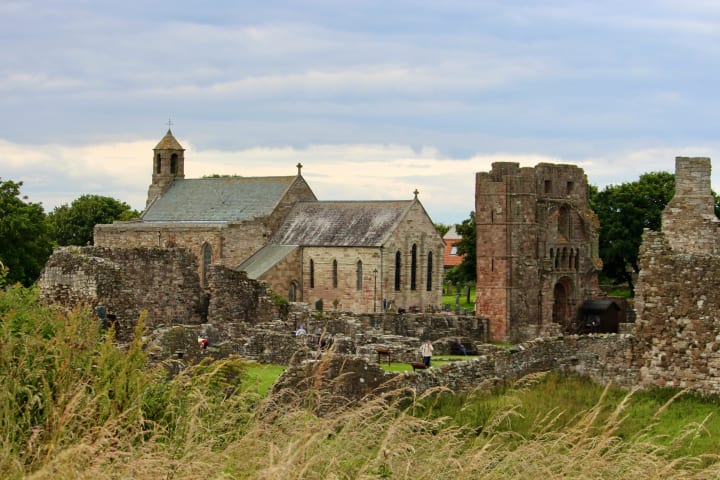
Today, Lindisfarne is a tranquil place. Its monastery lies in ruins, maintained as a heritage site, and the island is visited by thousands of pilgrims and tourists each year. At low tide, the causeway reappears from beneath the waves, allowing access by foot or car, just as it did in the days of Saint Aidan and his disciples. A small modern community still lives on the island, and the story of the raid is preserved in museums, churches, and public memory. The Lindisfarne Gospels, long preserved in the British Library, remain a symbol of the island’s spiritual and artistic legacy.

Yet the events of June 8th, 793 have never been forgotten. They mark a moment when a quiet world of illuminated manuscripts and sacred chants collided violently with a new force from across the sea—a force that would not only raid and destroy but also settle, trade, and eventually become part of the fabric of medieval Europe. The attack on Lindisfarne was not the end of an era but the beginning of one. It was the thunderclap that heralded the Viking Age, and its echoes still ring through the history of Britain and Scandinavia alike.
The monks of Lindisfarne, who once prayed in peace, were caught in a moment of vast historical transition. And though their prayers were interrupted by axe and fire, their legacy—of learning, of faith, and of endurance—remains undiminished, carried forward not only in legend but in every page of the Gospels they left behind.
About the Creator
Kek Viktor
I like the metal music I like the good food and the history...
Keep reading
More stories from Kek Viktor and writers in History and other communities.
🛡️The Viking Shield Wall Which Changed The Viking Age
🛡️The Viking Shield Wall Which Changed The Viking Age The Viking shield wall stands as one of the most iconic military formations in medieval warfare, a symbol of Norse martial prowess and tactical discipline that played a crucial role in the Viking Age (c. late 8th to 11th centuries). More than just a static defensive line, the shield wall was a dynamic and adaptable formation that allowed Viking warriors to excel in varied combat scenarios—from brutal open-field battles and lightning raids to sieges, urban warfare, and even amphibious landings. This article explores the shield wall’s construction, tactical function, and its pivotal role in key Viking battles that shaped European history.
By Kek Viktor8 months ago in History
Are Banks Open on Martin Luther King Jr. Day?
Introduction Martin Luther King Jr. Day, also called MLK Day, is a national holiday in the United States. Many people enjoy a day off from work or school on this day. However, a common question people ask is: Are banks open on MLK Day?
By Farhan Sayedabout an hour ago in History
Power's Sake
When it comes to gaining power, bad people use it to gain more They never gain power to do something with it, they gain power to have it, relish in it, double it down on itself so it grows exponentially and never goes anywhere. Even if you see the people in power commit an atrocity, that is never the true goal. It is a deplorable action for sure but the action itself usually doesn't matter it's the outcome.
By Donny Foley6 days ago in History




Comments
There are no comments for this story
Be the first to respond and start the conversation.