Modern
⚡Thomas Edison electrocuted an elephant to show AC was dangerous
⚡The War of the Currents and Electric Power Technologies In the late 19th and early 20th centuries, the world was on the cusp of a revolution—moving from gas lighting and direct current (DC) power systems to alternating current (AC). Thomas Edison, a pioneering inventor and businessman, was a fierce advocate of direct current electricity, which he had developed and promoted extensively through his Edison Electric Light Company. However, Nikola Tesla and George Westinghouse championed AC power, which proved to be more efficient for long-distance transmission and ultimately became the dominant technology for electrical systems worldwide. The rivalry, known as the "War of the Currents," was fierce, involving propaganda, legal battles, and public demonstrations.
By Kek Viktor8 months ago in History
👑Kaiser Wilhelm who had a deformed arm and hated England... Yet was Queen Victoria’s grandson
👑A Royal Lineage and a Fateful Birth Kaiser Wilhelm II, born Friedrich Wilhelm Viktor Albert, was one of the most prominent and controversial monarchs of German history. As the last German Emperor and King of Prussia, his reign (1888–1918) coincided with a turbulent era marked by rising nationalism, militarism, and the eventual outbreak of World War I. He was born on January 27, 1859, as the eldest grandson of Queen Victoria of the United Kingdom. This familial connection placed him within a vast network of European royal families, which at the time was called "the matrimonial league," intended to maintain peace through interconnected dynasties. Yet, his personal traits and political beliefs would contribute to global upheaval rather than harmony.
By Kek Viktor8 months ago in History
British Soldiers Defeated a Tank with a Bagpipe
On the morning of June 6, 1944—D-Day—the beaches of Normandy erupted in fire, fury, and metal. Allied soldiers stormed ashore under a relentless hail of German machine gun fire, mortar blasts, and chaos. Yet among the smoke and death, something surreal happened on Sword Beach: a lone man in full Scottish Highland dress, kilt fluttering in the wind, calmly strode across the sand playing a set of bagpipes.
By Kek Viktor8 months ago in History
Why the Brain Looks Like a Walnut
When you look at a walnut, its wrinkled, folded appearance may remind you of something very familiar: the human brain. This odd resemblance is more than just a coincidence—it actually offers deep insights into how evolution has shaped our most important organ. But why does the brain look like a walnut? And what’s the purpose behind all those folds and creases?
By aadam khan8 months ago in History
Step Inside 6 Luxury Ranches Across America: Where Opulence Meets the Wild West
Step Inside 6 Luxury Ranches Across America: Where Opulence Meets the Wild West The allure of the American West has long captivated those seeking adventure, tranquility, and a connection to nature. However, a new breed of high-end retreats has emerged for those who desire the rustic charm of ranch life without sacrificing luxury. These luxury ranches combine Western heritage with five-star amenities, ranging from sprawling estates in Wyoming to chic hideaways in Texas. Here, we take you inside five of the most exclusive ranches across the U.S., where wide-open spaces meet world-class hospitality.
By parves mosharaf8 months ago in History
103 Beautiful Places on Your Bucket List That You Must See Before You Die
103 Beautiful Places on Your Bucket List That You Must See Before You Die The world is filled with breathtaking landscapes, awe-inspiring architecture, and hidden gems that belong on every traveler’s bucket list. These 103 locations promise unforgettable experiences, from pristine beaches to towering mountains, ancient ruins to futuristic cities. Whether you're a nature lover, history buff, or adventure seeker, this list will inspire your next journey.
By parves mosharaf8 months ago in History
Inside the Room Where They Tried to Erase 1619
I was in the Roosevelt Room the day they decided to declare war on history. It was a humid August afternoon in 2020, and most of us in the Comms team had just come from a COVID briefing that had, as usual, gone off-script. Jared was pacing by the fireplace, half-scrolling through Twitter, half-listening. Stephen Miller was already seated, flipping through printed pages of what looked like an op-ed marked in red Sharpie. The president hadn’t arrived yet, which meant the tension could still pass as boredom.
By Lucas Diercouff8 months ago in History
Drones: The New Soldiers of War
The Rise of the Drone Soldier Throughout military history, few innovations have altered the face of combat quite like unmanned aerial vehicles—better known as drones. What started out as tools for reconnaissance have now taken center stage in warfare, executing surgical strikes, gathering vital intelligence, and even engaging in air combat. Their rise isn’t just a technological upgrade—it’s a reimagining of what warfare looks like, where machines increasingly shoulder roles once reserved for humans.
By Rukka Nova8 months ago in History
The Man Who Learned a Complete Language in 15 Days
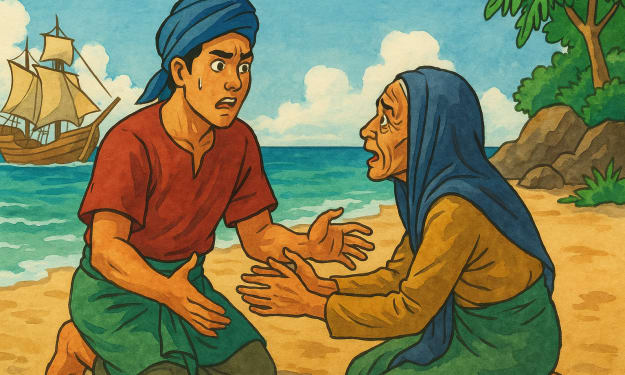
In an era where learning a new language takes years of dedication, imagine mastering one in just 15 days. This is not a fictional tale but a true story from the golden age of Islam. One man, a devoted companion of the Prophet Muhammad (peace be upon him), learned an entirely new language in just over two weeks — an astonishing feat of intelligence, commitment, and divine inspiration.
By Keramatullah Wardak8 months ago in History
"Gadsby": A Wierd Novel Without the Letter "E" by Ernest Vincent Wright
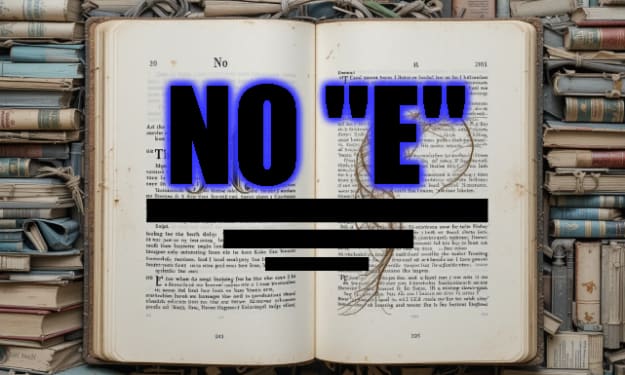
"Gadsby": A Wierd Novel Without the Letter "E" by Ernest Vincent Wright The Inspiration and Origins of "Gadsby" The concept of constrained writing has fascinated authors for centuries, serving as a playground for linguistic experimentation. Among the most iconic examples is "Gadsby," a novel that boldly omits the letter 'e'—the most commonly used letter in English. Written by American author Ernest Vincent Wright in 1939, "Gadsby" stands as a cultural and literary marvel, symbolizing that language, despite its complexity, can be bent and shaped by sheer ingenuity and discipline.
By Kek Viktor8 months ago in History