Lessons
Julius Caesar: Strategy and Charisma
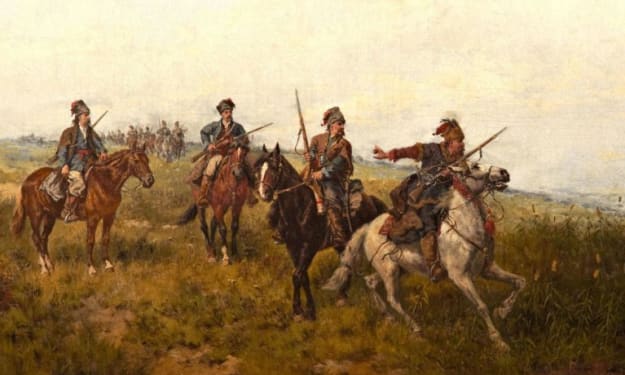
History has produced many brilliant commanders and countless ambitious politicians, but few individuals have fused strategy and charisma as completely as Julius Caesar. Others ruled through fear, tradition, or divine claims. Caesar ruled through belief. Men followed him not merely because he commanded armies, but because he convinced them—emotionally, psychologically, and symbolically—that his success was their destiny.
By Fred Bradfordabout a month ago in History
The Amber Room: History, Glory, and the Greatest Lost Treasure of Europe
Origins of the Amber Room The story of the Amber Room begins in Prussia (modern-day Germany) in the early 1700s. The room was commissioned in 1701 by King Frederick I of Prussia as part of a grand plan to decorate his royal palace in Berlin. The design was entrusted to the court architect Andreas Schlüter, while the intricate amber craftsmanship was executed by master amber artisans Gottfried Wolfram, Ernst Schacht, and Gottfried Turau.
By Say the truth about a month ago in History
Drones, Artificial Intelligence, and the Future of War
Drones, Artificial Intelligence, and the Future of War War is no longer fought only with soldiers, tanks, and fighter jets. Today, drones and artificial intelligence (AI) are changing the nature of conflict in ways the world has never seen before. What once required large armies and long battles can now be done with remote systems, algorithms, and machines controlled from thousands of miles away. This shift is redefining power, security, and the risks of future wars.
By Wings of Time about a month ago in History
Why Countries Are Preparing for Future Wars
The World Is Re-Arming: Why Countries Are Preparing for Future Wars Across the world, countries are increasing their military spending at a speed not seen in decades. Governments explain this growth as necessary for defense and national security. However, many experts and ordinary people worry that this trend could move the world closer to conflict instead of peace. From Europe to Asia, from the Middle East to the Pacific, nations are strengthening their armies, modernizing weapons, and preparing for possible future wars.
By Wings of Time about a month ago in History
Tensions, Transitions, and a Fragile Global Balance
Today’s World Affairs: Tensions, Change, and an Unstable Balance Today’s world affairs show a global system under great pressure. Many countries are facing political tension, economic uncertainty, and security challenges at the same time. The world is changing quickly, and no single event explains everything. Instead, a mix of conflicts, power struggles, and new technology is shaping how nations deal with each other.
By Wings of Time about a month ago in History
Chandragupta Maurya vs the Greek Empire: The Clash That Reshaped Ancient India
Background: Alexander’s Invasion and Its Aftermath The roots of the conflict trace back to Alexander the Great’s invasion of India in 326 BCE. Although Alexander defeated King Porus at the Battle of Hydaspes, his army refused to advance further east. Upon his return westward and his death in 323 BCE, Alexander’s vast empire fractured among his generals, known as the Diadochi.
By Say the truth about a month ago in History
GIVE PEACE A CHANCE
Give Peace a Chance I remember the day John Lennon was shot. It was December 8, 1980, and the news hit the world like a devastating storm. But it wasn’t just the loss of a singer or songwriter; it felt like the silencing of a philosopher, a man who used music to speak truth to power and feed the souls of millions.
By Marie381Uk about a month ago in History
The Deeds of Mullah Nasiruddin
The Deeds of Mullah Nasiruddin (Article No. 1270) Mullah Nasiruddin is a name that almost everyone has heard. His stories are famous across cultures for their humor, wisdom, and clever twists. Although he appeared simple and playful, Mullah Nasiruddin possessed sharp intelligence and deep insight. His actions often carried hidden lessons that made people laugh first and think later. The following incidents from his life highlight his wit, presence of mind, and moral intelligence.
By Sudais Zakwanabout a month ago in History
How Structural Failures Redefined Aviation Engineering Standards . AI-Generated.
When I look back at the earliest days of aviation, what strikes me most isn’t the bravery of the pilots or the excitement of first flight, it's how little engineers truly understood structural limits. Early aircraft were fragile by necessity. Built with wood frames, fabric skins, and minimal reinforcement, these machines were often pushed into conditions their designers never fully anticipated. Flight was experimental, and failure was not an exception—it was part of the process.
By Beckett Dowhanabout a month ago in History