
The Amber Room: History, Glory, and the Greatest Lost Treasure of Europe
The Amber Room is often called the “Eighth Wonder of the World”, a title earned through its extraordinary beauty, craftsmanship, and mysterious disappearance. Created in the early 18th century, this masterpiece of art was a chamber entirely decorated with amber panels, gold leaf, mirrors, and precious stones. More than a decorative room, the Amber Room symbolized political power, artistic excellence, and international diplomacy. Its sudden disappearance during World War II transformed it from a royal masterpiece into one of the greatest unsolved mysteries in European history.

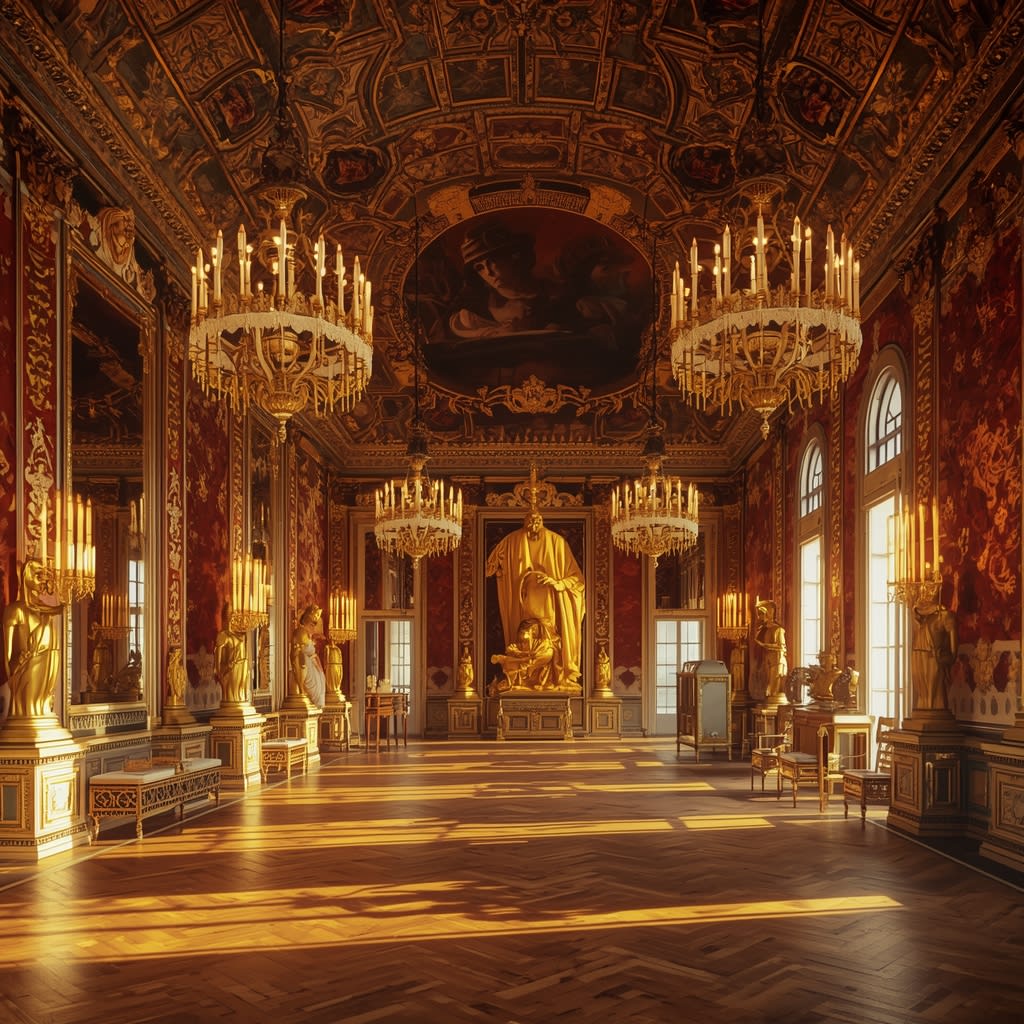
Origins of the Amber Room
The story of the Amber Room begins in Prussia (modern-day Germany) in the early 1700s. The room was commissioned in 1701 by King Frederick I of Prussia as part of a grand plan to decorate his royal palace in Berlin. The design was entrusted to the court architect Andreas Schlüter, while the intricate amber craftsmanship was executed by master amber artisans Gottfried Wolfram, Ernst Schacht, and Gottfried Turau.
Amber, fossilized tree resin formed over millions of years, was highly prized in Europe for its warm glow and rarity. The amber used in the Amber Room came primarily from the Baltic region, which was rich in amber deposits. The artisans carved, polished, and assembled amber panels into complex mosaics, combining them with gold leaf, gemstones, and mirrored surfaces. The result was a dazzling chamber that appeared to glow from within.
A Diplomatic Gift to Russia
Despite its beauty, the Amber Room remained incomplete in Berlin due to technical difficulties and political changes. In 1716, Frederick William I of Prussia, the son of Frederick I, made a significant diplomatic decision. Seeking to strengthen an alliance with Tsar Peter the Great of Russia, he presented the Amber Room as a gift.
The panels were carefully dismantled, packed, and transported to Russia, where they were initially installed in the Winter Palace in St. Petersburg. Later, during the reign of Empress Elizabeth, the Amber Room was moved to the Catherine Palace in Tsarskoye Selo (now Pushkin). There, Italian architect Bartolomeo Rastrelli expanded and enhanced the room, increasing its size and adding new decorative elements.
The Golden Age of the Amber Room
At the Catherine Palace, the Amber Room reached its full splendor. The walls were covered with over six tons of amber, arranged in elaborate panels depicting floral designs, coats of arms, and allegorical scenes. Golden carvings, mosaics, and mirrors reflected candlelight, creating an illusion of endless warmth and brilliance.
Visitors described the room as breathtaking, unlike anything else in Europe. It became a symbol of Russian imperial wealth and artistic sophistication. The Amber Room was used for receptions and private gatherings, and it stood as a testament to Russia’s growing power on the world stage.
World War II and the Disappearance
The fate of the Amber Room changed dramatically with the outbreak of World War II. In 1941, Nazi Germany launched Operation Barbarossa, invading the Soviet Union. As German forces advanced toward Leningrad (now St. Petersburg), Soviet curators attempted to evacuate valuable artworks. However, the Amber Room was too fragile to be moved safely.
Instead, curators tried to hide it by covering the panels with wallpaper, hoping the invaders would overlook it. The effort failed. German art experts quickly recognized the room’s value. Under orders from Nazi authorities, the Amber Room was dismantled in just 36 hours and transported to Königsberg Castle in East Prussia (now Kaliningrad, Russia).
For a time, the Amber Room was reassembled and displayed in Königsberg Castle. Then, in 1944, Allied bombing raids severely damaged the city. After this point, the Amber Room vanished from historical records.
Theories About Its Fate
Numerous theories attempt to explain what happened to the Amber Room:
Destroyed During Bombing – Some historians believe the room was destroyed during Allied air raids or subsequent fires.
Hidden in Underground Bunkers – Others suggest it was secretly stored in underground tunnels or mines.
Transported and Lost at Sea – A popular theory claims the room was loaded onto ships fleeing East Prussia and sank in the Baltic Sea.
Secretly Smuggled – Some believe parts of the Amber Room were smuggled to private collections.
Despite extensive searches across Germany, Poland, Russia, and the Baltic region, no definitive evidence has been found.
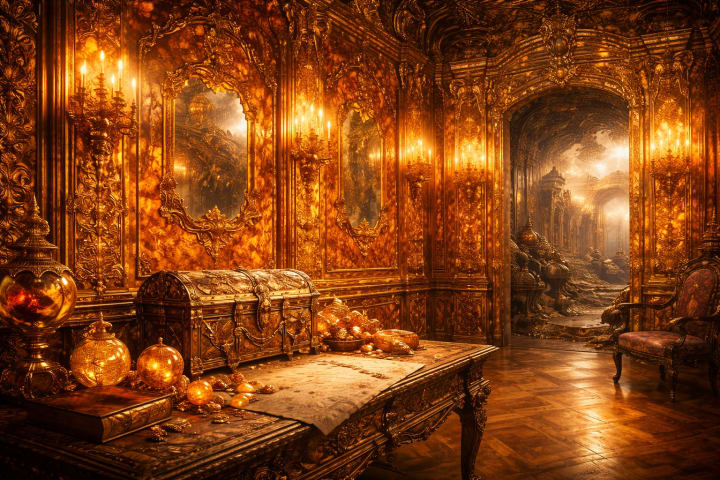
Reconstruction of the Amber Room
Determined not to let history fade, Russia undertook an ambitious reconstruction project in 1979. Using old photographs, drawings, and traditional amber-working techniques, craftsmen painstakingly recreated the room over 24 years. The reconstruction was completed in 2003, coinciding with the 300th anniversary of St. Petersburg.
The recreated Amber Room now stands in the Catherine Palace, offering visitors a glimpse into its former glory.
Cultural Significance and Legacy
The Amber Room represents more than lost treasure. It symbolizes:
The fragility of cultural heritage during war
The destructive power of conflict
The enduring human desire to preserve beauty and history
Its mystery continues to inspire books, films, and treasure hunts, keeping its legend alive.
Conclusion
The Amber Room remains one of the greatest lost treasures in history. Whether destroyed, hidden, or waiting to be rediscovered, its story reminds us that even the most magnificent creations can vanish in times of chaos. Yet, through reconstruction and remembrance, its legacy continues to shine—like amber itself, preserving the past in golden light.
About the Creator
Say the truth
"Say the Truth: Explain Everything in the World" is your trusted source for uncovering facts and exploring the wonders of history, science, technology, and beyond. We simplify complex ideas and reveal truths to inspire curiosity .
Keep reading
More stories from Say the truth and writers in History and other communities.
The Gold of the Inca Empire: Sacred Wealth and the Greatest Lost Treasure of the Andes
Gold as a Sacred Substance For the Incas, gold was not mere metal; it was sacred. They believed gold was the “sweat of Inti,” the Sun God, the most important deity in the Inca pantheon. Silver was considered the “tears of Mama Quilla,” the Moon Goddess. Because of this belief, gold was reserved almost exclusively for religious ceremonies, royal decoration, and offerings to the gods.
By Say the truth about 6 hours ago in History
3 Small Lies That Grew Into Massive Disasters
Big disasters don’t always start with big lies. Those are too obvious and too suspicious. The truly dangerous ones begin small, harmless even. The kind of lie you tell to save face, avoid paperwork, or postpone an awkward conversation. The kind that feels temporary.
By Enoch Sagini6 days ago in History
The Rise of Jackie Chan: The Drunken Master and the History of Chinese Cinema
The Death of the King of Kung Fu (1973) With Bruce Lee's death in 1973, the kung fu film genre also started to die and become stale. Everyone tried to imitate Lee: Bruce Li, Bruce Lo, and Bruce Rhee. Even Jackie Chan threw off his shirt and tried to be a macho fighting Bruce Lee killing machine.
By WILD WAYNE : Taco King of Dragonsabout 24 hours ago in History



Comments
There are no comments for this story
Be the first to respond and start the conversation.