Lessons
Drones: The New Soldiers of War
The Rise of the Drone Soldier Throughout military history, few innovations have altered the face of combat quite like unmanned aerial vehicles—better known as drones. What started out as tools for reconnaissance have now taken center stage in warfare, executing surgical strikes, gathering vital intelligence, and even engaging in air combat. Their rise isn’t just a technological upgrade—it’s a reimagining of what warfare looks like, where machines increasingly shoulder roles once reserved for humans.
By Rukka Nova8 months ago in History
The Man Who Learned a Complete Language in 15 Days
In an era where learning a new language takes years of dedication, imagine mastering one in just 15 days. This is not a fictional tale but a true story from the golden age of Islam. One man, a devoted companion of the Prophet Muhammad (peace be upon him), learned an entirely new language in just over two weeks — an astonishing feat of intelligence, commitment, and divine inspiration.
By Keramatullah Wardak8 months ago in History
"Gadsby": A Wierd Novel Without the Letter "E" by Ernest Vincent Wright
"Gadsby": A Wierd Novel Without the Letter "E" by Ernest Vincent Wright The Inspiration and Origins of "Gadsby" The concept of constrained writing has fascinated authors for centuries, serving as a playground for linguistic experimentation. Among the most iconic examples is "Gadsby," a novel that boldly omits the letter 'e'—the most commonly used letter in English. Written by American author Ernest Vincent Wright in 1939, "Gadsby" stands as a cultural and literary marvel, symbolizing that language, despite its complexity, can be bent and shaped by sheer ingenuity and discipline.
By Kek Viktor8 months ago in History
🐸Australia Lost a War against the Cane Toads
🐸Australia Lost a War against the Cane Toads Origins of the Invasion – A Misguided Introduction In the early 20th century, Australia's sugar cane industry faced a significant threat from cane beetles, which were devastating crops in Queensland. In an attempt to control these pests, 102 cane toads (Rhinella marina) were imported from Hawaii in June 1935 and released into the fields of northern Queensland. The hope was that these toads would prey on the beetles and protect the sugar cane. However, this biological control strategy was based on limited understanding of the toads' behavior and ecology. The cane toads did not significantly impact the beetle population, as they preferred other prey and could not reach the beetles high on the cane stalks. Instead, the toads found the Australian environment highly conducive to their survival and reproduction, leading to an unforeseen ecological disaster.
By Kek Viktor8 months ago in History
The Kingdom of Benin
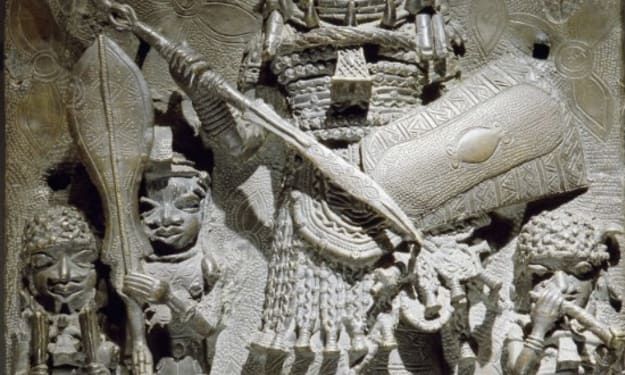
The historical Kingdom of Benin was established in the forested region of West Africa in the 1200's CE. It was a powerful and sophisticated dynasty, located in what is now southern Nigeria. It flourished from around the 11th century until it was annexed by the British Empire in 1897.
By Antoni De'Leon8 months ago in History
🪖Top 7 Submachine Guns of World War II
🪖Top 7 Submachine Guns of World War II MP40 — The Backbone of German Firepower The **MP40**, known as the Maschinenpistole 40, became one of the most iconic and widely used submachine guns of Nazi Germany during World War II. It was developed as a successor to the MP38, streamlining the design for mass production using stamped steel and bakelite, which made it cheaper and faster to manufacture. The MP40 was chambered in 9x19mm Parabellum and had a relatively low rate of fire at approximately 500–550 rounds per minute, allowing for better control in full-auto fire. It featured an open-bolt blowback action and a 32-round magazine, though the magazine was prone to jamming if not handled carefully.
By Kek Viktor8 months ago in History
June 2, 1953 – Queen Elizabeth II’s Coronation Memories. AI-Generated.
on one of the coldest June days of the century after 16 months of planning and watched by millions of people throughout the world Her Majesty the queen set out to be crowned. One of the world's oldest ceremonies was to Mark the dawn of a new Elizabethan age now in what has become the longest reign of any British monarch the queen talks for the first time about that day we're not taking part in something you don't actually see it Her Majesty reveals her intimate knowledge of the crown jewels he handed that that way that I put it on when he hands it and I put it on straight so there are some disadvantages to crowns but otherwise they're quite important things no British monarch has ever talked about their coronation on camera until now with unprecedented access to the Royal collection. This program unlocks the story of the crown jewels the crown jewels matter they are conductors for a feeling that we have about our country and and that is something that's that comes alive when they're actually used we meet those who witnessed the events of that day everybody thought the queen had arrived so everybody stood up 8 000 people stood up when from underneath the organ Loft came four cleaners with carpet sweepers in a Britain recovering from war and austerity nothing could be allowed to go wrong under there we had a file of smelling sauce finally after 65 years we tell the inside story of the crown jewels. The Queen's coronation I mean I've seen one one coronation and been the recipient and the other which is pretty remarkable, today the two crowns used in the Queen's coronation have just left their heavily guarded home in the Tower of London for an unprecedented assignment at Buckingham Palace for the first time since her coronation Her Majesty. The queen has agreed to talk about the ceremony that marked the start of her Reign 65 years ago with coronation expert Aleister Bruce she is about to reacquaint herself firstly with the crown she has only ever worn once at the moment of coronation since Edward's Crown was made in 1661 for the coronation of Charles II only be handled by the Queen the Archbishop of Canterbury and the crown Jeweler. Today it's been summoned from its Fortress home to Her Majesty's throne room encrusted with 440 precious and semi-precious stones and with a frame of solid gold it weighs five pounds but is it still as heavy yes it is it weighs a ton it's very solid isn't it um I don't suppose you've seen it much no I haven't since thank goodness and it's impossible to tell which is front and back I suppose it's identical I think the crowning with Saint Edward's Crown is the centerpiece of the coronation it's the ceremony that marks the moment when the new Sovereign is formally recognized in front of God and their people and it goes back more than a thousand years the ritual of the coronation has been being performed pretty much exactly along the same lines other than being translated into English and Latin since um since the the Anglo-Saxon period and that is an extraordinary thing the order of service was written down more than 600 years ago in a medieval manuscript it outlines the five stages of the coronation they move from the recognition where the Monarch shows they aren't an imposter byronose and an anointing to the crowning and finally the Lords of the land pay their homage to the monarch and Central to each stage are the crown jewels in the collection there are 140 items containing more than 23 000 precious stones most are used in the coronation and are known as the regalia we have this incredible continuity in this country in the form of the coronation other countries still have a monarchy but very very few have a medieval fat none has a medieval coronation in the way that we do and that we have a collection of regalia that is used for that um is is is astonishing the concept of the crown dates back at least 2 000 years originally a simple band a Halo of light it represents the Sovereign as head of the nation then there are the other sacred items in the collection that throughout the ceremony symbolize different aspects of the Monarch's powers. The orb is an expression of religious and moral Authority receptor embodies power the ampulla and Spoon represent the most holy part of the ceremony when the Monarch is Anointed with the coronation oil and the sovereign's ring known by some as the wedding ring of England symbolizes the lifetime commitment of the monarch. It is an amazing thing to see these objects which in a way very familiar to people from afar but to see them up close like this actually that proximity is extraordinary because you can really appreciate what astonishing objects they are for many the role of the crown jewels has been largely forgotten of 65 years without a coronation they're not just objects of tremendous Beauty and and and skill and craftsmanship and so on they are an expression of the way in which authority has worked in this country the the relationship between the Sovereign and the subject. There is a kind of an expression of all of our history in that in that relationship in those objects the most important items used in the coronation are the monarchs two crowns the queen has only worn Saint Edward's Gold Crown once she is much more with this the diamond encrusted Imperial State Crown she wore it at the end of her coronation and for most State openings of parliament since you see it's it's much smaller isn't it I mean it was it was the same height you know it would be it would have been up to about there when my father wore it I mean it was huge then yes very un unwieldy it's difficult to always remember that diamonds are Stones I said it very heavy yes fortunately my father and I have about the same sort of shaped head but once you put it on it stays I mean it just remains itself you have to keep your head very still yes and you can't look down to read the speech you have to take the speech up because if you did your neck would break would it fall off so there are some disadvantages to crimes but but otherwise they're quite important things can I ask if the crown could be brought a little bit closer to the queen this is what I do when I wear it can I look at this end yes certainly I like the black princess Ruby this Crown contains the story of a thousand years of the history of the British Monarchy the Ruby actually a semi-precious Stone mined in Afghanistan is said to have been worn by Henry V in 1415 at the Battle of Agincourt he is supposed to have placed a feather in the hole drilled into the Ruby it's fun to see I think with it with the idea that his plume was was put into the stone for his on his helmet bit rash but that was the sort of thing they did I suppose and there's it four pearls hang underneath the Arches two of them were said to have belonged to Mary Queen of Scots and were bought by her rival Elizabeth the first after Mary's execution they were meant to be Queen Elizabeth's earrings um but they're not very happy now no they don't look very happy now like to be sort of living creatures. They've just been out hanging out here for years it's all said so they don't look very happy I quite dead well I'm afraid so I mean the trouble is that pearls are are sort of live things and and they need they need warming the Queen's relationship with the regalia began in 1937 that her father King George VI coronation Her Majesty is about to look at footage of what happened when her father was crowned the coronation didn't quite go to plan the Archbishop of Canterbury who conducts the service thought he'd cunningly marked the front of Saint Edward's crown with a piece of cotton but at the vital moment he couldn't find it now this is when they'd lost the little piece of thread that they organizers are placed through the front Arch the king written his diary I never did know whether it was put on the right way or not I don't think the King was best pleased. Father was determined that his daughter's coronation would run more smoothly I remember my father making me write down what I remembered about his coronation it was very valuable everyone who never seen it the Queen's own account written in a child's exercise book contains remarkable insights. I thought it all very very wonderful and I expect the Abbey did too The Arches and beams at the top were covered with a sort of haze of Wonder as Papa was crowned at least I thought so the events left a lasting impression on the queen you remember that one almost better than yours because I wasn't doing anything I'm just sitting there from that moment on Guided by her father the queen Was preparing for her own coronation no one was more aware of the importance of the crown jewels to the coronation and to the nation than the Queen's father in the second world war when Britain faced the threat of Nazi invasion the King was intimately involved in plans to keep the jewels out of Hitler's hands to protect them they were taken from the tower only a handful of people knew where they were hidden until now recently uncovered private correspondence reveals that the crown jewels were actually hidden under Windsor Castle. Librarian Oliver urkutelvin who discovered the letters is showing Aleister Bruce their specially built secret hiding place 60 feet below the castle. It was accessed by a medieval tunnel known as a sally port secret passage with a concealed entrance that was used in times of Siege, oh my goodness look down there you better lead us down yes absolutely Castle, one imagines that you know the King was determined to make sure that right down here the Nazis would never find the crown jewels so here are the chambers built to hold the rules it is far bigger than I thought and so literally all the symbols the regalia of this nation that go back centuries held here of all the things that were to be kept close by and guarded most securely had a lot of something significant to the Royal palaces and fortresses it is those actual jewels and I think that is uh that's a measure really the importance which he attached to the jewels the correspondence also reveals that some key items were prized from their settings and placed in a Biscuit tin it meant they could easily have been Spirited Away to an even more secure location had the Nazis closed in on Windsor Castle for her majesty the queen it's an intriguing and unknown story you think they were at Windsor they were definitely the librarian guides the principal stains out of the crown jewels and put them into a wrap them up put them into a jar and put them in a bath Oliver tin hmm and hit them brilliant absolutely brilliant did you remember where he put them because he might have died in the middle I think the King was told man the queen like the crown jewels spent the war at Windsor but she was never aware of the treasure beneath her feet when we would turn nothing when we were only children then but but I mean we didn't know anything that was well I mean all the pictures disappeared and all the everything disappeared and someone was never told anything it was it was you know a secret I suppose the road to the Queen's own coronation began on February the 6th 1952. 25 year old princess Elizabeth was on Royal duties in Kenya standing in for her father George VI the king suffering from lung cancer was too ill to travel princess filmed these images of the famous Treetop Safari Lodge they were taken at a moment when the princess's life was about to change forever. Hours later on the morning of the 6th of February the king died at Sandringham in his sleep at that moment in Africa the princess became Queen losing a parent for anyone is tough particularly if like the princess you're as close as she was to her father but knowing that everything has changed now she's not the Queen the head of state it's very lonely place to be the queen flew home for the lying in state of her beloved father the Imperial State Crown the scepter and the orb were taken from the tower to lie on the king's coffin in Westminster Hall. After a period of mourning the date for the coronation was set Tuesday the 2nd of June 1953 there were 16 months to get everything ready preparations were overseen by a coronation committee chaired by the Duke of Edinburgh in charge was the formidable Bernard Duke of Norfolk he had masterminded George VI coronation since 1386 the Dukes of Norfolk have had a role in organizing great state occasions even though the 1953 everyone in that possession will either Drive in a carriage ride a horse or walk and there will not be any mechanization at all. To coronation for a new Elizabethan age in a country still suffering from the ravages of War was still in place the country was still physically very visibly damaged by the impact of War this was an opportunity to celebrate both the future and the past that the accession of a a young woman as Sovereign provided a wonderful opportunity to do that to sort of feel like it was a fresh start the very long period of time that it took between the death of George VI and the coronation of the queen was used to design something that would have a Hollywood movie glamor to it as well as all the ancient tradition to it the plan included organizing food and accommodation for 30 000 troops from across the Commonwealth and building 27 miles of seating along the processional route it put the whole country to work to achieve the greatest coronation show ever used to make a great coronation carpet at a factory in Glasgow when it is completed the carpet will measure 188 feet long by a 17 feet wide home to every coronation since that of King Harold in 1066 is Westminster Abbey it's witnessed the crowning of 39 kings and queens John Hall is the dean of Westminster it is the dean's responsibility to ensure the Abbey becomes the perfect stage for the coronation for six months they closed the alley they laid a railway track down the center of the Abbey bringing in tons and tons of wood and iron foreign takes place is called the theater. A specially raised platform at the Central Crossing of the Abbey the rest of the Abbey had to be transformed into a stadium for thousands of guests I think there were 400 people in the choir and they were they were all up there and there was an orchestra on the Cross Creek 2 200 people can sit on the on the floor of the Abbey 8 000 people were in here in 1953 they took a long time actually to get the whole thing ready but all these impressive preparations were no guarantee that the Queen's coronation would run smoothly in the past they'd gone notoriously wrong I think Queen Victoria's coronation here was absolutely amazing because they hadn't got much of a clue how to handle it and she writes very clearly about how chaotic the whole thing is how long it lasts it goes on forever and she and she goes into into the uh Saint Edwards Chapel behind the high altar earlier than she should and she finds the whole place a litter of bottles and sandwiches and is rather disgusted by this afterwards the Archbishop of Canterbury wondered if they should have had a full rehearsal. In May 1953 with a month to go building work within the Abbey was complete outside London was being transformed with giant stands for The Spectators temporary accommodation in World War II air raid shelters and attempted City in Kensington Gardens. As the day approached the rehearsals to deliver the perfect coronation reached fever pitch the queen practiced at Buckingham Palace and attended several rehearsals at The Abbey in secret the Press offered workmen 50 pounds to find out what had happened, lady Anne Glen Connor then aged 19 was chosen by the queen as one of her six Maids of Honor we had to be Daughters of Earl's Marcus's or dukes and it had sort of nice figures and that sort of thing in post-war Britain they provided much needed glamor in those days there weren't any sort of girl bands back there and I always perhaps was simply say we were all like the Spice Girls because suddenly we were in all the newspapers the Press followed us well this is my box I got my own Asian dressing a huge box it's very very fragile my address the maids of honors costumes were designed by Norman Hartnell the designer of the Queen's coronation dress it's all a beautifully more embroidered pearls and gold and I think they're zircons. There are leaves Little Golden Leaves there and it was all hand embroidered and we just felt like princesses actually because I was but we all brought up in the war when there were um rationing and clothes coupons and we never had an amazing rest like this the rehearsals were so secret even the dresses were kept Under Wraps the last rehearsal they said you wear your dress is but they didn't say completely top secret and you got to wear a coat so anyway I just had a white shawl and as we came out there was a wind blowing it blew my shawl back. The Queen said there was I exposed head to toe this wonderful dress and so embarrassing on the front of a newspaper head done saying she didn't know it was a secret so I felt I thought well I'm going to be struck off I'm going to get telephone call by the Duke of Norfolk saying sorry you know we're going to have I have to find somebody else but anyway it didn't happen for the final dress rehearsal four days before the coronation all the key participants other than the queen were brought together for the first time the ring Master Bernard Duke of Norfolk was in his element that brings back lots of memories there are my second from the right uh by the train the Duke of Norfolk was absolutely fantastic he had done the coronation of the late King so he knew exactly every detail about exactly what we were to wear uh what the jewelry the height of our shoes Duke Bernard was an absolute stickler for discipline when a bishop took an unauthorized holiday the Duke sent a police car to drag him back I think it must have been pretty scary to be at a rehearsal with Bernard Norfolk he knew minute by minute where every single person should be and when you see the plans it is literally a ballet things move everything moves precisely and when Randolph Churchill who was the son of Winston Churchill thought it looked like a bit of an untidy ballet very quickly Bernard's representative came over and said I think you need to remember there's room in the tower still. The dress rehearsal Bernard's wife The Duchess of Norfolk stood in for the queen there is the crown Duchess of Norfolk is being crowned all seems so much all real we realized what it was going to look like, on the eve of the Carnation two million people descended on the Rainy capital, 6500 extra trains and 6 000 coaches had been laid on to get them there I went The Umbrellas on went the raincoats and under the shelter of blankets and newspapers they stuck it out as people settled down for the night Crown Jaws were brought to the Abbey James Wilkinson was a 12 year old choir boy at the coronation and has subsequently written about the event this is the most historic room, this is the Jerusalem chamber and this is where the night before the coronation the regalia is set out and now it comes with 12 Yeoman Waters of the tar and it's set out on this table and they were all armed with revolvers and they each had 12 rounds of ammunition uh what would have happened if they'd had to discharge it, I don't know it would have left a few holes around this very significant room I would have thought that these days they would have probably had slightly more sophisticated ways of of making sure that the crown jewels are untouched amongst the most valuable items guarded that night were two gems from one of the most famous diamonds ever discovered the cullinan number one sits in the scepter and is the largest colorless cut diamond in the world its smaller sister the cullinan number two is mounted in the Imperial State Crown in total nine diamonds were fashioned from the legendary cullinan it was discovered in 1905 and astonishingly sent to Britain in the post. In 1908 The Cutting of this Priceless rough diamond was entrusted to Antwerp Jeweler Joseph Asher he was reputedly the best Diamond Cutter in the world I always wish I'd been there when they smashed it into pieces these are the chips that were left and there are two other two or three other bits too he he hit it with this whatever you had a diamond was to get the right thing and he spent hours looking at it you know and then he fainted when he'd done it but I don't know whether that's just a story it had a brown floor in it he hit it and and all the bits fell out and the brown bit disappeared these we've never seen each other since they were smashed really that is as Dawn broke on June the 2nd 1953 the scene was set for The Greatest Show on Earth Parliament Square quarter to six this morning many had never been out so early before yet here they were rapidly filling every Vantage for him more than 8 000 specially invited guests rushed to their places in the Abbey before the doors closed at 8 European royalty mingled with shakes Sultans and maharajas thousands of aristocrats in their Urban pick their way through the puddles. Many had hidden strong drink and sandwiches in their coronets to get them through the day among the 8 000 was the choir of 400 voices today James Wilkinson is meeting three of his fellow choristers from The Abbey Choir School at the time Richard Watts William Wallace and David Brown were aged between 9 and 13. Well it's a very long time since I was here my goodness me but it hasn't changed very much what a superview you get yeah and we're so close to where we were I mean you David was standing just there on the corner absolutely right on that corner there we were just lined up on the front two rows and it was extremely cramped if you remember yeah by 11 AM. The Abbey was ready for the arrival of the queen and the penultimate procession was the procession of the Queen Mother and Princess Margaret everybody got terribly excited because the next one was the queen and then there was a sort of bustle at the West End and everybody thought the queen had arrived so everybody stood up 8 000 people stood up when from underneath the organ Loft came four cleaners with carpet sweepers and started to sweep the carpet to restore it to its pristine station everybody got laughed and and sat down again at Buckingham Palace the queen is viewing film of her coronation cameras filmed throughout the day and even though the queen commissioned some of the footage it's the first time she has ever reviewed the event a very long day we're not taking part in something we don't actually see it no I don't suppose you've seen these films very often man I don't suppose I've ever seen it as the Queen's Carriage left the palace Courtyard her children remained at home now there are your children watching and Prince Charles says that you rehearsed wearing the crown before the event in fact he says at bath times it's rather sweet because only Prince Charles actually witnessed it hasn't that Princess Anne stayed back here and he only came for 10 minutes away what did the two children do for most of the day can you remember man no idea it wasn't there no it wasn't there I have no idea what they did but there are a lot of other people in the in the palace as well. I think lots of children the queen set out for Westminster Abbey in the gold State coach it weighs nearly four tons horrible it's not meant for terribly installed I mean it's just not it's only sprung on leather so it rocks around a lot it's not really comfortable were you in it for a long time Halfway Around London really we must have gone about four or five miles we can only go to walking pace yeah the horses couldn't possibly go any faster right it's so heavy really but you look really high up there so I presume it is very high I mean look at the size of the man yeah said. As the carriage approached the Abbey lady Anne's first task was to greet the queen there he is that's the gold and the lovely golden coach it has me about me looking through the window well this is a queen Coming well there's a Duke of Norfolk there's me on the left um taking up my bit of a tree like though I am going past it was so exciting to seeing her I mean she looked absolutely beautiful you know um we hadn't seen her in her dress and she had the tiniest waist and the most wonderful complexion and I it's just beautiful absolutely beautiful and of course the November looked pretty dishy too but he was a little bit fussy I think he wanted it all to go perfectly so he was sort of telling us no you know now I'm going to do this and I'll do that sort of thing after a moment's pausing the annex it was time. She hadn't said anything people said did you say something when she arrived and we said no nothing and we were all waiting and it was you know we were all like this and uh she just turned around and she said ready girls we've no idea you know an off we went the 8 000 guests were packed to the rafters to see a 27 year old crowned queen thank you they were they were so high up they messed up in the I mean we were in the bottom and everything that was happening you know they were all sitting at the top it was so full but that it all the takes away the height of it and here we are coming up I'm on the right there, as a queen but of course at that point she hasn't got any of her regalia answer we we felt she should have had some flowers or something that wasn't correct. The Queen's coronation dress was embroidered in silk with pearls and gold and silver bullion thread well I remember one where a moment when I was going against the tile of the carpet and I couldn't move at all really yes they hadn't thought of that in the organ Loft choir boy David Brown was one of three soloists there were just four bars intro and I came in and there were three of us who were going to do this solo and I think looking back to have three boys on standby as it were to do the solo you never know what's likely to happen in a situation like that nerves weren't the only difficulty for the choir they were so spread out they needed three conductors some will require were stuck further back or even somewhere they couldn't see anything that was being. I think they needed to sort of relay a system of conducting yes the tradition dates back to the year 973.
By taylor lindani8 months ago in History
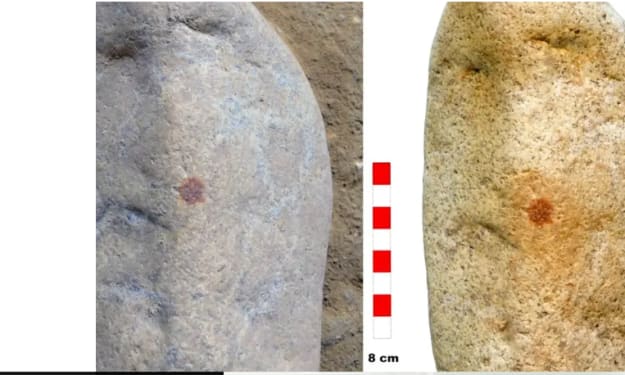
Perhaps the first concrete evidence that Neanderthals created art has been discovered by archaeologists.
Recently, archaeologists discovered a stone that seems to contain the earliest known complete human fingerprint. According to their research, it was created by Neanderthals, who would have shaped what appears to be an artistic representation of a facial figure from about 43,000 years ago using a red pigment on a rock.
By Francis Dami8 months ago in History