
The Kingdom of Benin
Benin was a dominant force until the late 19th century, when British forces invaded and looted its treasures, including the famous Benin Bronzes, many of which are now displayed in museums around the world.

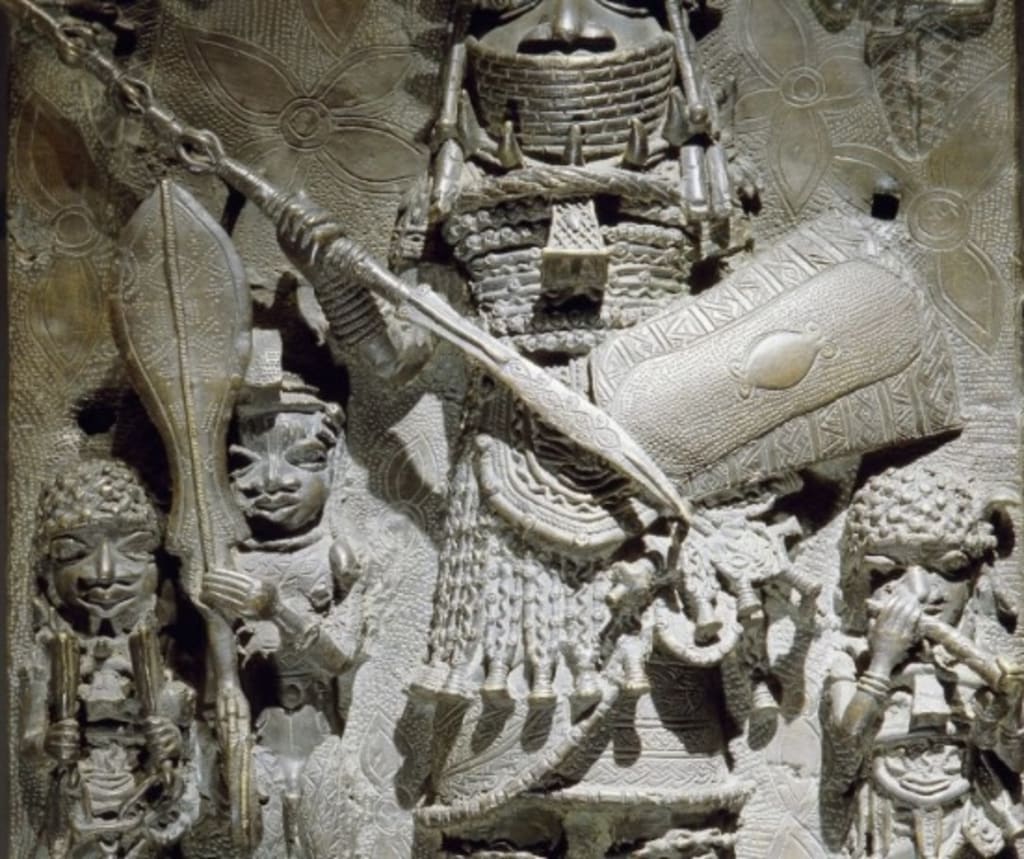
The historical Kingdom of Benin was established in the forested region of West Africa in the 1200's CE. It was a powerful and sophisticated dynasty, located in what is now southern Nigeria. It flourished from around the 11th century until it was annexed by the British Empire in 1897.
Of course it was! The words flourished, powerful and sophisticated explains it all.
Benin, initially the Edo Kingdom of Igodomigodo, emerged in the 900s in the rainforests of West Africa. It grew from small villages into a unified kingdom, ruled by a dynasty of kings known as Ogisos. The kingdom later became a powerful force in the region, expanding its territory through military conquests and establishing a vibrant trade network. However, internal conflicts and the rise of the British led to its decline.
Early Development and Governance:
Around 900 AD, these villages joined together to form Igodomigodo, a unified kingdom.
The kingdom was renowned for its impressive earthen walls, with some estimates suggesting they were longer than the Great Wall of China.
In the 11th century, the Ogisos lost control, leading to a request for help from the king of Ife, who sent his son Prince Oranmiyan, who became the first Oba (king) of the Kingdom.
The kingdom expanded its territory through military conquest, particularly during the 15th and 16th centuries. (Somehow, they sounded like they were as bad as the British, conquering to enrich themselves. Were the conquered ones as culpable as they were? All seeking power.
Trade and Cultural Significance:
Benin was a major trading hub, with trade relationships with the Portuguese who sought goods like gold, ivory, and pepper.
The kingdom was also involved in the West African slave trade, capturing and selling captives to European and American buyers.
Shamefully...This part of History should literally be burned. The positive impact of Benin on the slave trade impacted negatively on their own people. Perhaps here, the British seizure and annexation of Benin may not have been a bad thing. Just saying. They deserved some of it. But why rob them of their art. it makes no sense whatsoever.
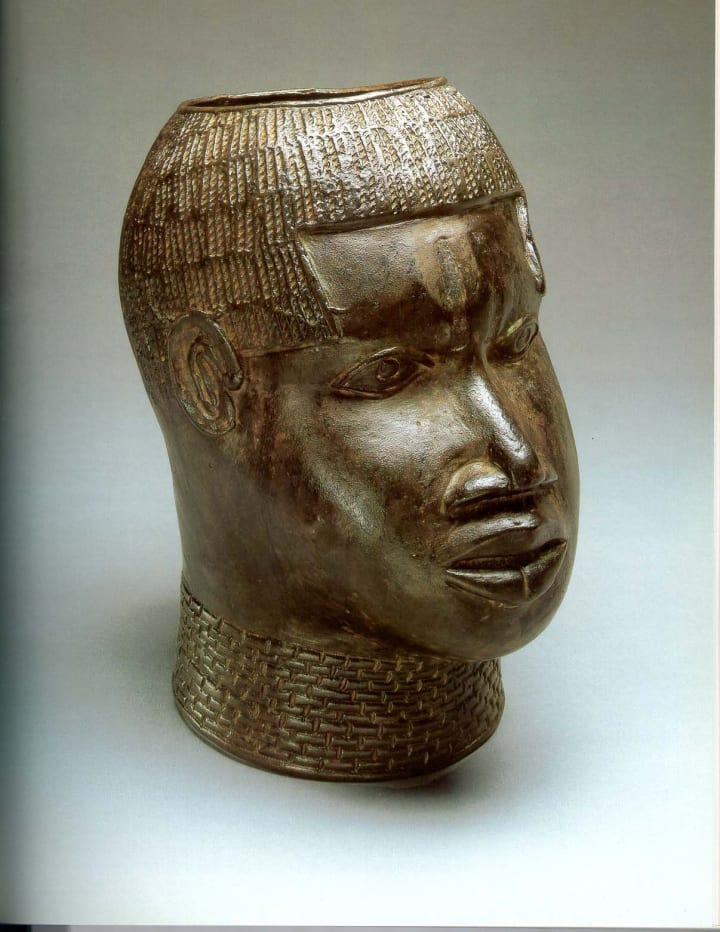
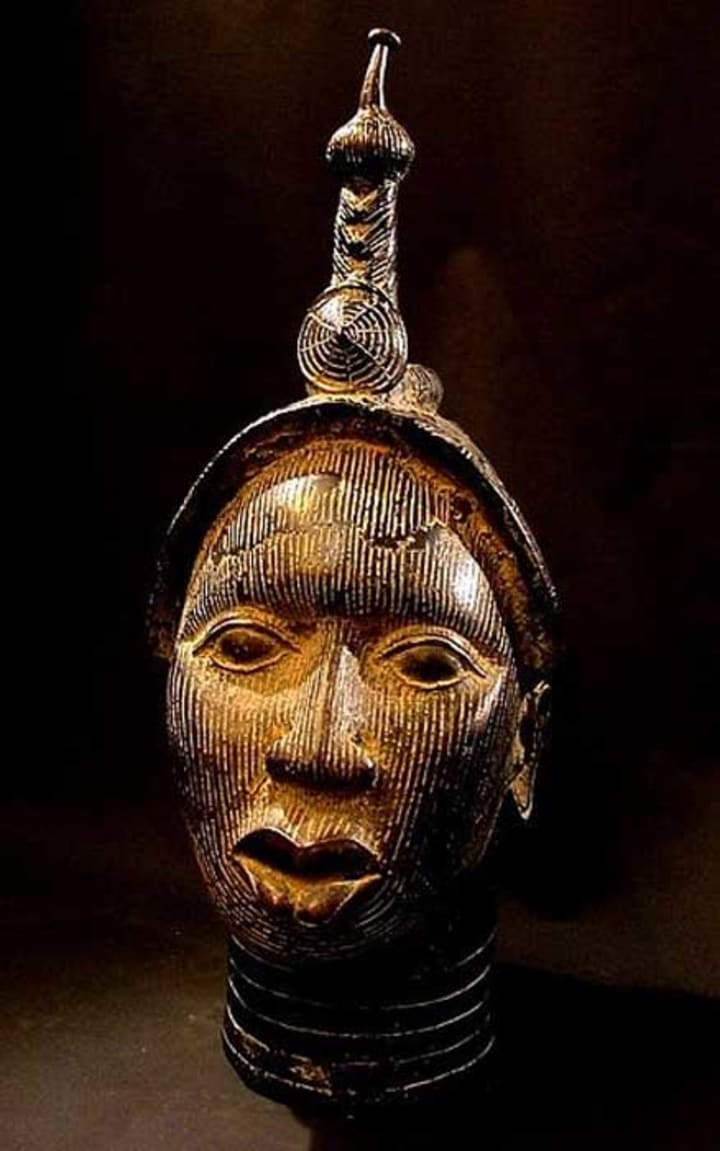
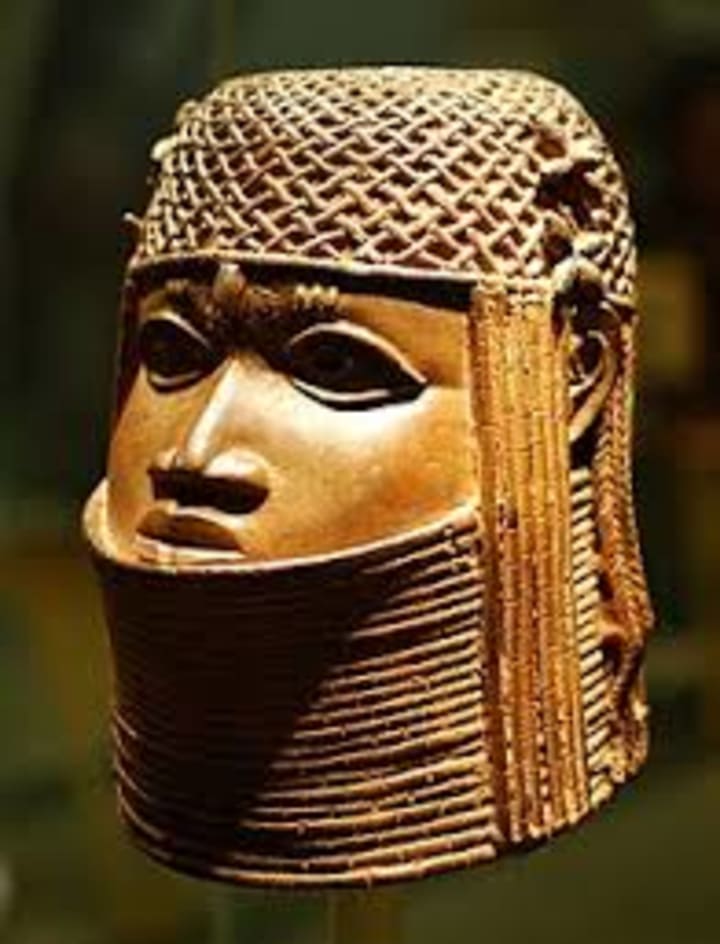
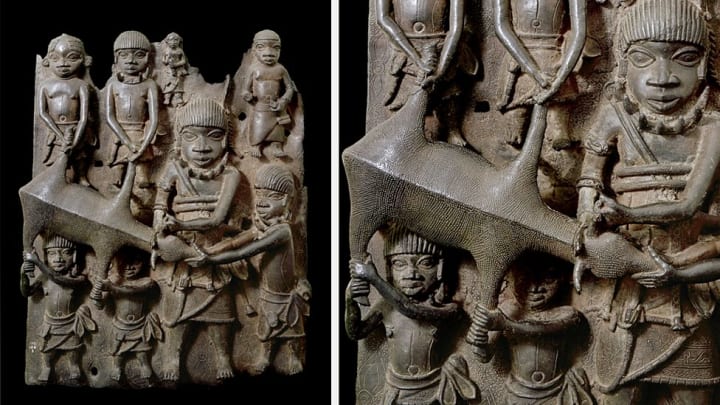
Benin was known for its unique artistic traditions, particularly its bas-relief sculptures, plaques, and life-size head sculptures.
Artisans also crafted various ivory objects, including masks and salt cellars for European traders.
Decline and Annexation:
Internal conflicts, including succession struggles and civil wars, weakened the kingdom during the 18th and 19th centuries.
The suppression of the slave trade and shrinking territory further impacted Benin's prosperity.
The British, seeking control over West African trade and territory, eventually invaded Benin in 1897.
The reigning Oba, Ovonramwen, was deposed and exiled, and the kingdom was annexed by the British Empire.
The British raid on Benin in 1897, in response to the death of British officials, resulted in the burning of Benin City and the depopulation of the kingdom.
The descendants of the ruling dynasty still occupy the throne in Benin City, though with an advisory role in government.
Transition to Modern Benin:
The territory was incorporated into British Nigeria, and the boundary with neighboring French colonies was established.
Benin experienced periods of democratic governments, military coups, and a Marxist-Leninist state before becoming the Republic of Benin in 1991.
The Benin Kingdom was one of the oldest and most developed states in the coastal hinterland of West Africa.
This region was referred to as the Slave Coast of West Africa from the early 17th century due to the high number of people who were sold into slavery.
......
The Obas of Benin became renowned for their wealth, military strength, and artistic achievements.
During its height in the 15th and 16th centuries, Benin expanded its territory, engaged in trade with European powers, and developed a remarkable artistic tradition, particularly in bronze, brass, ivory, and wood carvings. The kingdom was famous for its Benin Bronzes, intricate metal plaques and sculptures that depicted its rulers and society.
Benin remained a dominant force in the region until the late 19th century, when British forces invaded and looted its treasures, including the famous Benin Bronzes, many of which are now displayed in museums around the world.
Why?
Art
+
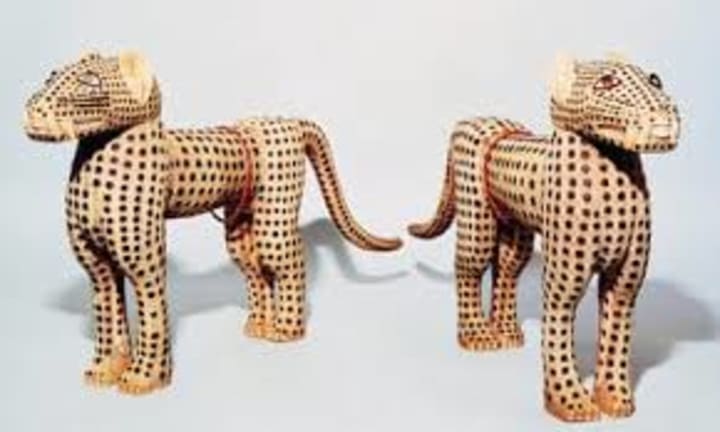
Benin ancient art is renowned for its intricate craftsmanship and deep cultural significance. This art primarily consists of bronze, brass, and ivory sculptures. These works were created for the Oba (king) of Benin and served ceremonial, historical, and religious purposes.
Key Features of Benin Art:
- Materials: Artists used brass, coral, ivory, and wood to craft their pieces
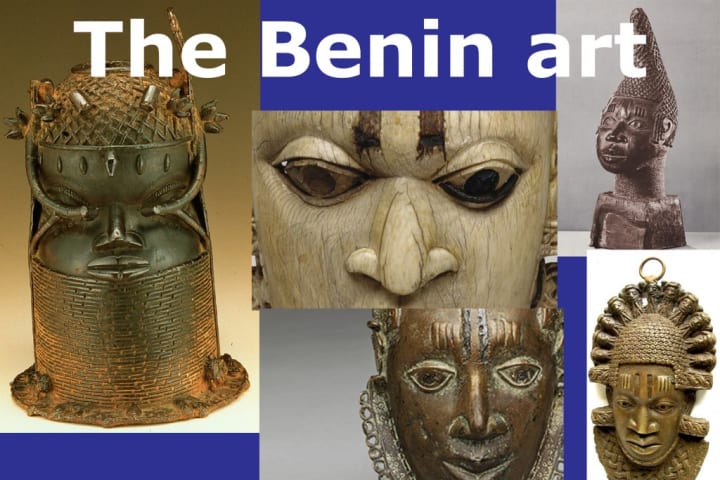
- Symbolism: Leopards, crocodiles, and other animals were commonly depicted to represent the power of the Oba.
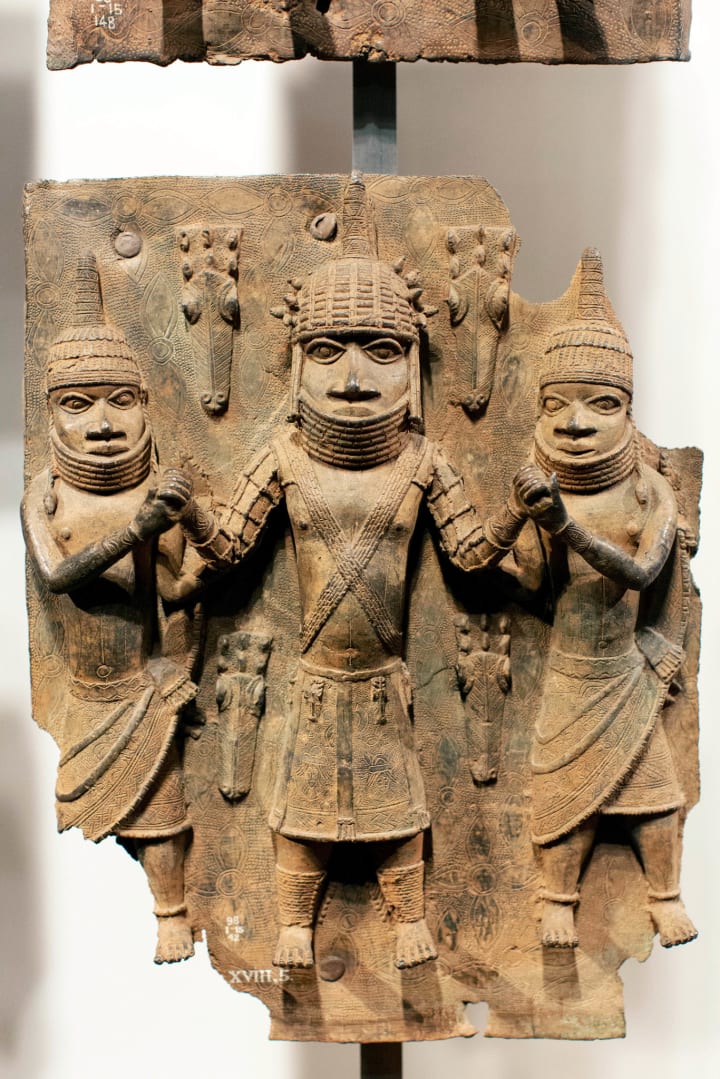
- Guild System: Skilled artisans were organized into guilds, with brass casters working exclusively for the royal court.
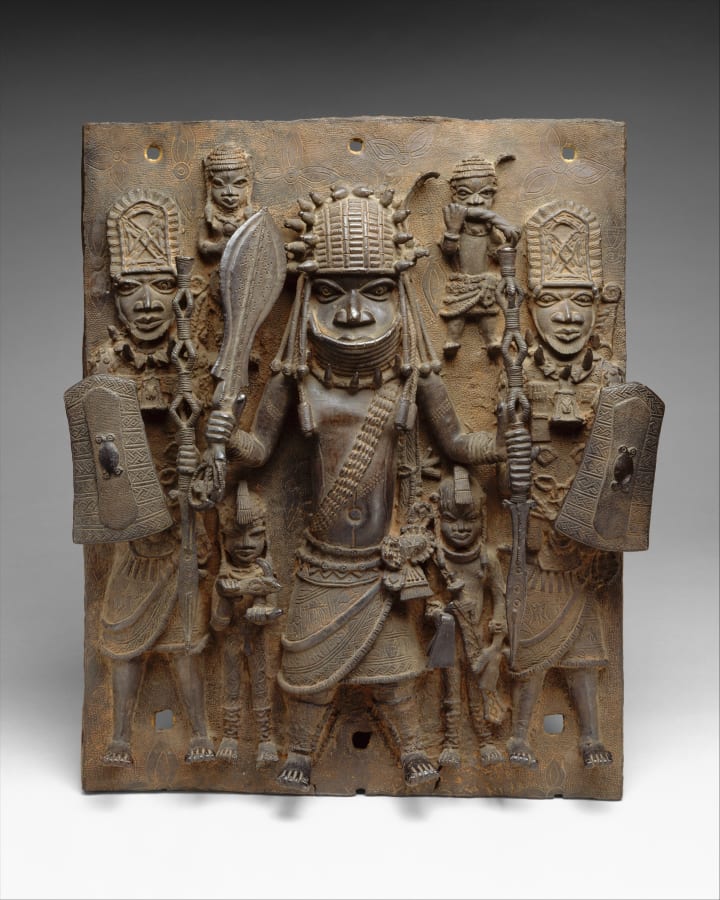
These famous plaques and sculptures, often mistaken for bronze but actually made of brass, depict historical events, rulers, and European traders.
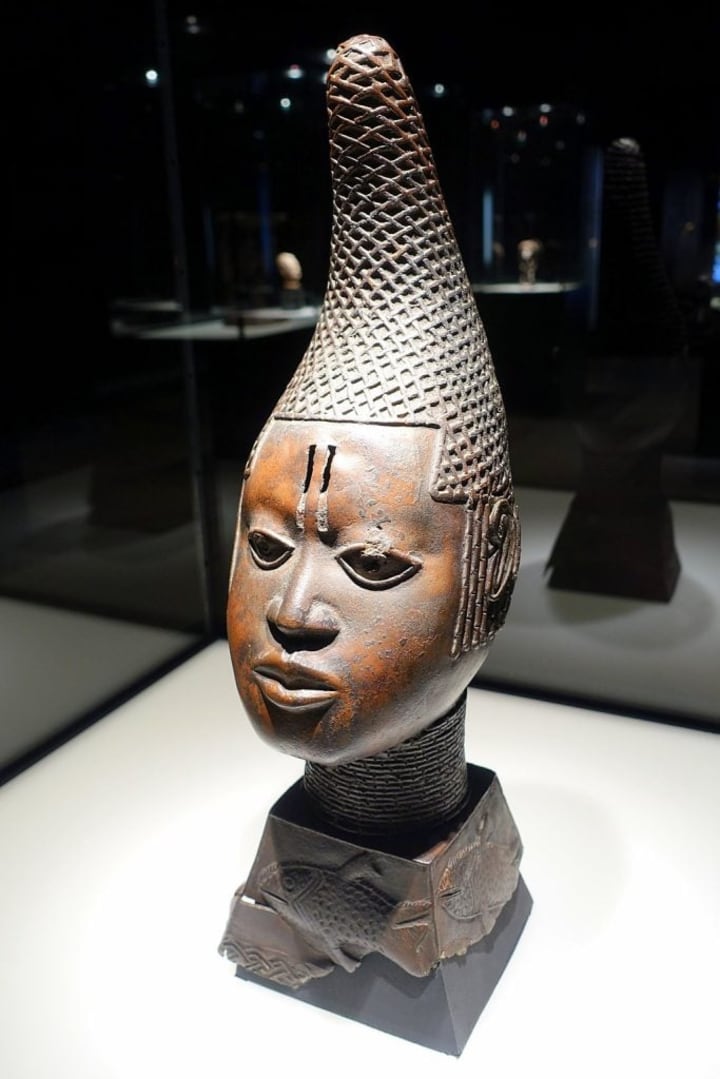
Benin art is not just aesthetically impressive---it serves as a historical record of the kingdom’s traditions, leadership, and interactions with Europeans. Many of these artifacts were looted during the British invasion of Benin in 1897, and today, efforts are being made to return them to Nigeria.
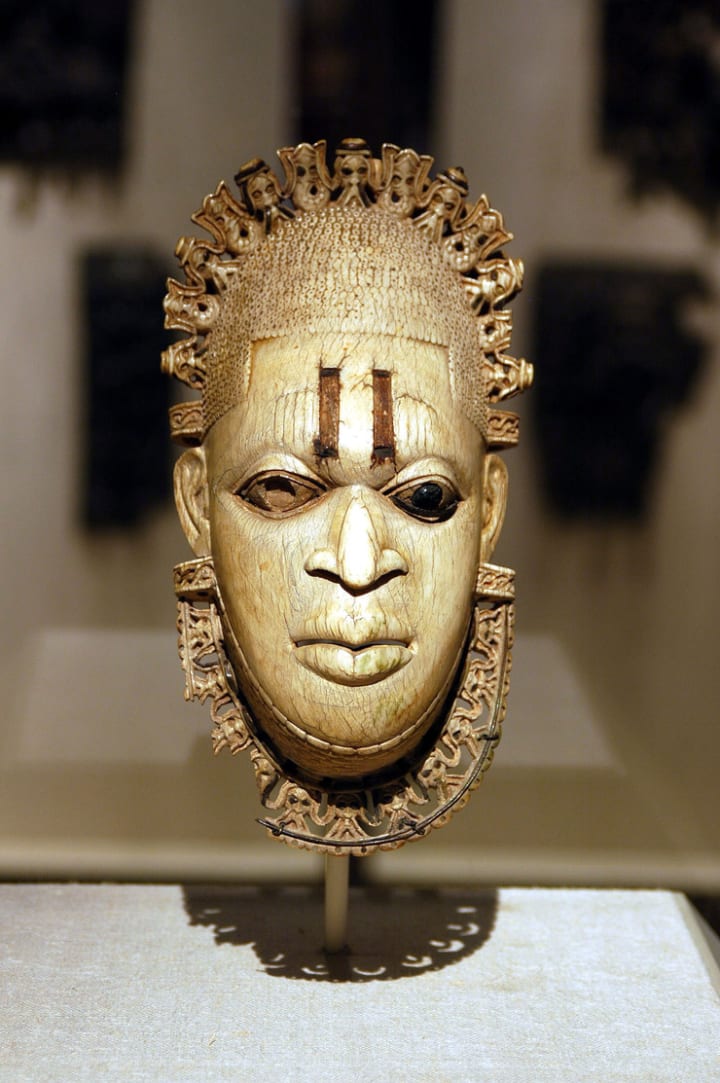
It is quite impressive how they managed to craft their art without the modern day tools at their disposal.
The Benin Bronzes, which were looted from Benin City in 1897, are displayed in museums across the world. Some notable institutions include:
- The British Museum in London, which holds over 900 pieces but is legally restricted from returning them.
- The Horniman Museum in London, which announced in 2022 that it would return its collection of 72 bronzes to Nigeria.
- The Wereldmuseum in the Netherlands, which has displayed Benin Bronzes for decades and recently agreed to return 119 artefacts.
- German Museums, including those in Berlin, which have begun repatriating bronzes to Nigeria.
- The Edo Museum of West African Art (EMOWAA), set to open in Benin City in 2026, will house the largest collection of repatriated Benin Bronzes. Some returned pieces have been given to the Oba of Benin, the traditional ruler of the kingdom.
Many institutions are facing increasing pressure to return these artefacts, with formal repatriation requests issued by Nigeria’s National Commission for Museums and Monument.
Lord give us strength. Should not the 'modern' peoples of this world recognize what does not belong to them and return it post haste to the rightful owners. Why do they have to be asked...begged and pleaded unto for them to do the right and decent thing?
What are the main challenges in returning the Benin Bronzes?
Returning the Bronzes is a complex process with several challenges:
- Legal Restrictions – Some museums, like the British Museum, are legally prohibited from permanently returning artefacts due to national laws. (This makes no sense whatsoever).
- Ownership Disputes – In Nigeria, there is debate over whether the bronzes should be housed in national museums or returned to the Oba of Benin, the traditional ruler.
- Logistical Issues – Transporting and preserving centuries-old artefacts requires careful planning and resources.
- Institutional Resistance – Some institutions argue that the bronzes are better preserved and accessible in Western museums. (Pish Posh, if these were their property, war would already have broken out for their return).
- Funding and Infrastructure – Nigeria is preparing to house repatriated bronzes in the Edo Museum of West African Art, but concerns remain about security and conservation.
Despite these challenges, momentum for repatriation is growing.
About the Creator
Antoni De'Leon
Everything has its wonders, even darkness and silence, and I learn, whatever state I may be in, therein to be content. (Helen Keller).
Tiffany, Dhar, JBaz, Rommie, Grz, Paul, Mike, Sid, NA, Michelle L, Caitlin, Sarah P. List unfinished.
Keep reading
More stories from Antoni De'Leon and writers in History and other communities.
No ICE, No KKK, No Fascist USA
"I don't 'do' politics." Politics will do you, regardless. Watching from the sidelines for the last year I can see far too many similarities in the way Trump's ICE Gestapo is to Nazi Germany. Considering the United States just invaded Venezuela and kidnapped their President and his wife I would say we are there.
By Lyvia Jack2 days ago in History
3 Moments When Reality Accidentally Became a Horror Movie
Horror movies usually rely on a simple agreement with the audience: this could never really happen. Ghosts follow rules, monsters have weaknesses, and there’s always a clear point where reality hands the story over to fiction. Real life, unfortunately, does not care about narrative structure, logic, or closure.
By Enoch Saginiabout 20 hours ago in History


Comments (4)
What a great lecture of Art history and even political science. Loved the sculptures for there are a lot of stories in them. Good work.
Ah, the many faces of mankind. Devils come in all shades, would they have lived is peace if the Europeans etc had not intervened, or would they have made war a pastime. Still, there is good with the bad. Very informative and eye opening history.
Fascinating article, especially the way you are able to walk us through their own tortured & checkered past.
Well-wrought! I was especially taken with the leopards, which I am guessing are made of ivory. War, conquest, slavery... no one is exempt, and there are still places today where human beings are mere pieces on a gameboard, playthings for power. I hope we will overcome this curse!