Fiction
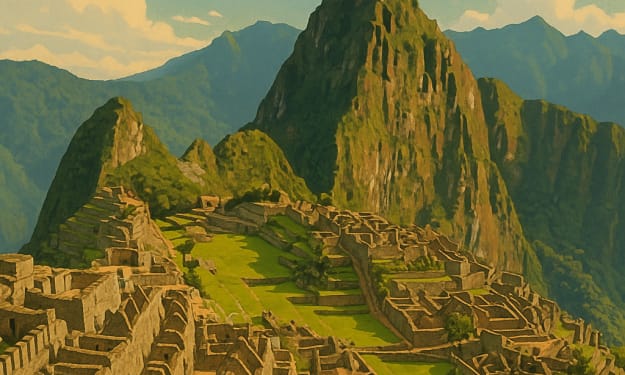
Machu Picchu in Modern Times: Legacy, Wealth, and Global Significance. AI-Generated.
Machu Picchu in the Contemporary Era: Safeguarding the Incan Marvel for Posterity Once a disregarded fortress hidden within the jungle, Machu Picchu has emerged as a universal emblem of ancient innovation and natural splendor. Rediscovered in 1911, it now stands as a significant cultural and economic emblem for Peru. This article examines how Machu Picchu’s contemporary narrative has progressedfrom archaeological unearthing and tourism expansion to its lasting significance and the global initiatives aimed at preserving it for future generations.
By Say the truth 9 months ago in History
Pope Francis Dies at 88: The World Mourns a Humble Shepherd
A Spiritual Icon's Demise: A Global Loss Pope Francis, the 266th head of the Roman Catholic Church and a towering figure of compassion, humility, and reform, has died at the age of 88. VATICAN CITY – His death was confirmed by the Vatican on [date], ending an 11-year papacy that reshaped the Church's role in contemporary society. Pope Francis was the first Jesuit pope and the first pope from the Americas, and he was born Jorge Mario Bergoglio in Buenos Aires, Argentina.
By Md Omar Faruk9 months ago in History
IN Terrorist Attack in Pahalgam, Jammu and Kashmir
In Pahalgam, a popular tourist destination in Indian-administered Kashmir, a tragic mass shooting took place today. At least 26 Indian tourists were killed and several injured when gunmen opened fire on them at the Baisaran meadow. The Resistance Front, a militant group that opposes non-local settlement in Kashmir, has been blamed by authorities for the attack. This is one of the most fatal incidents to target civilians in the region in recent memory. Security concerns and the aftermath of the terrorist attack in Pahalgam, Jammu and Kashmir Pahalgam, Jammu and Kashmir: A recent terrorist attack in the tranquil tourist town of Pahalgam has raised concerns about security in the Kashmir Valley once more. On [insert date], [security forces, civilians, and tourists] were the target of the incident, which resulted in [number] fatalities and numerous injuries. Despite intensified counterterrorism efforts, this attack demonstrates that militant groups continue to pose a threat to the region. Details of the Attack According to officials, the attack occurred near [specific location], where militants [describe the incident – for example, militants opened fire, used grenades, or carried out an ambush]. A fight broke out when security personnel swiftly retaliated. Casualties & Impact
By Md Omar Faruk9 months ago in History
The Billion-Dollar Revival: Building the Great Pyramid in the Modern Era . AI-Generated.
"Pyramids Reimagined: The Estimated Expense of Constructing the Great Pyramid Today" The Great Pyramid of Giza remains one of humanity’s most remarkable architectural achievements, a tribute that has evoked awe for over 4,500 years. However, what if we were to construct it in the present day? This comprehensive article examines the building techniques of ancient Egypt and contrasts them with contemporary advancements, calculating an estimated value for a 21st-century reconstruction. Through an extensive evaluation of labor, materials, transportation, and project management, we determine the expense, purpose, and symbolic significance of a modern pyramid inspired by the original.
By Say the truth 9 months ago in History
The Holocaust: The Tragic Massacre of the Jews by the Nazis
The Holocaust: The Tragic Massacre of the Jews by the Nazis The Holocaust stands as one of the most horrifying and methodically executed genocides in human history. From 1941 to 1945, the Nazi regime, under the leadership of Adolf Hitler, orchestrated the mass murder of approximately six million Jews across Europe. This atrocity was not merely the result of war or chaos—it was a deliberate, ideologically driven campaign that sought to erase an entire population. But why did it happen? What drove the Nazis to commit such inhuman crimes?
By Say the truth 9 months ago in History
Nineteen Eighty-Four
1984 (also written as Nineteen Eighty-Four) is a powerful and chilling novel written by George Orwell. It was published in 1949, just after World War II, but it talks about a future world that feels cold, controlling, and scary. This book is not only a story—it’s a warning about what could happen if governments gain too much power and people lose their freedom.
By Muhammad Hayat9 months ago in History
John Cena Makes History With 17th World Title After WrestleMania Win Against Cody Rhodes
In an unforgettable WrestleMania moment, John Cena cemented his legacy as one of the greatest professional wrestlers of all time by capturing his 17th world championship, breaking the record he once shared with the legendary Ric Flair. The iconic victory came after a hard-fought battle against Cody Rhodes, who had been on a meteoric rise since his return to WWE. The match, filled with drama, near-falls, and raw emotion, will go down in history as one of WrestleMania’s most defining moments.
By Md polash Ali9 months ago in History
Trends and Issues in Nursing
The advancements in healthcare, societal shifts, and challenges facing the world all have an impact on the profession of nursing, which is dynamic and constantly changing. The following are some important current nursing issues and trends: 1. Problems with the Workforce and Nursing Shortage There is a worldwide shortage of nurses as a result of retirements, burnout, and a lack of new graduates. Patient-to-nurse ratios that are too high cause stress and lower the quality of care. Better working conditions, incentives for retention, and increased funding for nursing education are the solutions. 2. Problems with mental health and burnout After the pandemic, many nurses experience compassion fatigue, post-traumatic stress disorder, and emotional exhaustion. Stress in the workplace as a result of long shifts, a lack of staff, and high patient acuity. Support for mental health, training in resilience, and improved policies regarding work-life balance are the solutions. 3. Nursing Technological Developments Predictive analytics for patient care and chatbots for triage are examples of AI and machine learning. Telehealth expansion includes virtual nursing and remote patient monitoring. Electronic health records, or EHRs, can simplify documentation, but they can also lead to "click fatigue." 4. Nursing's DEI (diversity, equity, and inclusion) Diversity in leadership roles is lacking. Training in cultural competency to enhance diverse population patient care. addressing minority nurses' discrimination. 5. Range of Practice and Nurse Independence Advocacy for NPs to practice independently in some states (in the United States) known as Full Practice Authority (FPA). Restrictions imposed by regulations and opposition from physician groups are barriers. 6. Management of Chronic Diseases and an Aging Population There are more elderly patients who require specialized care. An increase in chronic diseases requiring long-term nursing interventions (such as diabetes and heart disease). 7. Nursing Education & Faculty Shortage There aren't enough nurses teaching the program, so there aren't many seats. Move toward simulation training and education that is based on competencies. 8. Safety and Violence in the Workplace Patients and visitors are increasingly attacking nurses. Training in security and de-escalation needs to be improved. 9. International Nursing and Globalization Migration of nurses from developing to developed nations, causing brain drain need for uniform licensing (such as the NCLEX for international nurses). 10. Nursing and Public Health and Climate Change The role of nurses in responding to disasters (natural disasters, pandemics). promoting methods of healthcare that are long-lasting.
By Nurul Huda 9 months ago in History
Supreme Court Divided Over FDA Block on Kid-Friendly Flavored Vapes. AI-Generated.
The FDA's refusal to approve flavors for vapes that are safe for children divides the Supreme Court. The U.S. A crucial case that has the potential to reshape federal regulation of flavored e-cigarettes, particularly those deemed appealing to children and adolescents, has divided the Supreme Court. The Food and Drug Administration's (FDA) decision to prevent millions of flavored vape products from entering the market is at the heart of the case. The FDA cited concerns about the products' appeal to minors and the potential for nicotine addiction. The vape companies Triton Distribution and Vapetasia have filed a lawsuit to contest the FDA's decision to deny their marketing applications. The businesses argue that the FDA shifted regulatory expectations midway through the process and failed to clearly communicate the approval standards. They claim that the FDA's sudden insistence on long-term scientific data to demonstrate that flavored e-cigarettes aid adult smokers in quitting was unexpected. The companies claim that they were never informed that this data was required. The justices appeared divided during oral arguments. Justice Sonia Sotomayor, among others, questioned whether the FDA provided businesses with sufficient clarity regarding its requirements, suggesting that due process might have been overlooked. These concerns were echoed by Justice Brett Kavanaugh, who suggested that the agency might have shifted the targetposts in a manner that was unfair to manufacturers. On the other hand, other justices appeared to be more in favor of the FDA's position. Justices Elena Kagan and Ketanji Brown Jackson stated that the agency's decisions were justified by the need to safeguard public health, particularly the health of children. The future of flavored vaping products as well as the extent of federal agencies' regulatory authority are at stake. The FDA's ability to swiftly respond to emerging threats to public health may be hindered by a ruling in their favor. Additionally, it might make room for a broader challenge to agency authority in a variety of industries. The FDA has received support from advocates for public health, citing studies indicating that the majority of young e-cigarette users prefer flavored products that frequently resemble candy or fruit. They argue that the FDA's ban would be reversed, undoing years of progress toward reducing youth tobacco use. In the meantime, vape manufacturers insist that their products are important tools for adult smokers who want to quit smoking cigarettes. They argue that the FDA's refusal to approve their applications was arbitrary, lacked a consistent scientific framework, and could encourage consumers to return to more harmful tobacco products. The final decision of the Supreme Court, which is expected later this year, could have wide-ranging repercussions, not only for the vaping industry but also for the extent to which government agencies can protect public health. The balance between innovation, regulation, and child safety is on the line as both sides wait for the verdict.
By Mahim khan9 months ago in History