
The Billion-Dollar Revival: Building the Great Pyramid in the Modern Era
What if humanity decided to reconstruct the Great Pyramid of Giza using today’s technology, resources, and economic frameworks? This article dives deep into the fascinating comparison between ancient ingenuity and modern engineering. It estimates the net worth of building the pyramid today—ranging from $5 to $10 billion—factoring in labor, machinery, materials, transportation, and site management. The piece also examines the cultural, political, and symbolic significance such a project would hold in today’s world, turning a marvel of the past into a global architectural statement of the future.

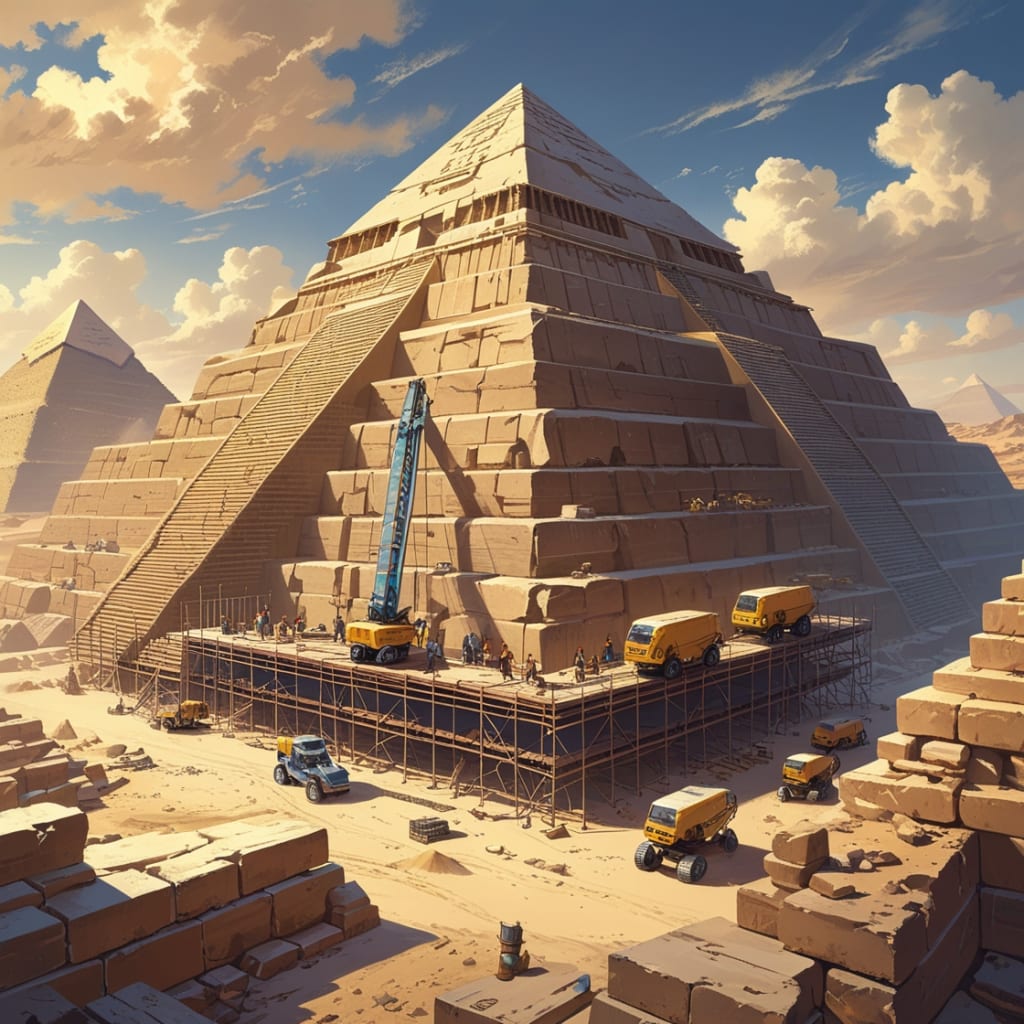
"Pyramids Reimagined: The Estimated Expense of Constructing the Great Pyramid Today"
The Great Pyramid of Giza remains one of humanity’s most remarkable architectural achievements, a tribute that has evoked awe for over 4,500 years. However, what if we were to construct it in the present day? This comprehensive article examines the building techniques of ancient Egypt and contrasts them with contemporary advancements, calculating an estimated value for a 21st-century reconstruction. Through an extensive evaluation of labor, materials, transportation, and project management, we determine the expense, purpose, and symbolic significance of a modern pyramid inspired by the original.
Article:
The Monument of Eternity: A Pyramid for Today’s World
Situated on the Giza Plateau, the Great Pyramid of Khufu is one of the Seven Wonders of the Ancient Worldand the only one still in existence. Constructed circa 2560 BCE, the pyramid has enthralled generations with its enormous scale, architectural accuracy, and enigmatic construction methods. Yet, in an era of skyscrapers and supercomputing, one question lingers enticingly: what would it entail to build the Great Pyramid today?
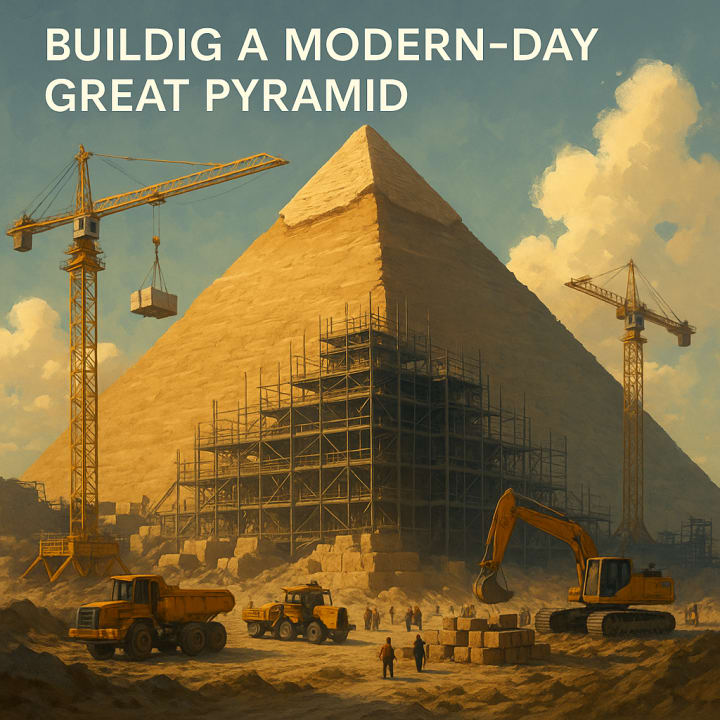
Ancient Marvel, Contemporary Challenge
The original Great Pyramid is believed to weigh approximately 6 million tons and consists of around 2. 3 million blocks of limestone and granite. At an impressive height of 146. 6 meters (initially), it held the title of the tallest man-made structure for over 3,800 years.
In contrast to modern edifices that utilize steel and concrete, the pyramid was primarily constructed with manual labor, stone tools, and copper chisels. Scholars estimate that it took around 20 years and tens of thousands of workerswhether skilled artisans, enslaved individuals, or conscripts continues to be a matter of debate.
Reproducing this marvel today would necessitate a combination of historical fidelity and modern machinery. Consequently, the inquiry becomes both logistical and financial.
Breaking Down the Expense
Let’s approximate the cost of reproducing the Great Pyramid today, employing contemporary materials and labor.
1. Materials:
Limestone & Granite: If we use identical materials, procuring, cutting, and transporting millions of tons would incur a substantial expense.
Limestone (approximately $100 per ton) for about 5 million tons: $500 million
Granite (more costly): roughly 500,000 tons at $200 per ton: $100 million
Total (Raw Materials): $600 million
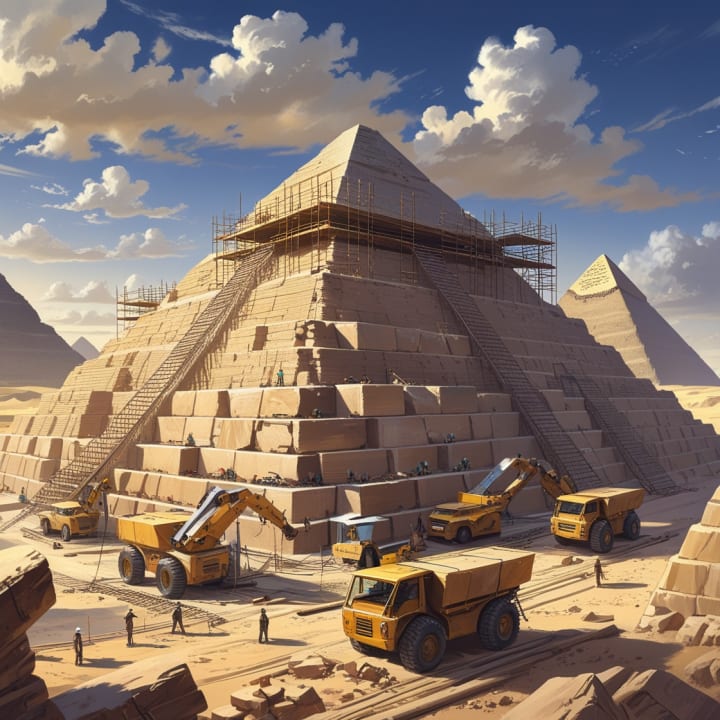
2. Labor:
A workforce of approximately 10,000 to 30,000 would be necessary over a span of 5–10 years.
With current wages (average $40,000/year), 20,000 workers for 7 years = $5. 6 billion
3. Technology & Equipment:
Cranes, heavy-duty trucks, AI planning tools, 3D mapping: $300 million
4. Land & Legal Expenses:
Acquiring land equivalent to the Giza Plateau in a contemporary city: $500 million to $1 billion
5. Security, Insurance & Bureaucracy:
Permits, insurance, archaeology, safety standards: $200 million
6. Environmental & Preservation Considerations:
Sustainable sourcing, carbon offsetting, impact assessments: $150 million
Final Cost Estimate:
Modern Reconstruction of the Great Pyramid: $7. 3 to $8. 5 billion
This sum approaches the expenditure associated with the most expensive skyscrapers and national monuments. For context, the Burj Khalifa cost approximately $1. 5 billion. The modern counterpart of the Great Pyramid would incur significantly higher costs due to its scale, historical implications, and symbolic expectations.
Beyond Finances: Cultural Significance
While financial figures are striking, they diminish in significance when compared to the symbolic and cultural importance of such a structure. The original pyramid functioned as a burial site for Pharaoh Khufu and represented Egypt’s divine governance, authority, and spiritual convictions.
Reconstructing it today would not only resonate with Egypt’s historical magnificence but also spark international interest in cultural preservation and historical appreciation.
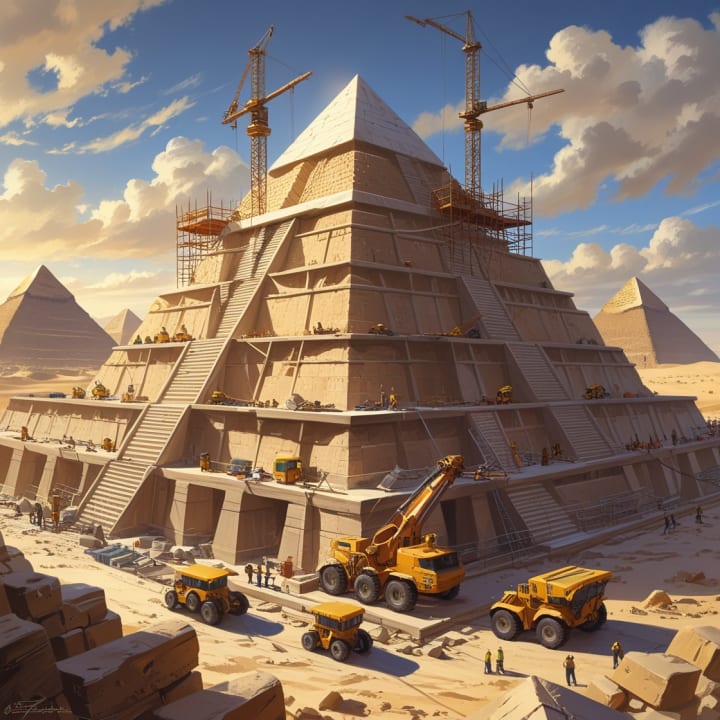
The Purpose in the Present
Would a contemporary pyramid act as a tourist attraction? A museum? A sacred site? Or solely an homage to ancient wisdom?
In every scenario, the repercussions would be worldwide. Tourism could yield billions each year. Historical and archaeological revelations might reignite discussions regarding ancient engineering and the origins of civilization.
Conclusion: Monumental Legacy, Timeless Wonder
The Great Pyramid transcends mere architectural accomplishmentit embodies a philosophical and spiritual heritage etched in stone. Reconstructing it today would entail billions in expense, yet the endeavor would be invaluable regarding historical continuity, national pride, and human accomplishment.
The modern era may possess technology, but the ancient era had vision. And perhaps, to genuinely comprehend the significance of the pyramid, we must endeavor to recreate itnot to replicate the past, but to mirror the eternal in our current reality.
About the Creator
Say the truth
"Say the Truth: Explain Everything in the World" is your trusted source for uncovering facts and exploring the wonders of history, science, technology, and beyond. We simplify complex ideas and reveal truths to inspire curiosity .
Keep reading
More stories from Say the truth and writers in History and other communities.
The Lost Fortune of the Jews: Tracing the Greatest Treasure in Jewish History
The Esoteric Wealth of Solomon: Charting the Preeminent Treasure in Jewish Heritage This article explores the mythical riches of ancient Israel, particularly those associated with King Solomon’s Templegolden relics, the Ark of the Covenant, and invaluable religious artifacts. It examines historical documents, sacred texts, and archaeological hypotheses to investigate how the affluence of one of history's mightiest ancient empires gradually disappeared through epochs of conquest, exile, and warfare. From Babylonian incursions to Roman plundering, the narrative of these treasures encapsulates both the splendor and sorrow of Jewish heritage.
By Say the truth 9 months ago in History
No ICE, No KKK, No Fascist USA
"I don't 'do' politics." Politics will do you, regardless. Watching from the sidelines for the last year I can see far too many similarities in the way Trump's ICE Gestapo is to Nazi Germany. Considering the United States just invaded Venezuela and kidnapped their President and his wife I would say we are there.
By Lyvia Jack5 days ago in History
3 Moments When Reality Accidentally Became a Horror Movie
Horror movies usually rely on a simple agreement with the audience: this could never really happen. Ghosts follow rules, monsters have weaknesses, and there’s always a clear point where reality hands the story over to fiction. Real life, unfortunately, does not care about narrative structure, logic, or closure.
By Enoch Sagini4 days ago in History
The Devil's Cut
“Comrade, finally you’re awake.” The voice was smooth, sensual. A flickering incandescent bar was all that lit the white, sterile room. All Vladimir remembered was everything going black. He tried to move his arms and found them strapped to the gurney.
By Matthew J. Fromm4 days ago in Fiction




Comments (1)
Thanks for keeping us knowledgeable. Super.