
The Holocaust: The Tragic Massacre of the Jews by the Nazis
This article explores the darkest chapter in modern history—the Holocaust, during which six million Jews were systematically murdered by Adolf Hitler’s Nazi regime. It uncovers the historical roots of anti-Semitism, the ideological foundation of Nazi hatred, and the chilling execution of one of the world’s largest genocides. The article also explores the psychological, political, and economic motivations behind this atrocity, offering readers a detailed understanding of why and how this massacre occurred.

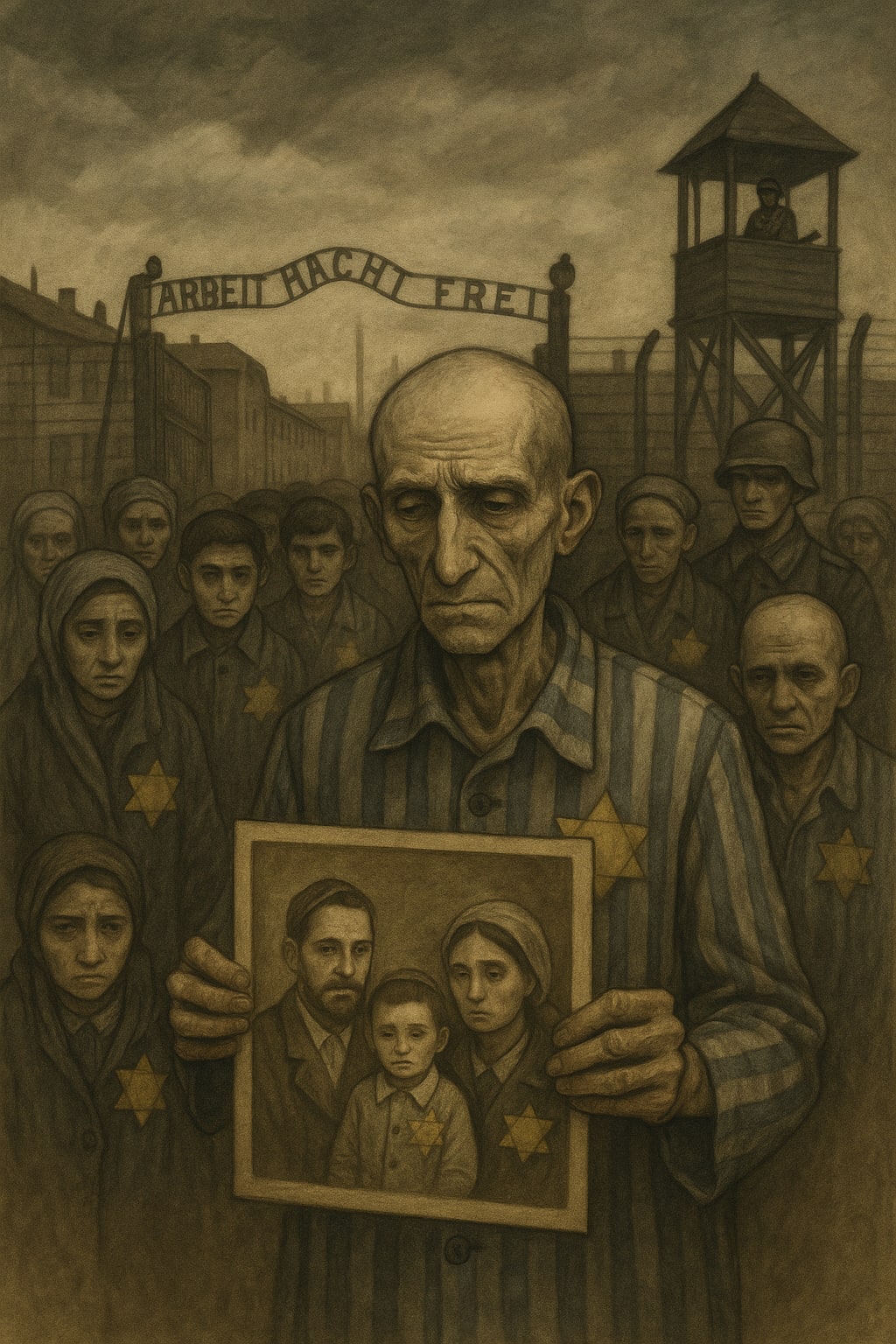
The Holocaust: The Tragic Massacre of the Jews by the Nazis
The Holocaust stands as one of the most horrifying and methodically executed genocides in human history. From 1941 to 1945, the Nazi regime, under the leadership of Adolf Hitler, orchestrated the mass murder of approximately six million Jews across Europe. This atrocity was not merely the result of war or chaos—it was a deliberate, ideologically driven campaign that sought to erase an entire population. But why did it happen? What drove the Nazis to commit such inhuman crimes?
Origins of Anti-Semitism in Europe
Anti-Semitism—the prejudice against Jews—was not born in the 20th century. Its roots trace back centuries. Throughout medieval Europe, Jews were frequently scapegoated for plagues, economic hardship, and social unrest. They were often barred from owning land, excluded from guilds, and blamed for financial manipulation. These deep-seated prejudices laid a fertile foundation for the rise of Nazi ideology.
By the time the 19th and 20th centuries arrived, pseudo-scientific theories of racial superiority had emerged, falsely categorizing Jews as biologically inferior or even parasitic. These ideas percolated into the collective mindset of Europe, becoming more systemic, especially in Germany after its defeat in World War I.
The Rise of Hitler and Nazi Ideology
After Germany’s loss in World War I, the country suffered immense economic turmoil, hyperinflation, and a national identity crisis. The Treaty of Versailles imposed harsh penalties on Germany, which Hitler and many Germans viewed as humiliating and unjust.
In this desperate atmosphere, Hitler’s Nazi Party rose to power by promising a return to national glory, economic recovery, and social unity. A central part of this vision, however, was the exclusion and elimination of Jews. Hitler’s autobiography Mein Kampf openly blamed Jews for Germany’s defeat and portrayed them as enemies of the Aryan race.
Nazism’s core belief was racial purity. Jews were portrayed not only as a religious group but as a biological threat. The Nazis used propaganda to dehumanize them—depicting Jews as dirty, greedy, conspiratorial, and dangerous.
Implementation of Genocide
Once Hitler became Chancellor in 1933, systematic oppression of Jews began. The Nuremberg Laws of 1935 stripped Jews of citizenship, banned them from marrying non-Jews, and excluded them from public life. Anti-Jewish propaganda flooded schools, radio, films, and newspapers.
Then, in 1938, the Kristallnacht (“Night of Broken Glass”) marked a turning point. Jewish homes, businesses, and synagogues were attacked across Germany and Austria. Thousands of Jews were arrested, and the path to genocide was set.
With the outbreak of World War II in 1939, Nazi policies grew even more brutal. Ghettos were established to segregate Jews in overcrowded, disease-ridden quarters. From there, the Nazis escalated their plans into what they called the “Final Solution”—the mass extermination of all European Jews.
Death Camps and Mass Murders
Between 1941 and 1945, the Nazis built a network of concentration and extermination camps across occupied Europe. Auschwitz, Treblinka, Sobibor, and Majdanek became death factories. Jews were transported in cattle cars, deprived of food and water, and sent directly to gas chambers.
Entire communities were wiped out. Children, women, the elderly—none were spared. Victims were stripped of their belongings, gold teeth were extracted, hair was collected, and even their ashes were used as fertilizer. The Holocaust was not only a genocide—it was an industry of death.
Psychological and Political Motivations
The Nazis didn’t act alone. Ordinary citizens, police, bureaucrats, and soldiers became complicit. Some believed in Nazi ideology; others participated out of fear, indifference, or gain. Anti-Semitism was normalized to such an extent that moral barriers collapsed.
The massacre was also politically motivated. By uniting Germans against a common enemy—the Jews—Hitler maintained control and suppressed dissent. Economic envy played a role too. Jewish wealth was seized and redistributed, benefiting the state and collaborators.
Global Impact and Legacy
When Allied forces liberated the camps in 1945, the world was horrified by what they found. Piles of corpses, mass graves, survivors reduced to skeletons, and mountains of personal belongings revealed the unimaginable cruelty of the Holocaust.
In the post-war period, the Nuremberg Trials sought to bring Nazi leaders to justice. The world vowed “Never Again,” and the United Nations was formed to promote peace and human rights.
The Holocaust also led to the establishment of Israel in 1948, as a homeland for the Jewish people who had faced centuries of persecution.
Conclusion
The Holocaust is a painful reminder of the depths to which humanity can sink when hatred goes unchecked. It was not just a tragedy for the Jewish people—it was a loss for all humanity. Education, remembrance, and resistance to bigotry are essential to ensure that such a massacre never happens again.
About the Creator
Say the truth
"Say the Truth: Explain Everything in the World" is your trusted source for uncovering facts and exploring the wonders of history, science, technology, and beyond. We simplify complex ideas and reveal truths to inspire curiosity .
Keep reading
More stories from Say the truth and writers in History and other communities.
The Silent Scream of Smyrna: The Overlooked Massacre of 1922
The Silent Scream of Smyrna: The Overlooked Massacre of 1922 During the final moments of the Greco-Turkish War, an ancient metropolis that once prospered as a center of culture and commerce in the Mediterranean became the backdrop for a calamitous event that altered the trajectory of history: the Great Inferno of Smyrna. Currently known as İzmir in present-day Turkey, Smyrna was not only among the most affluent cities of the Ottoman Empire but also one of the most heterogeneous. Greeks, Armenians, Jews, and Turks coexisted for centuriesuntil 1922.
By Say the truth 9 months ago in History
3 Harmless Habits That Once Caused Absolute Chaos
Most habits are comfortingly dull. You chew gum. You clap at events. You check your phone. You assume—reasonably—that these actions will not destabilize governments, bankrupt industries, or end lives. Society depends on this assumption. If every small habit carried catastrophic potential, we would never leave the house.
By Enoch Sagini4 days ago in History
Brosley Punch — The Strike That Shook Fate
Brosley was never taught how to throw a punch. He learned it the hard way—through hunger, through survival, through a childhood spent on a world that showed no mercy. Long before the universe would whisper his name in fear, Brosley was just a boy standing on cracked red stone, staring at a sky that never answered his questions.
By The best writer 2 days ago in History


Comments
There are no comments for this story
Be the first to respond and start the conversation.