Fiction
The Boy Who Carried a Dream
In a quiet village nestled between the green hills of Bangladesh, lived a boy named Imran. He was only twelve years old, but his eyes sparkled with a maturity far beyond his age. He lived with his mother in a small, tin-roofed house. His father had died when Imran was just three, and since then, his mother had worked at a local rice mill to support them.Imran loved books. But not just any books—he loved science books, books about stars, planets, machines, and inventions. While other boys played football in the fields after school, Imran would sit under the old banyan tree with his nose buried in pages filled with wonder.His dream was simple: he wanted to be an engineer. Not just any engineer—but one who would create machines that could help farmers, like his neighbors, work more easily.But dreams, as Imran would learn, are expensive.His school was several kilometers away, and he walked barefoot every day to attend. The books he read were all borrowed—sometimes from school, sometimes from an old teacher who had taken a liking to the curious boy. His mother barely made enough to feed them, let alone buy extra books or materials.One night, as rain poured down from the heavens and thunder shook their little house, Imran studied by the light of a kerosene lamp. The wind blew in through the cracks in the wall, but he didn’t stop. His mother watched him quietly, a mix of pride and worry in her eyes.“You should sleep,” she said softly.“I will, Ma. Just one more chapter,” he replied, eyes still fixed on the page.Days turned into months. Imran won the district science fair with a handmade model of a solar-powered irrigation system. The local newspaper featured his photo. For the first time, people in the village began to believe—this boy might go far.But life had its tests.One day, his mother collapsed at work. The doctor said she needed surgery and months of rest. Imran was devastated. The hospital bills were beyond anything they could He stood outside the hospital, staring at the sky, tears streaming down his face. He could feel his dream slipping away.The next morning, he went to the market. He took up a job cleaning dishes at a roadside tea stall. Before school, after school, sometimes instead of school. He did whatever he could to pay for his mother’s medicine.But he never stopped reading. He carried a small notebook in his pocket where he wrote ideas, drew machines, and jotted questions he hoped to find answers to one day.One evening, as he cleaned the stall, a well-dressed man watched him curiously. The man noticed Imran scribbling in his notebook during breaks.“What are you writing, boy?” he asked.Imran hesitated but then showed him. The man flipped through the pages—diagrams, notes, even simple engineering designs. He was surprised.“Where did you learn all this?”“Books… school… I just try to learn on my own,” Imran said shyly.The man smiled. “I’m Professor Rahman. I teach at Dhaka University. Would you show me more tomorrow?”That meeting changed everything.Professor Rahman visited Imran’s house the next week. He spoke to the principal of his school and arranged a scholarship. He ensured his mother received proper medical treatment. He even brought books—so many that Imran’s little shelf overflowed.Years passed. Imran went on to study engineering at Dhaka University. He topped his class. His ideas began to attract attention. His final year project—an affordable, solar-powered water pump for rural farmers—won an international award.News spread back to the village. People gathered around the old banyan tree, reading about the boy who once walked barefoot to school and now stood on world stages speaking about innovation.Imran didn’t forget his roots.He returned to his village, not as a visitor, but as a builder. He opened a small research center to train young students. He worked with local farmers to introduce simple technologies that saved them time and effort.One day, while walking through the fields, a young boy came running to him.“Sir, I want to be like you,” the boy said.Imran smiled, handing him a small notebook.“Then start by writing your dreams here,” he said.That night, under the same banyan tree, the village children gathered around as Imran spoke—not just about machines or technology, but about belief, sacrifice, and the strength of never giving up.Because dreams, he now knew, could grow even in the hardest soil—if only someone cared to water them. afford.
By Sumaiya’s Wordbox9 months ago in History
Bangladesh
The History and Culture of Bangladesh: A Tapestry of Resilience and Rich Tradition Bangladesh, a country located in South Asia, boasts a rich and diverse history along with a vibrant cultural heritage. Nestled on the northern coast of the Bay of Bengal and bordered by India and Myanmar, Bangladesh has long been a crossroads of civilizations, religions, and trade. The history and culture of this land reflect centuries of change, struggle, creativity, and resilience.
By Nabir Mondol9 months ago in History
Knights of the Sun
Chapter One: The Beginning of the Journey The morning was bright in Cairo, where Nahlah sat in her office at the Egyptian Museum of Antiquities, staring at a mysterious artifact in her hands. It was part of an ancient puzzle, one of the hidden secrets she had discovered during her latest archaeological expedition. She sighed deeply, trying to decipher the symbols engraved on its surface.
By mohamed elsayed9 months ago in History
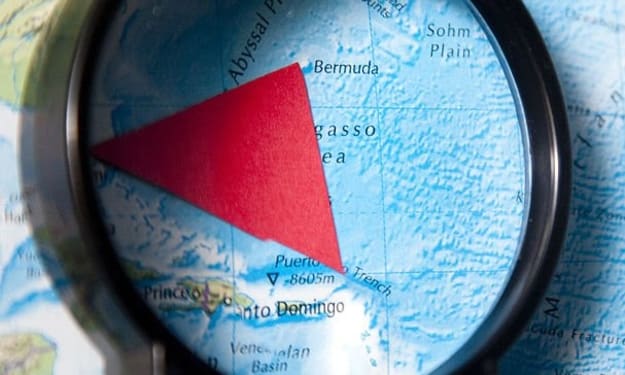
The Mysteries of the Bermuda Triangle: Fact, Fiction, and Fascination. AI-Generated.
The Bermuda Triangle, also referred to as the Devil's Triangle, is one of the most fascinating and enigmatic places on Earth. Spanning a loosely defined area in the Atlantic Ocean between Bermuda, Florida, and Puerto Rico, it has captivated the imagination of adventurers, scientists, and conspiracy theorists alike. Stories of mysterious disappearances, strange phenomena, and legends have built an aura of intrigue around this triangular stretch of ocean. While the Bermuda Triangle's reputation is partially based on myths, it continues to inspire curiosity and debate.
By Noob Hacker9 months ago in History
The Silent Scream of Smyrna: The Overlooked Massacre of 1922
The Silent Scream of Smyrna: The Overlooked Massacre of 1922 During the final moments of the Greco-Turkish War, an ancient metropolis that once prospered as a center of culture and commerce in the Mediterranean became the backdrop for a calamitous event that altered the trajectory of history: the Great Inferno of Smyrna. Currently known as İzmir in present-day Turkey, Smyrna was not only among the most affluent cities of the Ottoman Empire but also one of the most heterogeneous. Greeks, Armenians, Jews, and Turks coexisted for centuriesuntil 1922.
By Say the truth 9 months ago in History
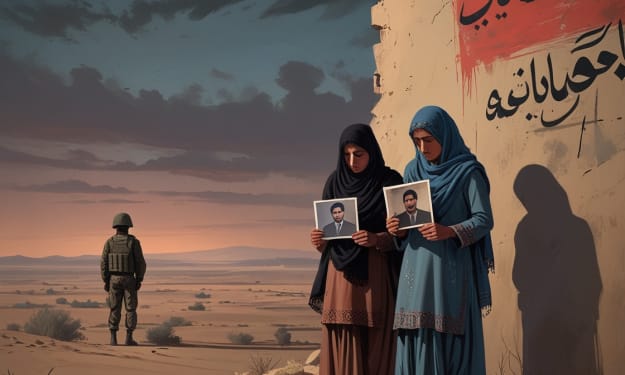
Silent Genocide: The Hidden Massacre of Balochistan. AI-Generated.
The Concealed Afflictions: The Balochistan Massacre – An Overlooked Episode of Contemporary History In spite of being one of the least addressed atrocities of the contemporary period, the persistent turmoil and purported massacres in Balochistan stand as a distressing reminder of the muted agony of a populace ensnared in the realm of politics and power. This article reveals the concealed particulars of decades of discord in the Baloch region, examining its historical origins, political conflicts, and the human toll that persistspredominantly disregarded by international media and historical narratives.
By Say the truth 9 months ago in History
“The Children of Alexander: The Legacy, The Succession, and the Birth of New Empires”
When Alexander the Great died in 323 BCE in Babylon, he left behind the largest empire the world had ever seen—stretching from Greece to Egypt, across Persia and into the Indian subcontinent. But perhaps more striking than the size of his empire was the void he left behind: Alexander died without a clear, adult successor. What followed was a dramatic saga of betrayal, war, and the slow unraveling of a unified dream.
By Say the truth 9 months ago in History