Fiction
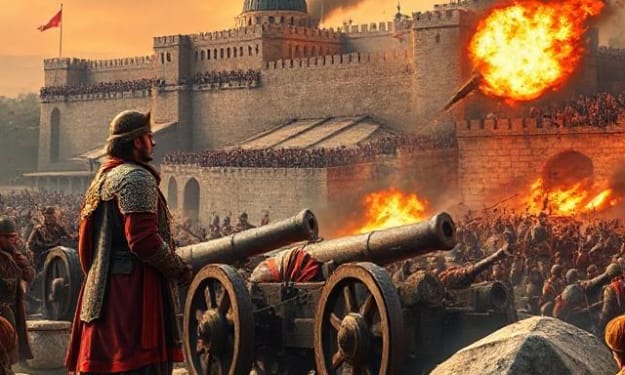
The Fall of Constantinople (1453)
The year is 1453, and the mighty Byzantine Empire, once a powerful force in the Mediterranean, stands on the verge of collapse. The city of Constantinople, its capital, has weathered countless invasions and sieges over the centuries, earning its reputation as one of the most formidable fortresses in the world. For over a thousand years, it has stood as a beacon of Christian power, the last remnant of the great Roman Empire, and a symbol of unyielding strength. Yet, by the mid-15th century, the empire is in decline. Its once vast territories are now a shadow of their former selves, and its economy is in shambles. Most of its lands are now occupied by foreign powers, leaving Constantinople isolated and vulnerable.
By Sadiq Muhammad9 months ago in History
Perfect brownies baked at high altitude are possible thanks to Colorado’s home economics pioneer Inga Allison
Many bakers working at high altitudes have carefully followed a standard recipe only to reach into the oven to find a sunken cake, flat cookies or dry muffins.
By Abjol Hussain Laskar9 months ago in History
The North-to-South Shift: Understanding the Impact of Northern Indian Migration to South India and How to Manage It . AI-Generated.
The North-to-South Transition: Comprehending the Effects of Northern Indian Migration to Southern India and Methods of Management
By Say the truth 9 months ago in History
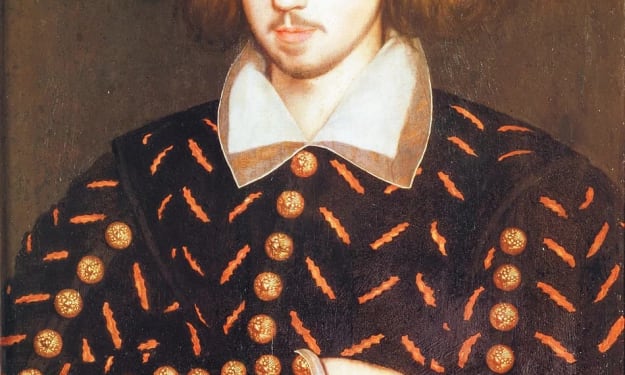
The Violent and Mysterious Death of Christopher Marlowe
Christopher Marlowe, one of Elizabethan England’s most enigmatic and brilliant playwrights, died young and under circumstances so suspicious that his death has become one of literary history’s most enduring mysteries. Known for his powerful blank verse and provocative themes, Marlowe’s meteoric rise in the late 16th century was matched only by the suddenness and violence of his demise.
By Abjol Hussain Laskar9 months ago in History
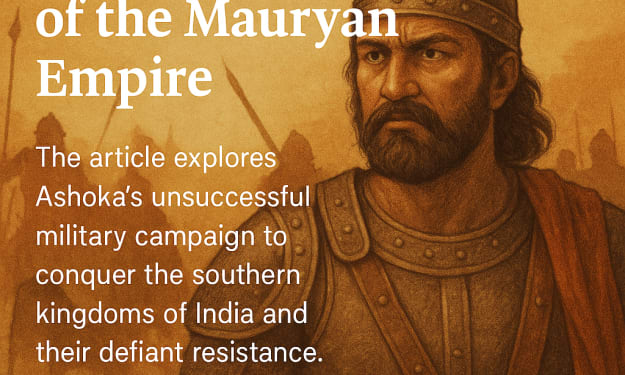
The Defeat of the Mauryan Empire: Ashoka's Southern Failure. AI-Generated.
The Defeat of the Mauryan Empire: Ashoka’s Southern Campaign and the Unyielding South History often glorifies the victors—but in the sun-scorched landscapes of ancient South India, a lesser-known chapter tells the story of resistance, pride, and resilience. It is the tale of how the great Ashoka the Great, the mighty emperor of the Mauryan Empire, met his limits at the southern frontiers—brought low not by war-weariness or internal dissent, but by the fiery defiance of the South Indian kingdoms.
By Say the truth 9 months ago in History
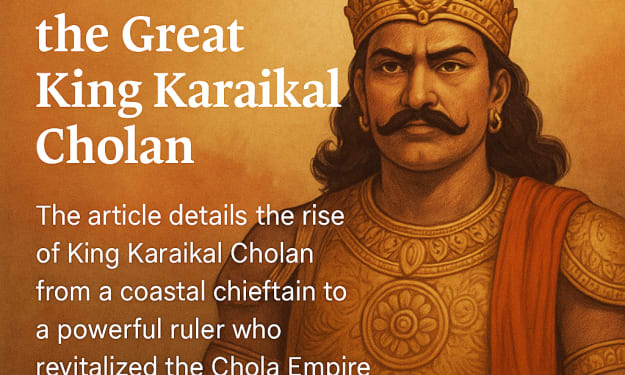
The Rise of the Great King Karaikal Cholan
The Ascent of the Great King Karaikal Cholan: Illuminator of the Chola Empire The chronicles of South Indian history are adorned with the bravery and magnificence of the Chola dynasty. Among its numerous prominent rulers, one name that has recently begun to surface from the shadows of time is King Karaikal Cholana sovereign whose journey from a coastal stronghold to imperial supremacy epitomizes endurance, foresight, and transformative governance.
By Say the truth 9 months ago in History
Nelson Mandela: A Legacy of Liberation, Reconciliation, and Hope
Nelson Mandela: A Legacy of Hope, Peace, and Liberation Nelson Rolihlahla Mandela, more commonly referred to as Madiba, is still regarded as an iconic figure from both the 20th and 21st centuries. His life is a source of inspiration for people all over the world who are working toward equality and human dignity. It is marked by unwavering dedication to justice, significant sacrifice, and an extraordinary capacity for forgiveness. Mandela's journey is a testament to the strength of the human spirit in the face of oppression, from anti-apartheid activist to political prisoner to first president of a democratic South Africa. Born on July 18, 1918, in the Eastern Cape of South Africa, Mandela's early life provided little indication of the monumental role he would play in shaping his nation's destiny. He learned about the systemic racial discrimination and injustice that black South Africans faced under the apartheid regime while attending the University of Fort Hare and local missionary schools. When he joined the African National Congress (ANC) in 1944, a liberation movement that was initially committed to non-violent resistance against apartheid laws, his activism took off in earnest. However, following the Sharpeville massacre in 1960, where peaceful protestors were brutally killed by police, Mandela and the ANC leadership concluded that armed struggle was a necessary last resort. He co-founded the ANC's military wing, Umkhonto we Sizwe ("Spear of the Nation"), which carried out sabotage against important government facilities. His arrest in 1962 and the infamous Rivonia Trial in 1964, in which he and other ANC leaders were charged with sabotage and conspiracy, were both as a result of this shift. His powerful speech from the dock, in which he said he was willing to die for the idea of a free and democratic society, was heard all over the world and made him into a symbol of resistance. Mandela was given a life sentence and spent the next 27 years in harsh conditions on Robben Island and other South African prisons. Mandela's influence only increased despite his imprisonment. The global anti-apartheid movement demanded his release and the end of the oppressive apartheid system, making him a global celebrity. Millions of people around the world were inspired by his unwavering resolve and refusal to compromise his values. Domestic and international pressure on the South African government increased toward the end of the 1980s. President F.W. de Klerk started reforms in the face of growing unrest and the realization that apartheid was unsustainable. These reforms led to Mandela's unconditional release on February 11, 1990. Mandela was a key player in the delicate negotiations for a peaceful transition to a multiracial democracy after his release. Together with de Klerk, he worked tirelessly to end apartheid laws, free political prisoners, and create a framework for free and fair elections. In 1993, they were awarded the Nobel Peace Prize for their collective efforts in navigating this difficult period. Nelson Mandela became the nation's first black president after its first democratic elections were held in 1994. His presidency was marked by a dedication to nation-building and reconciliation. He advocated for the Truth and Reconciliation Commission, a ground-breaking initiative that encouraged a process of healing and comprehension by allowing both perpetrators and victims of apartheid-era violence to share their experiences. His government also prioritized addressing the deep-seated inequalities created by apartheid, implementing policies aimed at improving housing, education, healthcare, and economic opportunities for the black majority. Mandela's leadership was marked by pragmatism, inclusivity, and a profound commitment to the well-being of all South Africans, despite the enormous challenges he faced. Mandela voluntarily resigned from office in 1999 after serving one term, establishing a significant precedent for democratic leadership in Africa. However, he continued to be an active global statesman, working through the Nelson Mandela Foundation to promote peace, human rights, and the fight against HIV/AIDS. On December 5, 2013, Nelson Mandela passed away at the age of 95. Global mourning surrounded his passing, but his legacy continues to inspire. In addition to his brave resistance to apartheid, he is remembered for his extraordinary capacity for forgiveness, his dedication to reconciliation, and his unwavering belief in the possibility of a just and equitable world. Mandela's legacy reaches far beyond South Africa's borders. He stands as a symbol of hope for oppressed people everywhere, a testament to the power of perseverance, and an enduring reminder that even the most entrenched systems of injustice can be overcome through courage, determination, and a commitment to human dignity. His life is a powerful example of the significance of dialogue, comprehension, and the pursuit of a shared humanity in constructing a better future for everyone. Canvas
By Tafsirul Talukdar luvdo9 months ago in History
The Girl in My Heart's Garden
When I was younger, I was quite shy. The world was too bright, too noisy, and too overwhelming all the time. I tried to stay away from people, especially women. Their voices were like songs I was too nervous to dance to, and their laughter was like bells I couldn't answer. I was raised in the city, surrounded by glass and concrete, where feelings were tucked away like private letters. The windowpane through which I observed life passing by served as my closest confidante, literature as my companions, and solitude as my haven.
By nurul alam9 months ago in History
"Kalani Dam: A Reservoir of Legacy, Power, and Prosperity". AI-Generated.
Kalani Dam: A Reservoir of Energy, Heritage, and Abundance Situated amid the rolling landscape of South India, the Kalani Damfrequently misidentified or confused with similarly named structuresserves as a fictional yet emblematic illustration of the numerous historical water management achievements in Tamil Nadu. This article fuses genuine engineering traditions with imaginative fiction to investigate the dam's inception, purpose, and how its projected value in natural resources and infrastructure exemplifies India's ancient and current proficiency in hydraulic engineering.
By Say the truth 9 months ago in History