
Machu Picchu in Modern Times: Legacy, Wealth, and Global Significance
Machu Picchu, the famed Incan citadel, stands not only as a symbol of Peru’s ancient heritage but also as a significant modern asset. This article explores the city's rediscovery, its transformation into a global tourism icon, and its immense economic and cultural value today. We delve into how Machu Picchu contributes to Peru’s national identity, the challenges of conservation, and its estimated worth in both financial and historical terms, revealing how this ancient marvel continues to shape global interest and local prosperity in the modern era.

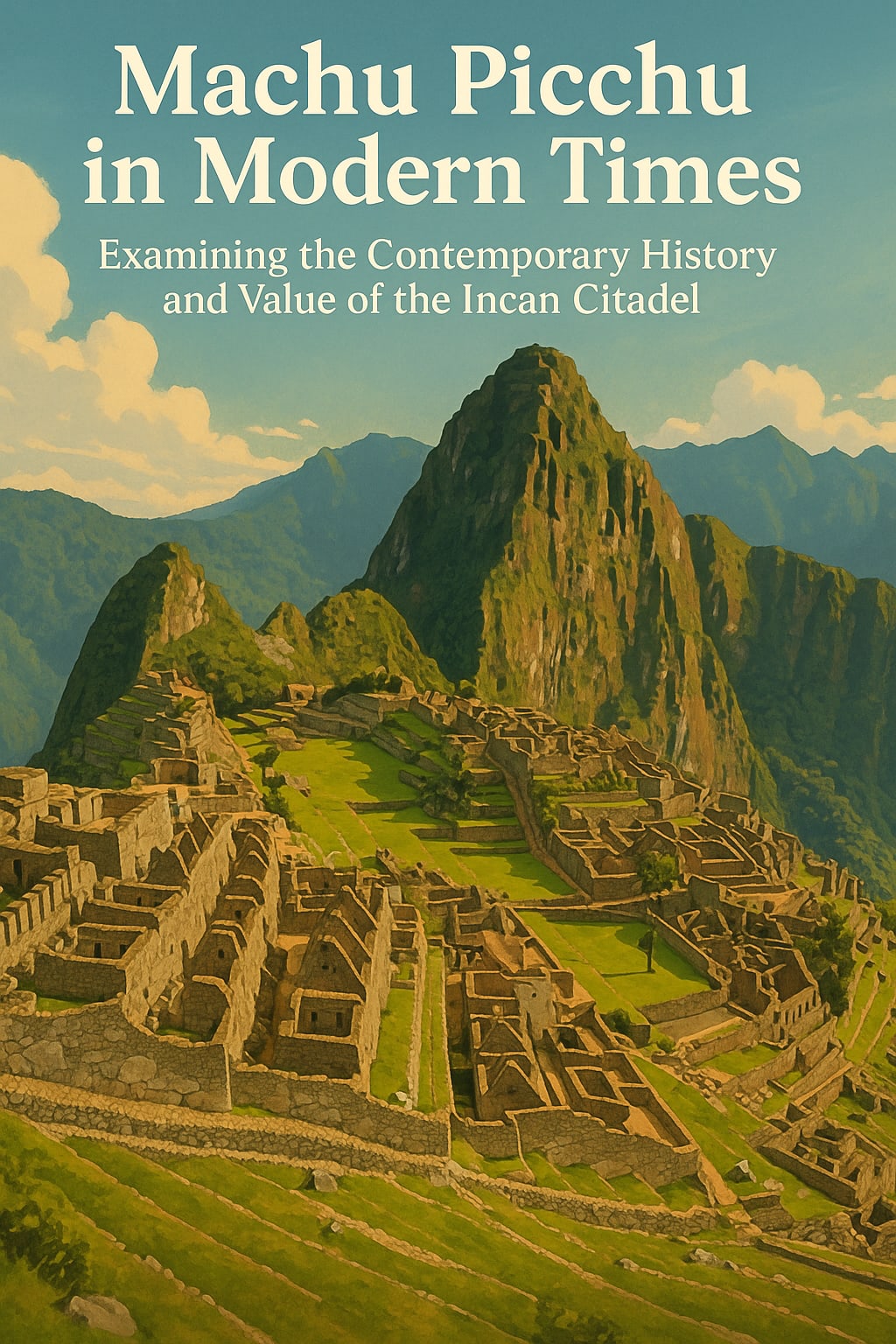
Machu Picchu in the Contemporary Era: Safeguarding the Incan Marvel for Posterity
Once a disregarded fortress hidden within the jungle, Machu Picchu has emerged as a universal emblem of ancient innovation and natural splendor. Rediscovered in 1911, it now stands as a significant cultural and economic emblem for Peru. This article examines how Machu Picchu’s contemporary narrative has progressedfrom archaeological unearthing and tourism expansion to its lasting significance and the global initiatives aimed at preserving it for future generations.
Introduction: A City Transformed
Machu Picchu, frequently labeled as the “Lost City of the Incas,” was not constructed in recent times, yet its genuine acclaim and significance only surfaced during the contemporary era. Concealed high in the Andes Mountains of Peru, this breathtaking stone metropolis remained largely unrecognized by the outside world until its rediscovery in the early 20th century. Since that time, Machu Picchu has experienced an extraordinary evolutionfrom an overlooked relic to one of the most frequented and photographed sites on Earth.
Rediscovery and Archaeological Significance
In 1911, American adventurer Hiram Bingham was guided to the location by local farmers and Peruvian interpreters. He was astounded by his discoveriesstone edifices, terraces, and shrines enveloped by jungle vegetation yet remarkably preserved. Bingham’s writings and photographs garnered international interest in the Incan civilization and incited decades of archaeological exploration.
In subsequent years, contemporary archaeologists have employed technologies such as LiDAR scanning and 3D modeling to map the landscape and comprehend Inca construction methods. These findings not only reveal advanced engineering and astronomy but have transformed our perspective of pre-Columbian societies as more complex than previously assumed.
Machu Picchu and the Emergence of Global Tourism
As Peru enhanced its transportation infrastructure in the mid-20th century, Machu Picchu became increasingly reachable. The inauguration of railway lines, hiking paths like the Inca Trail, and helicopter excursions transformed the previously secluded site into a vibrant center for global tourism.
By the early 2000s, Machu Picchu was welcoming over a million visitors each year. To safeguard the ancient structures from the adverse effects of overtourism, the Peruvian government and UNESCO instituted stringent visitor regulations. Contemporary conservation initiatives now strive to harmonize economic prospects with cultural preservation.
Cultural Emblem and National Identity
In contemporary Peru, Machu Picchu signifies more than a tourist destinationit represents indigenous heritage and national pride. It features on Peruvian currency, in educational materials, and in international relations as a symbol of the country's pre-colonial magnificence.
In 2007, it was designated as one of the New Seven Wonders of the World, further reinforcing its global cultural significance. Artists, filmmakers, authors, and historians frequently cite the site as an emblem of resilience, intrigue, and architectural excellence.
Present-Day Challenges and Preservation
Ensuring the preservation of Machu Picchu for future generations has become an essential objective in recent years. Concerns have emerged from:
Erosion and Landslides: Resulting from pedestrian traffic and natural deterioration.
Tourism Impact: Overcrowding and unauthorized tours.
Climate Change: Variations in rainfall and temperature threaten the stability of the stone.
To tackle these challenges, Peru has collaborated with UNESCO and environmental organizations to establish sustainable tourism frameworks. Satellite surveillance, digital tourism platforms, and staggered entry timelines assist in alleviating stress on the site.
Economic and Cultural Value in Contemporary Times
Currently, Machu Picchu generates over $1. 5 billion each year for Peru’s economy. Beyond monetary aspects, its cultural significance is incalculable. It attracts scholars, spiritual seekers, artists, and history enthusiasts from around the globe.
There are ongoing conversations regarding digital preservationdeveloping intricate 3D models and virtual reality experiences to ensure that future generations can explore Machu Picchu even if physical travel becomes unattainable.
Conclusion: Machu Picchu as a Living Heritage
Although Machu Picchu is founded on ancient stone, its legacy continues to progress in contemporary times. It serves as a site where history and modernity convergea testament to human creativity, resilience, and the ability of history to motivate future generations. As the world becomes increasingly interconnected and aware of its cultural legacies, Machu Picchu remains prominent, not solely as an Inca artifact but as a vibrant emblem of global harmony and awe.
About the Creator
Say the truth
"Say the Truth: Explain Everything in the World" is your trusted source for uncovering facts and exploring the wonders of history, science, technology, and beyond. We simplify complex ideas and reveal truths to inspire curiosity .
Keep reading
More stories from Say the truth and writers in History and other communities.
The Billion-Dollar Revival: Building the Great Pyramid in the Modern Era
"Pyramids Reimagined: The Estimated Expense of Constructing the Great Pyramid Today" The Great Pyramid of Giza remains one of humanity’s most remarkable architectural achievements, a tribute that has evoked awe for over 4,500 years. However, what if we were to construct it in the present day? This comprehensive article examines the building techniques of ancient Egypt and contrasts them with contemporary advancements, calculating an estimated value for a 21st-century reconstruction. Through an extensive evaluation of labor, materials, transportation, and project management, we determine the expense, purpose, and symbolic significance of a modern pyramid inspired by the original.
By Say the truth 9 months ago in History
3 Real People Who Accidentally Became Myths
History has a strange habit of refusing to leave certain people alone. Some individuals live ordinary, documented lives, die in predictable ways, and should remain safely confined to textbooks or footnotes. Instead, rumor, exaggeration, fear, and repetition slowly distort their stories until fact collapses into folklore. Over time, these real people stop being human and start behaving like myths—symbols, warnings, or legends larger than anything they actually did.
By Enoch Sagini4 days ago in History
Rachel Reviews: The Spiral Archive by Pieter Hendrik
It's difficult for me to know where to start with a review of this book as it was, for me, an entirely unique experience and one that I'll probably never have again. I don't want that to be interpreted as unenjoyable but it has left me scratching my head a little and ruminating on its content, its themes and its characters.
By Rachel Deemingabout 14 hours ago in BookClub


Comments (1)
Such a nice exploration from along the history.