Ancient
The Mummy of Queen Nodjmet: A Glimpse into Egypt's 21st Dynasty
In the world of ancient Egyptian history, Queen Nodjmet’s mummy stands as a stunning relic that offers a vivid glimpse into the lives of the royal figures who once ruled along the banks of the Nile. Preserved over three thousand years, her remains reveal a fascinating story about life, death, and belief in the afterlife in Egypt’s 21st Dynasty, around 1000 BC. Nodjmet, known as the "Black Queen" for her carefully braided hair, was an influential queen whose lineage and legacy remain of significant interest to Egyptologists and historians alike.
By Deji Akomolafeabout a year ago in History
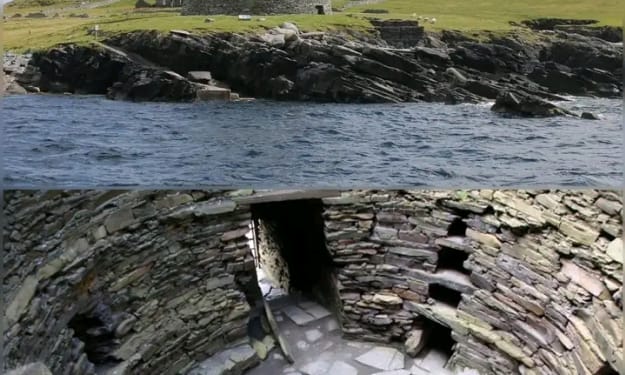
Mousa Broch: A Remarkable Legacy of Iron Age Scotland on Shetland’s Remote Shores
On the rugged Shetland island of Mousa, standing amidst wild landscapes and facing the relentless North Sea, lies a structure so ancient and well-preserved that it has captivated historians, archaeologists, and travelers alike. Mousa Broch, an architectural marvel of Iron Age Scotland, was constructed around 300 BC and has withstood more than two thousand years of weather, human activity, and change. Rising an impressive 43 feet (13 meters) high, Mousa Broch is one of the best-preserved broch structures in Scotland, offering a remarkable insight into ancient life and engineering.
By Deji Akomolafeabout a year ago in History
Dunluce Castle: The Haunting Beauty and Storied Past of Northern Ireland’s Cliffside Fortress
Perched dramatically on the edge of a basalt cliff overlooking the North Atlantic, Dunluce Castle stands as one of Northern Ireland’s most iconic medieval ruins. With a history spanning centuries, marked by feuds, fierce storms, and a series of notable inhabitants, Dunluce Castle is as much a testament to Ireland’s turbulent past as it is a symbol of enduring beauty. Built in the 13th century, Dunluce has captivated onlookers for generations, drawing visitors who come for its breathtaking views and a tangible sense of history that permeates the crumbling stone walls.
By Deji Akomolafeabout a year ago in History
10 Ancient Artifacts That Changed the World
Ancient artifacts have the power to unlock secrets from the past, alter our understanding of history, and inspire advancements in modern society. Here are 10 of the most impactful ancient artifacts that changed our world forever.
By Zahra Syedabout a year ago in History
Andromeda
Andromeda was the princess of Aethiopia and the wife of Perseus. Together, they founded Mycenae – the city after which the entire Mycenaean Age was named – and the Perseid Dynasty, making her the ancestress of Heracles, Castor and Pollux, Helen of Troy, and countless others.
By T. A. Bresabout a year ago in History
"The Serbian Dancing Lady: Urban Legend or Haunting Truth?"
The Serbian Dancing Lady is an burghal fable that has sparked artifice and agitation beyond amusing media platforms and accessible forums. According to tales and beholder reports, the abstruse figure, dressed in acceptable attire, appears at night, dancing eerily in the streets of Serbia. The accounts generally call her assuming abashing dances and reacting aggressively if approached.
By Say the truth about a year ago in History
"The Mystery of the Serbian Dancing Lady: Folklore or Frightening Reality?"
The Serbian Dancing Adult is an burghal fable that has captured boundless attention, decidedly beyond internet forums and amusing media platforms. Rooted in Serbian folklore, this adventure is both awesome and captivating, bidding concern and caution. The account about centers on letters of a abstruse woman apparent dancing abandoned in the streets during the backward hours of the night.
By Say the truth about a year ago in History
The Legendary Journey of Eight Andalusian Adventurers: Al-Idrisi’s Account of the Voyage Beyond the Sea of Darkness
The annals of history are brimming with stories of courage, curiosity, and the quest for knowledge. One of the most fascinating yet lesser-known tales comes from Al-Idrisi, the 12th-century Arab geographer and scholar. This narrative recounts the daring voyage of eight young men from Andalusia who set sail into the vast and mysterious Atlantic Ocean, referred to at the time as the "Sea of Darkness" (Bahr al-Zulumat). Their journey remains an evocative chapter in the chronicles of exploration and has sparked intrigue among historians, scholars, and enthusiasts of medieval seafaring tales.
By mariam elghazalyabout a year ago in History
The Library of Celsus: An Architectural Marvel of Ancient Ephesus
Nestled within the ancient city of Ephesus, now located in modern-day Turkey, stands the remarkable Library of Celsus, a structure celebrated for its architectural grandeur and historical significance. This library, constructed during the height of the Roman Empire, is a rare surviving example of the great libraries that once dotted the ancient world. Built in the 2nd century AD, the Library of Celsus is more than just a collection of texts and scrolls; it is a testament to the Roman appreciation for learning, beauty, and public life, with intricate architectural details that captivate historians and tourists alike to this day.
By Deji Akomolafeabout a year ago in History
Unearthing History: The Story of the Roman Ship "De Meern 1"
In 1997, a remarkable discovery was made in Veldhuizen, a small town in The Netherlands, that shed new light on the history of Roman expansion and trade in northern Europe. During a routine excavation, archaeologists stumbled upon the remains of a Roman ship, later named "De Meern 1." Lying near the ancient boundary of the Roman Empire and Germania, this ancient vessel offers a fascinating glimpse into the lives of the people who lived and traded along the empire's frontiers nearly two thousand years ago.
By Deji Akomolafeabout a year ago in History
The Mysteries of King Arthur’s Hall: A Neolithic Monument Uncovered on Bodmin Moor
In a remarkable breakthrough, archaeologists have recently uncovered stunning new evidence about King Arthur’s Hall on Bodmin Moor, Cornwall. This site, long thought to be medieval in origin, has now been dated back approximately 5,500 years, pushing its construction to the Neolithic period. This fascinating find not only redefines the historical timeline of King Arthur’s Hall but also opens up new questions about the ancient peoples who once roamed Bodmin Moor and the mysteries that lie beneath its rugged landscape.
By Deji Akomolafeabout a year ago in History