
Mousa Broch: A Remarkable Legacy of Iron Age Scotland on Shetland’s Remote Shores
Scotland's Ancient Structure

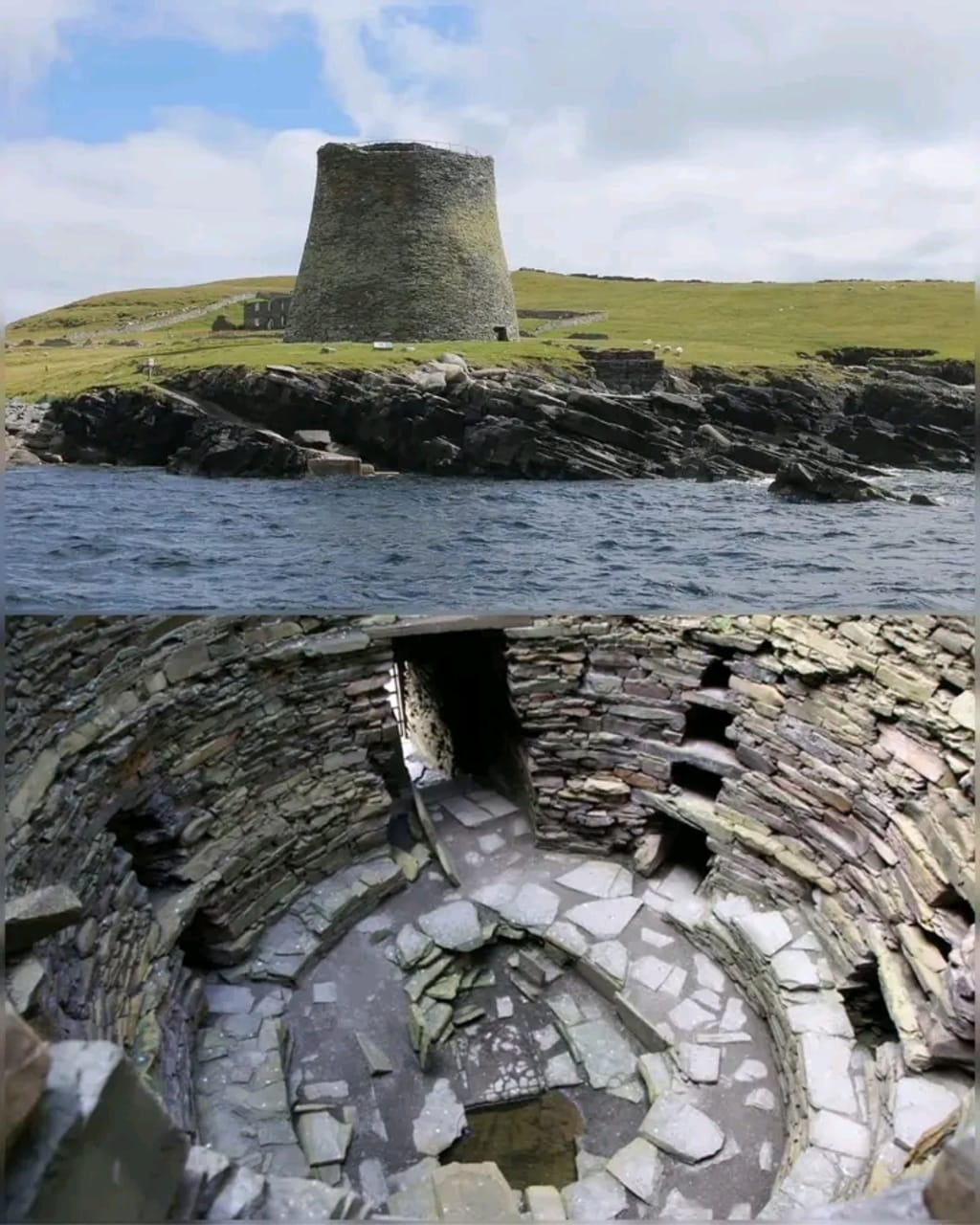
On the rugged Shetland island of Mousa, standing amidst wild landscapes and facing the relentless North Sea, lies a structure so ancient and well-preserved that it has captivated historians, archaeologists, and travelers alike. Mousa Broch, an architectural marvel of Iron Age Scotland, was constructed around 300 BC and has withstood more than two thousand years of weather, human activity, and change. Rising an impressive 43 feet (13 meters) high, Mousa Broch is one of the best-preserved broch structures in Scotland, offering a remarkable insight into ancient life and engineering.
What is a Broch?
Brochs are unique to Scotland and serve as a defining feature of the Iron Age in the region. Found mainly in the north and west, these drystone towers were circular buildings with thick walls made entirely without mortar. Brochs were often constructed along coastlines, providing strategic vantage points against potential invaders. While their exact purpose remains a topic of debate, brochs are generally thought to have served as defensive structures or high-status dwellings, designed to protect inhabitants from external threats. Their construction represents a sophisticated understanding of engineering, as they were able to withstand the elements and remain standing for centuries.
The Construction of Mousa Broch
What makes Mousa Broch particularly impressive is not just its height but also the precision and skill evident in its construction. Built without mortar, the broch is made up of stacked stones, carefully placed to create the towering walls that remain largely intact today. The circular structure features a double-wall design, with an interior staircase running between the outer and inner walls, allowing access to different levels of the broch. This design provided both structural strength and insulation, creating a space that would have been secure and, relatively speaking, comfortable even in Shetland’s often harsh weather.
The broch’s walls are nearly 16 feet thick at the base, tapering as they rise, which adds to its stability. The interior of the broch, though simple, would have been a refuge from the elements, offering a space where residents could keep warm and store supplies. The entrance is low and narrow, perhaps a deliberate design to make it easier to defend against attackers. Some historians believe that the structure could have functioned as a fortified home for an Iron Age chieftain or leader, signifying its importance as a residence or status symbol in the region.
The Strategic Location of Mousa Broch
The location of Mousa Broch was as much a defensive choice as it was a practical one. Positioned along the coast of Shetland’s Mousa island, the broch faces the North Sea, with views stretching across the water to nearby islands. This coastal positioning gave the broch’s inhabitants a vantage point from which they could observe approaching ships and potential threats. During the Iron Age, this remote and isolated position would have offered both security and access to the sea, a critical resource for fishing, trade, and travel.
Furthermore, the structure’s proximity to the sea likely provided an added defensive benefit. The rugged coastline and surrounding water acted as a natural barrier, making it difficult for invaders to reach the broch without being detected first. This location may also have facilitated contact with neighboring settlements or clans, strengthening alliances and trading networks in the region.
Mousa Broch in the Norse Sagas
Adding to its historical significance, Mousa Broch is even mentioned in Norse sagas, making it one of the rare prehistoric sites in Scotland with a place in medieval literature. In the Orkneyinga Saga, a Norse tale from the 13th century, the broch is described as a refuge for a Norwegian couple in the year AD 900. The story tells of a couple who, after a shipwreck, sought shelter in the broch from hostile forces. Their tale, preserved in the sagas, brings the broch to life as a symbol of protection and sanctuary, adding a layer of mythology and romance to its history. This connection to the Norse sagas underscores the broch’s importance not only to Iron Age communities but also to the Norse who later inhabited the region.
Mousa Broch Through the Centuries
While its primary function remains debated, Mousa Broch has served various purposes over the centuries, from shelter to stronghold to landmark. During the Iron Age, it would have been a center of community life, serving as a gathering place, residence, and possibly a defensive fortress. As time passed, the broch was abandoned, but its solid construction ensured that it remained intact, enduring through centuries of shifting tides, storms, and history.
In the centuries that followed, the broch became a focal point for local legends and a topic of interest among historians and archaeologists. Its exceptional state of preservation made it an invaluable site for understanding the Iron Age, and it has since been the subject of numerous archaeological studies. Today, Mousa Broch remains a national treasure, protected as a historic monument and visited by travelers who come to marvel at this ancient structure and experience its timeless atmosphere.
Visiting Mousa Broch Today
Today, Mousa Broch stands as one of Shetland’s most popular historical attractions, drawing visitors from around the world. A trip to Mousa requires a journey by boat, as the island remains remote and uninhabited. Visitors who make the trek are rewarded with a striking view of the broch rising from the rugged landscape, a sentinel against the sea that has stood for over two millennia.
Once on the island, visitors can explore the broch’s interior, ascending the narrow staircase within its double walls and stepping out to look over the surrounding landscape and ocean. The broch offers a glimpse into life in the Iron Age, with its ancient stones and remarkable engineering evoking a connection to the past. The experience of standing within Mousa Broch, surrounded by the same stone walls that shielded ancient inhabitants, is a powerful one, transporting visitors back in time.
Preserving a Legacy
Mousa Broch is an enduring symbol of resilience, a structure that has withstood the test of time and continues to inspire awe. Its preservation is crucial not only for understanding the Iron Age in Scotland but also for maintaining the connection between past and present. Protected as a scheduled monument, efforts are ongoing to ensure that the broch remains intact for future generations to study and enjoy.
As one of the most impressive examples of Iron Age architecture in Scotland, Mousa Broch represents the ingenuity, strength, and tenacity of ancient communities. It stands as a reminder of a time when people crafted their own fortresses and homes from the landscape itself, drawing upon skill, cooperation, and resilience to build structures that would endure across the ages.
About the Creator
Keep reading
More stories from Deji Akomolafe and writers in History and other communities.
Dunluce Castle: The Haunting Beauty and Storied Past of Northern Ireland’s Cliffside Fortress
Perched dramatically on the edge of a basalt cliff overlooking the North Atlantic, Dunluce Castle stands as one of Northern Ireland’s most iconic medieval ruins. With a history spanning centuries, marked by feuds, fierce storms, and a series of notable inhabitants, Dunluce Castle is as much a testament to Ireland’s turbulent past as it is a symbol of enduring beauty. Built in the 13th century, Dunluce has captivated onlookers for generations, drawing visitors who come for its breathtaking views and a tangible sense of history that permeates the crumbling stone walls.
By Deji Akomolafeabout a year ago in History
Chinese Water Torture
Since the dawn of history, human beings have inflicted unimaginable suffering upon one another. Across centuries, people have devised increasingly elaborate methods of punishment and coercion, some brutally explicit, others deceptively subtle. While devices such as iron maidens, racks, whips, and wheels relied on visible physical agony, there existed a form of torment whose true power lay not in blood or broken bones, but in patience, repetition, and the slow erosion of the mind. This method came to be known as Chinese water torture.
By Pure child2 days ago in History
Saddam Hussein: Rise, Rule, and Fall
Saddam Hussein was born on April 28, 1937, in a small village near Tikrit, Iraq. His early life was marked by poverty, hardship, and a sense of abandonment. His father died before he was born, and his mother remarried soon after. Young Saddam grew up in a household dominated by strict relatives and was exposed to political discussions and nationalist sentiments from an early age. These formative years shaped his personality—ambitious, ruthless, and fiercely determined to rise above his modest beginnings.
By The best writer 3 days ago in History




Comments
There are no comments for this story
Be the first to respond and start the conversation.