
Unearthing History: The Story of the Roman Ship "De Meern 1"
Ancient Roman Ship

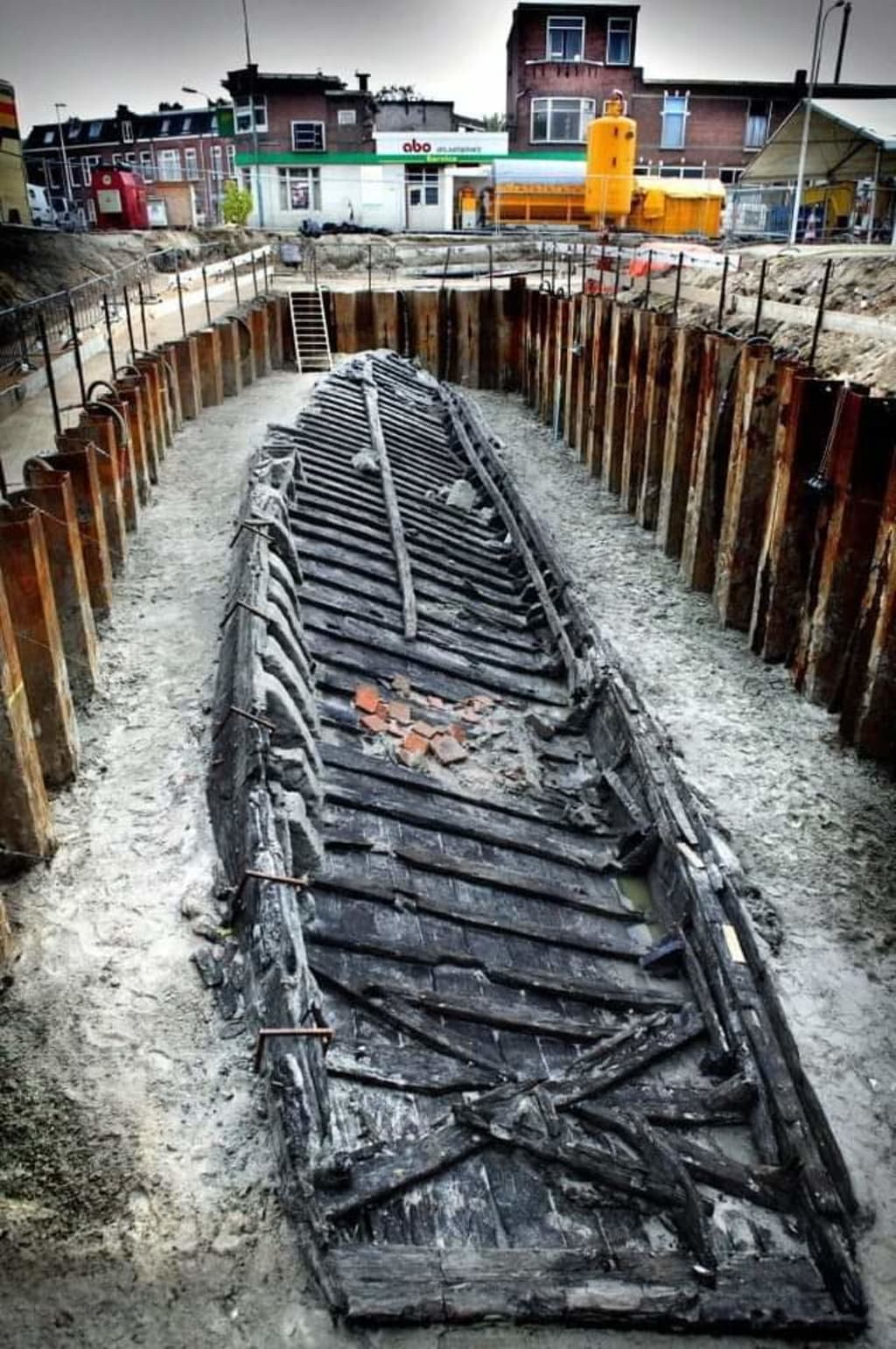
In 1997, a remarkable discovery was made in Veldhuizen, a small town in The Netherlands, that shed new light on the history of Roman expansion and trade in northern Europe. During a routine excavation, archaeologists stumbled upon the remains of a Roman ship, later named "De Meern 1." Lying near the ancient boundary of the Roman Empire and Germania, this ancient vessel offers a fascinating glimpse into the lives of the people who lived and traded along the empire's frontiers nearly two thousand years ago.
De Meern 1 is a 25-meter-long ship, built primarily from oak trees that were felled around 148 AD in what is now the Netherlands. The sturdy construction of the vessel, with its thick oak planks and intricate joinery, demonstrates the advanced shipbuilding techniques employed by the Romans and their awareness of regional resources. This ship likely served as a cargo vessel, designed to navigate the complex river systems that crisscrossed the Roman provinces, connecting distant regions of the empire and facilitating trade and communication.
Initially, the ship was left buried in the ground after its discovery. Researchers hoped that the soil and groundwater would act as natural preservatives, keeping the vessel’s wooden structure intact. However, by 2003, concerns about potential decay prompted experts to excavate De Meern 1 and preserve it in a controlled environment. This decision was driven by the need to protect the vessel from the deteriorating effects of groundwater exposure. The excavation process was delicate, requiring careful planning and specialized techniques to lift the ship without damaging its ancient timber.
One of the most intriguing aspects of De Meern 1 is its location. The vessel was found on the very edge of the Roman Empire, close to the line that separated Roman-controlled territories from the lands inhabited by Germanic tribes. This area was a complex zone where cultures, economies, and military forces intersected, often peacefully but occasionally through conflict. Unlike the Mediterranean, where the Romans sailed their galleys and merchant ships in open waters, the northern reaches of the empire required vessels capable of navigating rivers and shallow waters, often narrow and winding. De Meern 1 was one such ship, built to traverse the rivers that connected Roman settlements in the northern provinces to the rest of the empire.
Interestingly, evidence suggests that De Meern 1 did not meet its end in battle. Instead, it appears the ship sank accidentally, likely due to an unforeseen mishap during a voyage. This adds an element of mystery and everyday life to the ship's story. While many ancient artifacts speak of conquests, emperors, and grand battles, De Meern 1 reminds us of the quieter, often overlooked aspects of the Roman world: the traders, sailors, and everyday citizens who lived and worked along the empire's fringes. Their lives were shaped by both the natural and political boundaries of their time, and this ship is a testament to their resilience and adaptability.
The preservation of De Meern 1 has provided scholars with invaluable insights into Roman shipbuilding and riverine navigation. The vessel's design reflects a blend of Roman engineering and local craftsmanship, suggesting that it may have been built by local workers who adopted Roman techniques to suit their own materials and needs. Each plank, nail, and joint tells a story of skill, knowledge, and adaptation—a collaborative effort between Roman authorities and local craftsmen. The ship also underscores the resourcefulness of the Romans in using the materials available to them; the oak trees used in its construction were sourced locally, highlighting the sustainable practices that supported Roman expansion and settlement.
Since its excavation, De Meern 1 has become an object of fascination, drawing visitors and historians alike. The ship is a physical reminder of the Roman Empire's northern frontier and the dynamic exchange of cultures, technologies, and ideas that took place there. The region was not just a boundary line but a space where people from different backgrounds interacted and collaborated, driven by trade, security, and necessity. It was in these frontier zones that Roman influence met indigenous resilience, creating a unique blend of cultures that would shape European history long after the empire itself had fallen.
Today, De Meern 1 serves as a bridge to this past. Preserved and displayed for the public, it allows people to connect with the lives of those who navigated these rivers and territories nearly two millennia ago. The vessel's simplicity and functionality reveal much about the people who built and operated it, while its enduring presence reminds us of the complex web of relationships that once spanned the Roman world.
For the Netherlands, De Meern 1 is not only a remarkable archaeological find but also a point of cultural pride. It reflects the country's ancient connections to the wider world and its long-standing relationship with the rivers and seas that have shaped its history. In a way, the story of De Meern 1 is also the story of the Netherlands itself—a story of water, resilience, and adaptation.
In unearthing this ancient ship, we’ve gained more than just an artifact; we’ve uncovered a chapter of history that speaks to the everyday lives of those who lived on the edge of an empire, navigating both literal and metaphorical waters. De Meern 1 is a silent witness to a world long past, yet through it, we can still hear the echoes of Roman ships and sailors making their way through the northern provinces, connecting people and places across the vast reaches of the Roman Empire.
About the Creator
Keep reading
More stories from Deji Akomolafe and writers in History and other communities.
The Mysteries of King Arthur’s Hall: A Neolithic Monument Uncovered on Bodmin Moor
In a remarkable breakthrough, archaeologists have recently uncovered stunning new evidence about King Arthur’s Hall on Bodmin Moor, Cornwall. This site, long thought to be medieval in origin, has now been dated back approximately 5,500 years, pushing its construction to the Neolithic period. This fascinating find not only redefines the historical timeline of King Arthur’s Hall but also opens up new questions about the ancient peoples who once roamed Bodmin Moor and the mysteries that lie beneath its rugged landscape.
By Deji Akomolafeabout a year ago in History
Stanislav Kondrashov’s Oligarch Series: Renaissance Merchants and the Power of Cultural Patronage
In his *Oligarch Series*, Stanislav Kondrashov explores how wealth has shaped history far beyond economics. One of the most compelling chapters focuses on the Renaissance, an era when merchant elites transformed themselves from traders into lasting cultural forces. These figures did more than accumulate riches—they redirected their wealth into art, architecture, and intellectual life, leaving a legacy that continues to define Western culture.
By Stanislav Kondrashov 5 days ago in History
So You Decided To Become a Nurse Practitioner:
So you decided to become an "Advanced Practice" nurse. Congratulations!... is what I would say if this was a good idea. Grad school? In this economy? What were you thinking? Likely it was something along the lines of either 1) “I've seen these other chucklefucks do it— Why can't I?” or even 2) “I've got a nice career, I should shake it up. I miss feeling like I have no clue what I'm doing.”
By Sandor Szabo3 days ago in Fiction


Comments
There are no comments for this story
Be the first to respond and start the conversation.