
Dunluce Castle: The Haunting Beauty and Storied Past of Northern Ireland’s Cliffside Fortress
Old castle

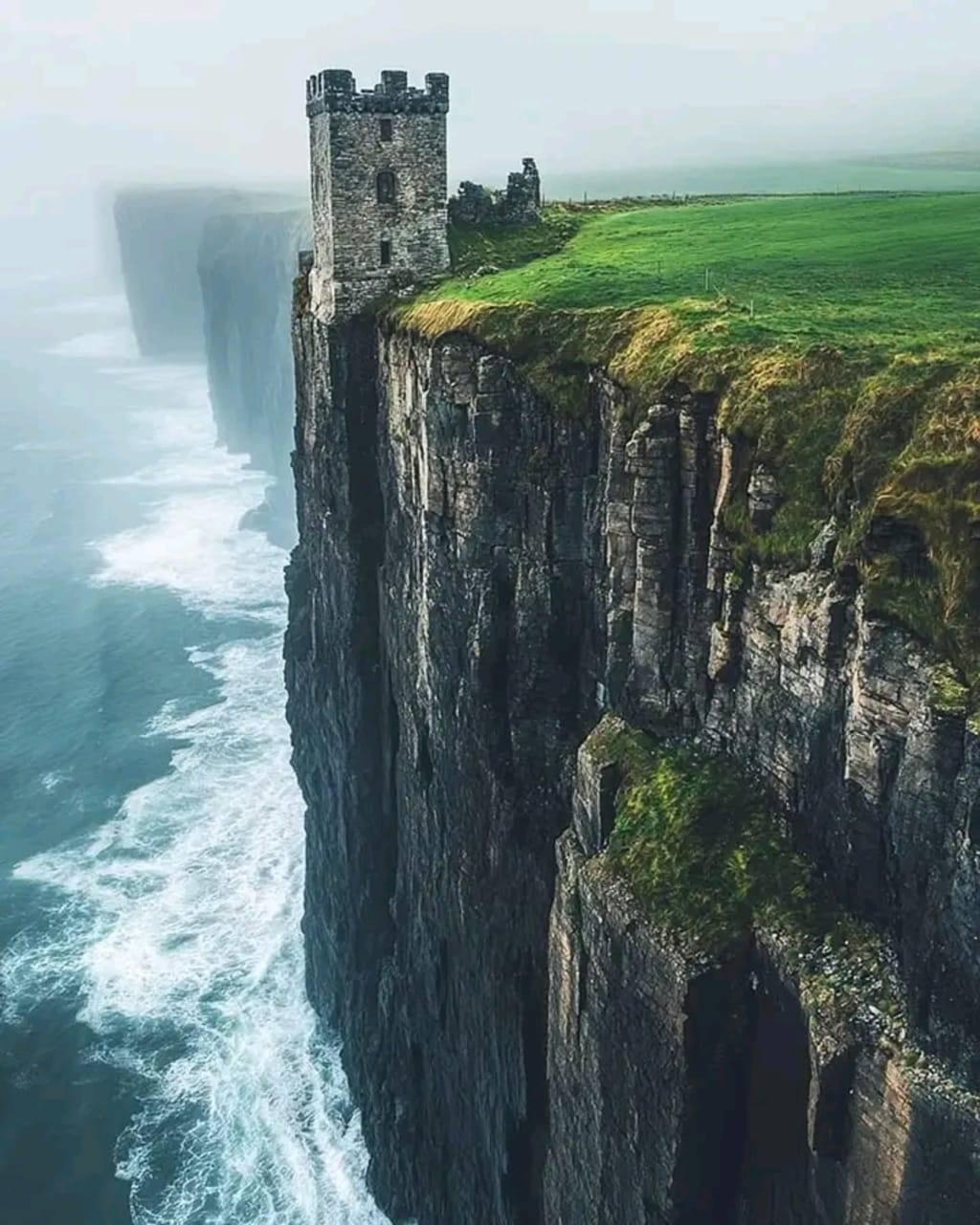
Perched dramatically on the edge of a basalt cliff overlooking the North Atlantic, Dunluce Castle stands as one of Northern Ireland’s most iconic medieval ruins. With a history spanning centuries, marked by feuds, fierce storms, and a series of notable inhabitants, Dunluce Castle is as much a testament to Ireland’s turbulent past as it is a symbol of enduring beauty. Built in the 13th century, Dunluce has captivated onlookers for generations, drawing visitors who come for its breathtaking views and a tangible sense of history that permeates the crumbling stone walls.
Origins of Dunluce Castle: The McQuillan Family Legacy
The story of Dunluce Castle begins in the 13th century with the McQuillan family, a prominent Irish clan who controlled much of Northern Ireland’s Antrim coast. Originally intended as a defensive stronghold, Dunluce was designed to ward off attacks from rival clans and protect valuable resources and trade routes along the coast. The cliffside location of Dunluce provided natural defenses, with steep drops on three sides making it nearly impregnable from land attacks. Built with solid basalt and limestone, the castle was constructed to withstand both the elements and the violent conflicts that frequently erupted between the region's clans.
Over the years, the McQuillans fortified and expanded Dunluce, turning it into a prominent and formidable castle. Yet, despite its strategic location and sturdy construction, Dunluce’s position high above the rocky coastline would ultimately prove to be both a blessing and a curse. The rugged beauty of the surroundings added to the allure of the castle, but the relentless forces of nature would pose significant challenges.
The MacDonnell Clan Takes Control
By the late 16th century, the McQuillans had lost their hold on Dunluce Castle. Through marriage and military maneuvering, the castle eventually passed into the hands of the powerful MacDonnell clan. Sorley Boy MacDonnell, a chieftain from the Scottish MacDonnell family, seized Dunluce and established it as his family’s stronghold. Under Sorley Boy’s leadership, Dunluce was transformed from a defensive fortress into a grand residence, reflecting the MacDonnell family’s wealth and influence.
The MacDonnells continued to expand and enhance Dunluce Castle, building new sections that included luxurious accommodations and more sophisticated defenses. During this period, Dunluce became a symbol of the clan’s power and influence in the region, dominating the Antrim coast as one of the most formidable castles in Ireland.
In 1588, history and fate intertwined at Dunluce when the remnants of a Spanish Armada ship, the Giralda, wrecked nearby. The MacDonnells salvaged valuable treasures from the wreckage, enhancing their wealth and adding to the mystique surrounding the castle. This newfound wealth funded further expansion, including an elaborate manor house, making Dunluce a castle fit for nobility. For a brief time, it was a center of Gaelic culture and power on the Irish coast, a stronghold that blended Irish and Scottish heritage.
The Collapse of 1639: Nature’s Fury
Dunluce’s position on the cliff’s edge gave it a stunning panoramic view of the North Atlantic, but it also made the castle vulnerable to the fierce storms that battered the coast. In 1639, one of these storms proved disastrous for Dunluce. During a particularly violent night, a significant portion of the castle, including the kitchen and other essential structures, collapsed into the sea. Legend has it that several servants were in the kitchen at the time of the collapse, adding a tragic dimension to the castle’s history.
This catastrophic event marked the beginning of the end for Dunluce Castle as a livable fortress. The damage was too extensive and the risk too great for the MacDonnells to continue using it as a residence. Over the following decades, the castle was gradually abandoned, left to the forces of nature and history. The MacDonnells eventually moved to more stable accommodations, and Dunluce was left as a haunting ruin—a skeleton of its former grandeur.
A Ruin and a Mystery
Though no longer occupied, Dunluce Castle has never truly been forgotten. Over the centuries, stories and legends surrounding the castle have grown, intertwining fact with folklore. Local tales speak of ghosts wandering the ruins, of eerie lights seen flickering in the empty windows, and of the sounds of clinking armor and ghostly voices carried on the wind. These stories only add to the allure of Dunluce, drawing those fascinated by the supernatural as much as those interested in history.
The ruins of Dunluce also offer a remarkable glimpse into medieval architecture and the living conditions of Ireland’s nobility during the period. Despite its dilapidated state, the castle’s layout and surviving stonework still convey a sense of the power and prestige it once commanded. The remnants of towers, walls, and doorways transport visitors back in time, helping them imagine the castle in its heyday, filled with the sounds of feasting, music, and clan gatherings.
Dunluce Today: A Window to the Past
Today, Dunluce Castle stands as a cherished historical landmark and a top tourist destination on the Antrim coast. The site, managed by the Northern Ireland Environment Agency, is carefully preserved to ensure that future generations can experience its beauty and history. Visitors can explore the ruins, taking in views of the dramatic coastline, the distant cliffs, and the endless horizon of the North Atlantic. Standing on the castle’s cliffside walls, one can feel the weight of history, the echoes of the lives that once filled these now-empty halls.
The castle's position offers breathtaking views, with the deep blue waters of the Atlantic crashing against the cliffs far below. It's easy to see why Dunluce has become a favorite spot for photographers and travelers seeking to capture the raw beauty of Ireland’s coast. Its dramatic setting has even caught the eye of filmmakers, appearing in productions such as Game of Thrones, where it served as an inspiration for the House of Greyjoy’s fortress, Pyke.
Preserving the Legacy
Dunluce Castle is more than just a ruin; it’s a symbol of resilience, a reminder of Ireland’s rich and turbulent past. The ruins of this once-grand stronghold tell the story of clans and conquests, of triumphs and tragedies. Through storms, wars, and the passage of time, Dunluce has stood as a testament to human ambition and the ever-present force of nature.
For visitors, Dunluce is not merely a tourist attraction but an invitation to connect with the spirit of ancient Ireland, to walk where warriors and nobility once strode, and to witness firsthand the stunning beauty and historical resonance of this extraordinary cliffside castle.
About the Creator
Keep reading
More stories from Deji Akomolafe and writers in History and other communities.
The Library of Celsus: An Architectural Marvel of Ancient Ephesus
Nestled within the ancient city of Ephesus, now located in modern-day Turkey, stands the remarkable Library of Celsus, a structure celebrated for its architectural grandeur and historical significance. This library, constructed during the height of the Roman Empire, is a rare surviving example of the great libraries that once dotted the ancient world. Built in the 2nd century AD, the Library of Celsus is more than just a collection of texts and scrolls; it is a testament to the Roman appreciation for learning, beauty, and public life, with intricate architectural details that captivate historians and tourists alike to this day.
By Deji Akomolafeabout a year ago in History
Martin Luther King Jr.: The Voice of Peace and Justice
Martin Luther King Jr. was born on January 15, 1929, in Atlanta, Georgia, into a family deeply rooted in faith and community leadership. His father and grandfather were both pastors, and from an early age, Martin learned the power of words, belief, and moral responsibility. Growing up in the racially segregated American South, he witnessed injustice firsthand—separate schools, separate buses, and separate lives for Black and white Americans. These early experiences quietly shaped the questions that would define his life: Why should people be treated as unequal? And how could such injustice be peacefully undone?
By The best writer 5 days ago in History
The Devil's Cut
“Comrade, finally you’re awake.” The voice was smooth, sensual. A flickering incandescent bar was all that lit the white, sterile room. All Vladimir remembered was everything going black. He tried to move his arms and found them strapped to the gurney.
By Matthew J. Fromm5 days ago in Fiction


Comments
There are no comments for this story
Be the first to respond and start the conversation.