
The Mysteries of King Arthur’s Hall: A Neolithic Monument Uncovered on Bodmin Moor
Ancient England

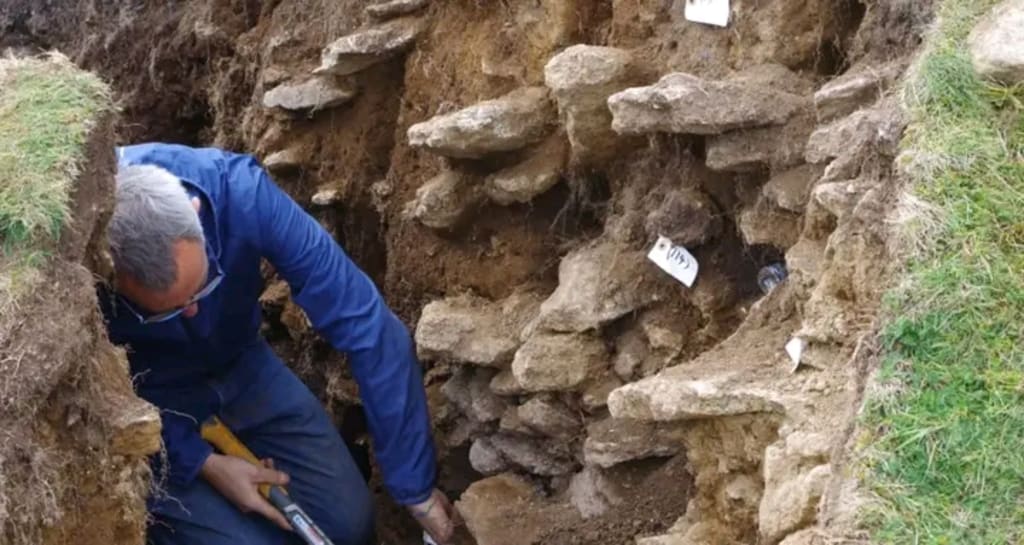
In a remarkable breakthrough, archaeologists have recently uncovered stunning new evidence about King Arthur’s Hall on Bodmin Moor, Cornwall. This site, long thought to be medieval in origin, has now been dated back approximately 5,500 years, pushing its construction to the Neolithic period. This fascinating find not only redefines the historical timeline of King Arthur’s Hall but also opens up new questions about the ancient peoples who once roamed Bodmin Moor and the mysteries that lie beneath its rugged landscape.
A Landmark Discovery on Bodmin Moor
King Arthur’s Hall has always intrigued historians and archaeologists alike, with its massive granite stones forming a rectangle—a unique layout that has inspired stories of knights, kings, and ancient rituals. For years, the site’s origins were debated, with many assuming it was a medieval structure, perhaps linked to Arthurian legends or ancient rituals of chivalry. However, this recent archaeological project, conducted by Historic England and experts from UK universities, has turned that assumption on its head.
Using state-of-the-art dating techniques such as radiocarbon dating and Optically Stimulated Luminescence (OSL), the team uncovered conclusive evidence that King Arthur’s Hall dates back to the Neolithic era, around 3,500 BCE. These tests, alongside analyses of pollen, insect remains, and other soil samples, painted a vivid picture of a site that has stood through the ages, surviving extreme weather, erosion, and human impact.
What Was King Arthur’s Hall? New Theories Emerge
The Neolithic period in Britain is known for its monumental structures, such as Stonehenge and Avebury, sites often linked to early religious or ceremonial practices. The discovery that King Arthur’s Hall belongs to this era suggests it may have held significant cultural or spiritual importance. However, the true purpose of the site remains elusive. Some archaeologists have posited that it could have been an animal pound, a meeting place, or even a reservoir due to its unique structural features.
The hall is bordered by granite stones believed to be sourced from nearby quarries, emphasizing that the Neolithic people who built it possessed an intimate knowledge of the local landscape and resources. Unlike typical Neolithic monuments, which often feature circular arrangements of standing stones, King Arthur’s Hall has a rectangular layout. This distinct shape could indicate a different use or even a different cultural group from those who built other well-known Neolithic sites in Britain.
Advanced Archaeological Techniques Reveal Ancient Secrets
To uncover the true age of King Arthur’s Hall, archaeologists used cutting-edge techniques. Radiocarbon dating, widely regarded as the gold standard in dating organic materials, enabled researchers to accurately assess the age of pollen and plant remains trapped in the soil around the stones. OSL, another advanced technique, measures the last time sediment was exposed to sunlight, providing a reliable timeline for when the site may have been constructed.
These samples, combined with the sediment and stone arrangements, helped archaeologists determine not only the site’s age but also environmental details about Bodmin Moor thousands of years ago. The landscape was likely more forested, with wetter conditions that could have influenced its use, possibly as a reservoir or a holding area for livestock.
The Significance of Granite Stones in Neolithic Culture
Granite, a hard and durable material, is abundant on Bodmin Moor and was likely chosen for its strength and resilience against erosion. The stones at King Arthur’s Hall are distinct for their sheer size and weight, indicating that considerable effort went into sourcing and arranging them. This choice may have been symbolic as well as practical. In Neolithic Britain, standing stones were often imbued with spiritual or cultural significance, suggesting that the construction of King Arthur’s Hall could have held ritualistic or social importance.
The effort to place each of these stones in a structured rectangular layout speaks to the advanced knowledge and skill of Neolithic builders. It is not only a testament to their engineering abilities but also to their possible spiritual or cultural motivations for creating a lasting monument.
Challenges of Preserving King Arthur’s Hall
Despite its historic value, King Arthur’s Hall faces challenges today that threaten its preservation. Due to its exposed location on Bodmin Moor, the site is vulnerable to erosion from harsh weather conditions and vegetation growth. Foot traffic from visitors, unaware of its fragility, also contributes to its degradation, especially as its popularity rises following the recent discoveries. Historic England has placed King Arthur’s Hall on its At Risk Register, highlighting the urgent need for measures to protect the site from further damage.
Local organizations and conservation groups are working to ensure visitors are aware of the site’s delicate condition. Signage and informational boards encourage respectful tourism, while future plans may include limited access or controlled pathways to prevent unintentional harm.
A Legacy Rediscovered
The re-dating of King Arthur’s Hall to the Neolithic period has added a new chapter to Britain’s ancient history, highlighting a time when early civilizations were mastering monumental architecture and exploring their connection to the land. This discovery shifts the narrative of Bodmin Moor, establishing it as a site of cultural and historical depth that stretches back millennia. No longer just a medieval curiosity, King Arthur’s Hall stands as a witness to a distant past and a testament to the people who shaped it.
As archaeologists continue to study this incredible find, King Arthur’s Hall reminds us of the power of discovery and the importance of preserving our shared heritage. Each stone tells a story, each layer of soil holds a secret, and together they create a tapestry of history that spans thousands of years. For visitors, researchers, and historians alike, King Arthur’s Hall on Bodmin Moor remains an awe-inspiring link to Britain’s prehistoric legacy.
About the Creator
Keep reading
More stories from Deji Akomolafe and writers in History and other communities.
The Oldest House in France: A Glimpse into Medieval Life in Aveyron
Nestled in the charming countryside of Aveyron, France, stands an extraordinary piece of history: a 700-year-old house, believed to be the oldest in France. Built in the 13th century, this medieval residence, attributed to a woman named Jeanne, provides a captivating look into life in medieval France. Its age, architectural details, and ongoing restoration efforts have transformed it into a unique cultural treasure, preserving a way of life that otherwise may have been forgotten.
By Deji Akomolafeabout a year ago in History
12 American Flag Designs That Almost Changed History
The American flag is one of history’s most iconic symbols. Its red, white, and blue stripes, along with fifty stars, instantly represent freedom, democracy, and national pride. But did you know that the flag we all recognize today didn’t become official until 1960?
By Areeba Umair3 days ago in History




Comments
There are no comments for this story
Be the first to respond and start the conversation.