
The Library of Celsus: An Architectural Marvel of Ancient Ephesus
Ancient Roman Library

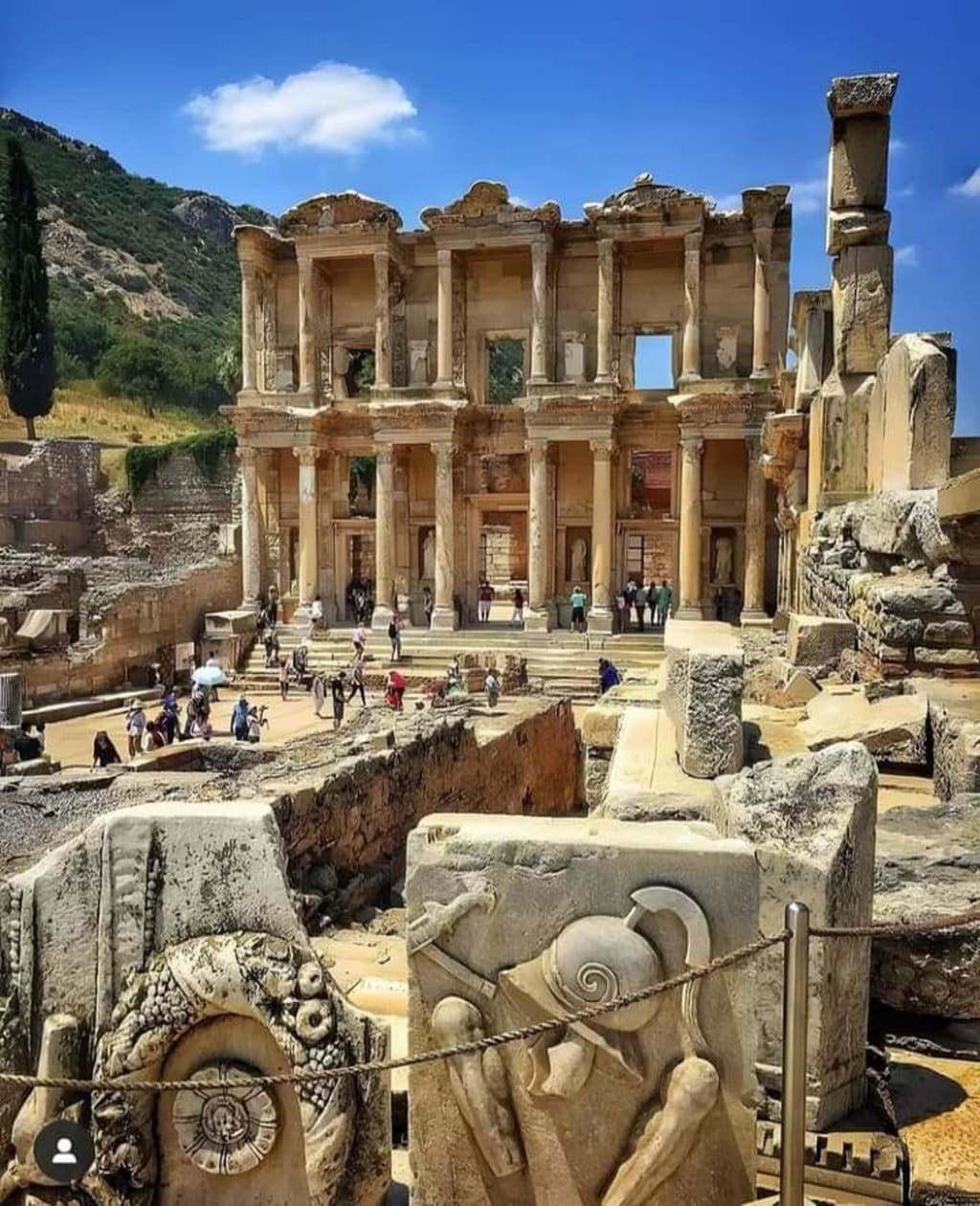
Nestled within the ancient city of Ephesus, now located in modern-day Turkey, stands the remarkable Library of Celsus, a structure celebrated for its architectural grandeur and historical significance. This library, constructed during the height of the Roman Empire, is a rare surviving example of the great libraries that once dotted the ancient world. Built in the 2nd century AD, the Library of Celsus is more than just a collection of texts and scrolls; it is a testament to the Roman appreciation for learning, beauty, and public life, with intricate architectural details that captivate historians and tourists alike to this day.
Origins and History
The library was built between 110 and 135 AD by Tiberius Julius Aquila in honor of his father, Tiberius Julius Celsus Polemaeanus, a former Roman senator and governor of the Asian province. Celsus had been a highly respected and influential figure, and his son sought to honor his legacy by commissioning a structure that would serve as both a library and a monumental tomb. Unlike other libraries of the time, which served exclusively as public spaces for reading and knowledge, the Library of Celsus also served as Celsus’s tomb. It is believed that his remains were laid to rest within a sarcophagus beneath the library, making it a unique blend of a cultural and commemorative space.
Architectural Significance
What makes the Library of Celsus particularly remarkable is its architectural design. With a two-story facade adorned with Corinthian columns, statues, and intricately carved details, the library stands as an example of Roman urban design and the Empire’s ability to blend utility with visual artistry. The facade is approximately 21 meters (69 feet) high and is flanked by several statues, each symbolizing wisdom, knowledge, and other virtues associated with intellectual pursuits. The placement of the columns and statues is not only decorative but also serves to create a visual illusion of grandeur and depth, making the library appear even larger than it is.
The use of these columns, along with the ornate carvings, exemplifies the fusion of Greek and Roman architectural styles, a hallmark of Roman public buildings during this period. The outer walls feature a sequence of niches filled with statues symbolizing the virtues most prized in Roman society—Sophia (wisdom), Arete (virtue), Ennoia (intellect), and Episteme (knowledge)—highlighting the importance the Romans placed on intellectual and moral values. The aesthetic beauty of the Library of Celsus, with its proportional symmetry and detailed ornamentation, makes it one of the most admired structures from ancient Ephesus.
A Center for Knowledge
While the primary purpose of the Library of Celsus was commemorative, it was also designed to house an impressive collection of scrolls, estimated to be as many as 12,000. Although this may seem modest compared to other grand libraries of the ancient world, like the Library of Alexandria, it was an invaluable resource for Ephesus, a bustling Roman provincial capital and center of commerce. The library not only supported the city’s intellectual community but also served as a place where citizens could gather, read, and engage in discussion.
Inside, the library featured a rectangular room with shelves and niches designed to hold the scrolls, while windows allowed natural light to flood the reading area. To protect the precious scrolls from humidity, which could damage the delicate papyrus material, the library was built with a clever ventilation system, an advanced feature that helped maintain the scrolls’ condition. The walls also had double layers to act as insulation, preventing excessive heat and moisture from damaging the scrolls. This attention to detail underscores the value that the Romans placed on the preservation of knowledge and their understanding of how to manage environmental factors.
The Library's Decline and Rediscovery
The Library of Celsus, like many of the world’s ancient wonders, fell victim to time and the forces of nature. The city of Ephesus began to decline in importance during the Byzantine period, and a series of earthquakes in the 3rd and 10th centuries AD caused extensive damage to the library and surrounding structures. By the time Ephesus was abandoned, the Library of Celsus had been reduced to ruins, with its once-grand facade buried under layers of sediment and debris.
In the 20th century, a team of archaeologists from Austria set out to restore the library’s facade, painstakingly piecing together its remnants from the rubble. The restoration efforts were successful, and today, the facade of the Library of Celsus stands as a beautiful reminder of its past splendor. While the interior and original scrolls were lost over time, the facade remains largely intact, allowing visitors to catch a glimpse of its former glory.
The Legacy of the Library of Celsus
The Library of Celsus has left a lasting legacy as an architectural marvel and a symbol of the intellectual vibrancy of the ancient Roman world. Its survival through millennia, despite natural and human-induced challenges, is a testament to the craftsmanship of Roman engineers and the cultural importance placed on knowledge and intellectual achievement. For visitors to Ephesus, standing before the Library of Celsus offers a tangible connection to history and a reminder of the timeless value of learning.
In the context of ancient libraries, which were often destroyed by fire, invasion, or decay, the Library of Celsus stands out as a rare survivor, capturing the elegance and ambition of the Roman Empire at its height. It is not just a place where knowledge was stored; it is a symbol of a society that revered wisdom and sought to preserve it for future generations. In this way, the Library of Celsus remains relevant, a monument to the enduring human quest for knowledge and the architectural beauty that can arise from such noble pursuits.
Today, the Library of Celsus continues to inspire awe and admiration as one of the most photographed and celebrated ruins in Ephesus, drawing visitors from around the world who marvel at its artistry and the historical narrative it embodies. It reminds us that the pursuit of knowledge and beauty is universal, transcending the boundaries of time and culture, and that even in ruin, the legacy of past civilizations continues to resonate.
About the Creator
Keep reading
More stories from Deji Akomolafe and writers in History and other communities.
Unearthing History: The Story of the Roman Ship "De Meern 1"
In 1997, a remarkable discovery was made in Veldhuizen, a small town in The Netherlands, that shed new light on the history of Roman expansion and trade in northern Europe. During a routine excavation, archaeologists stumbled upon the remains of a Roman ship, later named "De Meern 1." Lying near the ancient boundary of the Roman Empire and Germania, this ancient vessel offers a fascinating glimpse into the lives of the people who lived and traded along the empire's frontiers nearly two thousand years ago.
By Deji Akomolafeabout a year ago in History
The Year 1901 in Review: Fun Facts, Trivia, and Historic Highlights
This quick read is a collection of fun facts, trivia, and historic events from the year 1901. Discover the year’s top news stories, most influential people, sports facts, notable inventions, and much more.
By Gregory DeVictor5 days ago in History




Comments
There are no comments for this story
Be the first to respond and start the conversation.