
The Legendary Journey of Eight Andalusian Adventurers: Al-Idrisi’s Account of the Voyage Beyond the Sea of Darkness
The Legendary Journey of Eight Andalusian Adventurers: Al-Idrisi’s Account of the Voyage Beyond the Sea of Darkness

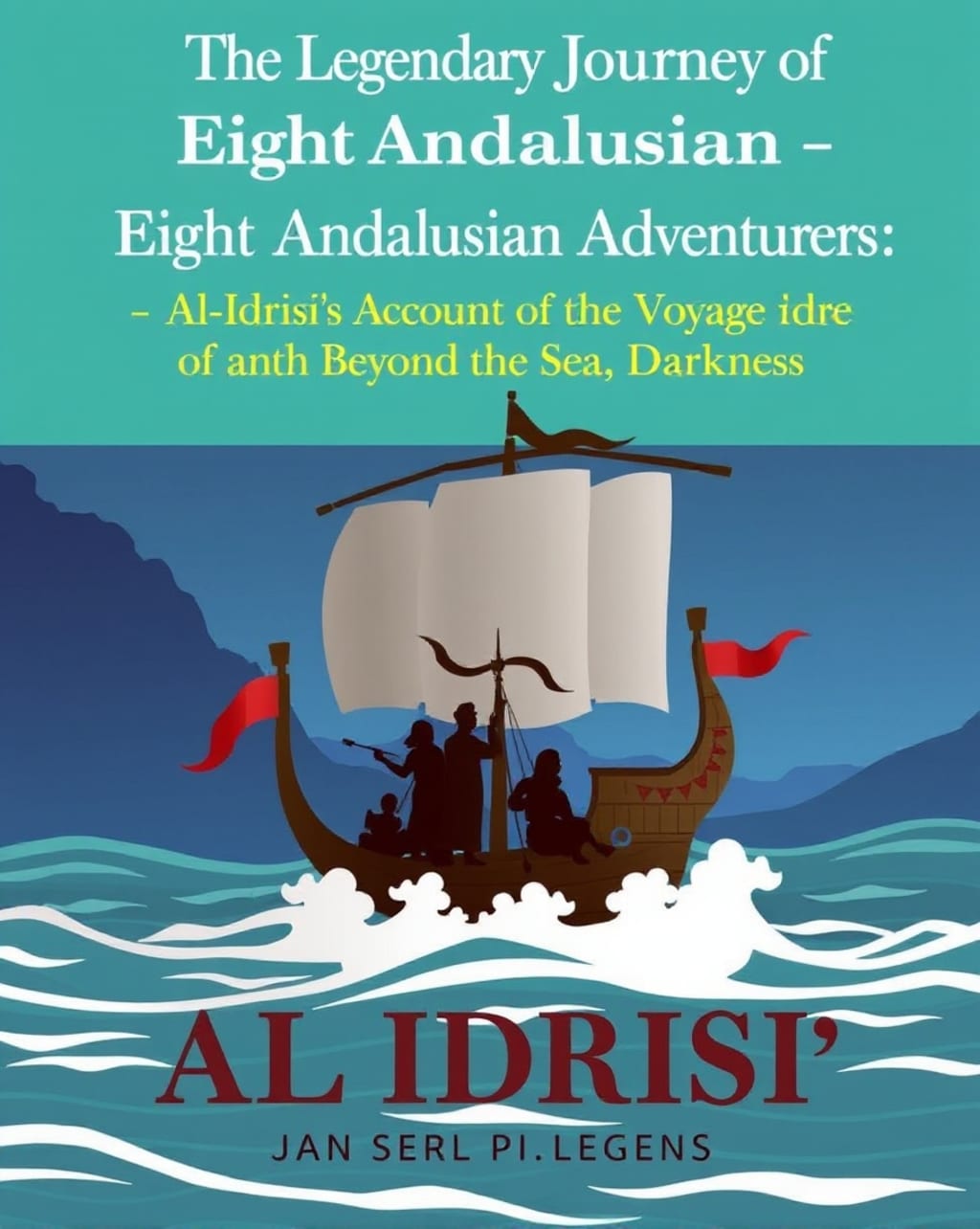
The annals of history are brimming with stories of courage, curiosity, and the quest for knowledge. One of the most fascinating yet lesser-known tales comes from Al-Idrisi, the 12th-century Arab geographer and scholar. This narrative recounts the daring voyage of eight young men from Andalusia who set sail into the vast and mysterious Atlantic Ocean, referred to at the time as the "Sea of Darkness" (Bahr al-Zulumat). Their journey remains an evocative chapter in the chronicles of exploration and has sparked intrigue among historians, scholars, and enthusiasts of medieval seafaring tales.
Al-Idrisi: The Scholar Behind the Tale
To appreciate the story of these Andalusian adventurers, it’s essential to understand who Al-Idrisi was. Born in Ceuta in 1100, Al-Idrisi was an accomplished scholar, geographer, and cartographer during the Islamic Golden Age. He spent a significant part of his career in Sicily under the patronage of King Roger II, where he produced the Tabula Rogeriana, one of the most detailed and accurate maps of the medieval world.
In his magnum opus, Al-Idrisi meticulously documented not only geographic and cartographic information but also the myths, legends, and real accounts shared by sailors and travelers of his era. One such tale was the extraordinary voyage of the eight young men from Andalusia who dared to venture beyond the familiar confines of the Mediterranean Sea.
The Sea of Darkness: A Realm of Mystery
Before the Age of Exploration that saw Columbus, Magellan, and other renowned European explorers charting new routes, the Atlantic Ocean was shrouded in a veil of mystery. Known among Arab geographers and mariners as the "Sea of Darkness," it represented the unknown, a place beyond which few dared to venture. The sea was so named due to the fearsome tales of endless waters, monster-infested depths, and the belief that ships could simply vanish into oblivion.
This backdrop of enigma sets the stage for the journey undertaken by the eight Andalusian adventurers. Their story, as recounted by Al-Idrisi, emphasizes not just bravery but also the human spirit's yearning to push the boundaries of the known world.
The Journey Begins: Driven by Exploration
According to Al-Idrisi, the tale began when eight young men from the city of Lisbon, which was then part of Muslim-controlled Andalusia, resolved to explore the world beyond the Sea of Darkness. Fueled by an insatiable curiosity and the desire to uncover what lay beyond the Atlantic horizon, they prepared a ship and set sail westward. Their journey is said to have been fraught with uncertainty, as they faced uncharted waters and unpredictable conditions.
One notable aspect of this story is how it highlights the Andalusian tradition of exploration and intellectual pursuit during a time when Islamic Spain was a beacon of culture, science, and knowledge. These eight men embodied the spirit of their era, reflecting the drive to expand human understanding of the world.
Trials on the High Seas
The voyage was anything but smooth. As the story goes, the young explorers sailed for many days without sight of land. They encountered storms, relentless waves, and the haunting vastness of the sea. These challenges tested their resolve and made the journey one of both physical and psychological endurance.
After an arduous and harrowing expedition, the ship eventually reached an island. The inhabitants of this new land, described as different in appearance and language from those the explorers knew, greeted them. Al-Idrisi’s account suggests that the adventurers were questioned about their origins and reasons for braving the perilous sea.
The Return and Al-Idrisi’s Documentation
The adventurers were reportedly taken to meet the local king, who was intrigued by their story. After being detained for some time, they were sent back across the sea, escorted part of the way to ensure their safe return. When they finally reached Andalusia, they shared their incredible experience, which Al-Idrisi later documented in his writings.
While some historians debate the historical accuracy of this tale, it remains an essential part of medieval literature. It symbolizes humanity’s deep-rooted desire for exploration and discovery and highlights the role that medieval Islamic scholars and travelers played in contributing to the broader narrative of global exploration.
The Legacy of the Voyage
Al-Idrisi’s recounting of this voyage serves as a testament to the lesser-known but significant contributions of the Islamic world to the spirit of exploration. Long before the Portuguese expeditions and the Spanish conquests of the New World, the story of the eight young men from Andalusia stands as an example of early maritime ambition and the courage to venture into the unknown.
This tale also reminds us of the rich cultural and intellectual environment of Andalusia during the medieval period. Andalusian scholars, navigators, and explorers laid the groundwork for what would become the Age of Exploration. Their achievements, often overshadowed by their European counterparts, paved the way for a greater understanding of the world.
Final Thoughts
The story of the eight young men from Andalusia, as told by Al-Idrisi, remains a captivating account that continues to fascinate historians and storytellers alike. It embodies the blend of fact and legend that characterizes much of medieval history and underscores the important role of Islamic scholarship in chronicling human endeavors. By revisiting such tales, we gain a deeper appreciation for the spirit of exploration that has always driven humanity to seek what lies beyond the horizon.
This narrative invites us to reflect on how curiosity, courage, and the drive to explore define our shared history and cultural heritage. As we continue to uncover and learn from the stories of the past, we honor the explorers who ventured into the unknown, carving pathways not just in the seas but in the chronicles of human achievement.
About the Creator
Keep reading
More stories from mariam elghazaly and writers in History and other communities.
The Epic Voyages of Christopher Columbus: Discovering New Lands and Shaping History
Christopher Columbus’s journey across the Atlantic Ocean stands as one of the most transformative events in world history. His voyages in the late 15th century were not only feats of navigation and maritime courage but also pivotal moments that linked continents and altered the course of human civilization. In this article, we’ll explore Columbus’s famous expeditions, the lands he encountered, and the profound impact his discoveries had on the world.
By mariam elghazalyabout a year ago in History
The Economic Cost of Empire: How British Rule Drained India’s Wealth
For nearly two centuries, the Indian subcontinent remained under British colonial rule. From the mid-18th century until 1947, British policies reshaped India’s political, social, and economic systems. While the British administration introduced railways, legal systems, and modern institutions, historians and economists widely argue that colonial rule resulted in a massive transfer of wealth from India to Britain. This economic extraction has often been described as the “drain of wealth,” a concept that attempts to estimate how much financial loss India experienced during colonial rule.
By Irshad Abbasi 3 days ago in History



Comments
There are no comments for this story
Be the first to respond and start the conversation.