Ancient
Do you know who created the Olympic Games and how? Why are the Olympic Games so popular?
The Olympic Games, a celebration of athletic prowess and international unity, have a rich history that spans thousands of years. The efforts of Baron Pierre de Coubertin, a French educator and historian, who is credited with reviving the ancient tradition in the late 19th century, can be traced back to the beginnings of the modern Olympic Games. His vision was to promote physical education and foster international goodwill through sports, leading to the establishment of the International Olympic Committee (IOC) and the first modern Olympic Games in Athens in 1896.
By MD.A.R Neaz10 months ago in History
"Threads of Empire: The Richest Royal Dress Ever Worn by a King" . AI-Generated.
"Threads of Empire: The Richest Royal Dress in History" Introduction Throughout history, the attire of kings has symbolized not just wealth and power but also the divine right to rule. Among the many legendary garments worn by monarchs, one stands out for its opulence, historical importance, and jaw-dropping value: the ceremonial robe of Emperor Shah Jahan of the Mughal Empire. Known as the "Peacock Robe", this legendary piece of royal fashion was not just clothing—it was a moving museum of the empire's wealth. This article explores the fascinating history, design, and present-day worth of this extravagant piece of regal attire.
By Say the truth 10 months ago in History
"Royal Threads of the Sangam Era: The Regal Attire and Wealth of the Tamil Muvendhar" . AI-Generated.
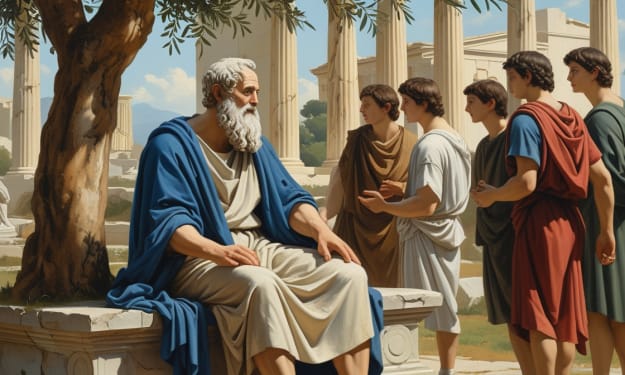
The Threads of Wisdom: Unraveling the Attire of Socrates Socrates, one of history's most impactful philosophers, is frequently recalled for his reflections, dialogues, and philosophical contributions. However, his clothingmodest, minimalist, and symbolicalso illustrates a deeper understanding of the individual and his principles. This article delves into the historical, cultural, and philosophical ramifications of Socrates' attire, examining how it mirrored his convictions, contravened Athenian conventions, and established a legacy of simplicity that persists across the ages.
By Say the truth 10 months ago in History
The Philosopher’s Robe: The Humble Dress of Socrates and Its Timeless Meaning
The Threads of Wisdom: Unraveling the Dress of Socrates Socrates, one of history’s most influential philosophers, is often remembered for his thoughts, dialogues, and philosophical contributions. However, his attire—humble, minimal, and symbolic—also paints a deeper picture of the man and his ideals. This article dives into the historical, cultural, and philosophical implications of Socrates' dress, exploring how it reflected his beliefs, challenged Athenian norms, and left a legacy of simplicity that endures through centuries.
By Say the truth 10 months ago in History
The Hidden Horrors of Devil's Punchbowl
As the Civil War neared its end in 1865, a wave of hope surged through the hearts of countless formerly enslaved people. Freed from the shackles of Southern plantations, they journeyed north, seeking safety and the promise of true liberty. For many, the city of Natchez, Mississippi, seemed a beacon of refuge. But what awaited them in a place known as Devil’s Punchbowl was a nightmare that rivaled the brutality they had escaped-a grim episode deliberately obscured in America’s historical narrative.
By KWAO LEARNER WINFRED10 months ago in History
Jesus Christ and Good Friday
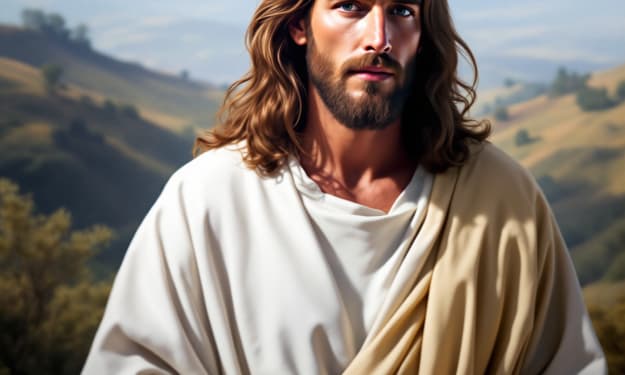
Jesus Christ and Good Friday: A Day of Suffering, Sacrifice, and Salvation Good Friday is one of the most solemn and significant days in the Christian calendar. It commemorates the crucifixion and death of Jesus Christ at Calvary, an event central to Christian belief in salvation. Observed on the Friday before Easter Sunday, Good Friday marks the climax of Holy Week and is a day of mourning, reflection, and gratitude for the sacrifice Jesus made for humanity.
By James Brock10 months ago in History
The Anunnaki and the Neteru: Were They the Same Sky Gods?
The Anunnaki and the Neteru: Were They the Same Sky Gods? Across the ancient world, civilizations spoke of powerful beings who descended from the heavens, shaping humanity and guiding our early societies. In Sumer, they were known as the Anunnaki. In Egypt, they were called the Neteru.
By The Secret History Of The World10 months ago in History
Dewdrops on the Windowsill
The First Light of Day One Long golden streaks were created on the wooden floor as the early sun softly filtered through the gauzy curtains. Wrapped in a handwoven blanket that still had a subtle scent of rose water and cedar, Eleanor stirred on the couch. The whisper of time continued to gnaw at her old bones, but the room's quiet comfort eased the pain.
By MD SHAMIM RANA10 months ago in History
Malik Ambar (Abyssinian Warrior in India)
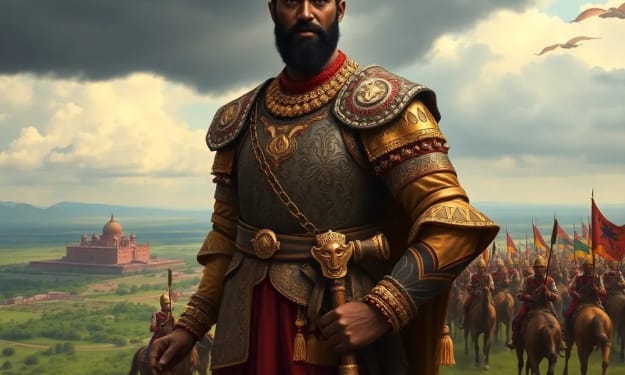
Introduction In the shifting sands of 16th and 17th-century Deccan India, a remarkable figure emerged from the shadows of slavery to challenge the might of the Mughal Empire: Malik Ambar. Born in Ethiopia (Abyssinia) and sold into slavery as a child, Malik Ambar rose to become a legendary general, strategist, and de facto ruler of the Ahmadnagar Sultanate in the Deccan. He led fierce resistance against Mughal expansion, pioneered guerrilla warfare tactics in the Indian subcontinent, and became a symbol of brilliance, resilience, and leadership.
By Muhammad Sohail10 months ago in History
The Dark Night,
It was a night just like any other, the sun had set over the horizon, and the sky was painted with hues of crimson and gold. The sea was calm, and the wind was whispering secrets to the waves. My crew, the Straw Hat Pirates, and I were sailing on our ship, the Thousand Sunny, through the vast ocean, in search of our next adventure.
By MOHAMMED NAZIM HOSSAIN10 months ago in History
An American Historian's Experience with Machu Picchu Ruins.
The early decades of the 20th century, and the world was getting more and more curious about the lost cities mystery when one expedition by a historian deep into the Andes would turn the world around regarding the Incan Empire for good. This is the story of how American historian Hiram Bingham, who worked for Yale University, stumbled upon the stunning Machu Picchu ruins, and how his discovery would become the standard in the pages of cultural history and archaeology.
By Pen to Publish10 months ago in History