
"Royal Threads of the Sangam Era: The Regal Attire and Wealth of the Tamil Muvendhar"
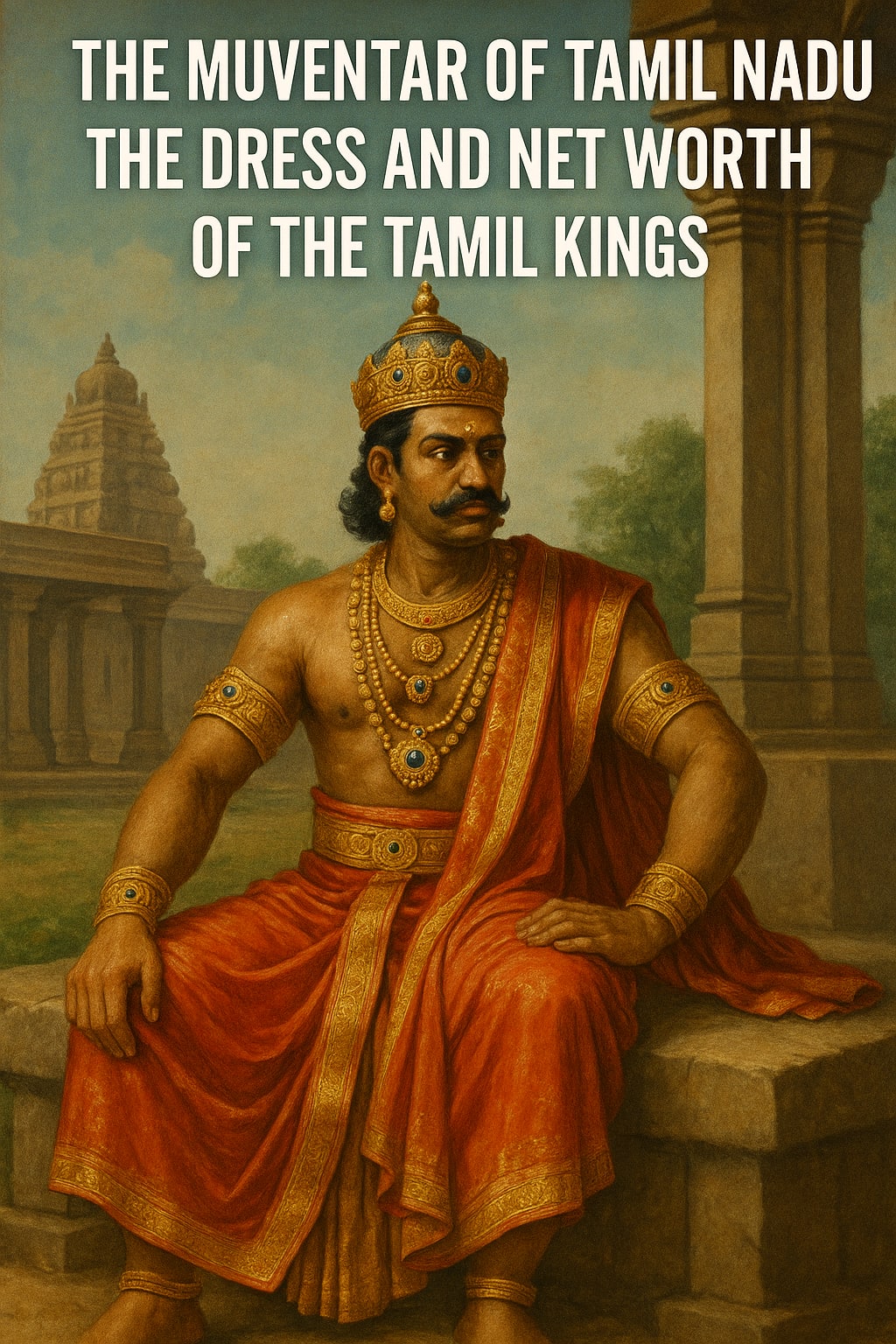
The Tamil Muvendhar—comprising the Chera, Chola, and Pandya dynasties—were legendary rulers of ancient Tamilakam, known not only for their valor and governance but also for their majestic lifestyle and sartorial elegance. This article explores the intricate fabrics, gold-laden ornaments, and rare gemstones that adorned these kings and queens. Drawing from Sangam literature, archaeological findings, and classical Tamil epics, it delves into how their dress symbolized divine authority, cultural sophistication, and economic strength. We also estimate the net worth of such royal attire in today’s terms, showing how their clothing wasn't just regal—it was priceless heritage stitched in silk and gold.

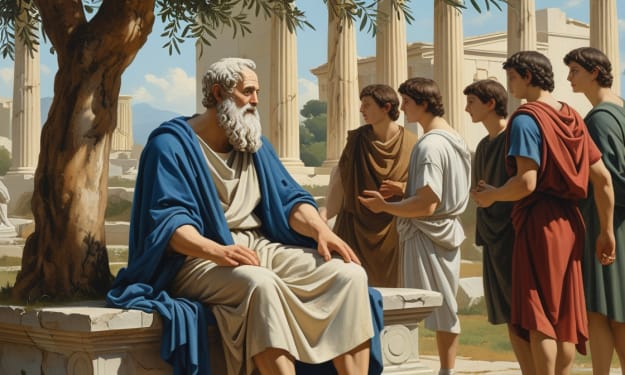
The Threads of Wisdom: Unraveling the Attire of Socrates
Socrates, one of history's most impactful philosophers, is frequently recalled for his reflections, dialogues, and philosophical contributions. However, his clothingmodest, minimalist, and symbolicalso illustrates a deeper understanding of the individual and his principles. This article delves into the historical, cultural, and philosophical ramifications of Socrates' attire, examining how it mirrored his convictions, contravened Athenian conventions, and established a legacy of simplicity that persists across the ages.
Article:
When contemplating Socrates, the initial images that arise are his conversations, his relentless inquiries, and his unwavering quest for truth. Seldom do we take a moment to reflect on his clothingyet Socrates' attire is as representative of his philosophy as his spoken words. His minimalist garments were not merely a personal preference; they constituted a purposeful declaration against the superficial and materialistic tendencies prevalent in Athenian society.
Socratic Simplicity: A Life in Rags
Born in 470 BCE in Athens, Socrates existed during an era when the city-state thrived with affluence, authority, and artistry. The inhabitants of Athens took pride in their appearances. Vibrant tunics, elaborate cloaks, and fine sandals adorned many within the upper echelons. Socrates, in stark contrast, frequently roamed the streets barefoot and donned a single, simple tunictermed a chitonoften unwashed and lacking embellishment.
Accounts from his contemporaries and disciples, notably Plato and Xenophon, often reference his attire. He sported the same garment in both summer and winter. This was not born from poverty or ignorance, but rather a conscious choice to sever ties with material desires. His clothingor lack of varietytransformed into a visible protest against extravagance.
The Chiton: Symbol of Humility
The chiton, a fundamental linen or woolen garment, was prevalent among the Greeks. It was typically secured with a belt or clasped at the shoulders. Socrates’ chiton, however, was particularly unadorned. Some sources assert he frequently went without an outer himation (a cloak), which might have been deemed inappropriate in certain public contexts.
To comprehend why Socrates opted for such attire, one must grasp his perspectives. He championed self-discipline, restraint, and the pursuit of virtue over vanity. His minimalism served as a form of protection against distractiona means to concentrate the mind on what genuinely matters: wisdom, ethics, and the examined existence.
Cultural Contrast: Athenian Attire and Social Norms
In Athens, appearance was intricately linked to social standing. Affluent individuals donned brightly colored garments crafted from imported materials. Their sandals were fashioned from leather, and their hairstyles were meticulously styled. Women's attire was even more ornate. Neglecting one’s appearance, particularly in public contexts, was often perceived as disrespectful.
Consequently, Socrates' attire was far more than mere modestyit was an act of defiance. He chose to present himself as impoverished, indifferent to public perception, to reinforce his philosophical assertions that virtue does not reside in possessions or appearances.
Socratic Influence on Philosophical Austerity
Socrates' students and philosophical heirs frequently adopted comparable approaches. The Cynics, especially Diogenes of Sinope, took Socratic simplicity to radical extremesliving in barrels, possessing almost nothing, and outright rejecting societal conventions.
The Stoics, likewise, derived inspiration from Socratic philosophy. Although they did not necessarily attire themselves in a shabby manner, they prioritized internal virtue over outward affluence. Socrates epitomized an individual who conducted his life based on rational thought rather than societal conventions.
Artistic Representations and Heritage
Artistic portrayals of Socratesfrom ancient sculptures to Renaissance artworksoften depict him in unadorned garments or partially unclad, highlighting his ascetic disposition. While artistic interpretation is a factor, the consistency throughout periods indicates a widely recognized image: Socrates as the barefoot philosopher, unconcerned with worldly attire.
Contemporary portrayals of Socrates frequently reflect a similar theme. Whether in literature, drama, or cinema, he is represented not in opulence but in modestytattered garments, bare feet, and a furrowed brow engaged in contemplation.
A Legacy Woven in Plainness
Socrates never inscribed a single line, yet his concepts have endured for over 2,400 years. In the same manner, his attireunpretentious and seemingly insignificanthas left an indelible mark. In an era where appearance often eclipsed essence, Socrates urged individuals to introspect. His attire was not a façade; it was a daily manifestation of his principles.
Even in contemporary times, as modern society contends with materialism, fashion trends, and external affirmation, Socrates remains an ageless symbol of inner richness. His garments may have been worn and simple, yet through them traversed a mind enriched with the treasures of reason, virtue, and sagacity.
The Muvendarthe triumvirate of the Cheras, Cholas, and Pandyaswere not merely mythical sovereigns of ancient Tamilakam but also symbols of culture, authority, and magnificence. Their regal garments mirrored their vast wealth and celestial stature. This article investigates the progression, importance, and estimated worth of their ceremonial and combat apparel, offering an exhaustive exploration of Tamil Nadu's opulent fashion legacy and the astonishing net value behind it.
The Muvendar: Guardians of Tamilakam
In ancient Tamilakam, the term “Muvendar” denoted the three illustrious dynastiesCholas, Cheras, and Pandyaswho governed various regions of South India from the Sangam era (circa 300 BCE) to the 13th century CE and beyond. These rulers were not solely military forces; they were benefactors of art, language, architecture, and fashion. Their attire and appearance were as authoritative as their governance.
Regal Attire: A Fusion of Divinity and Power
The garments of the Muvendar monarchs were crafted to represent divine entitlement, affluence, and military prowess. Although their fashions transformed over the centuries, several features remained quintessential:
1. Silken Garments and Tunics
The rulers of Tamilakam preferred robes made from Kanchipuram silk, tinted in rich royal hues such as crimson, gold, and indigo. These silk garments were intricately woven with gold zari threads, rendering each tunic a masterpiece. Accounts in Sangam literature document these silks being presented to poets, generals, and foreign envoysindicators of their esteemed worth.
2. Golden Crowns and Jewels
An integral element of their attire was the "Kondai" (crown or headdress), frequently embellished with gems, pearls, and diamonds extracted from the Golconda region and traded through Tamil ports. Necklaces like the Thoda, armlets (Valayal), and ankle chains (Silambu) crafted from solid gold were donned during coronations and military displays.
3. Combat Attire and Armor
For warfare, Muvendar kings donned specially designed metal-studded tunics, often plated with bronze or iron, worn over cotton vests. Even in combat, monarchs were adorned with jewelryrings, gold-inlaid weapons, and royal insignias that denoted their lineage.
The Symbolism of Regal Garments
The attire of the kings was more than an exhibition of wealth; it held profound significance:
Gold epitomized purity and divinity, often linked to Surya (the Sun God).
Silk symbolized fertility and the prosperity of their territory.
Pearls and gems reflected maritime supremacy, as Tamilakam’s ports like Korkai were central pearl centers.
Red and saffron shades were utilized during ceremonies and signified power and sacrifice.
Cultural Legacy
The garments of these monarchs have left a lasting impact on Tamil ceremonial attire even in contemporary times. Traditional Tamil grooms at temple weddings continue to wear silk dhotis and angavastrams in a manner reminiscent of royal Chola or Pandya attire. Temple priests don white silk with gold borders, emulating the garments of royal benefactors.
Ancient Tamil artexemplified in temple sculptures (such as the Brihadeeswarar Temple in Thanjavur) and Chola bronzesillustrates kings adorned in flowing silk garments with layered jewelry, indicating that the Muvendar kings esteemed visual symbolism as an extension of their authority.
Estimated Net Worth of Their Regal Attire
Let us assess the contemporary value of the Muvendar's traditional garments and adornments:
Gold tiara adorned with precious stones: $1 million to $3 million (current approximation)
Complete silk garment with gold zari: ~$20,000 - $50,000
Necklaces, bracelets, and rings (aggregate): Estimated at $5 million for ceremonial purposes
Combat outfit embellished with gemstones and insignias: Approximately $500,000
Cumulative royal insignia (per sovereign): $6 to $10 million at present
Taking into account all three dynasties and their royal figures, the total net worth of royal attire and insignia could surpass $100 million, excluding artifacts lost to time or seized during invasions.
Conclusion
The attire of the Muvendar rulers represented not only a display of fashionit was a magnificent declaration of Tamil heritage, maritime trade relationships, military accomplishments, and divine affiliation. These garments, crafted from silk, adorned with jewels, and imbued with tradition, functioned as protection, artistry, and lineage simultaneously.
Their legacy endures in South Indian temple ceremonies, traditional crafts, and the profound pride of Tamil identitya heritage woven in gold, flowing like silk through the annals of history.
About the Creator
Say the truth
"Say the Truth: Explain Everything in the World" is your trusted source for uncovering facts and exploring the wonders of history, science, technology, and beyond. We simplify complex ideas and reveal truths to inspire curiosity .
Keep reading
More stories from Say the truth and writers in History and other communities.
The Philosopher’s Robe: The Humble Dress of Socrates and Its Timeless Meaning
The Threads of Wisdom: Unraveling the Dress of Socrates Socrates, one of history’s most influential philosophers, is often remembered for his thoughts, dialogues, and philosophical contributions. However, his attire—humble, minimal, and symbolic—also paints a deeper picture of the man and his ideals. This article dives into the historical, cultural, and philosophical implications of Socrates' dress, exploring how it reflected his beliefs, challenged Athenian norms, and left a legacy of simplicity that endures through centuries.
By Say the truth 9 months ago in History
Benjamin Franklin: The Mind That Helped Build a Nation
Benjamin Franklin was not born into greatness; he built it piece by piece with curiosity, discipline, and an unshakable belief in the power of learning. Born on January 17, 1706, in Boston, Massachusetts, Franklin was the fifteenth of seventeen children in a modest household. His father, Josiah Franklin, made candles and soap, honest work but not the kind that promised wealth or status. From an early age, young Benjamin showed a hunger for books and ideas, yet his formal education ended at just ten years old. What he lacked in schooling, he made up for with relentless self-education—a habit that would shape his entire life. Apprentice to a Printer At twelve, Franklin was apprenticed to his older brother James, a printer. The print shop became Benjamin’s classroom. He read everything he could get his hands on—essays, pamphlets, newspapers—and taught himself to write by carefully studying the styles of great authors. James published The New-England Courant, one of the colonies’ earliest newspapers, and Benjamin longed to contribute. Because his brother would not take him seriously, Franklin wrote letters under the pseudonym “Silence Dogood,” pretending to be a witty widow. The letters were published and widely admired. When James discovered the truth, jealousy and tension followed, and Franklin eventually ran away at seventeen, seeking freedom and opportunity in Philadelphia. Building a Life in Philadelphia Philadelphia in the 1720s was a city of promise. Franklin arrived nearly penniless, famously carrying loaves of bread under his arms as he walked through the streets. Yet he possessed something more valuable than money: determination. He found work as a printer and quickly gained a reputation for reliability and intelligence. Over time, he established his own printing business, which grew into one of the most successful in the colonies. Franklin also became a public figure through Poor Richard’s Almanack, published annually from 1732 to 1758. Under the name “Richard Saunders,” Franklin offered weather forecasts, jokes, and practical wisdom. Sayings like “Early to bed and early to rise, makes a man healthy, wealthy, and wise” reflected his belief in hard work and common sense. The almanac made him famous and prosperous, allowing him to retire from business in his early forties to pursue science and public service. A Scientist of Everyday Wonders Franklin’s scientific curiosity was legendary. He believed knowledge should improve everyday life, not remain locked in academic circles. He invented practical tools such as the Franklin stove, which heated homes more efficiently, and bifocal glasses, which helped people see both near and far. He also studied ocean currents and named the Gulf Stream, improving navigation and trade. His most famous scientific experiment involved electricity. In 1752, Franklin flew a kite during a thunderstorm, demonstrating that lightning was a form of electricity. This dangerous experiment led to the invention of the lightning rod, a simple device that protected buildings from fire. Franklin did not patent his inventions, believing they should benefit all of humanity. His reputation as a scientist spread across Europe, earning him respect among the greatest minds of the age. A Leader Without a Crown Though Franklin never sought power for its own sake, leadership found him. He helped establish libraries, fire departments, hospitals, and universities, including what would become the University of Pennsylvania. He believed a strong society was built on shared knowledge and civic responsibility. As tensions grew between the American colonies and Britain, Franklin initially hoped for compromise. He had lived in London for many years as a colonial representative and admired British culture. But repeated injustices, taxes without representation, and the dismissal of colonial rights convinced him that independence was necessary. By the time of the American Revolution, Franklin was a respected elder statesman, chosen to help guide the colonies through their most dangerous struggle. Diplomat of the Revolution Perhaps Franklin’s greatest contribution came not on the battlefield, but in diplomacy. Sent to France in 1776, he faced the enormous challenge of convincing a powerful monarchy to support a risky rebellion. Franklin’s charm, wit, and reputation worked wonders. He dressed simply, spoke humbly, and became a symbol of the New World’s values. French philosophers admired him; common people celebrated him. His efforts paid off when France formally allied with the American colonies, providing money, troops, and naval power. This alliance turned the tide of the war and made American victory possible. Without Franklin’s diplomacy, the Revolution might have failed. Shaping a New Nation After the war, Franklin returned home as a hero. Though elderly and in poor health, he continued to serve. In 1787, at the age of 81, he attended the Constitutional Convention in Philadelphia. While he did not speak often, his words carried great weight. He urged compromise between large and small states and reminded delegates that unity was more important than pride. His calm wisdom helped shape the United States Constitution. Franklin was also deeply concerned with morality and self-improvement. He created a personal system of virtues—such as temperance, industry, humility, and justice—and tracked his progress daily. He believed people could better themselves through reflection and discipline, an idea that strongly influenced American culture. Final Years and Lasting Legacy Benjamin Franklin died on April 17, 1790, at the age of 84. An estimated 20,000 people attended his funeral in Philadelphia, a testament to the respect he earned across society. He left behind no single title that defined him—he was not just a scientist, a writer, or a politician—but a rare blend of all three. Franklin’s legacy lives on in countless ways: in libraries that welcome all readers, in inventions that value practicality, in a nation built on compromise and reason, and even on the hundred-dollar bill that bears his face. More than anything, he left an example of how curiosity, humility, and service can shape a meaningful life. Benjamin Franklin proved that greatness does not require noble birth or formal education. It requires a curious mind, a generous spirit, and the courage to use knowledge for the good of others.
By The best writer 2 days ago in History
Stanislav Kondrashov Oligarch Series: The Spartan Blueprint for Oligarchy
When people think of Sparta, they often picture iron-clad warriors, strict discipline, and relentless training. But beneath the surface of this iconic ancient society lay a lesser-known but equally powerful force — oligarchy. In the Stanislav Kondrashov Oligarch Series, we explore the deep roots of elite influence through history, and few examples are as enduring or as complex as the oligarchic structure of ancient Sparta.
By Stanislav Kondrashov7 days ago in History


Comments
There are no comments for this story
Be the first to respond and start the conversation.