Ancient
Khalid ibn al-Walid: The Sword of Allah
Introduction Khalid ibn al-Walid ibn al-Mughira, also known as Saifullah (the Sword of Allah), is one of the most celebrated military figures in Islamic history. Born into the powerful Quraysh tribe of Mecca, Khalid began as an enemy of Islam but later became one of its fiercest defenders. His unmatched record on the battlefield, strategic brilliance, and loyalty to the cause of Islam earned him enduring respect not only among Muslims but also among historians and military strategists across the world.
By Muhammad Sohail10 months ago in History
ChatGPT’s Rising Costs and Viral Politeness Myth: Why Sam Altman Says It’s All Worth It
The Myth About ChatGPT's Rising Prices and Viral Politeness: Why Sam Altman Claims That It's All Worth It On the internet, there has been a surprising claim that users keep saying "please" and "thank you" and that OpenAI's ChatGPT is spending "tens of millions of dollars" on it. While humorous and clearly exaggerated, the viral statement taps into a very real issue—ChatGPT is getting expensive. Additionally, OpenAI CEO Sam Altman has stated that he is willing to pay that cost. Let’s separate fact from fiction and dive into the real financial stakes behind one of the most popular AI tools on the planet.
By Md Shahadat Hossain10 months ago in History
Returning Without Questions
Returning Without Questions They came a little closer to me one odd evening, I recall. Despite its simplicity, the relationship had an odd depth. There was a kind of connection between them that spoke before words, the language of their eyes—even when they were silent in front of each other, they understood each other. However, despite being by each other's side, there are times in life when people move on. There came a time when the two of them moved far away from each other.
By Arshad Ali10 months ago in History
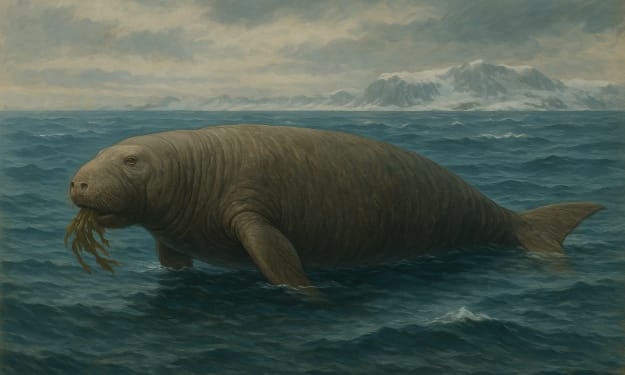
Giants of the Frozen Sea: The Tragic Tale of the Stellar Sea Cow. AI-Generated.
The Stellar sea cow, a massive marine herbivore discovered in the 18th century, is one of the most tragic examples of rapid extinction in recorded history. A close relative of the dugong and manatee, the Stellar sea cow was first documented by German naturalist Georg Wilhelm Steller in 1741 during the Great Northern Expedition led by Danish explorer Vitus Bering. Found in the icy waters surrounding the Commander Islands near the Bering Sea, the sea cow’s tale is a haunting reminder of how quickly human activity can impact fragile ecosystems.
By Say the truth 10 months ago in History
"The Tasmanian Tiger: Echoes of a Lost Predator". AI-Generated.
The Tasmanian Tiger: Echoes of a Lost Predator The narrative of the Tasmanian tiger, or thylacine (Thylacinus cynocephalus), is one of the most heartrending accounts in the records of extinction. Indigenous to Tasmania and once prevalent throughout mainland Australia and New Guinea, this carnivorous marsupial was the largest recognized member of its species. With its characteristic striped lower back, wolf-like cranium, and pouch reminiscent of a kangaroo’s, the thylacine was both a scientific wonder and a cultural symbol.
By Say the truth 10 months ago in History
Hatshepsut's Revenge
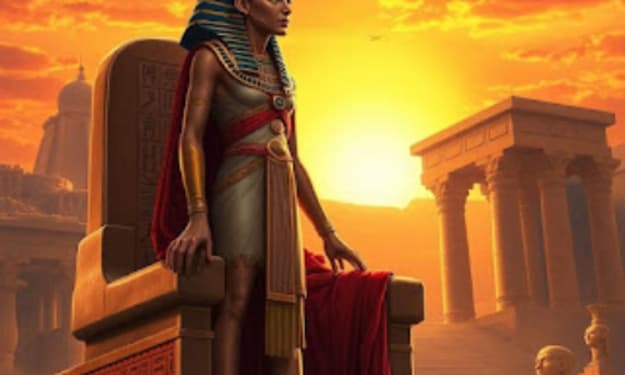
Chapter One: The Beginning of Revenge The grand hall of the king's palace was filled with sorrow and hushed whispers. Hatshepsut, the heir to the Egyptian throne, sat beside the body of her late father, the king, trying to conceal her inner turmoil behind a mask of royal grief. She wasn’t just grieving; she was increasingly anxious about the future of her reign following her father’s death.
By mohamed elsayed10 months ago in History
History of Israel and Palestine
Land, identity, and sovereignty are at the heart of the Israeli–Palestinian conflict, which continues to this day in the historically Palestinian region. Its origins trace back to the late 19th century with the rise of Zionism and Arab nationalism during the decline of the Ottoman Empire. ikipedia The British mandate in the early 20th century and rising tensions Following World War I, the British took control of Palestine under the Mandate system. The 1917 Balfour Declaration expressed British support for a "national home for the Jewish people" in Palestine, leading to increased Jewish immigration. This influx heightened tensions with the Arab population, who opposed the growing Zionist movement and feared displacement. Wikipedia 1947–1949: UN Partition Plan and the First Arab–Israeli War In 1947, the United Nations proposed partitioning Palestine into separate Jewish and Arab states. Jewish leaders accepted the plan, but Arab leaders rejected it. Upon Israel's declaration of independence in 1948, neighboring Arab states invaded, resulting in the first Arab–Israeli war. By the war's end in 1949, Israel controlled a significant portion of the territory, while Jordan and Egypt occupied the West Bank and Gaza Strip, respectively. The Nakba, or "catastrophe," refers to the displacement of approximately 750,000 Palestinians during this time. Reuters
By J P PRINCE 10 months ago in History
The Platinum River: Legend, Wealth, and the Secrets of a Forgotten Stream. AI-Generated.
The Origins of the Platinum River Legend The legend of the Platinum River traces back to ancient Southeast Asian lore, particularly among tribal groups living along the current borders of Laos, Thailand, and Vietnam. Oral traditions speak of a sacred river, hidden deep in the jungle, whose bed was layered not with sand or stone—but with platinum nuggets, glimmering beneath crystal-clear waters.
By Say the truth 10 months ago in History
“The Forgotten Fortune: The Tale of Southeast“The Forgotten Fortune: The Tale of Southeast Asia’s Largest Treasure Discovery” . AI-Generated.
A Sea of Riches Beneath the Waves In 2004, an accidental discovery off the coast of Cirebon, Java, stunned historians and treasure hunters alike. A fisherman reported unusual objects emerging from the seafloor after a powerful current had shifted the sands. What followed was one of the largest and most valuable underwater excavations in Southeast Asian history: the discovery of a 10th-century shipwreck, later known as the Cirebon shipwreck.
By Say the truth 10 months ago in History
"Yamashita's Gold: The Elusive Treasure of Imperial Japan". AI-Generated.
Yamashita’s Gold: The Elusive Treasure of Imperial Japan In the shadowy world of wartime legends and hidden fortunes, few tales are as captivating or controversial as that of Yamashita’s Gold—an alleged treasure trove looted by the Japanese Imperial Army during World War II. Believed to contain billions of dollars' worth of gold, religious relics, and ancient artifacts, this treasure has inspired adventurers, fueled conspiracy theories, and stirred international intrigue for decades.
By Say the truth 10 months ago in History
"The Sacred Vessel: Unraveling the Mystery of the Container Said to Hold Jesus’ Blood"
The Sacred Vessel: Unveiling the Mystery of the Holy Grail – The Container Said to Hold the Blood of Jesus Summary: The legend of the Holy Grail, the sacred vessel believed to have held the blood of Jesus Christ, is one of the most enduring and enigmatic mysteries in history. Revered by Christians and pursued by knights, monarchs, and seekers for over two millennia, the story intertwines faith, myth, and archaeology. This article delves into the historical origins of the Grail, its significance in Christian theology and medieval lore, and explores various claims regarding its current location—whether in ancient cathedrals, secret vaults, or hidden across Europe. With a cultural and symbolic worth that far exceeds any monetary value, the Holy Grail continues to inspire awe and spiritual fascination.
By Say the truth 10 months ago in History