
The Philosopher’s Robe: The Humble Dress of Socrates and Its Timeless Meaning
This article explores the historical and philosophical significance of Socrates' clothing—his famously simple dress and barefoot lifestyle. In a world obsessed with status and material beauty, Socrates wore a plain tunic and rejected adornment, symbolizing his pursuit of truth and virtue. His minimalist fashion was not mere poverty, but a bold statement of wisdom, humility, and defiance of societal norms. Discover how the simplicity of Socrates’ dress continues to inspire philosophical thought and moral clarity across generations.

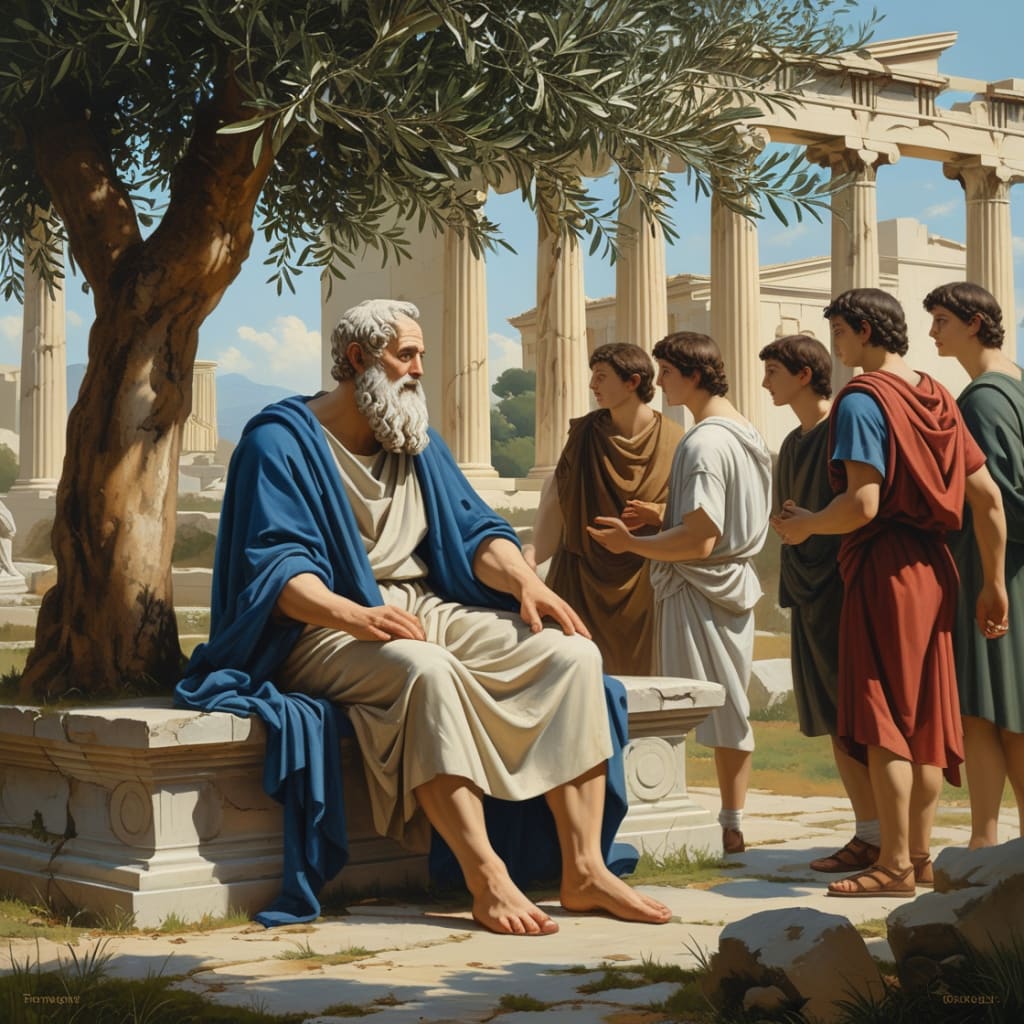
The Threads of Wisdom: Unraveling the Dress of Socrates
Socrates, one of history’s most influential philosophers, is often remembered for his thoughts, dialogues, and philosophical contributions. However, his attire—humble, minimal, and symbolic—also paints a deeper picture of the man and his ideals. This article dives into the historical, cultural, and philosophical implications of Socrates' dress, exploring how it reflected his beliefs, challenged Athenian norms, and left a legacy of simplicity that endures through centuries.
Article:
When we think of Socrates, the first images that come to mind are his dialogues, his relentless questions, and his unyielding pursuit of truth. Rarely do we pause to consider what he wore—yet Socrates' dress is as reflective of his philosophy as his words. His minimalist clothing wasn’t just a personal choice; it was a deliberate statement against the superficial and materialistic tendencies of Athenian society.
Socratic Simplicity: A Life in Rags
Born in 470 BCE in Athens, Socrates lived during a time when the city-state flourished with wealth, power, and art. The citizens of Athens took pride in their appearance. Colorful tunics, intricate cloaks, and fine sandals adorned many in the upper classes. Socrates, in stark contrast, often wandered the streets barefoot and wore a single, simple tunic—called a chiton—often unwashed and unadorned.
Accounts from his contemporaries and students, especially Plato and Xenophon, frequently mention his dress. He wore the same garment in summer and winter. This wasn’t out of poverty or ignorance, but a conscious decision to detach from material desire. His clothing—or lack of variety—became a visible protest against indulgence.
The Chiton: Symbol of Humility
The chiton, a basic linen or woolen garment, was common among Greeks. It was typically secured with a belt or clasped at the shoulders. Socrates’ chiton, however, was especially plain. Some sources suggest he often went without an outer himation (a cloak), which would have been considered improper in certain public settings.
To understand why Socrates chose such dress, one must understand his views. He believed in self-mastery, discipline, and the pursuit of virtue over vanity. His minimalism was a form of armor against distraction—a way to focus the mind on what truly matters: wisdom, ethics, and the examined life.
Cultural Contrast: Athenian Dress and Social Norms
In Athens, appearance was deeply tied to status. Wealthy men wore bright-colored garments made from imported materials. Their sandals were leather-crafted, and hairstyles were carefully groomed. Women’s dresses were even more elaborate. To neglect one’s appearance, especially in the public sphere, was often seen as disrespectful.
Socrates' attire, therefore, was more than modesty—it was defiance. He chose to appear poor, unconcerned with public image, to reinforce his philosophical arguments that virtue does not reside in possessions or appearances.
Socratic Influence on Philosophical Austerity
Socrates’ students and philosophical descendants often adopted similar approaches. The Cynics, particularly Diogenes of Sinope, took Socratic simplicity to radical extremes—living in barrels, owning almost nothing, and rejecting societal norms outright.
The Stoics, too, drew from Socratic thought. While they didn’t necessarily dress poorly, they emphasized inner virtue over external wealth. Socrates was the model of a man who lived according to reason, not societal expectation.
Artistic Depictions and Legacy
Artistic representations of Socrates—from ancient busts to Renaissance paintings—frequently show him in modest robes or partially unclothed, emphasizing his ascetic nature. While artistic license plays a role, the consistency across eras points to a well-understood image: Socrates as the barefoot sage, indifferent to worldly fashion.
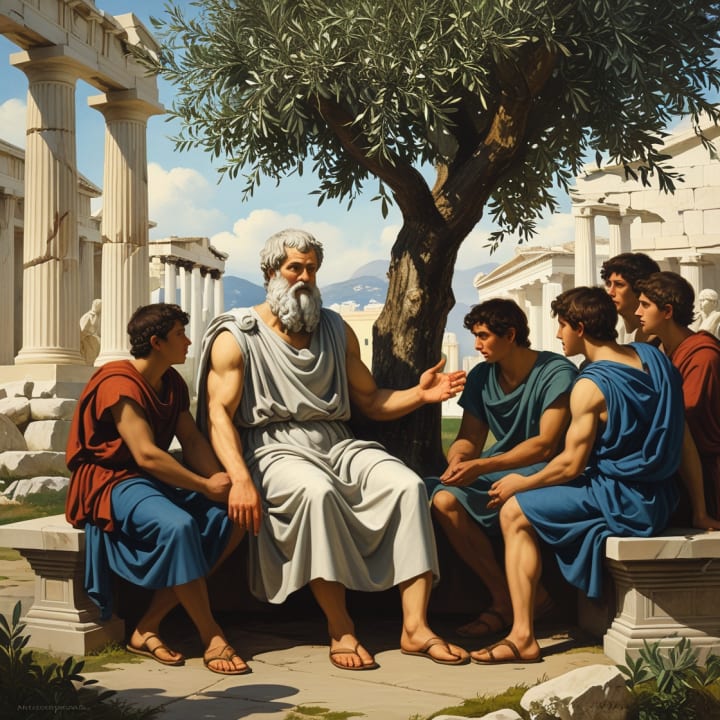
Modern interpretations of Socrates often echo the same sentiment. Whether in literature, theater, or film, he’s portrayed not in grandeur, but in simplicity—tattered robes, bare feet, and a furrowed brow deep in thought.
A Legacy Sewn in Simplicity
Socrates never wrote a single word, and yet his ideas have lasted over 2,400 years. In the same way, his clothes—simple and seemingly unimportant—have left a lasting impression. In an age where appearance often overshadowed substance, Socrates reminded people to look within. His dress wasn’t a costume; it was a daily embodiment of his beliefs.
Even today, as modern society grapples with materialism, fashion trends, and external validation, Socrates stands as a timeless icon of inner wealth. His garments may have been worn and plain, but through them walked a mind adorned with the riches of reason, virtue, and wisdom.
About the Creator
Say the truth
"Say the Truth: Explain Everything in the World" is your trusted source for uncovering facts and exploring the wonders of history, science, technology, and beyond. We simplify complex ideas and reveal truths to inspire curiosity .
Reader insights
Good effort
You have potential. Keep practicing and don’t give up!
Top insight
Heartfelt and relatable
The story invoked strong personal emotions
Keep reading
More stories from Say the truth and writers in History and other communities.
Giants of the Frozen Sea: The Tragic Tale of the Stellar Sea Cow
The Stellar sea cow, a massive marine herbivore discovered in the 18th century, is one of the most tragic examples of rapid extinction in recorded history. A close relative of the dugong and manatee, the Stellar sea cow was first documented by German naturalist Georg Wilhelm Steller in 1741 during the Great Northern Expedition led by Danish explorer Vitus Bering. Found in the icy waters surrounding the Commander Islands near the Bering Sea, the sea cow’s tale is a haunting reminder of how quickly human activity can impact fragile ecosystems.
By Say the truth 9 months ago in History
The Timeless Pyramids of Egypt: Stories from the Ancient World
Egypt is home to some of the most remarkable monuments ever built by humans: the pyramids. Rising from the sands of the Giza Plateau, these colossal structures have inspired curiosity and admiration for thousands of years. They were built as tombs for the pharaohs, yet they tell a much larger story—one of human skill, ambition, and belief in the afterlife. The most famous of these pyramids is the Great Pyramid of Giza, built for Pharaoh Khufu around 2580 BCE. Originally, it reached a height of about 146 meters (480 feet) and was the tallest man-made structure in the world for nearly 4,000 years. Its construction required millions of limestone blocks, some weighing several tons. Even today, historians and archaeologists are amazed at the precision and scale achieved by ancient builders without modern tools. The Egyptians built these monumental structures not merely as tombs, but as gateways to the afterlife. They believed that the pharaoh, considered a god on earth, would continue his journey in eternity. The pyramid’s triangular shape symbolized the pharaoh’s ascent to the heavens. Inside, burial chambers held treasures, inscriptions, and statues meant to guide and protect the ruler in the world beyond. How the pyramids were built remains a topic of debate. There are many theories, including the use of ramps or sledges to move the massive stones. Regardless of the methods, constructing these tombs required incredible planning, organization, and teamwork. Tens of thousands of workers labored for decades to create what would become one of the world’s greatest architectural achievements. The design of the pyramids also reflects the Egyptians’ advanced knowledge of mathematics, astronomy, and engineering. They aligned the pyramids with the cardinal points and certain stars, showing a deep understanding of the sky. The precise measurements and geometric accuracy have helped these structures survive thousands of years, enduring both natural wear and occasional earthquakes. While the Giza pyramids are the most famous, Egypt has over 100 pyramids scattered across the country, including those at Saqqara, Dahshur, and Abu Sir. Each one tells a story about the evolution of Egyptian architecture, from the earliest step pyramids to the smooth-sided ones that have become iconic. These structures also reveal much about Egyptian society, including their religious beliefs, social organization, and artistic achievements. The pyramids were not built in isolation. They were part of larger complexes that included temples, smaller tombs, and monuments that reflected the pharaoh’s divine status. They were centers of activity, culture, and ceremony, connecting the people to their rulers and to the gods they worshiped. Today, the pyramids continue to inspire awe. Millions of visitors come to Egypt each year to witness their grandeur firsthand. Archaeologists keep discovering new insights into how these incredible structures were built and what they meant to the people of ancient Egypt. Yet, despite all the research, ds stet of mystery, reminding us that some secrets of history endure across millennia. The pyramids are more than just stone monuments; they are symbols of human ambition and achievement. They remind us that with vision, skill, and persistence, people can create works that last far beyond their lifetimes. Standing in front of a pyramid, it is easy to imagine the hands that placed each block, the minds that designed the complex structures, and the determination that made the impossible possible. In the end, the Egyptian pyramids are timeless. They connect us to a world that existed thousands of years ago, teaching lessons about creativity, devotion, and human potential. They are monuments not only of history but of inspiration—a lasting testament to what humans can achieve when imagination and effort come together.
By Binan Mooon7 days ago in History
Can Global Peace Exist Without a Global Authority?
Can Global Peace Exist Without a Global Authority? The idea of global peace without a global authority sounds appealing to some people. In theory, nations could manage their own affairs, respect each other’s borders, and resolve disputes peacefully without an overarching institution telling them what to do. Supporters of this view argue that global bodies are slow, biased, and often ineffective. But history and current events raise a difficult question: can lasting global peace truly exist without a central authority to guide it?
By Wings of Time about 14 hours ago in History



Comments
There are no comments for this story
Be the first to respond and start the conversation.