
Socrates Was Right: Embracing the Value of Intellectual Inquiry
Unraveling Ancient Wisdom"

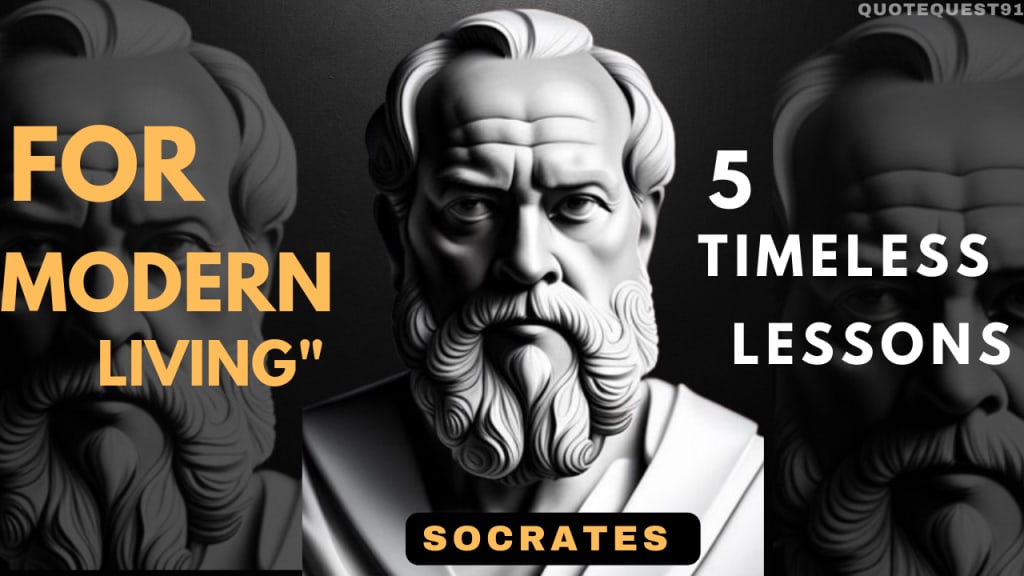
Throughout history, many great minds have left an indelible mark on human civilization, shaping the way we think and perceive the world. Among these luminaries, Socrates, the ancient Greek philosopher, stands tall as a paragon of wisdom and intellectual pursuit. Socrates' method of relentless questioning and emphasis on self-examination have not only influenced philosophical thought but also have enduring relevance in our contemporary world. In this essay, we will explore some of the core aspects of Socratic philosophy and demonstrate why Socrates was right in advocating for the importance of critical thinking, self-awareness, and the pursuit of knowledge.
At the heart of Socrates' teachings was his famous Socratic method, a form of cooperative argumentative dialogue that seeks to stimulate critical thinking and expose contradictions in people's beliefs. Rather than providing direct answers, Socrates would engage in thought-provoking conversations, challenging individuals to question their assumptions and delve deeper into the nature of truth. This method emphasized the value of intellectual humility, as it acknowledged that no one possessed absolute knowledge. By encouraging individuals to examine their own understanding and biases, Socrates aimed to instill a sense of intellectual integrity and open-mindedness.
One of the central maxims of Socratic philosophy was the notion that "an unexamined life is not worth living." Socrates believed that self-awareness and introspection were essential for leading a meaningful and virtuous existence. He contended that individuals who went through life without reflecting on their actions and beliefs merely existed on a superficial level, devoid of true purpose and fulfillment. Instead, he urged people to engage in constant self-inquiry, as this would lead to a deeper understanding of oneself and foster personal growth.
In the context of modern society, Socrates' emphasis on critical self-reflection remains as relevant as ever. In an age characterized by information overload and instant gratification, individuals often find themselves navigating a complex web of opinions and perspectives. The art of self-examination allows us to discern between genuine beliefs and societal conditioning, enabling us to make informed decisions and lead authentic lives. Socrates' wisdom encourages us to step back from the noise of the world and ask ourselves, "What do I truly believe? What are my values, and why do I hold them?"
Moreover, Socrates' approach to knowledge serves as a powerful reminder of the importance of intellectual curiosity. In a rapidly changing world, the acquisition of knowledge has never been more crucial. Socrates' acknowledgment of his own ignorance set a precedent for intellectual humility, encouraging us to be open to learning from others and embracing diverse perspectives. This humility fosters a growth mindset, wherein we see challenges as opportunities for learning and view failures as stepping stones toward progress.
In contemporary society, it is essential to recognize that knowledge is not fixed but constantly evolving. The willingness to engage in lifelong learning, a value Socrates championed, enables us to adapt to new circumstances and remain relevant in an ever-changing landscape. Whether it be through formal education or self-directed study, the pursuit of knowledge broadens our horizons and enriches our understanding of the world.
Another crucial aspect of Socratic philosophy is the notion of ethical living. Socrates firmly believed that virtue was the highest form of goodness and that understanding the principles of ethics was vital for a just society. He questioned the widely held belief that people intentionally do wrong and argued that those who commit immoral acts do so out of ignorance and confusion about what is truly good. Therefore, he posited that virtue was knowledge and that individuals who understood what was right would inevitably choose virtuous actions.
This perspective on ethics remains relevant in modern ethical discourse. Socrates' emphasis on the relationship between knowledge and virtue challenges us to reflect on the sources of our moral values. Examining the motivations behind our actions and decisions can lead to a more conscientious and principled way of living. In today's complex ethical dilemmas, Socratic philosophy encourages us to think deeply about the consequences of our choices and the impact they have on others and society as a whole.
In conclusion, Socrates' enduring legacy lies in his advocacy for critical thinking, self-awareness, and the pursuit of knowledge. The Socratic method's ability to stimulate intellectual curiosity and foster open dialogue remains a potent tool for cultivating a thinking society. Embracing the value of self-examination enables us to lead more meaningful lives and make informed decisions based on authentic values. Furthermore, Socrates' insights into ethics urge us to reflect on the foundation of our moral principles and, in turn, strive for a more virtuous existence.
As we continue to navigate the complexities of the modern world, Socrates' teachings serve as a timeless guide, reminding us of the significance of intellectual inquiry and the continuous pursuit of wisdom. By embracing the essence of Socratic philosophy, we can hope to create a more enlightened and compassionate world, driven by the pursuit of truth and the quest for a life well-lived. Socrates was right, and his wisdom echoes through the ages, inviting us to embark on a journey of intellectual discovery and self-realization.
About the Creator
Asim hussain
- In conclusion my name is Asim Hussain
- and I am an enthusiastic Article Writer with a dedication to delivering high quality content
Keep reading
More stories from Asim hussain and writers in History and other communities.
Believe You Can, and You're Halfway There: The Power of Positive Thinking
Throughout history, great leaders and thinkers have emphasized the importance of belief in achieving success. Among them, Theodore Roosevelt, the 26th President of the United States, left us with an enduring message: "Believe you can, and you're halfway there." These simple yet profound words capture the essence of the power of positive thinking and the impact it can have on our lives.
By Asim hussain3 years ago in History
Titanic Menu Card Sells for £100,000 at Auction
A rare menu card from the legendary ocean liner RMS Titanic has sold at auction for an astonishing £100,000, highlighting the enduring fascination with one of history’s most famous maritime disasters. The menu, believed to have been from a first-class meal served shortly before the ship’s tragic sinking in 1912, is considered one of the most remarkable surviving artifacts from the doomed voyage.
By Irshad Abbasi 3 days ago in History




Comments
There are no comments for this story
Be the first to respond and start the conversation.