
Saudi Arabia Warns Against War
Regional stability, energy security, and diplomacy drive Gulf resistance to escalation

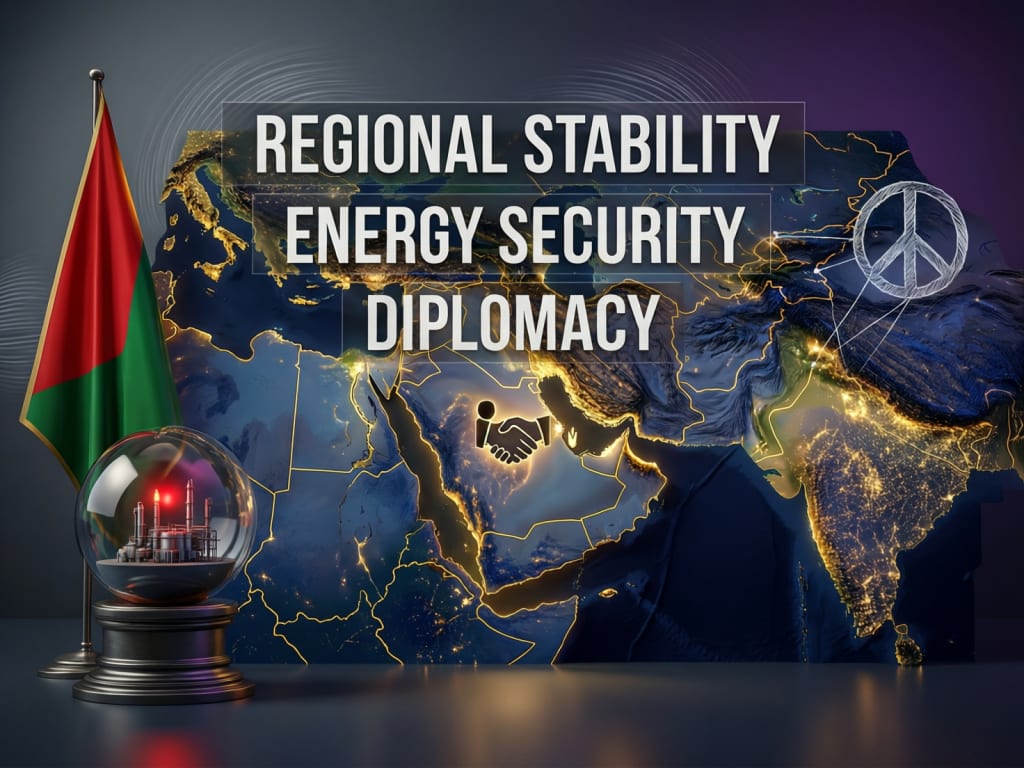
Saudi Arabia Warns Against War: Why Riyadh Opposes a U.S. Attack on Iran
As tensions between the United States and Iran continue to rise, Saudi Arabia has taken a notable and cautious position: warning against any U.S. military attack on Iran. This stance may surprise some observers given the long history of rivalry between Riyadh and Tehran, but it reflects a broader regional concern that another major war in the Middle East could spiral beyond control.
Saudi Arabia’s message is not one of defending Iran’s policies or actions. Instead, it is a warning grounded in realism. A direct U.S. strike on Iran would not remain a limited confrontation. It could trigger retaliation across the region, disrupt global energy markets, and place Gulf states directly in the line of fire—whether they want to be involved or not.
One of the clearest signals from Riyadh has been its refusal to allow its airspace or territory to be used for any attack on Iran. This decision sends a strong diplomatic message: Saudi Arabia does not want to be a launchpad for war. Given the presence of U.S. military assets in the region, this restriction highlights Saudi Arabia’s determination to stay out of direct conflict and avoid becoming a target for Iranian retaliation.
The reasons behind this stance are strategic as much as political. The Gulf region sits at the heart of global energy supply. Any military escalation involving Iran could threaten shipping lanes, oil facilities, and infrastructure critical to the world economy. Saudi leaders understand that even a short conflict could send oil prices soaring, disrupt trade, and damage economies far beyond the Middle East.
Beyond economics, there is the issue of regional security. A U.S. attack on Iran would likely provoke responses from allied groups across the region, increasing instability in Iraq, Syria, Lebanon, and Yemen. For Gulf states that are already navigating fragile security environments, this is a risk they are unwilling to accept. War, once ignited, rarely stays contained.
Saudi Arabia’s warning also reflects a shift in regional diplomacy. In recent years, Riyadh has pursued de-escalation and dialogue rather than confrontation. This includes efforts to restore diplomatic ties with Iran and reduce proxy conflicts. While mistrust remains, Saudi leadership appears convinced that managed rivalry is preferable to open warfare.
Other regional players share this concern. Countries like Qatar, Oman, Egypt, and Turkey have also urged restraint, emphasizing diplomacy over military action. Together, these voices form a regional consensus: escalation would do more harm than good. This collective pressure has played a role in slowing momentum toward immediate military confrontation.
From Washington’s perspective, the situation is complex. U.S. leaders must balance domestic political pressures, alliance commitments, and security concerns—particularly regarding Iran’s nuclear and missile programs. However, regional opposition from partners like Saudi Arabia complicates the picture. Military action without regional support risks isolating the United States and undermining long-term strategic relationships.
Saudi Arabia’s position also carries symbolic weight. Historically, the kingdom has been closely aligned with U.S. security policies. Its decision to publicly caution against an attack signals that alliances do not mean unconditional agreement. Partners can—and sometimes must—draw boundaries when their core interests are at stake.
This moment highlights an important truth about modern global affairs: power is no longer exercised only through force. Influence now flows through diplomacy, economic interdependence, and regional consensus. Saudi Arabia’s warning is an example of how states seek to shape outcomes not by confrontation, but by preventing conflict before it begins.
For the international community, the message is clear. Another large-scale war in the Middle East would not solve underlying problems. It would deepen humanitarian suffering, destabilize fragile regions, and strain global systems already under pressure. Saudi Arabia’s opposition to a U.S. attack on Iran underscores a growing recognition that restraint is not weakness—it is strategy.
As tensions continue, the world will be watching whether diplomacy holds or gives way to force. Saudi Arabia’s warning serves as a reminder that even rivals can agree on one essential point: the cost of war today would be far greater than its promise of resolution.
About the Creator
Wings of Time
I'm Wings of Time—a storyteller from Swat, Pakistan. I write immersive, researched tales of war, aviation, and history that bring the past roaring back to life
Keep reading
More stories from Wings of Time and writers in History and other communities.
Is the U.S. Preparing to Attack Iran?
Is the U.S. Preparing to Attack Iran? Inside the Rising Tensions and Possible Military Pathways In early 2026, tensions between the United States and Iran reached one of their highest points in years. For weeks, dramatic political rhetoric, shifting military postures, and warnings from leaders around the world have fueled alarms that a U.S. military strike against Iran may be imminent. Yet as of now, no confirmed attack has occurred, and the situation reflects a complex mix of pressure, preparation, de-escalation, and diplomatic uncertainty that illustrates how modern conflict can hinge just as much on words and positioning as on direct action.
By Wings of Time 2 months ago in History
The Exorcist instills fear, but Christ gave authority over evil
Another version of The Exorcist is coming Different cultures have their own methods of dealing with the supernatural. This article is based on my experience and is not intended to guarantee anyone the results they will have should they encounter evil spirits.
By Cheryl E Prestonabout 14 hours ago in History
Two Grumpy Old Men Solve the Problem
Marty and Steve were two grumpy old men who lived together. They had known each other for years. Marty had been a bachelor all his life. Steve said it was because no one could stand to ever live with. Marty’s standard reply was “Well, you are, so what sort of a moron does that make you!”
By Calvin London2 days ago in Humor


Comments
There are no comments for this story
Be the first to respond and start the conversation.