
Reform or Replace? The Future of Global Governance
Why the world must decide whether to fix international institutions—or build something new

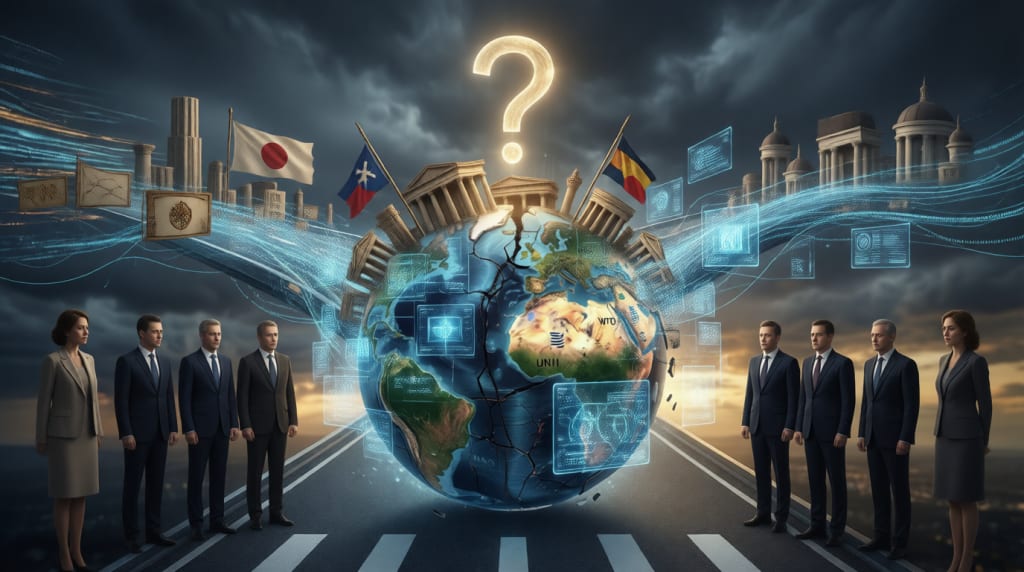
Reform or Replace? The Future of Global Governance
Global governance stands at a critical crossroads. Institutions created after World War II—especially the United Nations—were designed to prevent another global catastrophe. For decades, they provided platforms for dialogue, coordination, and conflict management. But today, many people question whether these institutions still work as intended. The growing debate is no longer just about reform. It is about whether global governance should be repaired or replaced entirely.
The world has changed dramatically since these institutions were formed. Power is no longer concentrated in a few countries. New economic and political actors have emerged. Technology has reshaped warfare, communication, and influence. Yet many global institutions still operate with old structures, outdated rules, and decision-making systems that struggle to reflect modern realities.
Supporters of reform argue that global institutions are still necessary. They point out that no other system exists that can bring nearly every country to the same table. The United Nations, despite its weaknesses, remains the only truly global forum for diplomacy. Reform advocates believe the problem is not the idea of global governance, but how it is managed.
Key reform demands include making institutions more representative, transparent, and accountable. Critics argue that bodies like the UN Security Council no longer reflect the balance of global power. Some countries hold permanent influence, while others—despite large populations or regional importance—have limited say. Reformers believe updating these structures would restore trust and relevance.
Another major reform issue is enforcement. Global institutions often issue resolutions and warnings, but lack the power or unity to enforce them. When rules are broken without consequences, credibility suffers. Supporters of reform argue that stronger enforcement mechanisms—applied fairly—could rebuild confidence in international law.
On the other side of the debate are those who believe replacement is the only option. They argue that existing institutions are too deeply flawed to be fixed. Political rivalries, veto powers, and national interests often block meaningful action. In moments of crisis, global bodies are accused of reacting too slowly or failing entirely.
Replacement advocates suggest creating new systems that better reflect today’s world. They imagine smaller, more flexible coalitions based on shared values or regional cooperation. Technology-driven platforms, economic alliances, and issue-specific organizations could replace large, slow institutions. According to this view, global governance should evolve naturally rather than remain tied to the past.
However, replacing global institutions carries serious risks. Building new systems from scratch would take years, if not decades. During that time, global cooperation could weaken. Without a shared authority, competition between rival systems could increase. Instead of one imperfect global structure, the world might face many fragmented ones—each serving different interests.
There is also the question of legitimacy. Existing institutions, despite criticism, are recognized worldwide. New systems would struggle to gain universal acceptance. Some countries might join, others might refuse. This division could deepen global instability rather than reduce it.
The debate between reform and replacement also reflects a deeper issue: trust. Many countries feel global governance no longer protects their interests fairly. Others worry that weakening institutions benefits only the strongest powers. Until trust is restored, any solution—reform or replacement—will face resistance.
A realistic path forward may lie between the two extremes. Instead of complete replacement or minimal reform, global governance may need gradual transformation. Updating leadership structures, improving transparency, and strengthening cooperation on shared threats like climate change and pandemics could help institutions adapt without collapsing.
The future of global governance is not just a political question—it is a human one. Decisions made in international halls affect food security, peace, migration, and survival itself. Whether the world chooses reform or replacement, doing nothing is the most dangerous option.
Global governance may be imperfect, but its absence would leave a vacuum filled by power, fear, and conflict. The challenge ahead is not choosing between reform or replace—but ensuring that cooperation survives in a divided world.
About the Creator
Wings of Time
I'm Wings of Time—a storyteller from Swat, Pakistan. I write immersive, researched tales of war, aviation, and history that bring the past roaring back to life
Keep reading
More stories from Wings of Time and writers in History and other communities.
Can Global Peace Exist Without a Global Authority?
Can Global Peace Exist Without a Global Authority? The idea of global peace without a global authority sounds appealing to some people. In theory, nations could manage their own affairs, respect each other’s borders, and resolve disputes peacefully without an overarching institution telling them what to do. Supporters of this view argue that global bodies are slow, biased, and often ineffective. But history and current events raise a difficult question: can lasting global peace truly exist without a central authority to guide it?
By Wings of Time 2 months ago in History
The Year 2017 in Review: Fun Facts, Trivia, and Historic Highlights
This quick read is a collection of fun facts, trivia, and historical events from the year 2017. Discover the year’s top news stories, most influential people, sports facts, computer and Internet news, entertainment trivia, and much more.
By Gregory DeVictora day ago in History




Comments
There are no comments for this story
Be the first to respond and start the conversation.