Latest Stories
Most recently published stories in History.
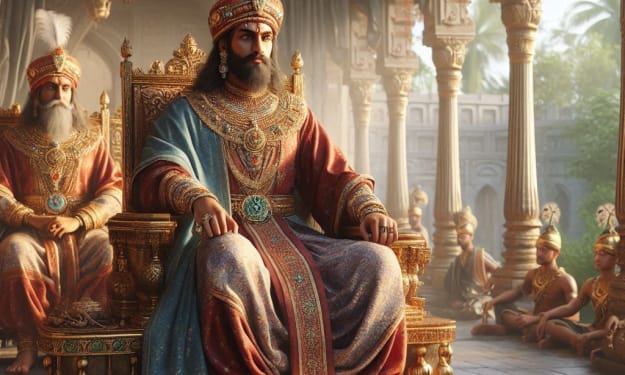
The Rise and Fall of the Mauryan Empire
Few things have driven humanity more than the ambition for power. Across history, we've witnessed how the desire for control, glory, and land can elevate or destroy empires. Today, we explore one of the most influential civilizations in ancient India: the Mauryan Empire. This post dives deep into how this empire emerged, expanded, and left a lasting impact not only on the Indian subcontinent but on the world. Starting in the 6th century BCE, the Indian subcontinent saw the rise of various political units called the Mahajanapadas. Among them, the Kingdom of Magadha was the most powerful, but under the rule of the Nanda dynasty, it became infamous for oppressive governance. King Dhana Nanda's reign (329-321 BCE) was marked by high taxes and cruelty, making the dynasty deeply unpopular. Adding to this internal unrest, the western part of India was thrown into chaos after the invasion of Alexander the Great, further destabilizing the region. Amidst this turmoil, a Brahmin statesman named Kautilya (or Chanakya) envisioned the possibility of uniting India under a centralized empire to ward off invaders and restore peace. After being scorned by King Dhana Nanda, Kautilya found an ally in Chandragupta Maurya, a young warrior with immense potential. Together, they plotted to overthrow the Nanda dynasty and establish a new order. Taking advantage of the power vacuum left by Alexander’s forces, Chandragupta began his military campaigns in northwest India, toppling weakened Greek-Macedonian rule. With Kautilya’s brilliant strategy, Chandragupta continued to advance through India, eventually taking the heart of Magadha and claiming the throne. In 321 BCE, Chandragupta founded the Mauryan Empire, establishing Pataliputra (modern-day Patna) as its capital. Chandragupta's empire quickly expanded to encompass much of India, from its western coast to the southern regions. Plutarch even noted that his army reached an astonishing 600,000 soldiers. Chandragupta also came into conflict with Seleucus I Nicator, one of Alexander’s successors. After a war in 301 BCE, the two leaders signed a treaty that gave Chandragupta large territories in exchange for war elephants—a move that further cemented the Mauryan power. The Mauryan Empire was one of the most well-organized empires of its time. Chandragupta ruled through a sophisticated bureaucratic system. The king was the head of the state, with a council of ministers advising him on military, financial, and administrative matters. Provinces were governed by royal princes, and the administration extended down to village levels, ensuring strict control over social and economic life. The empire maintained a vast spy network and a large standing army, with specialized units for infantry, cavalry, navy, and war elephants. Soldiers were highly valued, focusing solely on warfare and not being required for other services. Chandragupta’s rule established a model of efficient governance that influenced later rulers in the region. The Mauryan economy was largely state-controlled. The empire monopolized essential industries like coinage, salt production, mining, and weapon manufacturing. Agriculture was heavily taxed, and merchants were organized into guilds that held judicial and executive power. Trade flourished under state supervision, with strict regulations on prices, weights, and measures. Roads and rivers connected the empire to foreign markets, extending even to Sri Lanka, China, and Arab ports, promoting a vibrant trade network. After ruling for 25 years, Chandragupta abdicated in favor of his son Bindusara, who expanded the empire further into southern India. However, it was Ashoka, Chandragupta’s grandson, who left the most significant mark on the empire and the world. Initially a ruthless ruler known for his cruelty, Ashoka waged a bloody war against the kingdom of Kalinga, resulting in immense loss of life. This campaign traumatized Ashoka, leading him to adopt Buddhism and embrace non-violence, promoting the concept of dhamma—a philosophy of righteous behavior and goodwill. Ashoka’s reign saw the construction of monumental stupas and the spread of Buddhism across Asia, with missionary efforts reaching Sri Lanka, Southeast Asia, and beyond. Yet, despite Ashoka’s efforts to promote peace, his successors lacked his strength. After his death, the empire began to fracture, and by 185 BCE, the last Mauryan ruler, Brihadratha, was assassinated, ending the dynasty. The Mauryan Empire, the largest to ever exist on the Indian subcontinent, was driven by a relentless pursuit of power, but like many great empires, it faced internal strife and external pressures that led to its decline. The administrative, economic, and cultural advancements during its reign left an indelible legacy that shaped the Indian subcontinent for centuries. The rise and fall of the Mauryan Empire serve as a testament to the cyclical nature of power—where ambition builds great civilizations, but also sows the seeds of their eventual collapse. Their names, however, live on, carried by the cultural and social reforms they left behind. If you enjoyed this article, give it a thumbs up, and don't forget to share it with others. Stay tuned for more stories about empires, power, and history!
By A Históriaabout a year ago in History
Where is Maanhuttaan?
The biggest problem that Latvian immigrants had in New York City in the 1950s was that the older generation in families the grandmothers and grandfathers often had a most difficult time with English. Mostly they managed by going outside with other family members, babysitting for their grandchildren who picked up English real quick, or just socializing with other Latvians. Well, one grandpa took himself and his wife on a great adventure one fine day.
By Rasma Raistersabout a year ago in History
The History Of Antique Village In Denham Springs, Louisiana
Introduction to Antique Village Nestled in the charming town of Denham Springs, Louisiana, lies a hidden gem known as Antique Village. This unique collection of shops is more than just a marketplace; it's a vibrant tapestry woven from history, culture, and creativity. Each storefront tells its own story through vintage treasures waiting to be discovered.
By Wilbert Elsenrathabout a year ago in History
Flutterwave Scandal: What It Means for Africa’s Start-Up Scene
The African start-up ecosystem has seen incredible growth in recent years, with innovative companies emerging in fintech, e-commerce, healthcare, and agriculture, aiming to solve local problems with global solutions. Among the top players in this ecosystem is Flutterwave, a Nigerian-founded fintech company that provides payment services to businesses and individuals across Africa. However, the company has recently come under scrutiny due to a series of scandals that have threatened its reputation and raised concerns about governance, transparency, and accountability in Africa’s booming start-up scene.
By Farhan Mirzaabout a year ago in History
New York Federal Reserve’s Gold Depository in 1959
In the heart of Manhattan, 80 feet below the bustling streets, lies one of the most heavily fortified and secretive locations in the world: the gold depository of the New York Federal Reserve. Operational since 1924, this hidden vault has housed some of the world’s largest gold reserves, offering a secure storage space for foreign governments, central banks, and international organizations. By 1959, during the height of the Cold War, the depository held an astounding 12,000 tons of gold, making it one of the most significant collections of precious metal ever amassed.
By Deji Akomolafeabout a year ago in History
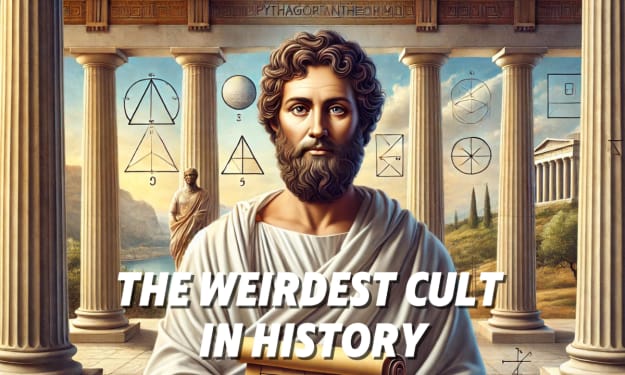
Step Inside the Weirdest Cult in History: Pythagoras
Many of us grew up with a favorite number. It was a bit of a necessity, really. "What's your favorite number?" was one of those important questions kids used to decide if others were worthy of their time, along with "Who's your favorite Ninja Turtle?" and "Are you with the Rebellion or the Empire?" Not everyone grows out of it. Marissa Mayer, former CEO of Yahoo, has a thing for highly divisible numbers like 12. People around the world seem to be drawn to the number seven, and we all know someone who has to have the volume set to an even number.
By Marveline Merababout a year ago in History
The Psychopath Who Invented Your Breakfast: Dr. John Harvey Kellogg
In the early 1900s, if you were an affluent American suffering from health issues, you might have considered a stay at the world-famous Battle Creek Sanitarium, often called "the San." Located in Michigan, the San sprawled across 30 acres and promised a cool and delightful summer resting place. Walking through its gates, guests were greeted by the Latin phrase mens sana in corpore sano—a healthy mind in a healthy body—etched into the entrance. They would find people sunbathing in the gardens or strolling through the picturesque woods, and inside, the lobby boasted fine furniture, crystal chandeliers, and plush Persian rugs. However, among the tranquility, guests might also hear an occasional scream from a distant treatment room—but more on that later.
By Marveline Merababout a year ago in History
The Real Weapon That Could Destroy New York: The Tsar Bomba
When it’s been a long year, and you’re in desperate need of some rest and relaxation, nothing quite compares to an island holiday. The soothing sounds of the ocean breeze, waves lapping against the shore, and maybe even the soft clinking of ice in your drink. But while you might be relaxing in a tropical paradise, some islands have seen far more explosive events—literally.
By Marveline Merababout a year ago in History
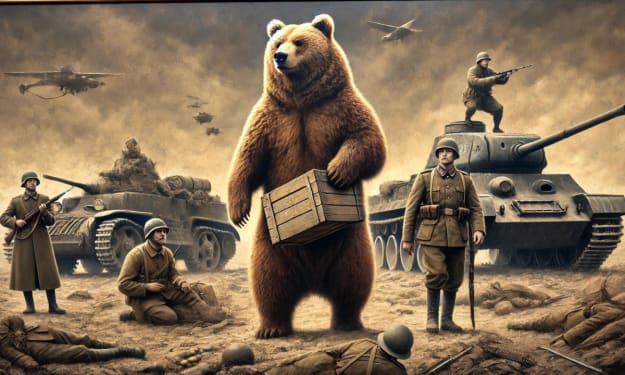
The Bear Who Fought the Nazis and Won: Wojtek the Soldier Bear
For centuries, humans have enlisted animals to fight by their side, and Wojtek, a Syrian brown bear who served in WWII, was no exception. While elephants, horses, and even pigeons have had their moments in war, a beer-drinking, cigarette-smoking bear seems like a story too wild to believe. But believe it or not, Wojtek, or "Joyful Warrior," as the Polish soldiers called him, was not just a mascot; he was a genuine soldier who carried ammunition during some of the toughest battles of the war. His legacy, celebrated by monuments in Europe, stands as one of the most unique and heartwarming tales of animal bravery in human history.
By Marveline Merababout a year ago in History
How a Man Escaped Prison By Melting Iron Bars With Soup: The Great Escapes of Yoshie Shiratori
When you think of a classic prison escape, you might picture desperate inmates feverishly filing away at the bars of their cell windows, spotlights sweeping across the prison yard, and daring criminals clambering over tall walls. Or maybe even an improbably long tunnel hidden behind a poster of a 1940s film icon. But one thing you’re less likely to picture in this daring scenario is a steaming hot bowl of miso soup. Yet, for Japanese anti-hero Yoshie Shiratori, miso soup was the key to one of the most ingenious prison escapes in history.
By Marveline Merababout a year ago in History
The 2,000-Year-Old Roman Parade Helmet
In May 2010, a remarkable discovery was made in Cumbria, a picturesque county in northwestern England, by a local treasure hunter using a metal detector. Buried beneath the soil for nearly two millennia lay a beautifully preserved Roman helmet and mask, dating from the late 1st to early 2nd century AD. The helmet, believed to have been used by Roman nobles during cavalry parades, offers a rare glimpse into the ceremonial splendor of ancient Rome’s military tradition. When it was sold at Christie's Auction House in London in April 2023 for an astounding $3.6 million—eight times its estimated value—it became one of the most famous Roman artifacts discovered in the UK.
By Deji Akomolafeabout a year ago in History
What Did Wealthy Romans Smell Like?
In 2019, an unexpected discovery was made in the small Spanish town of Carmona. As a resident was digging a swimming pool in their backyard, they broke through the earth and into an underground chamber. What lay beneath was not just empty space but an intact Roman family tomb dating back to the 1st century AD. Six burial urns were found inside, along with various funerary offerings, each shedding light on the Roman customs and beliefs surrounding death and the afterlife. Among these offerings was something extraordinary—a small, delicately carved bottle of quartz crystal containing the perfectly preserved remnants of an ancient perfume. This discovery provides modern scholars with a rare glimpse into what wealthy Romans may have smelled like during their daily lives.
By Deji Akomolafeabout a year ago in History