
The Psychopath Who Invented Your Breakfast: Dr. John Harvey Kellogg
How a Health-Obsessed Doctor Invented Cornflakes to Curb Sinful Desires

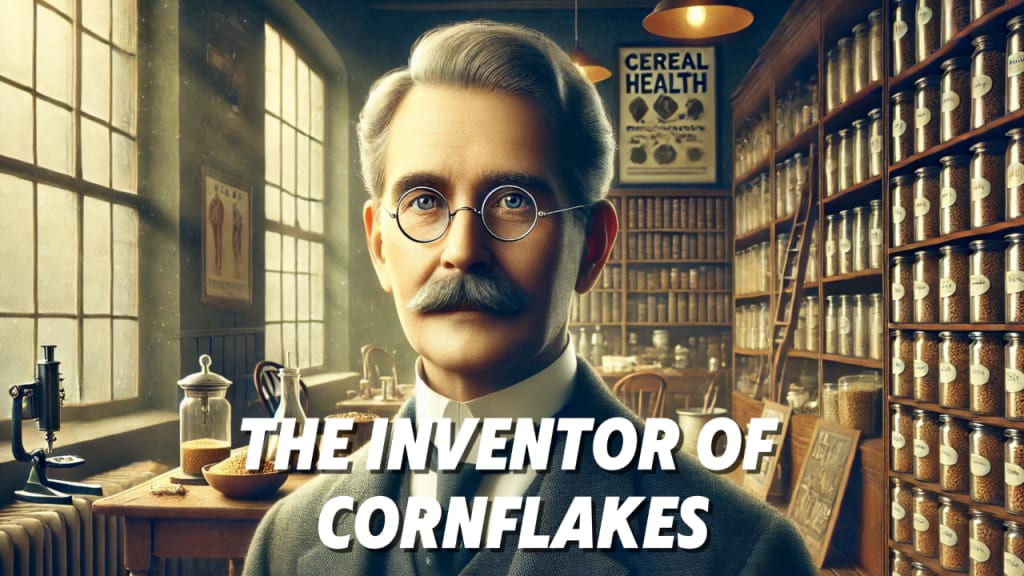
In the early 1900s, if you were an affluent American suffering from health issues, you might have considered a stay at the world-famous Battle Creek Sanitarium, often called "the San." Located in Michigan, the San sprawled across 30 acres and promised a cool and delightful summer resting place. Walking through its gates, guests were greeted by the Latin phrase mens sana in corpore sano—a healthy mind in a healthy body—etched into the entrance. They would find people sunbathing in the gardens or strolling through the picturesque woods, and inside, the lobby boasted fine furniture, crystal chandeliers, and plush Persian rugs. However, among the tranquility, guests might also hear an occasional scream from a distant treatment room—but more on that later.
Battle Creek Sanitarium wasn’t just a health retreat; it was a destination for the health-conscious elite. Its guests included the likes of Henry Ford, President Warren Harding, and Thomas Edison. Visitors might even spot a peculiar figure cycling around in a white suit, complete with white shoes and a cockatoo perched on his shoulder, dictating notes to a man following closely behind. This unusual character was none other than Dr. John Harvey Kellogg, the San's founder, and the poor fellow chasing after him? His younger brother, William Kellogg.
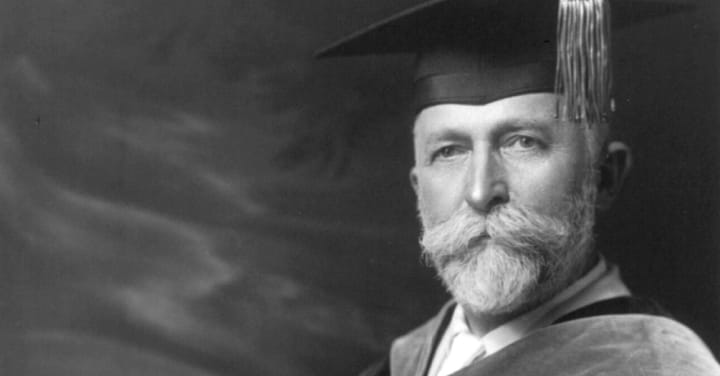
Dr. John Harvey Kellogg: The Eccentric Health Guru
Dr. John Harvey Kellogg was more than just a health fanatic—he was a pioneer of wellness and arguably created the entire concept of the wellness industry, which today is populated by all manner of health-conscious individuals and, yes, the occasional celebrity peddling bizarre treatments. Thanks to Kellogg's passion for good health, we now have the convenience of breakfast cereals, notably Kellogg's Cornflakes.
You’ve probably heard John Harvey Kellogg's name before, and perhaps you've even heard the infamous story that he invented cornflakes to stop people from masturbating. Delightfully, this is completely true, but it’s just the tip of the iceberg when it comes to Kellogg's eccentricity.
John was no stranger to illness. He was a sickly child, and out of his 16 siblings and half-siblings, six died from infectious diseases. Growing up as a Seventh-day Adventist, Kellogg’s parents didn't prioritize education, believing the second coming of Christ was near, so formal schooling wasn’t essential. However, John was a bright and determined child, and the Adventist church saw his potential, eventually sending him to medical school. After graduation, he took charge of their Health Reform Institute, which he transformed into the Battle Creek Medical Surgical Sanitarium, a sprawling combination of a medical center, spa, and grand hotel.
Under John’s leadership, the San became a haven for what he called "biological living," a philosophy inspired by his Adventist beliefs. He saw the human body as the temple of the Holy Spirit and believed it should be nurtured and protected at all costs. His sanitarium encouraged exercise, fresh air, plenty of sleep, good hygiene, and a nutritious, easy-to-digest diet. He was deeply against meat, alcohol, tobacco, sugar, and caffeine, viewing these substances as harmful.
From Light Baths to Yogurt Enemas
At first glance, many of John Kellogg’s health practices seem logical. After all, caffeine, nicotine, and alcohol can be harmful when misused. But things took a stranger turn with some of his more unconventional treatments. For instance, Kellogg was a proponent of light therapy. He believed that exposure to artificial light could cure anything from depression to diabetes. Patients would stand or lie in a light shower, akin to today’s sunbeds, in hopes of curing their ailments.
But the cleansing didn’t stop there. One of Kellogg’s most notorious treatments was the enema—yes, the process of flushing the bowels with water. But Kellogg didn’t just stop at a simple enema. He created machines that pumped a staggering 14 liters of water per minute into a patient's bowels. And then there were the yogurt enemas. In this unique procedure, patients would eat half a pint of yogurt, while the other half was—brace yourself—pumped into their bowels, with Kellogg believing this would provide protective germs and a squeaky clean intestine.
If this wasn’t enough to shock visitors, there was always the vibrating chair Kellogg invented. Unlike today’s luxurious massage chairs, Kellogg's vibrating chair was a simple wooden seat that would shake a person up to 60 times per second. If that wasn’t stimulating enough, patients could opt to be strapped into a slapping machine that would “flog” or “pound” them as part of their treatment.
The Battle Against Masturbation
Meet the Psychopath Who Invented Your Breakfast. You'll definitely enjoy this!
However, Kellogg’s most notorious belief was his crusade against sex and, particularly, masturbation. Kellogg believed that sex for pleasure was the root of many societal problems, a sentiment he took to extreme lengths. He practiced what he preached, remaining celibate during his 40-year marriage. His honeymoon was spent writing about the dangers of sexual intercourse, leading to the publication of his book, Plain Facts About Sexual Life—a real page-turner, no doubt.
John Harvey Kellogg's stance on masturbation was perhaps the most bizarre. He believed that the act was a violation of natural law and caused a variety of ailments, including memory loss, impaired vision, epilepsy, and insanity. To combat this supposed epidemic, Kellogg employed extreme methods. To begin with, he would tie patients' hands to prevent them from touching themselves. If that failed, he resorted to more drastic measures, such as bandaging or caging their genitalia. For boys, he advocated circumcision—without anesthesia—as a deterrent, believing the resulting pain would associate masturbation with suffering. If circumcision didn’t work, he would go so far as to sew the foreskin shut, preventing erections altogether. His female patients didn’t fare much better. For girls, Kellogg would apply carbolic acid to the clitoris or, in more extreme cases, remove it altogether.
The Creation of Kellogg’s Cornflakes
Kellogg’s obsession with preventing sexual stimulation extended to his diet recommendations. He believed that bland foods could help subdue hedonistic impulses. America’s breakfasts at the time were rich and hearty, often consisting of porridge, fried bacon, and steak. Kellogg sought to change that, which led to the invention of his now-famous breakfast cereal: Kellogg’s Cornflakes.
But the creation of Cornflakes wasn’t entirely Kellogg’s doing. His younger brother, Will, played a significant role in its development, though their relationship was strained at best. As children, John was domineering, often using Will as his personal foot warmer during cold nights. As adults, John brought Will into his sanitarium, where Will worked tirelessly, often clocking 120-hour workweeks for minimal pay. One of his duties included managing the kitchen, where he helped refine the recipe for Cornflakes.
In 1898, Will accidentally left out a batch of dough, which fermented overnight. When he returned, he decided to roll it out anyway, producing thin flakes that became crispy when baked. Thus, the first flaked cereal was born. Will continued experimenting and eventually replaced the wheat with corn, creating the beloved Kellogg’s Cornflakes. The cereal became a hit, first with patients at the San and then with the general public.
A Bitter Legal Battle
While Will saw the potential for their cereal to become a household staple, John had little interest in profit. His main focus remained on health and, of course, stopping people from masturbating. Will, however, was a businessman and knew that adding sugar to the flakes would make them even more appealing to consumers. John, horrified at the thought, refused, fearing the sugar would trigger uncontrollable sexual desires in consumers. This disagreement led to a major fallout between the brothers.
Will eventually struck out on his own, buying the rights to manufacture cornflakes and founding the Battle Creek Toasted Cornflake Company in 1906. His company flourished, and he soon became a successful businessman, producing 120,000 boxes of cornflakes a day. His advertising campaigns, which included offering toys in cereal boxes and adding nutrition labels, helped boost sales.
However, the success of Will’s business didn’t sit well with John. The two brothers engaged in a bitter legal battle over the use of the Kellogg name, which lasted for years. While John was a renowned doctor and wellness guru, Will’s marketing prowess made the Kellogg name synonymous with breakfast cereal. In the end, Will emerged victorious, and the Kellogg’s name became a cereal empire.
Conclusion
John Harvey Kellogg’s legacy is a fascinating blend of wellness innovation and eccentricity. His contributions to health, wellness, and breakfast foods are undeniable, but his extreme views and controversial treatments cast a shadow over his accomplishments. From his obsessive fight against masturbation to his bizarre medical treatments, Kellogg's life was anything but ordinary. Yet, thanks to his efforts—strange as they were—millions of people today enjoy a simple bowl of cornflakes without even a hint of scandal.
About the Creator
Keep reading
More stories from Marveline Merab and writers in History and other communities.
The Real Weapon That Could Destroy New York: The Tsar Bomba
When it’s been a long year, and you’re in desperate need of some rest and relaxation, nothing quite compares to an island holiday. The soothing sounds of the ocean breeze, waves lapping against the shore, and maybe even the soft clinking of ice in your drink. But while you might be relaxing in a tropical paradise, some islands have seen far more explosive events—literally.
By Marveline Merababout a year ago in History
Rajendra Chola I and the Conquest of the Ganga: A Monumental Feat in Indian History
Known as the “Gangaikonda Chola” (the Chola who conquered the Ganga), Rajendra transformed a South Indian maritime empire into a pan-Indian power whose influence stretched from the Indian Ocean to the heart of the subcontinent. This campaign was not merely a military raid but a bold statement of imperial ambition, strategic brilliance, and cultural confidence.
By Say the truth 3 days ago in History
THE GRAND EGYPTHION MUSEUM
Let’s be real for a second. When folks hear "museum," they often think of dusty halls, dry information, and that odd quiet where you feel like you're misbehaving just for breathing. But the Grand Egyptian Museum isn't like that. I really don't think that's it. It's not accurate at all. This just seems wrong. This place is really nice. Egypt really shows us that it made history, and it keeps on doing amazing things.
By Beshoy Zayerabout 13 hours ago in History



Comments
There are no comments for this story
Be the first to respond and start the conversation.