
The Rise and Fall of the Mauryan Empire
A Story of Power and Legacy

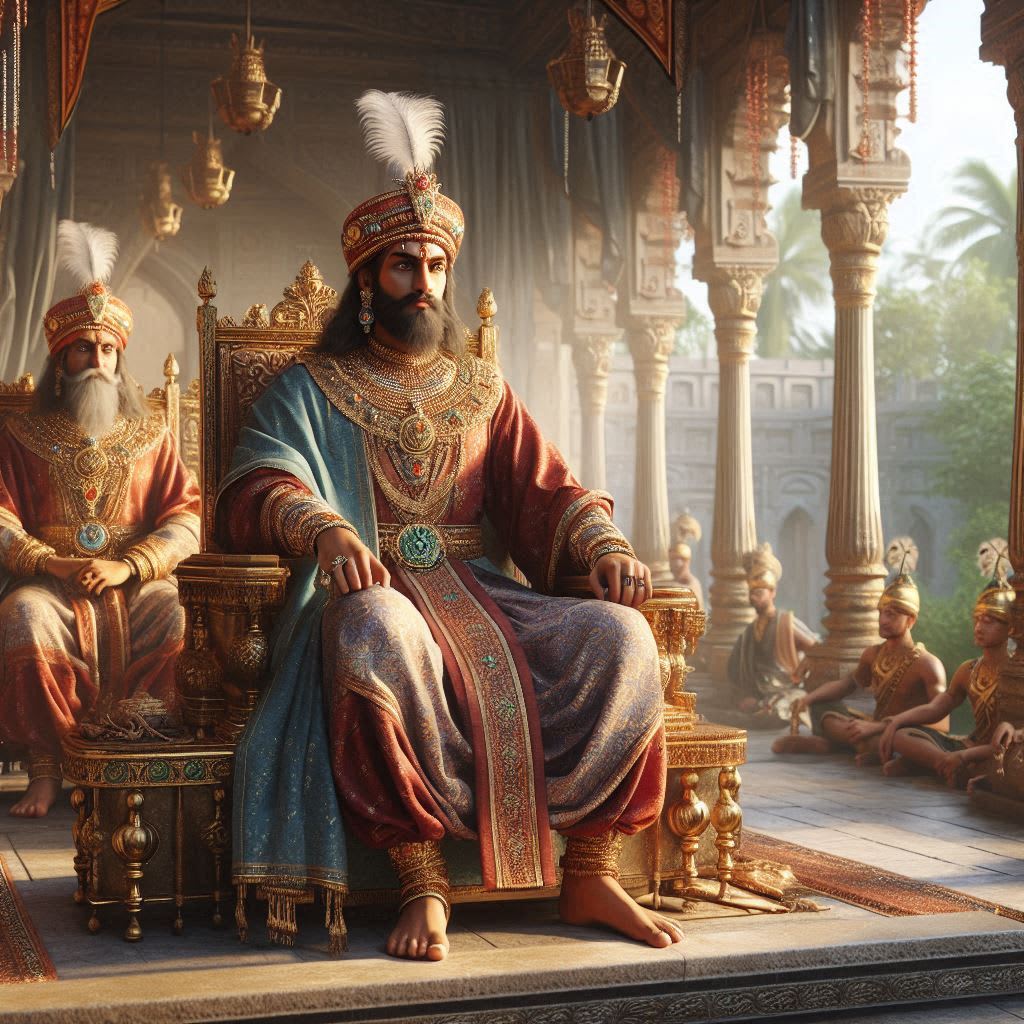
Few things have driven humanity more than the ambition for power. Across history, we've witnessed how the desire for control, glory, and land can elevate or destroy empires. Today, we explore one of the most influential civilizations in ancient India: the Mauryan Empire. This post dives deep into how this empire emerged, expanded, and left a lasting impact not only on the Indian subcontinent but on the world. Starting in the 6th century BCE, the Indian subcontinent saw the rise of various political units called the Mahajanapadas. Among them, the Kingdom of Magadha was the most powerful, but under the rule of the Nanda dynasty, it became infamous for oppressive governance. King Dhana Nanda's reign (329-321 BCE) was marked by high taxes and cruelty, making the dynasty deeply unpopular. Adding to this internal unrest, the western part of India was thrown into chaos after the invasion of Alexander the Great, further destabilizing the region. Amidst this turmoil, a Brahmin statesman named Kautilya (or Chanakya) envisioned the possibility of uniting India under a centralized empire to ward off invaders and restore peace. After being scorned by King Dhana Nanda, Kautilya found an ally in Chandragupta Maurya, a young warrior with immense potential. Together, they plotted to overthrow the Nanda dynasty and establish a new order. Taking advantage of the power vacuum left by Alexander’s forces, Chandragupta began his military campaigns in northwest India, toppling weakened Greek-Macedonian rule. With Kautilya’s brilliant strategy, Chandragupta continued to advance through India, eventually taking the heart of Magadha and claiming the throne. In 321 BCE, Chandragupta founded the Mauryan Empire, establishing Pataliputra (modern-day Patna) as its capital. Chandragupta's empire quickly expanded to encompass much of India, from its western coast to the southern regions. Plutarch even noted that his army reached an astonishing 600,000 soldiers. Chandragupta also came into conflict with Seleucus I Nicator, one of Alexander’s successors. After a war in 301 BCE, the two leaders signed a treaty that gave Chandragupta large territories in exchange for war elephants—a move that further cemented the Mauryan power. The Mauryan Empire was one of the most well-organized empires of its time. Chandragupta ruled through a sophisticated bureaucratic system. The king was the head of the state, with a council of ministers advising him on military, financial, and administrative matters. Provinces were governed by royal princes, and the administration extended down to village levels, ensuring strict control over social and economic life. The empire maintained a vast spy network and a large standing army, with specialized units for infantry, cavalry, navy, and war elephants. Soldiers were highly valued, focusing solely on warfare and not being required for other services. Chandragupta’s rule established a model of efficient governance that influenced later rulers in the region. The Mauryan economy was largely state-controlled. The empire monopolized essential industries like coinage, salt production, mining, and weapon manufacturing. Agriculture was heavily taxed, and merchants were organized into guilds that held judicial and executive power. Trade flourished under state supervision, with strict regulations on prices, weights, and measures. Roads and rivers connected the empire to foreign markets, extending even to Sri Lanka, China, and Arab ports, promoting a vibrant trade network. After ruling for 25 years, Chandragupta abdicated in favor of his son Bindusara, who expanded the empire further into southern India. However, it was Ashoka, Chandragupta’s grandson, who left the most significant mark on the empire and the world. Initially a ruthless ruler known for his cruelty, Ashoka waged a bloody war against the kingdom of Kalinga, resulting in immense loss of life. This campaign traumatized Ashoka, leading him to adopt Buddhism and embrace non-violence, promoting the concept of dhamma—a philosophy of righteous behavior and goodwill. Ashoka’s reign saw the construction of monumental stupas and the spread of Buddhism across Asia, with missionary efforts reaching Sri Lanka, Southeast Asia, and beyond. Yet, despite Ashoka’s efforts to promote peace, his successors lacked his strength. After his death, the empire began to fracture, and by 185 BCE, the last Mauryan ruler, Brihadratha, was assassinated, ending the dynasty. The Mauryan Empire, the largest to ever exist on the Indian subcontinent, was driven by a relentless pursuit of power, but like many great empires, it faced internal strife and external pressures that led to its decline. The administrative, economic, and cultural advancements during its reign left an indelible legacy that shaped the Indian subcontinent for centuries. The rise and fall of the Mauryan Empire serve as a testament to the cyclical nature of power—where ambition builds great civilizations, but also sows the seeds of their eventual collapse. Their names, however, live on, carried by the cultural and social reforms they left behind. If you enjoyed this article, give it a thumbs up, and don't forget to share it with others. Stay tuned for more stories about empires, power, and history!
About the Creator
A História
"Hi. My name is Wellington and I'm a passion for general history. Here, I publish articles on different periods and themes in history, from prehistory to the present day.
Keep reading
More stories from A História and writers in History and other communities.
Medieval Egypt
After the Islamic conquest in 639, Lower Egypt came under the governance of governors who acted on behalf of the Rashidun Caliphs and later the Umayyad Caliphs in Damascus. However, in 747, the Umayyads were ousted from power. During the Islamic rule, Askar was designated as the capital and served as the administrative center. The conquest resulted in the formation of two separate provinces, Upper and Lower Egypt, which were governed by the military and adhered to the directives issued by the governor of Egypt and the leaders of their respective communities. Egypt experienced a series of dynastic rule following the establishment of Islamic control in 639, lasting until the early 16th century. The Umayyad period, spanning from 658 to 750, marked an important phase in Egypt's history. Subsequently, the Abbasid period emerged, characterized by a greater emphasis on taxation and the consolidation of power. In 868, the Tulunids, led by Ahmad ibn Tulun, expanded Egypt's territorial influence into the Levant. Ahmad ibn Tulun's reign persisted until his demise in 884, after which his successor faced significant challenges, leading to a defection of many citizens back to the Abbasids. Consequently, in 904, the Abbasids regained control from the Tulunids.
By A História2 years ago in History
Islamic State Accused of Involvement in Antiquities Smuggling
The illegal trade in antiquities has long been a shadowy but profitable enterprise, and in recent years it has gained global attention due to the involvement of extremist groups. Among these groups, the so-called Islamic State (IS) has been widely accused by international investigators and cultural heritage experts of participating in the looting and smuggling of priceless historical artifacts. These activities not only threaten humanity’s shared cultural heritage but also provide a significant source of funding for militant operations.
By Irshad Abbasi about 20 hours ago in History


Comments (1)
Interesting sharing, but maybe some line breaks for easier reading next time? :)