Latest Stories
Most recently published stories in History.
US State Capital History Connecticut Delaware and Florida
Capital Honoring an English Town Adrian Block a Dutch explorer visited the area in 1614 and set up a trade post at Fort Good Hoop or Good Hope. Today in the city of Hartford, Connecticut this site is still a neighborhood called Dutch Point. When the first English settlers arrived in 1635 they renamed it Hartford in honor of the English town of Hertford, and home of Samuel Stone, one of the settlers.
By Rasma Raistersabout a year ago in History
Yemanjá
Yemanjá, also known as Iemanjá in Brazil, is a prominent figure in Afro-Brazilian religions and cultural expressions, recognized as the powerful and nurturing goddess of the sea. Revered in Candomblé and Umbanda, Yemanjá is known as the "Queen of the Ocean," embodying themes of motherhood, protection, and transformation. Her influence extends far beyond religious boundaries, touching Brazilian art, music, and annual celebrations that draw millions of devotees and tourists alike. In this article, we explore Yemanjá's origins, her symbolic role in Brazilian culture, and how her annual festival continues to inspire a sense of connection and renewal. Yemanjá originates from the Yoruba religion of West Africa, where she was venerated as one of the Orishas, powerful deities connected to nature. In the Yoruba tradition, Yemanjá is associated with rivers and motherhood, symbolizing fertility, nurturing, and emotional depth. The transatlantic slave trade, however, brought Yoruba practitioners to Brazil, where they adapted their religious practices in the face of colonial oppression. Over time, the worship of Yemanjá blended with local indigenous beliefs and elements of Catholicism, leading to the vibrant, syncretic Afro-Brazilian religious traditions we see today.
By A Históriaabout a year ago in History
Shajar al-Durr: The Story of a Powerful Queen
Shajar al-Durr: The Story of a Powerful Queen Shajar al-Durr, a prominent historical figure in medieval Egypt, was born in the mid-13th century in Damascus. She is best known as the wife of Sultan al-Malik al-Salih Ayyub and for her unique role in the history of Egypt and the Muslim world.
By Ahmed Mohamedabout a year ago in History
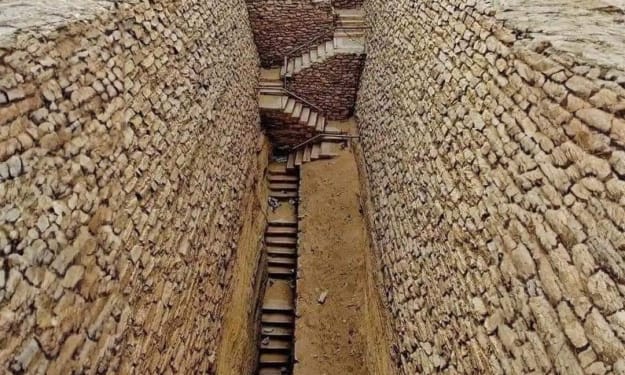
Steps Through Time: The Secrets of Pharaoh Djoser’s Tomb in Saqqara
The ancient Egyptian civilization remains one of the most mysterious and fascinating periods in history. With its monumental structures, intricate beliefs about life and the afterlife, and astounding advances in art, architecture, and science, this civilization still captivates our imaginations. Among the most impressive relics of ancient Egypt is the 4,800-year-old staircase leading to the southern tomb of Pharaoh Djoser in Saqqara, Egypt. These steps, which descend into the earth, do not merely represent a pathway; they are a window into a lost world of architectural genius, religious rituals, and beliefs that helped shape one of history's most influential cultures.
By Taimur Kazmiabout a year ago in History
Women on the throne.. Sirimavo Bandaranaike, the first female ruler in modern times
Former Sri Lankan President Sirimavo Bandaranaike is a figure that history will remember for a long time. She is the first woman in the world to assume the presidency of a country without a hereditary system in the modern era. She led Sri Lanka during difficult times in its history, and had many orientations and many enemies and opponents. She was followed by a number of women who were able to assume the presidency in their countries.Birth and upbringing
By Kisama Riyo about a year ago in History
"Shadows and Reflections: The Myth of the Black Taj Mahal Across the Yamuna"
The Fable of the Atramentous Taj Mahal: Fact or Fiction? The Taj Mahal, an unparalleled attribute of love, stands as a marble curiosity forth the Yamuna River in Agra, India. Commissioned by the Mughal emperor Shah Jahan in anamnesis of his admired wife Mumtaz Mahal, this catacomb is accepted common for its beauty, symmetry, and intricate craftsmanship. Yet abaft its aboriginal white domes lies a arresting abstruseness that has absorbed historians, tourists, and locals for centuries—the fable of the "Black Taj Mahal."
By Say the truth about a year ago in History
The world's first wooden satellite launched into space
In a groundbreaking move for space exploration and sustainability, the world’s first wooden satellite was successfully launched into space. This remarkable achievement marks a significant milestone in both the field of aerospace engineering and the drive toward greener space technologies. The innovative satellite, known as WISA Woodsat, is a symbol of how sustainable materials can shape the future of space exploration.
By Zinnat ara Begumabout a year ago in History
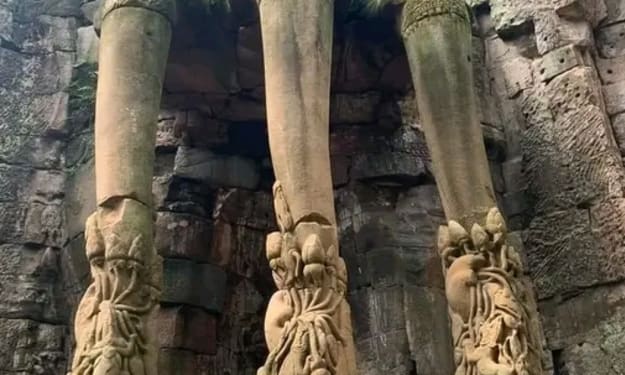
The Gate of Angkor Thom: A Portal into Cambodia's Storied Past
In the heart of Cambodia, where dense jungles conceal remnants of one of history’s greatest empires, stands the Gate of Angkor Thom. Built in the late 12th century under the visionary rule of King Jayavarman VII, this gateway is far more than a mere entrance; it’s a portal that takes visitors back to the golden age of the Khmer Empire. Adorned with elaborate carvings and imbued with an aura of timelessness, Angkor Thom’s gates tell stories of an empire defined by grandeur, artistry, and devotion.
By Deji Akomolafeabout a year ago in History
Exploring Puebla’s Rediscovered Tunnels: A Glimpse into Mexico’s Buried Past
In 2015, construction workers in Puebla, Mexico, made an extraordinary discovery that brought centuries-old myths to life: a network of tunnels dating back as far as 500 years. These tunnels, stretching approximately 10 kilometers, weave through the heart of Puebla, connecting key historical sites like the city’s historic center and Loreto Castle, a location remembered for the iconic Battle of Cinco de Mayo. Long regarded as mere folklore, these tunnels were once believed to be imaginary, dismissed by locals and historians alike. But today, the tunnels have become one of Puebla’s most fascinating historical attractions, offering a window into the city’s past and the struggles that shaped it.
By Deji Akomolafeabout a year ago in History
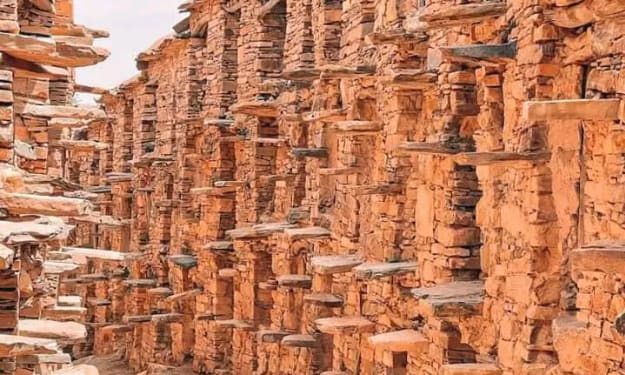
Igudar: Morocco’s Ancient Banking System and the Story of Communal Trust
In the rugged landscape of Agadir, Morocco, one can find the remains of a fascinating and ancient form of banking—structures known as “Igudar” (plural for "agadir"). These communal granaries, built by the Amazigh (Berber) people, are much more than simple storage spaces. With their fortified designs, elevated locations, and the sense of collective responsibility that sustained them, Igudar represent an early example of communal wealth management and trust, acting as one of the oldest banking systems in the world.
By Deji Akomolafeabout a year ago in History
Quiniela Notitimba: A Hidden Gem of Culture and Beauty . AI-Generated.
Introduction: Notitimba is a beautiful, lesser-known destination rich in culture, nature, and history. Located away from bustling city life, it offers visitors an authentic experience with its charming landscapes, traditional festivals, and warm-hearted people. This guide explores the many reasons Notitimba deserves a spot on your travel bucket list.
By Faheem Khanabout a year ago in History