
Steps Through Time: The Secrets of Pharaoh Djoser’s Tomb in Saqqara
Unveiling Ancient Egypt’s Mysteries: The 4,800-Year-Old Stairs That Lead to Pharaoh Djoser's Eternal Journey

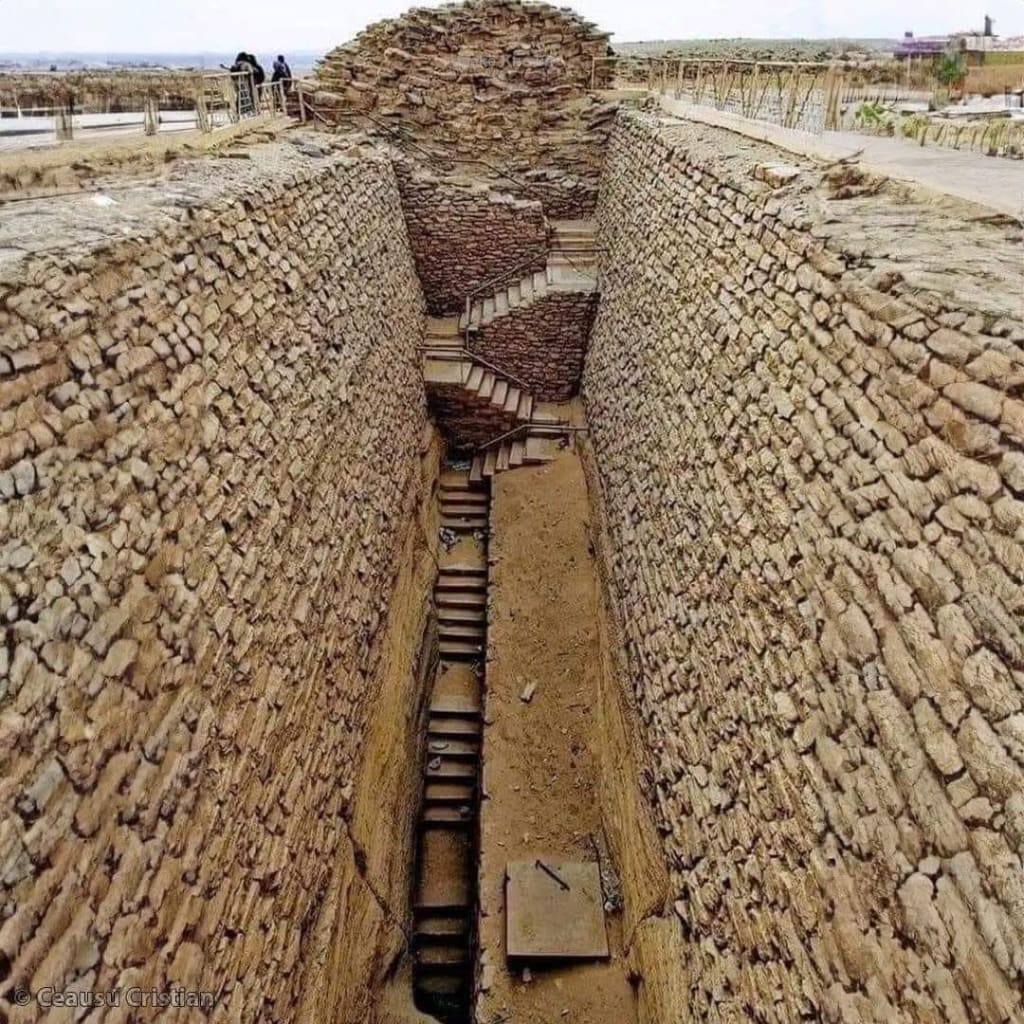
The ancient Egyptian civilization remains one of the most mysterious and fascinating periods in history. With its monumental structures, intricate beliefs about life and the afterlife, and astounding advances in art, architecture, and science, this civilization still captivates our imaginations. Among the most impressive relics of ancient Egypt is the 4,800-year-old staircase leading to the southern tomb of Pharaoh Djoser in Saqqara, Egypt. These steps, which descend into the earth, do not merely represent a pathway; they are a window into a lost world of architectural genius, religious rituals, and beliefs that helped shape one of history's most influential cultures.
These stairs are not just a reminder of the past but a testament to the ingenuity of ancient Egyptian architects. Djoser’s tomb and the stairway leading to it are among the oldest and most complex structures in Egypt, showcasing skills that were revolutionary for their time. Far more than simple stones arranged for ease of access, the steps were carefully designed to symbolize the Pharaoh’s passage into the afterlife, acting as a physical representation of his journey toward eternity.
The Stairway of Symbolism and Spirituality
The belief in life after death was a cornerstone of ancient Egyptian culture. Egyptians viewed death as a continuation rather than an end, and they held strong beliefs in the existence of an eternal afterlife. To them, these steps served as more than just a means of descent into Djoser’s tomb; they represented a spiritual journey. They were a pathway meant to lead the Pharaoh beyond this world and into the next, where he could attain eternal life. The staircase was thought to be a symbolic passageway, allowing Djoser’s spirit to ascend to the heavens after descending to his resting place on earth.
In ancient Egyptian theology, the afterlife was considered to be just as real as earthly life. The Pharaoh was not only a ruler but also a god-like figure, who would continue to protect and guide his people even after death. Therefore, the journey to the afterlife was one of great importance, requiring ritual and reverence. The staircase in Djoser’s tomb is a powerful manifestation of this belief, guiding the soul of the Pharaoh on his journey to immortality.
Architectural Mastery Beyond Time
The construction of Djoser’s tomb and the staircase is a marvel of ancient engineering. Built nearly 5,000 years ago, these steps were meticulously carved and placed without the use of modern tools or materials like mortar and cement. The stones were arranged in such a way that they interlocked, forming a structure that has withstood the test of time. This remarkable durability demonstrates the advanced knowledge of materials and techniques that ancient Egyptian builders possessed. They employed an architectural mastery that continues to astonish archaeologists, architects, and historians to this day.
The techniques used in the construction of this staircase and tomb reflect the Egyptians' understanding of geometry, physics, and stonework. It’s incredible to think that with limited resources and rudimentary tools, the architects of that time could create structures that have not only survived millennia but have also maintained their intricate designs and durability.
Hidden Treasures and Ancient Knowledge
Deep beneath the Saqqara sands, the staircase leads to rooms and corridors that hold some of Djoser's era's most valuable artifacts and writings. Hidden within these chambers are relics, jewels, and writings believed to date back to the reign of Pharaoh Djoser. These artifacts include religious texts, scholarly writings, and historical records that can shed light on the social, cultural, and intellectual life of that period.
The writings could provide valuable insights into ancient Egyptian traditions, rituals, and the philosophical thoughts that governed their understanding of life and death. By studying these artifacts, researchers can delve deeper into the minds of the Egyptians, learning how they viewed their world, structured their society, and practiced their religion.
Sacred Pathways and Ritual Significance
These steps were more than just an architectural element; they held a sacred status within Egyptian culture. The ancient Egyptians regarded the pathway to Djoser’s tomb as a holy journey, reserved for the pharaoh, whom they believed was a divine figure. As the stairway descended into the earth, it symbolized a spiritual realm that was separate from the mortal world, leading the pharaoh into a sacred space meant only for the select few.
The sanctity of this stairway reflects the Egyptians' views on the importance of spiritual journeys and rituals in guiding a person’s soul. The staircase was a tangible representation of their belief in a divine connection between earth and the afterlife, marking a route through which Pharaoh Djoser would attain eternal life.
Enduring Legacy of Egypt’s Civilization
Pharaoh Djoser’s ancient stairway at Saqqara not only leads into the depths of his tomb but also offers us a glimpse into the depths of ancient Egyptian civilization. The stairs encapsulate a unique blend of architectural excellence, spiritual belief, and cultural heritage. They remind us of a civilization that thrived on wisdom, innovation, and reverence for the mysteries of life and death.
These steps stand as silent witnesses to a time when humanity sought to bridge the physical and spiritual worlds through monumental structures and intricate rituals. As we walk these paths today, we find ourselves connected to the past, standing in awe of the mysteries and achievements that continue to define ancient Egypt’s legacy.
About the Creator
Taimur Kazmi
Taimur Kazmi is a passionate storyteller and writer on vocal media, weaving tales that explore the depths of human emotions, love, and life’s complexities. With a flair for evocative narratives and poetic reflections.
Keep reading
More stories from Taimur Kazmi and writers in History and other communities.
The One Rupee Lady: A Tale of Love, Loss, and Legacy
In the bustling city of Rawalpindi, her story was whispered among crowds and shared among strangers. Dr. Syeda Riffat Sultana, once a distinguished woman, belonged to an educated and affluent family. She was a doctor, trained in the prestigious medical schools of London and Germany. When she returned to Pakistan, she became a devoted healer, dedicating her life to the service of the people around her.
By Taimur Kazmiabout a year ago in History
Russia Deploys Rare Hypersonic Missile in “Massive” Strike on Ukraine
In the early hours of January 9, 2026, Russian forces launched a major military assault on Ukrainian territory that marked only the second known combat use of the Oreshnik hypersonic missile, one of Moscow’s most advanced and strategically significant weapons. The attack, accompanied by a barrage of drones and conventional missiles, has heightened fears of escalation, particularly given the missile’s potential nuclear capability and long range (Reuters, 2026).
By Games Mode On3 days ago in History
Stanislav Kondrashov Oligarch Series: A Transatlantic Tale of Wealth and Influence
The story of oligarchy across the Atlantic is not just one of wealth. It’s a mirror reflecting how influence takes shape in different cultures—subtle in some places, overt in others. In the Stanislav Kondrashov Oligarch Series, we explore how this small circle of ultra-wealthy individuals has, for decades, shaped the course of economies, industries, and societies without ever needing to run for office or carry a flag.
By Stanislav Kondrashov4 days ago in History


Comments
There are no comments for this story
Be the first to respond and start the conversation.