Latest Stories
Most recently published stories in History.
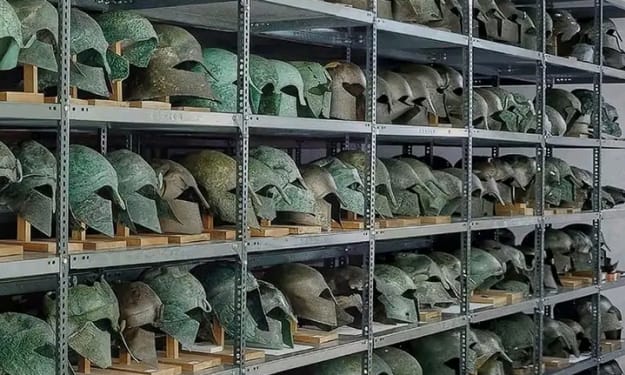
Echoes of Valor: The Corinthian Helmets of Ancient Olympia
In the heart of Greece, the Museum of Olympia stands as a guardian of history, filled with relics that transport visitors back to a world of ancient legends and battles. Among these treasures lies a mesmerizing collection of Corinthian-style bronze helmets. These stunning pieces are not merely relics; each helmet once shielded the faces of brave hoplites—Greek foot soldiers who were pivotal figures in the warfare of ancient Greece. As you gaze upon these helmets, with their timeless elegance and haunting visors, it’s impossible not to wonder about the lives they once protected, the battles they saw, and the hands that carefully crafted them into enduring symbols of courage.
By Deji Akomolafeabout a year ago in History
Uncovering the Timeless Legacy of Agora: The Roman Ruins of Ancient Smyrna
Nestled on the northern slope of Pagos Hill in modern-day Izmir, Turkey, the Agora of Smyrna is a powerful testament to the ancient city's rich history. The Agora, originally established during the Hellenistic period in the 4th century BC, later evolved into a bustling Roman center. This remarkable site, now known as the Agora Open Air Museum, offers visitors a rare glimpse into the vibrant life of ancient Smyrna and the resilience of its people, who restored their city following a devastating earthquake with the support of Emperor Marcus Aurelius. As a central point of commerce, politics, and social life, the Agora of Smyrna remains one of the most well-preserved Roman agoras in the world, carrying echoes of an era when it was the lifeblood of this once-thriving city.
By Deji Akomolafeabout a year ago in History
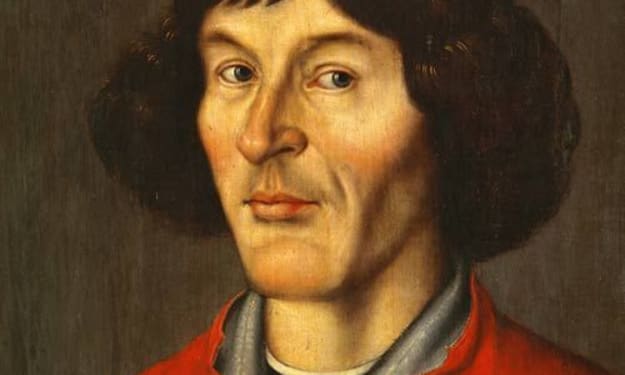
Nicolaus Copernicus: The Revolutionary Astronomer Who Changed Our View of the Universe**
**Nicolaus Copernicus: The Revolutionary Astronomer Who Changed Our View of the Universe** **Introduction** Nicolaus Copernicus (1473 - 1543) is renowned for transforming the scientific worldview of the cosmos. His revolutionary theory placed the Sun, rather than the Earth, at the center of the universe, challenging centuries of established beliefs. Copernicus’s life and work laid the foundation for modern astronomy and altered the trajectory of scientific thought, ultimately inspiring other great scientists like Galileo, Kepler, and Newton.
By Mahalakshmiabout a year ago in History
Why Should You Donate Food To Animal Shelter Homes?
Animal shelters offer sanctuary to homeless and hungry animals and play a critical role in rehabilitating and rescuing thousands of dogs in India. With more and more animals seeking shelters and welfare homes, there is an urgent need to donate and help the local animal shelters in Noida.
By Earthlings Trustabout a year ago in History
No Time for Sorrow
Mara was a medical caretaker — a title she'd worn proudly once. Be that as it may, presently, she felt more like a scrounger. Supplies were waning, and she expected to return food and medication once again to the facility. She lacked the opportunity and energy to contemplate the companions she'd lost, or the patients she wasn't ready to save. There was no time for anguish. Consistently spent grieving was a second squandered, and in circumstances such as these, seconds could mean endurance.
By Hridoy Hasanabout a year ago in History
Tales by moonlight
In the heart of ancient Benin, surrounded by dense forests and shimmering rivers, stood a kingdom known for its wealth, artistry, and strength. It was here, within the walls of the palace, that Queen Idia’s story began. Her birth was foretold by the kingdom’s diviners as the coming of a powerful and wise leader, destined to shape the future of the Benin Kingdom. Even as a child, Idia displayed an exceptional intelligence and calm determination, qualities that hinted at the remarkable path she would take.
By BlessingHaileyabout a year ago in History
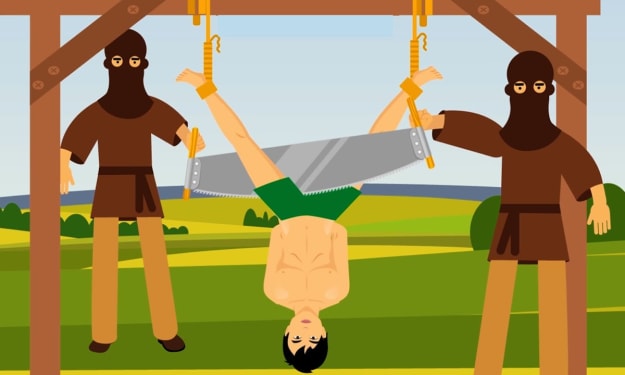
Unveiling the Past
Throughout history, societies have punished individuals for their transgressions in some unimaginably gruesome ways. Often used to demonstrate power, maintain control, or serve as stark warnings, these punishments go beyond what we might consider just or humane. From ancient empires to medieval Europe, some methods of punishment are so brutal that they remain infamous for their cruelty. Here are some of the worst punishments in human history, each demonstrating the darker aspects of human justice systems.
By Horace Waslandabout a year ago in History
The Brazen Bull
When we think of historical punishments, we may imagine something brutal, like beheading or whipping. But among the many ways societies have meted out cruelty, the ancient Greek invention known as the brazen bull stands out as one of the most horrifying devices ever imagined. Designed not just to execute but to inflict maximum psychological and physical agony, the brazen bull’s gruesome history has echoed through the ages, leaving us in awe of the cruelty humans are capable of—and of how far society has evolved since.
By Horace Waslandabout a year ago in History
Papua New Guinea . AI-Generated.
Papua New Guinea's Western Province is a region rich in cultural diversity and traditions, largely shaped by its environment and centuries-old tribal practices. Home to various ethnic groups, each with distinct customs, Western Province has preserved many of its traditional ways despite modern influences. Here’s a closer look at the culture, values, and traditions that define this fascinating part of Papua New Guinea.
By Grace Guiseabout a year ago in History
The Spark of a New Nation: The Story of Theodosia Burr
“Dear Theodosia” is a song in the musical Hamilton. It juxtaposes the birth of Alexander Hamilton’s first child, Phillip, in 1782 with the birth of Aaron Burr’s first child, Theodosia, in 1783. The two young revolutionaries stood side by side in fighting against the British. Hamilton—an energetic hustler of a man—and Burr, a quiet man of action whose thoughts remained mysterious to those around him would eventually become political rivals. But, when it came down to it, the two men became fathers to their children and the new nation.
By Alisan Keeseeabout a year ago in History