
Julia Thomas: The Woman Who Died Chasing the Lost Dutchman’s Gold
She Sat by His Bedside. Then She Went Looking for Gold.

🌵 She Sat by His Bedside. Then She Went Looking for Gold.
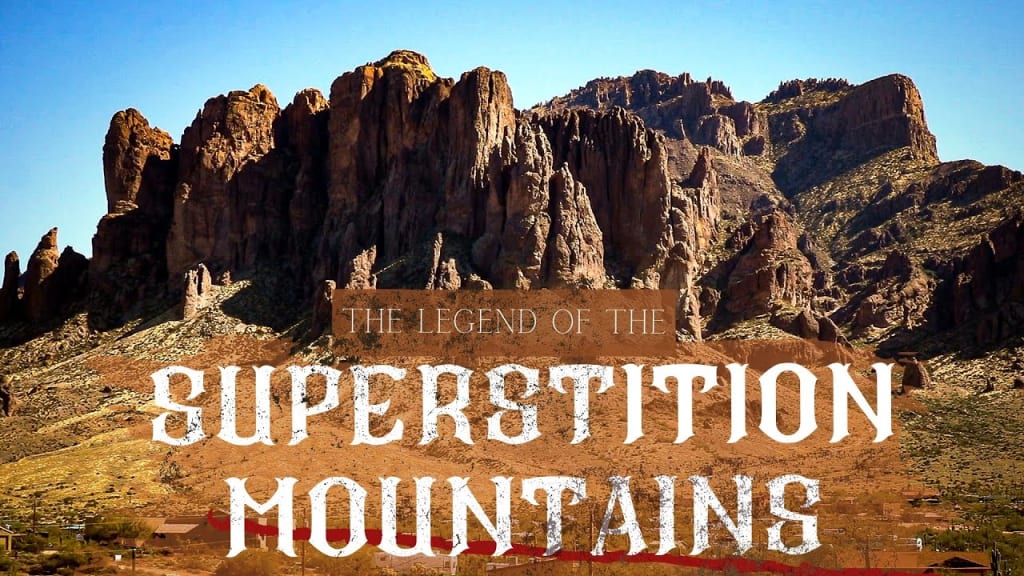
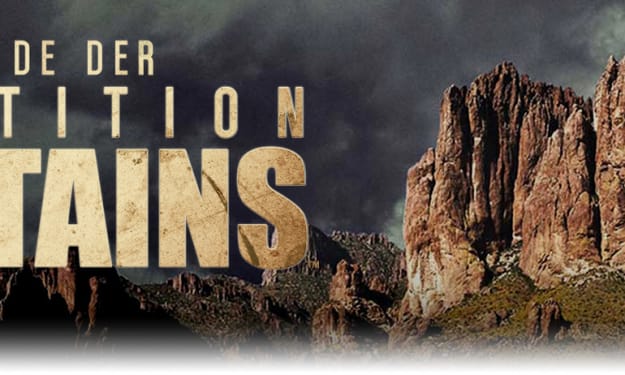
In the vast, rugged history of the American West, few tales are as enduring — or as haunting — as that of the Lost Dutchman’s Gold Mine. Most versions of the story center on Jacob Waltz, the elusive German immigrant who allegedly hid a treasure trove of gold deep in Arizona’s Superstition Mountains.
But behind every great legend is someone who keeps it alive.
And in this case, that person was a woman: Julia Thomas.
She was the last known confidant of Jacob Waltz, the only person he trusted in his final days — and the first to attempt finding the mine after his death.
Her journey started in compassion…
And ended in obsession.
👩 Who Was Julia Thomas?
Julia Elizabeth Thomas was a widow and businesswoman living in Phoenix, Arizona Territory in the late 1800s. She ran a modest bakery and was known locally for her hard work and independence — a rarity in that era.
In the early 1890s, she met Jacob Waltz, a reclusive, aging German man who sold gold nuggets now and then, but lived in a small adobe house with almost no luxuries.
When Waltz fell seriously ill in 1891, Julia took him in, nursing him through the final weeks of his life. She expected no payment. She wasn’t trying to get rich.
Until, according to her own story, Waltz began to talk.
🤒 The Deathbed Confession That Launched a Century of Searching
As Jacob Waltz lay dying, Julia claimed he made a startling confession:
He had discovered — or stolen — a massive gold mine somewhere in the Superstition Mountains.
He couldn’t take her there, but he gave detailed verbal directions:
- The entrance was near a prominent peak
- It was hidden by a rockslide or trapdoor
- A natural stone cross was nearby
- The area had a dead soldier’s skeleton
The mine contained gold so pure, it looked like butter
Waltz died on October 25, 1891, and Thomas quickly realized she might be holding the key to one of the greatest treasures in American history.
But things didn’t go the way she’d hoped.
🧭 The First Expedition to Find the Dutchman’s Mine
In 1892, less than a year after Waltz’s death, Julia Thomas — along with two friends, Reiney and Herman Petrasch, both prospectors — set out to find the mine.
They brought:
- A notebook full of Waltz’s clues
- Provisions
- A mule
- And more hope than real mining experience
The search lasted weeks, and they explored deep into the Superstition range, where the summer heat regularly reached 115°F.
They returned exhausted, broke, and empty-handed.
The gold wasn’t there. Or maybe it had never been.
Some say Julia was devastated. Others say she was energized — because the possibility was still alive.
💰 Turning the Legend Into a Legacy
After her failed expedition, Julia’s fortunes declined.
Her bakery business failed. Her health deteriorated. But she continued to tell the story — or versions of it — to anyone who would listen.
In 1895, she gave interviews that were published in local papers. Each one hinted at new variations of Waltz’s confession:
- Sometimes the skeleton was missing.
- Sometimes the entrance had caved in.
- Sometimes the directions were altered.
To skeptics, she was trying to keep the legend alive to profit from it.
To believers, she was a tragic heroine — the first victim of the Dutchman’s curse.
🧠 Was Julia Telling the Truth?
Historians are split on Julia’s role.
Supporting her story:
She had no real motive to invent Waltz’s confession — she cared for him out of kindness
Her descriptions match later “clues” like the Peralta Stones and Jesuit lore
She was close enough to Waltz to have heard something meaningful
But there are red flags:
She gave no written record of Waltz’s exact words
Her story changed slightly over time
She never found the mine — and neither did anyone who followed her trail
She eventually tried to sell her account, hinting at financial desperation
Was she misled by a dying man’s fever dream?
Or did she inherit a truth too dangerous to be told plainly?

💔 The Tragic End of Julia Thomas
Julia lived out the rest of her life in relative poverty. She died in 1917, never having found the mine, never having gotten rich.
But her name — once forgotten — lives on in treasure hunting circles, Dutchman documentaries, and historical records.
She was the first person to believe Waltz’s secret mattered.
And the first to chase a myth that has outlived them both.
📚 Julia’s Lasting Influence on the Legend
It’s not an exaggeration to say that without Julia Thomas, there might be no Dutchman legend at all.
She was the link between Jacob Waltz’s death and the modern obsession
Her clues form the basis for dozens of books and treasure maps
Her early interviews are still quoted in treasure forums today
She’s featured in episodes of Legend of the Superstition Mountains, Unsolved Mysteries, and Mysteries of the Museum
In many ways, she’s the forgotten co-author of the Dutchman’s myth.
And like Waltz, she took her final truth — if she had one — to the grave.

🧠 What Modern Treasure Hunters Think of Julia Today
To many Dutchman hunters, Julia Thomas is:
- A symbol of pure pursuit — someone who went after the legend for belief, not profit
- The origin of the curse — the first of many who would lose everything trying to find the mine
- A cautionary tale — proof that proximity to the truth doesn’t guarantee success
Some dismiss her entirely.
Others revere her.
But none ignore her.
Because every serious searcher eventually reads her name in some faded journal, hears it in a whispered theory, or sees it etched on an old trail sign.
And they wonder: What did she really know?
🎯 Final Thoughts: The First Believer in a Century-Old Mystery
Julia Thomas was never famous.
She didn’t make a fortune.
She didn’t find the mine.
But in a world filled with rumors, forged maps, and get-rich-quick dreamers, she stands out as something rare:
A woman who gave kindness to a dying man — and wound up chasing his ghost across the desert.
Her story reminds us that behind every legend is a human being.
And sometimes, the deepest mystery isn’t the gold.
It’s why we believe.

📣 Call to Action
Still believe the Dutchman’s gold is out there?
Or are you more interested in the people who believed it first?
Share this with a fellow legend lover, and follow me on Vocal.Media for more unsolved history, frontier mysteries, and the forgotten figures who chased treasure — and found something deeper.
Because sometimes, the first step into legend… is love.
About the Creator
Rukka Nova
A full-time blogger on a writing spree!
Keep reading
More stories from Rukka Nova and writers in History and other communities.
The Peralta Stones: Are These Ancient Maps the Key to the Lost Dutchman’s Gold — or the Greatest Treasure Hoax in American History?
A Treasure Map Carved in Stone… Or Just a Clever Mystery? Imagine stumbling across a set of heavy, hand-carved sandstone tablets buried in the Arizona desert — covered in cryptic symbols, Latin inscriptions, and what looks like a map.
By Rukka Nova8 months ago in History
Chicago Hospital Held Newborn Baby for 8 Months Over an Unpaid Medical Bill
Debts were handled much differently in the 19th and early 20th century. Back then, people who accrued debt had more to fear than letters and calls from collection agencies the same way we do today, especially if they owed a hospital or doctor money.
By Criminal Matters7 days ago in History
The Holland Hotel - A Railroad-Era Landmark in East Tawas
When the Holland Hotel opened on July 31, 1893, East Tawas was staking its future on rail connections and lake traffic. Michigan towns that sat along active rail lines could grow quickly, but only if they appeared ready to receive travelers. The Holland Hotel was built to send that signal.
By Paul Austin7 days ago in History


Comments
There are no comments for this story
Be the first to respond and start the conversation.