
Istanbul: The Capital of Mosaics - A Unique Journey from History to the Present
Sleepless city

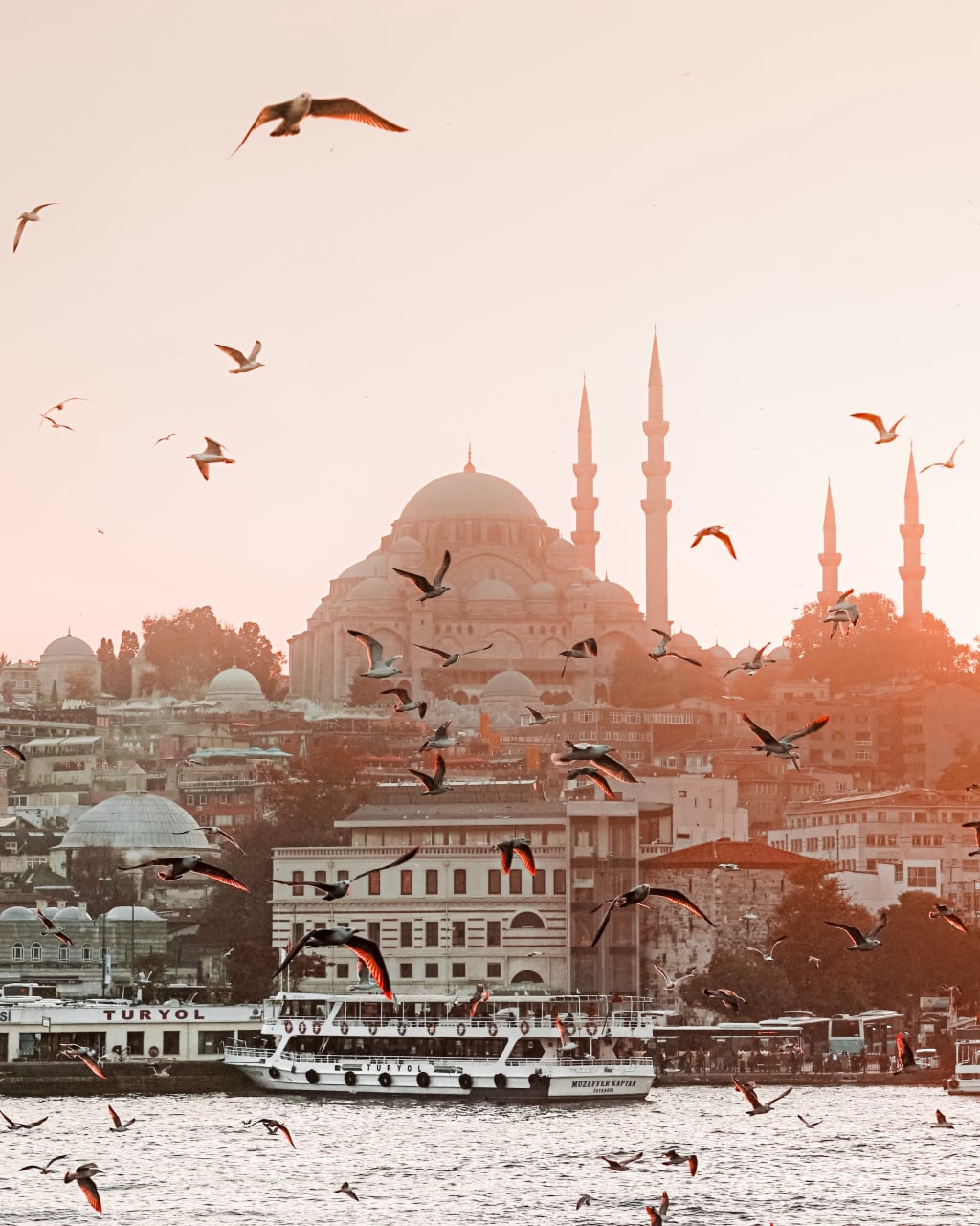
Istanbul, the largest city in Turkey and one of its most significant metropolises in terms of history, culture, and economy, has a long and captivating journey that spans from being the capital of the Byzantine and Ottoman Empires to becoming a crucial city in modern Turkey. Its geographical location, historical richness, cultural diversity, and harmonious blend of the past and the present have attracted numerous civilizations over the centuries.
1.Prehistory and Ancient Period:
The history of Istanbul and its surroundings dates back to the ancient times, as evidenced by archaeological excavations dating to around 3000 BC. During this era, the region was influenced by ancient civilizations such as the Thracians and Lycians. However, the recorded history of the city begins in the 7th century BC when Megarian colonists founded the city of Byzantion. Byzantion's strategic position, situated between Asia and Europe, made it a crucial gateway for trade and passage.
2.Roman Empire Period:
In 196 BC, Byzantion fell under the dominion of the Roman Empire and thrived as a significant port city of the empire's Eastern region. The renowned Emperor Constantine, acknowledging the city's potential, declared it the new capital of the Roman Empire and renamed it Constantinopolis (AD 330). Istanbul subsequently became the capital of the Eastern Roman Empire, commonly known as the Byzantine Empire, and retained this role for a thousand years.
3.Byzantine Empire Period:
The Byzantine Empire, the continuation of the Eastern Roman Empire, witnessed the ongoing development and growth of Istanbul as its capital. During this period, numerous iconic structures were erected on the historical peninsula (Suriçi) of Istanbul. The grand Hagia Sophia was one of the most prominent and awe-inspiring buildings of this era. Other significant structures, such as the Topkapi Palace and the Basilica Cistern, also graced the city's landscape.
4.Medieval Period:
Throughout the Middle Ages, Istanbul faced numerous invasions and changed hands between various ruling powers. During the Fourth Crusade (1204), the city was invaded by Crusaders, resulting in the establishment of the Latin Empire with Istanbul as its capital. Nevertheless, in 1261, the Byzantines reclaimed Istanbul and continued to use it as the capital of the restored Byzantine Empire.
5.Ottoman Empire Period:
The Ottoman Empire, founded in the late 14th century in Anatolia, conquered Istanbul in 1453, marking the end of the Byzantine Empire. Istanbul became the capital of the Ottoman Empire and one of its most significant cities. Following the conquest, Hagia Sophia was converted into a mosque and renamed the Sultanahmet Mosque, while the city's population rapidly expanded, leading to the creation of new neighborhoods and districts. During this period, the iconic Suleymaniye Mosque, Sultanahmet Mosque, Dolmabahce Palace, and numerous other grand structures were erected.
6.Modernization and the Republic Period:
The decline of the Ottoman Empire led to various economic, political, and social challenges in Istanbul during its final years. After the establishment of the Republic of Turkey in 1923, the country's visionary leader, Mustafa Kemal Ataturk, selected Ankara as the new capital, and Istanbul retained its significance as the second most important city in Turkey. Throughout the early and mid-20th century, Istanbul underwent urban renewal and modernization efforts, which included the development of infrastructure, the creation of new avenues and squares, and the enhancement of transportation networks.
7.Contemporary Istanbul:
Today, Istanbul boasts a population of over 15 million, making it Turkey's most populous city and one of the largest metropolises in the world. It stands as a unique city that straddles the continents of Europe and Asia, connected by the Bosphorus Strait. Istanbul's rich cultural diversity, historical heritage, art and cultural events, delectable cuisine, and vibrant nightlife draw millions of domestic and foreign tourists each year. Hagia Sophia, the Blue Mosque, Topkapi Palace, Dolmabahce Palace, and many other historical and touristic sites are visited by people from all over the globe.
However, the status of being a vast metropolis also comes with challenges. Issues such as heavy traffic, environmental pollution, urban transformation needs, and high population density are some of the obstacles that Istanbul strives to address. Serving as Turkey's financial hub, Istanbul plays a crucial role in the nation's economy, housing banks, financial institutions, commercial centers, shopping malls, and industrial zones.
Culturally, Istanbul represents a mosaic of different ethnic groups, religions, and cultures living harmoniously together. Turks, Kurds, Laz people, Romanians, Albanians, among others, coexist in the city. Similarly, followers of Islam, Christianity, and Judaism live side by side, creating a rich tapestry of diversity, which is a defining and enriching feature of Istanbul.
In conclusion, the history and contemporary state of Istanbul make it a city of immense global significance. Its strategic location, cultural heritage, and modern-day allure create an enchanting experience for visitors and residents alike. However, it also faces the challenges of a major metropolis. Istanbul stands as a city that reflects the traces of countless civilizations and epitomizes a unique and universal cosmopolitan hub.
About the Creator
Dovran
Hi I love read and write
The Titanic Mystery: Secrets Beneath the Frozen Sea
On the night of April 14, 1912, the RMS Titanic sailed calmly through the dark waters of the North Atlantic, carrying more than 2,200 souls and the dreams of a modern world that believed it had conquered nature. Labeled “unsinkable,” the Titanic was the pride of human engineering. Yet before dawn broke, the great ship lay shattered beneath miles of icy ocean. More than a century later, the Titanic remains not just a tragedy—but a mystery filled with unanswered questions.
By The best writer 5 days ago in History
3 True Stories That Sound Like Urban Legends but Aren’t
Urban legends usually follow a familiar pattern. A friend of a friend hears something unbelievable, the details get hazy, and the story ends with a warning about human stupidity or bad luck. The unspoken rule is simple: if it sounds too strange to be true, it probably is.
By Enoch Sagini3 days ago in History




Comments
There are no comments for this story
Be the first to respond and start the conversation.