
3 True Stories That Sound Like Urban Legends but Aren’t
#3. The Man Who Was Struck by Lightning Seven Times—and Lived
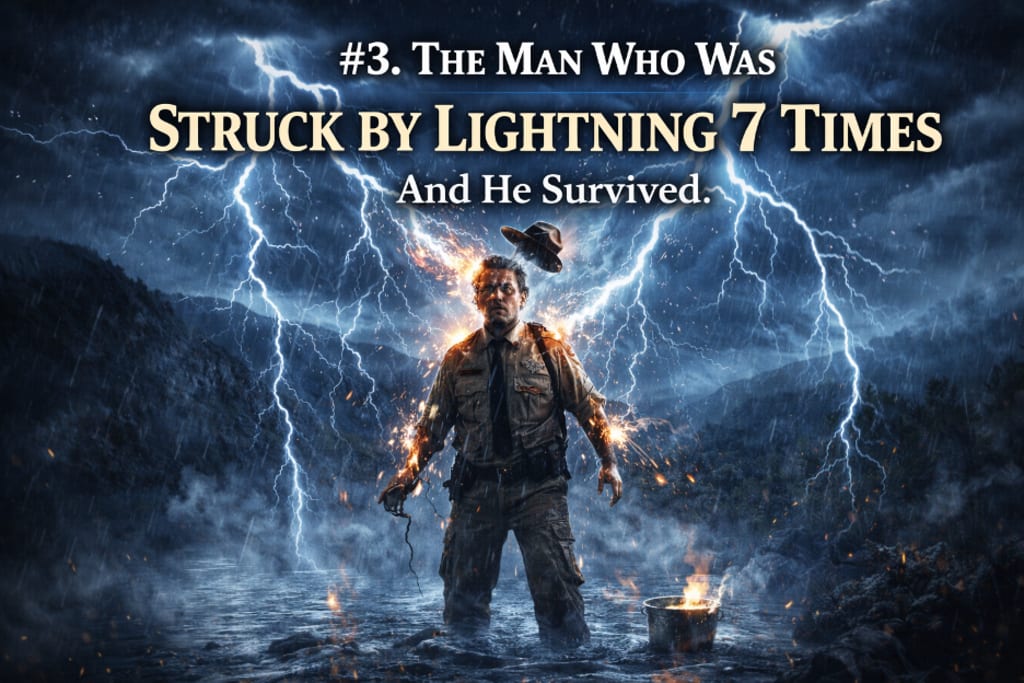
Urban legends usually follow a familiar pattern. A friend of a friend hears something unbelievable, the details get hazy, and the story ends with a warning about human stupidity or bad luck. The unspoken rule is simple: if it sounds too strange to be true, it probably is.
Except sometimes, reality ignores that rule completely.
History is full of real, well-documented events that sound exactly like campfire stories invented to scare people—or entertain them on the internet. The only difference is that these actually happened, were recorded by witnesses, and left behind paperwork, investigations, and deeply confused historians.
Here are three true stories that sound like urban legends, feel impossible, and yet stubbornly refuse to be fictional.
3. The Man Who Was Struck by Lightning Seven Times—and Lived
If someone told you about a man struck by lightning once, you’d believe them. Twice? Unlucky, but possible. Seven times? That’s when it starts sounding like a story invented by someone who doesn’t understand probability.
Roy Sullivan was a park ranger in Shenandoah National Park, Virginia, and between 1942 and 1977, he was struck by lightning seven separate times. Each strike was documented. Each time, he survived.
The injuries ranged from burns and nerve damage to the loss of toenails and hair catching fire. In one instance, lightning blew off his hat. In another, it traveled through his body while he was fishing, killing nearby animals but sparing him. At one point, Sullivan reportedly kept a bucket of water nearby while working—just in case he caught fire again.
This is not a tall tale. The Guinness World Records officially recognized him as the person struck by lightning more times than anyone else in recorded history.
Naturally, people stopped wanting to stand near him during storms. Some reportedly avoided him altogether, fearing proximity lightning. Imagine being so unlucky that other people don’t want to be near you during bad weather—not because you’re dangerous, but because nature seems personally offended by your existence.
Ironically, Sullivan did not die from lightning. He died by suicide in 1983. The universe, it seems, had limits, but irony did not.
2. The Town That Literally Fell Into a Hole
Urban legends love sinkholes. Entire houses swallowed overnight. Streets disappearing into the earth. It sounds dramatic, exaggerated, and suspiciously cinematic.
Except in 1999, the town of Hibbing, Minnesota, watched exactly that happen.
Hibbing was built near an iron mine—an economic engine that sustained the town for decades. Over time, mining operations expanded underground, creating massive caverns beneath the surface. Residents knew the mine existed, but the scale of what was happening below their feet was largely out of sight and out of mind.
Then the ground started cracking.
Roads split open. Buildings tilted. Entire sections of town collapsed into the mine pit. A local high school parking lot vanished. Homes were condemned not because they were unsafe structurally, but because the land beneath them had simply stopped being land.
The unsettling part wasn’t the collapse itself—it was how slow and inevitable it felt. Residents didn’t wake up to chaos. They watched it unfold, cracks widening day by day, knowing their houses would eventually lose the argument with gravity.
The town didn’t disappear entirely, but parts of it were abandoned and relocated. It’s one thing to hear a rumor about a town swallowed by the earth. It’s another to watch your neighborhood sink while paperwork is filed.
If this were an urban legend, people would say the details were exaggerated. In reality, the earth just quietly gave up.
1. The Woman Who Was Declared Dead—and Woke Up at Her Funeral
This is one of the oldest urban legend templates in existence: someone is mistakenly declared dead, wakes up in a coffin, and chaos ensues. It’s usually dismissed as Victorian paranoia or horror fiction.
Except versions of this story are not just real—they happened more than once.
One of the most famous modern cases occurred in 1915, involving Pauline Picard, a two-year-old girl in France. Pauline disappeared, and shortly afterward, a body believed to be hers was found. The remains were badly decomposed, but authorities and even her parents identified the body as Pauline. She was buried.
Weeks later, Pauline was found alive—kidnapped but unharmed.
This meant that the girl buried in her place was someone else entirely. An entirely different child had been mistaken for her, mourned, buried, and legally declared Pauline Picard.
The psychological horror here is layered. A family mourned a child who was not theirs. Another child’s identity was erased completely. And a real person was buried under the wrong name while the real Pauline resumed her life, now carrying a story so bizarre it sounds fictional.
Cases like this are why historical fear of premature burial was so intense. “Safety coffins” with bells and air tubes were invented not because people were paranoid, but because mistakes happened often enough to terrify an entire era.
The urban legend exists because the truth was already horrifying.
Conclusion
What makes these stories unsettling isn’t just how strange they are—it’s how documented they are. These events weren’t whispered rumors or exaggerated anecdotes. They were recorded by governments, witnessed by communities, and studied long after they occurred.
Urban legends usually serve as warnings: don’t trust strangers, don’t wander alone, don’t ignore common sense. These true stories offer a different lesson—sometimes, reality doesn’t need a moral. Sometimes it just happens, indifferent to probability, fairness, or narrative logic.
We laugh because it sounds fake. We laugh because accepting that this could happen is uncomfortable. But history doesn’t care whether a story feels realistic.
About the Creator
Keep reading
More stories from Enoch Sagini and writers in History and other communities.
3 Everyday Rules That Exist Because Someone Once Did Something Very Stupid
Everywhere you go, you are surrounded by rules that feel oddly specific. Do not touch. No running. Contents hot. Do not insert body parts. These warnings aren’t theoretical. They weren’t written by pessimists or lawyers with too much free time. They exist because at some point in history, a real human being looked at a situation and thought, “This will probably be fine.”
By Enoch Sagini3 days ago in History
Julius Caesar: The Rise and Fall of a Legend
The Rise and Fall of Julius Caesar In the first century BCE, the Roman Republic stood as one of the most powerful states in the ancient world. Its armies conquered vast territories, its laws shaped civilizations, and its Senate governed through a delicate balance of tradition and authority. Into this complex political world was born Gaius Julius Caesar in 100 BCE—a man whose ambition, brilliance, and fate would forever change Roman history.
By The best writer 8 days ago in History
A secret staircase found beneath a 1,500-year-old French church
A subterranean staircase and burial strata dating back approximately 1,500 years were discovered during a project inside the Church of Saint Philibert in Dijon, France. The stairs were discovered by restoration workers inside the church when repairs were being made, and the excavation soon ensued.
By Francis Dami3 days ago in History




Comments
There are no comments for this story
Be the first to respond and start the conversation.