
How Can the World Prevent Another Global War?
Diplomacy, Cooperation, and Responsible Leadership as the Key to Avoiding a Global Catastrophe

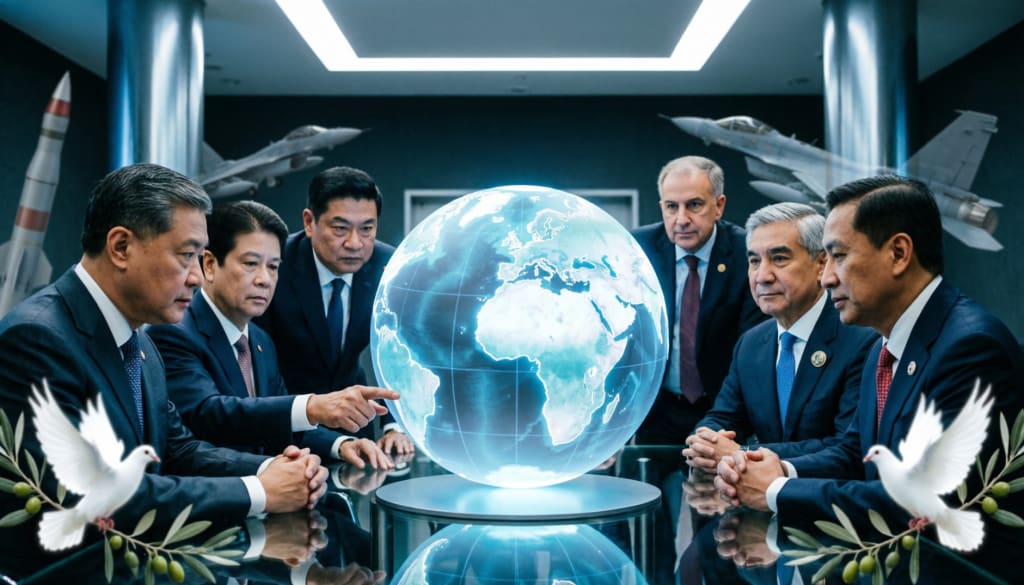
How Can the World Prevent Another Global War?
In times of rising global tensions, many people ask an important question: How can the world prevent another major war? History has shown that global conflicts cause enormous human suffering, economic destruction, and long-lasting political instability. Preventing a large-scale war—especially one that could involve nuclear weapons—is one of the most important challenges facing world leaders today.
The first and most effective way to prevent war is diplomacy. Diplomacy allows countries to resolve disputes through negotiation instead of violence. International organizations such as the United Nations play a central role in facilitating dialogue between nations. Through peace talks, mediation, and international agreements, diplomats work to reduce tensions and find solutions that avoid armed conflict.
For example, during periods of crisis between powerful countries like the United States, Russia, and China, communication channels between governments are extremely important. When leaders maintain direct contact, misunderstandings can be clarified before they turn into dangerous confrontations.
Another important step in preventing war is arms control agreements. These agreements limit the development or deployment of certain weapons. During the Cold War, several treaties helped reduce the risk of nuclear conflict by setting limits on nuclear arsenals and establishing verification systems. Similar agreements in the future could regulate emerging technologies such as autonomous weapons, cyber warfare tools, and hypersonic missiles.
Nuclear deterrence also plays a complicated role in maintaining global stability. Countries such as the United States, Russia, China, India, and Pakistan possess nuclear weapons. Because these weapons are so destructive, leaders understand that a direct war between nuclear powers could have catastrophic consequences. This awareness often encourages caution during political crises.
However, preventing war is not only the responsibility of governments. Economic cooperation between countries can also reduce the likelihood of conflict. When nations depend on each other for trade, energy, technology, and investment, war becomes extremely costly for all sides. Global economic connections encourage stability because countries have more to lose from conflict.
Education and communication between cultures are also important. When societies understand each other better, it becomes harder for misinformation or propaganda to create hatred between nations. International exchange programs, media cooperation, and cultural diplomacy can help build trust between populations.
Regional cooperation is another key factor in maintaining peace. Organizations that bring neighboring countries together for dialogue and economic cooperation can reduce tensions and prevent misunderstandings. By working together on shared challenges such as climate change, energy security, and economic development, countries can build partnerships instead of rivalries.
In conflict zones like the Middle East, diplomacy must involve multiple regional actors. Tensions involving Israel, Iran, and neighboring states have created cycles of instability for decades. Peace initiatives in this region require dialogue that includes all sides, addressing both security concerns and humanitarian issues.
Another crucial element in preventing war is responsible leadership. Political leaders must carefully consider the consequences of military decisions. History shows that wars sometimes begin not because leaders wanted a global conflict, but because of miscalculations, misunderstandings, or rapid escalation.
Modern technology has made this risk even greater. With the development of artificial intelligence, cyber warfare, and high-speed missile systems, conflicts could escalate much faster than in the past. This makes careful decision-making and international communication even more important.
Media and public opinion also influence global peace. When citizens demand diplomacy and peaceful solutions, governments often feel pressure to avoid unnecessary military actions. Public awareness of the human cost of war can encourage leaders to pursue negotiations instead of confrontation.
Humanitarian cooperation can also build trust between nations. When countries work together to provide disaster relief, medical aid, and support for refugees, they strengthen international relationships and demonstrate shared human values.
Ultimately, preventing a global war requires a combination of diplomacy, economic cooperation, responsible leadership, and strong international institutions. No single country can ensure global peace alone. Stability depends on collaboration between governments, organizations, and societies around the world.
The lessons of the 20th century remain clear: world wars bring unimaginable destruction, but they are not inevitable. Through dialogue, cooperation, and careful leadership, the international community can manage conflicts and protect global stability.
The challenge for the future is ensuring that competition between nations does not turn into confrontation. If countries choose negotiation over hostility, the world can avoid repeating the tragic mistakes of the past.
About the Creator
Wings of Time
I'm Wings of Time—a storyteller from Swat, Pakistan. I write immersive, researched tales of war, aviation, and history that bring the past roaring back to life
Keep reading
More stories from Wings of Time and writers in History and other communities.
Could Israel Ever Collapse? Understanding the Realities of Modern Geopolitics
Could Israel Ever Collapse? Understanding the Realities of Modern Geopolitics In discussions about the Middle East, some people ask dramatic questions such as whether Israel could ever face collapse or “the end.” These questions often appear during periods of intense conflict in the region. However, understanding this issue requires looking carefully at political realities, military power, international alliances, and regional dynamics rather than focusing only on emotional reactions during crises.
By Wings of Time about 7 hours ago in History
The Lost Coins of Alexander the Great: A Mysterious Discovery in Gaza
Few historical figures have captured the imagination of the world as powerfully as Alexander the Great. Known for building one of the largest empires in ancient history before the age of 32, Alexander’s campaigns stretched from Greece to Egypt and as far as India. Yet even today, more than two thousand years after his death, discoveries connected to his era continue to intrigue historians and archaeologists. One such mystery revolves around a remarkable discovery in the ancient city of Gaza—a hoard of coins believed to be linked to Alexander’s time, which later vanished under mysterious circumstances.
By Irshad Abbasi a day ago in History


Comments
There are no comments for this story
Be the first to respond and start the conversation.