
Did Trump’s Policies Push America Toward a New Imperialism?
How “America First,” economic pressure, and hard rhetoric reshaped U.S. power abroad

Did Trump’s Policies Push America Toward a New Imperialism?
When Donald Trump entered the White House, he promised a dramatic shift in how the United States dealt with the world. Under the banner of “America First,” his administration rejected many long-standing diplomatic norms and embraced a tougher, more confrontational style. Supporters praised this approach as strength and realism. Critics, however, argued it looked like a modern form of imperialism—less about cooperation and more about control through pressure.
Imperialism today does not always mean invading territory or planting flags. In the 21st century, power is often exercised through sanctions, trade leverage, financial systems, and political influence. By this definition, many analysts believe Trump’s foreign policy resembled an imperial mindset, even if it avoided traditional colonial expansion.
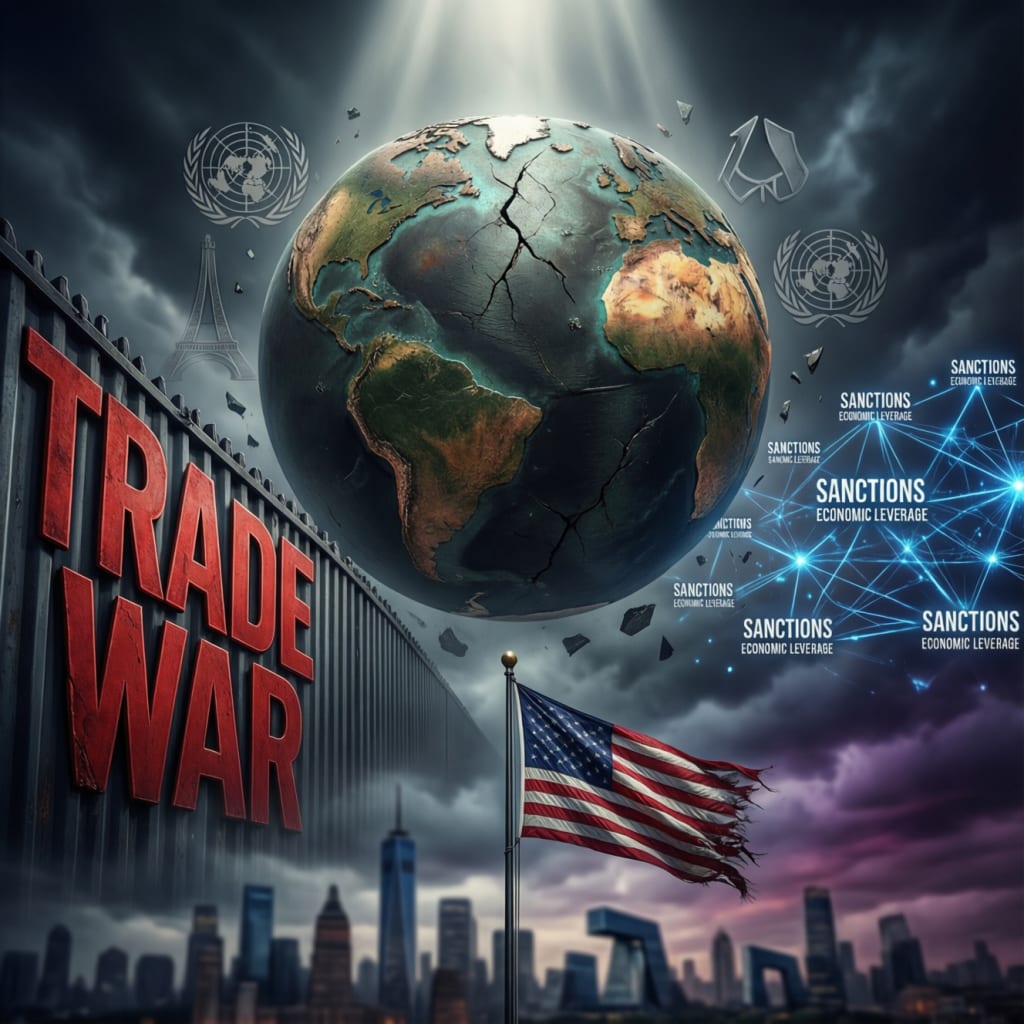
One of the clearest examples was the heavy use of economic sanctions. The Trump administration imposed sweeping sanctions on Iran after withdrawing from the nuclear deal, aiming to cripple its economy and force political change. Similar pressure was applied to Venezuela, where sanctions targeted oil exports and government officials. These actions were designed to influence internal decisions without direct military intervention, but their impact on ordinary citizens raised ethical concerns. Critics argued that using economic suffering as leverage mirrors imperial control by force, only in financial form.
Trade policy also reflected this shift. Trump launched aggressive trade wars, especially with China, but also targeted allies such as the European Union, Canada, and even India. Tariffs were framed as tools to “win” negotiations, not as temporary measures within a cooperative system. By using America’s economic size as a weapon, the administration signaled that access to U.S. markets depended on compliance with its demands. To many observers, this echoed imperial power dynamics—strong nations setting terms, weaker ones forced to adjust.
Diplomacy itself changed in tone. Trump often criticized allies publicly, questioned the value of NATO, and demanded higher payments for U.S. security guarantees. While previous administrations negotiated these issues behind closed doors, Trump used blunt language and public pressure. This approach unsettled partners who had long relied on trust and predictability. In global politics, perception matters, and the perception of coercion can damage alliances even when formal agreements remain intact.
Another defining feature was skepticism toward international institutions. Trump withdrew from or weakened U.S. participation in organizations and agreements such as the Paris Climate Accord, the World Health Organization, and various arms control treaties. His administration argued that these bodies limited American sovereignty. Critics countered that abandoning multilateral systems left a power vacuum and encouraged a “might makes right” world order—one historically associated with imperial eras.
Supporters of Trump strongly disagree with the imperialism label. They argue that his policies were defensive, not expansionist. From this view, sanctions and tariffs were tools to protect American workers, national security, and economic independence. They claim previous administrations allowed rivals to take advantage of the U.S., and that Trump simply rebalanced the system. To them, strong pressure was not imperialism but negotiation from a position of strength.
Yet even without territorial conquest, the consequences of pressure politics were global. Sanctions affected global supply chains. Trade wars slowed economic growth. Diplomatic rifts made cooperation on climate change, pandemics, and security more difficult. For many countries, especially smaller or developing ones, the message seemed clear: align with U.S. interests or face economic and political consequences.
This raises a deeper question about leadership in a connected world. Is global influence best exercised through cooperation and shared rules, or through unilateral pressure and dominance? History shows that imperial systems often create short-term control but long-term resistance. Trust erodes, rivals seek alternatives, and alliances weaken.
Trump’s presidency did not turn the United States into a traditional empire. There were no colonies and fewer military interventions than in some past administrations. However, the style of governance—favoring coercion over consensus—led many to describe it as a new form of imperialism adapted to modern tools.
The debate ultimately reflects a crossroads in global affairs. Power can be used to lead or to force. The Trump era demonstrated how quickly rhetoric and policy can shift the balance. Whether future leaders continue this path or return to cooperative diplomacy will shape not only America’s role, but the stability of the international system itself.
In the end, the question is not just about Trump. It is about what kind of power the world’s strongest nation chooses to be.
About the Creator
Wings of Time
I'm Wings of Time—a storyteller from Swat, Pakistan. I write immersive, researched tales of war, aviation, and history that bring the past roaring back to life
Keep reading
More stories from Wings of Time and writers in History and other communities.
The USA’s “Next Targets”?
Are These Really the USA’s “Next Targets”? Separating Fear, Facts, and Foreign Policy In recent weeks, a striking claim has circulated across social media and online discussions: “The USA’s next targets are Greenland, Cuba, Colombia, and Iran.” The statement is dramatic, alarming, and widely shared. But does it reflect reality—or does it reveal something deeper about how fear spreads during moments of global uncertainty?
By Wings of Time 6 days ago in History
Julius Caesar: The Rise and Fall of a Legend
The Rise and Fall of Julius Caesar In the first century BCE, the Roman Republic stood as one of the most powerful states in the ancient world. Its armies conquered vast territories, its laws shaped civilizations, and its Senate governed through a delicate balance of tradition and authority. Into this complex political world was born Gaius Julius Caesar in 100 BCE—a man whose ambition, brilliance, and fate would forever change Roman history.
By The best writer about 22 hours ago in History
Let's Don't Do This
"I just can't do this anymore..." "Do what?" What can't you do? Put gas in your own car? I swear to God you make me take care of everything, don't you? You know I'm on my way to work right now but that never stops you from bothering me, does it?"
By Shirley Belk6 days ago in Fiction


Comments
There are no comments for this story
Be the first to respond and start the conversation.