
Julius Caesar: The Rise and Fall of a Legend
Ambition, Power, and the End of the Roman Republic

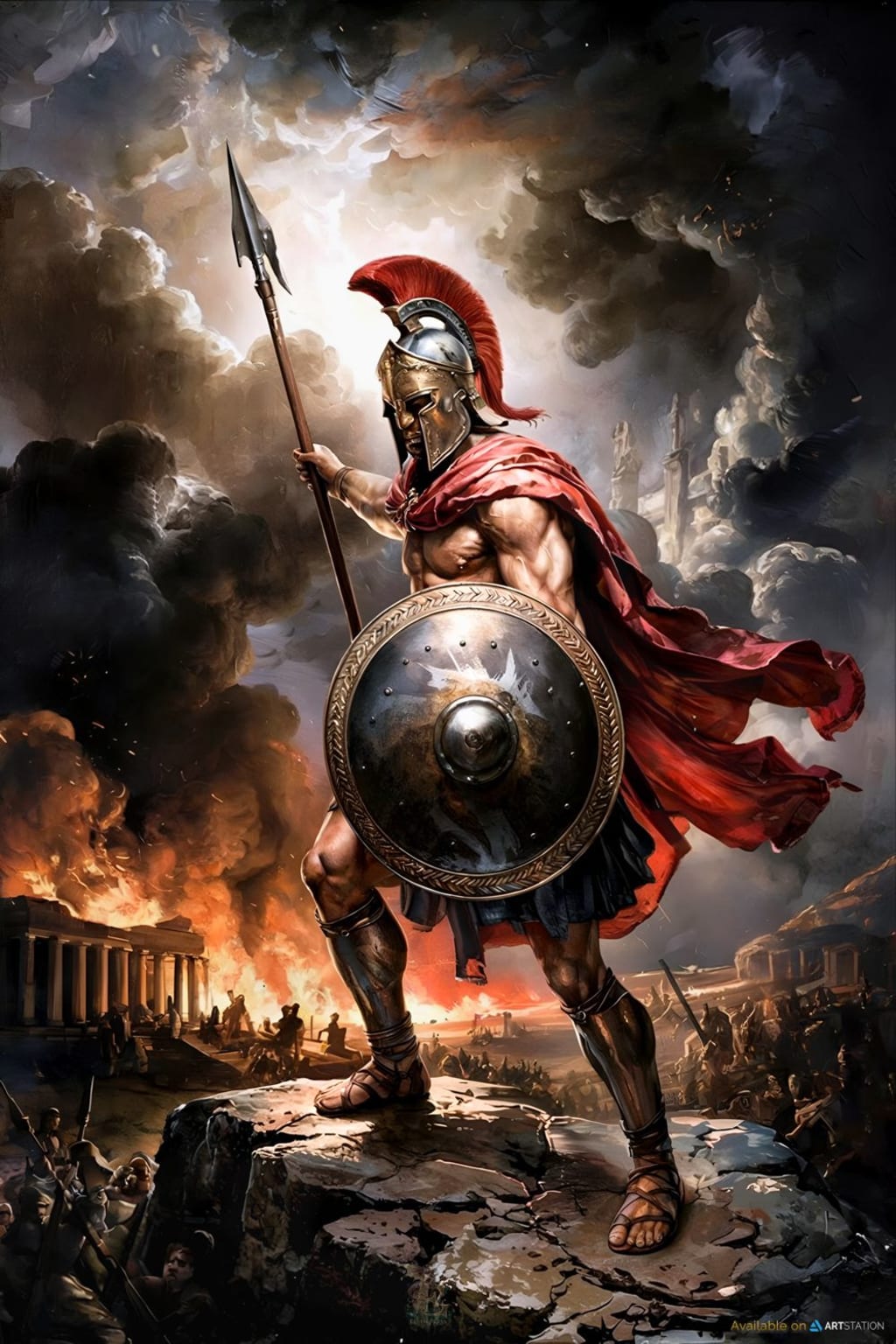
The Rise and Fall of Julius Caesar
In the first century BCE, the Roman Republic stood as one of the most powerful states in the ancient world. Its armies conquered vast territories, its laws shaped civilizations, and its Senate governed through a delicate balance of tradition and authority. Into this complex political world was born Gaius Julius Caesar in 100 BCE—a man whose ambition, brilliance, and fate would forever change Roman history.
Julius Caesar came from a noble family, but his early life was far from secure. Rome was torn by civil conflict between rival political factions. As a young man, Caesar aligned himself with the popular party, which favored reforms for the common people. This decision made him powerful enemies among the conservative elite. At one point, he was forced to flee Rome to save his life. Yet even in exile, Caesar showed resilience, serving in the military and earning respect for his courage and leadership.
Caesar’s rise truly began when he returned to Rome and entered politics. He was an exceptional speaker, able to sway crowds with his words, and he understood the importance of public support. To strengthen his position, Caesar formed an alliance known as the First Triumvirate with two influential men: Pompey, a celebrated general, and Crassus, the wealthiest man in Rome. Together, they dominated Roman politics, though the alliance was built more on convenience than trust.
In 58 BCE, Caesar was appointed governor of Gaul, a vast region covering modern-day France and parts of surrounding countries. Over the next eight years, he led brilliant military campaigns that expanded Roman territory and made him incredibly popular with his soldiers. His detailed accounts of these wars, written in clear and powerful language, further enhanced his reputation back in Rome. Caesar was no longer just a politician—he was a hero to many and a threat to others.
As Caesar’s power grew, fear spread among the Senate. Pompey, once Caesar’s ally, now sided with the Senate against him. They ordered Caesar to give up his command and return to Rome as a private citizen. Caesar knew this would likely lead to his arrest or execution. In 49 BCE, he made a bold and fateful decision: he crossed the Rubicon River with his army, an act that was forbidden by law. By doing so, he declared war on the Roman Republic itself. According to legend, he said, “The die is cast.”
Civil war followed. Caesar proved to be a master strategist, defeating Pompey’s forces in several key battles. Pompey fled to Egypt, where he was murdered by local rulers hoping to gain Caesar’s favor. When Caesar arrived, he was reportedly saddened by the death of his former friend and rival. In Egypt, Caesar became involved with Cleopatra, supporting her claim to the throne and beginning a relationship that would later influence Roman politics.
After returning to Rome, Caesar emerged as the undisputed ruler. He was named dictator for life, a title that alarmed many senators. However, Caesar used his power to introduce significant reforms. He reorganized the calendar—creating the foundation of the modern calendar—reduced debts, granted citizenship to many people in the provinces, and began projects to improve Rome’s infrastructure. To the common people, he was a reformer and protector. To the Senate, he appeared increasingly like a king.
Rome had long despised kingship, and the fear that Caesar aimed to crown himself fueled conspiracy. A group of senators, including Brutus and Cassius, believed they were saving the Republic. On March 15, 44 BCE—the Ides of March—they struck. As Caesar entered the Senate house, he was surrounded and stabbed multiple times. According to tradition, his final words upon seeing Brutus among the attackers were, “Et tu, Brute?”—“You too, Brutus?”
Caesar’s assassination did not restore the Republic as the conspirators hoped. Instead, it plunged Rome into further chaos and civil war. His adopted heir, Octavian (later known as Augustus), eventually emerged victorious. In 27 BCE, Octavian became Rome’s first emperor, marking the end of the Roman Republic and the beginning of the Roman Empire.
Julius Caesar’s life is a powerful lesson in ambition, leadership, and consequence. He reshaped Rome through his genius and reforms, yet his concentration of power sparked fear and betrayal. Though he died violently, his legacy endured, influencing politics, language, and history for centuries. Even today, Caesar remains a symbol of both greatness and warning—a man who changed the world but could not escape the cost of absolute power.
About the Creator
The best writer
I’m a passionate writer who believes words have the power to inspire, heal, and challenge perspectives. On Vocal, I share stories, reflections, and creative pieces that explore real emotions, human experiences, and meaningful ideas.
Keep reading
More stories from The best writer and writers in History and other communities.
The Fall of Croesus
The Fall of Croesus: Wealth, Pride, and the Wisdom of Time More than two and a half thousand years ago, in the ancient land of Lydia, there lived a king whose name became legendary throughout history. His name was Croesus, and he was known across the world as the richest man alive. Gold flowed through his kingdom like water. His palaces glittered with treasure, his vaults overflowed with coins, and traders from distant lands spoke of his wealth in awe. Even today, the phrase “rich as Croesus” is used to describe immense riches.
By The best writer a day ago in History
Did Trump’s Policies Push America Toward a New Imperialism?
Did Trump’s Policies Push America Toward a New Imperialism? When Donald Trump entered the White House, he promised a dramatic shift in how the United States dealt with the world. Under the banner of “America First,” his administration rejected many long-standing diplomatic norms and embraced a tougher, more confrontational style. Supporters praised this approach as strength and realism. Critics, however, argued it looked like a modern form of imperialism—less about cooperation and more about control through pressure.
By Wings of Time 5 days ago in History
Echoes of Influence: The Rise of the Few in Ancient Societies – Stanislav Kondrashov Oligarch Series
In today’s world, the word “oligarch” often conjures up images of immense wealth, quiet influence, and unseen networks. But the concept is far from new. Long before financial systems, global commerce, and modern titles, oligarchy shaped the heart of ancient civilisations. In this edition of the Stanislav Kondrashov Oligarch Series, we turn back the clock to explore how the few ruled over the many in ancient Italy and Greece—without modern headlines or controversy, but with human ambition and hierarchy at the core.
By Stanislav Kondrashov 4 days ago in History
Where's the Glory?
In breaking news, rehabilitated Republican Senator Johnnie Johnson (Pronouns: HE, HIM, HIS) called a press conference from the Men’s room of the New Orleans Louis Armstrong International Airport, Concourse B, across from the Ignatius Reilly’s Lucky Dog stand. The Senator had just returned from a sexual reorientation rehabilitation program in Memphis, TN after being publically disgraced at a Buckee’s Truckstop restroom soliciting sex from an undercover cop three months ago. He is a founding member of the Reformed Christians for Christ, a conservative, pro-family and ex-gay advocacy group. In the spirit of being reborn, Senator Johnson invited reporters to marvel at his plans for a major remodeling of airport bathrooms.
By Cathy Schieffelin4 days ago in Humor



Comments
There are no comments for this story
Be the first to respond and start the conversation.