
Dick Cheney: From Wyoming Roots to the Most Powerful Vice President in U.S. History
A look at how a Wyoming congressman became the most influential vice-president in U.S. history.

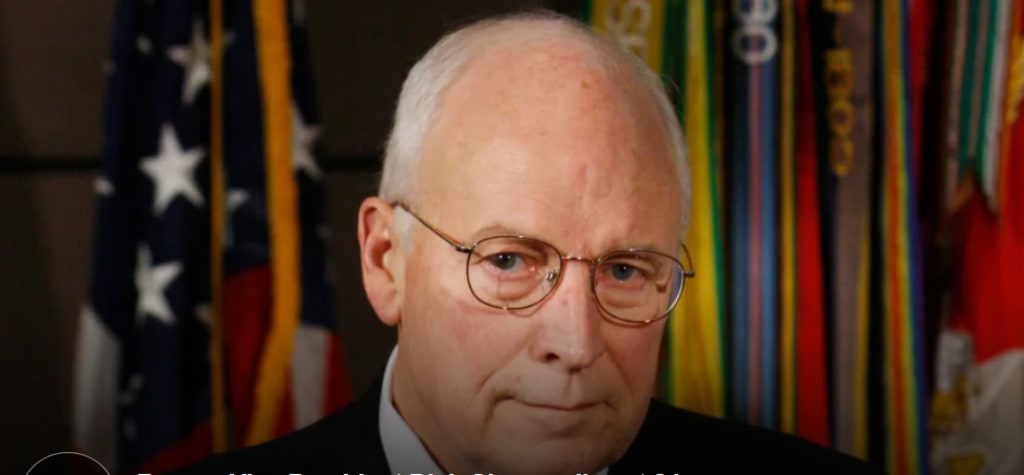
When we talk about figures who quietly yet powerfully shaped modern American politics, Dick Cheney stands near the top of the list. Known for his sharp mind, strategic thinking, and unwavering political will, Cheney’s journey from a small-town boy in Wyoming to one of the most influential vice presidents in U.S. history is nothing short of remarkable.
Early Life and Rise to Power
Richard Bruce Cheney was born on January 30, 1941, in Lincoln, Nebraska, and grew up in Casper, Wyoming. His beginnings were modest, but even from an early age, he showed signs of leadership and ambition. Cheney attended the University of Wyoming, where his interest in government and policy began to take shape.
After entering politics in the late 1960s, Cheney’s career took off when he joined the White House staff under President Richard Nixon. His ability to navigate complex political situations earned him recognition, and soon he became Chief of Staff for President Gerald Ford — the youngest person ever to hold that position at the time. This role marked the beginning of his long and influential career in Washington.
From Congress to the Pentagon
In 1978, Cheney was elected as the U.S. Representative for Wyoming, a seat he held for more than a decade. During his tenure in Congress, he built a reputation as a conservative thinker who valued defense, fiscal responsibility, and national security.
His experience and connections led him to one of the most powerful roles in government — Secretary of Defense under President George H. W. Bush from 1989 to 1993. During this time, Cheney oversaw Operation Desert Storm, the U.S.-led coalition that liberated Kuwait from Iraq. His calm decision-making and strategic leadership during the Gulf War earned him respect from both allies and opponents.
The Vice Presidency That Redefined Power
When George W. Bush chose Cheney as his running mate in the 2000 presidential election, few realized just how much influence he would wield. Serving as the 46th Vice President of the United States (2001–2009), Cheney was not content with playing a ceremonial role. Instead, he became one of the most powerful vice presidents in history.
After the tragic events of September 11, 2001, Cheney’s influence expanded dramatically. He became a key architect of America’s foreign policy and national security response. His guidance helped shape the War on Terror, the invasions of Afghanistan and Iraq, and the reorganization of U.S. intelligence agencies.
Supporters saw him as a decisive leader who acted to protect the country during uncertain times. Critics, however, accused him of overstepping boundaries and expanding executive power beyond its limits. Whether praised or criticized, there is no denying that Cheney changed the way the vice presidency operated forever.
Health Battles and Personal Life
Behind his tough political persona, Dick Cheney faced immense personal challenges — particularly with his health. He suffered multiple heart attacks throughout his life and underwent a heart transplant in 2012. Despite these challenges, Cheney remained active in politics and public life, often speaking about leadership, foreign policy, and the importance of resilience.
He has been married to Lynne Cheney since 1964, and together they raised two daughters, Elizabeth (Liz) Cheney and Mary Cheney. Liz Cheney followed in her father’s footsteps, becoming a member of Congress and continuing the family’s strong influence in American politics.
Legacy and Reflection
Dick Cheney’s legacy is complex but undeniable. He will always be remembered as a man who operated behind the scenes — strategic, serious, and unapologetically decisive. His career redefined what it meant to be vice president and left a lasting mark on American defense policy and executive power.
For some, Cheney represents strength, loyalty, and patriotism — a leader who always put national security first. For others, his tenure symbolizes secrecy and excessive influence in decision-making. Either way, his story reminds us that leadership often comes with both admiration and controversy.
Final Thoughts
In the end, Dick Cheney’s story is one of power, persistence, and purpose. From the plains of Wyoming to the White House, his journey reflects the complex nature of American politics — where vision, courage, and conviction can shape the destiny of a nation.
Cheney’s life reminds us that true leadership isn’t about popularity; it’s about impact. And whether one agrees with his policies or not, there’s no denying that Dick Cheney changed the course of history.
#DickCheney #Politics #VicePresident #USHistory #GeorgeWBush #Leadership #Motivation #AmericanPolitics #History #Inspiration
Disclaimer:
This artical is Ai generated and reviewed by Kamran Ahmad
This article was written for educational and informational purposes, based on publicly available information and historical records. It does not promote or oppose any political figure or ideology.
About the Creator
KAMRAN AHMAD
Creative digital designer, lifelong learning & storyteller. Sharing inspiring stories on mindset, business, & personal growth. Let's build a future that matters_ one idea at a time.
Keep reading
More stories from KAMRAN AHMAD and writers in History and other communities.
The Shadow of a Giant
I never met him. But I knew his voice. It came through our black-and-white TV in 1983, calm and steady, speaking of “morning in America” while my father fixed dinner and my mother worried about bills. To me, he was just a man in a suit—distant, polished, untouchable.
By KAMRAN AHMAD12 days ago in History
Dust
It was dust. Dust had weight there. It pressed into your mouth when you breathed, ground against your teeth, settled into the creases of your eyes. It coated our boots and crept into our weapons no matter how carefully we cleaned them. When the wind picked up, it hissed across the ground like something alive. Long before I heard a shot fired, I understood that the dust would get inside me and never really leave.
By Gaofeng Wang7 days ago in History
Ludacris and Nelly draw backlash over bookings at MAGA-coded music festival
Ludacris and Nelly headlining a mostly right-wing event is good for them. It’s also great for the genre of hip hop. The two rap veterans have showcased their talents on other stages. Why can’t they perform for mostly MAGA folks and grab that bag?
By Skyler Saunders4 days ago in Beat


Comments
There are no comments for this story
Be the first to respond and start the conversation.