
Dear Sydney Sweeney: Turning the “Great Jeans” Controversy into a Learning Moment
Understanding the history behind denim and its connection to race can help Sydney grow with empathy and insight.

Trigger Warning: This article contains discussions of racism, slavery, eugenics, MAGA extremist ideology, and systemic discrimination. Please read with care.
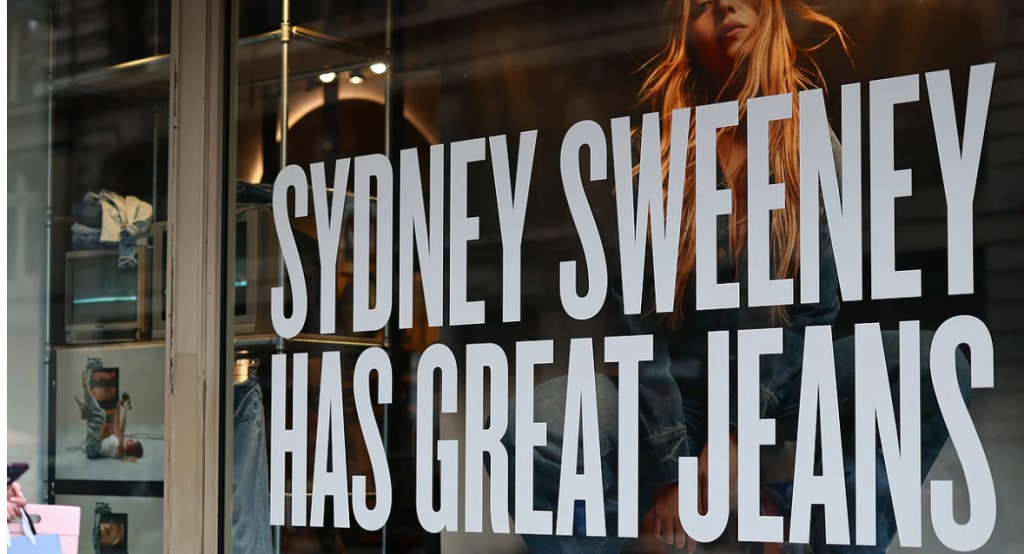
Sydney Sweeney, known for her roles in Euphoria and The White Lotus, recently faced public scrutiny after appearing in American Eagle’s fall 2025 campaign, which featured the tagline: “Sydney Sweeney Has Great Jeans.”
While seemingly a clever fashion pun, playing on "jeans" and "genes," many online commentators found the phrase racially charged. They argued that using "great genes" to describe a white, blonde woman, especially in a solo campaign, evoked associations with the eugenics movement and ideas of racial "purity."
It is unlikely that the campaign intended to endorse white supremacy. However, this article aims to explore the significance of unintentional harm, which warrants attention.
Why “Great Genes” Isn’t Just Wordplay: A History of Eugenics and Exclusion
In the early 20th century, “good genes” was a phrase associated with control, not compliments. The American eugenics movement advocated for selective breeding to “improve” society. This often meant discouraging interbreeding with other ethnic groups or forcibly sterilizing people with disabilities, immigrants, and particularly Black and Indigenous individuals.
Books such as The Passing of the Great Race paved the way for U.S. laws that led to the sterilization of over 60,000 people. These concepts also significantly influenced Nazi Germany’s “Aryan race” ideology.
When a campaign highlights a white, conventionally attractive actress as having “great genes,” it inadvertently echoes this troubling past, especially if the message lacks racial or body diversity to provide a balanced perspective.
The Hidden History of Denim: How Blue Jeans Are Tied to Black Labor
Denim, a fabric often associated with youth, rebellion, and American culture, has roots in Black oppression. Its popularity in the 1800s stemmed from its affordability and durability, making it ideal for enslaved Black individuals forced into manual labor on plantations and in factories. These enslaved Black tailors and seamstresses were not only responsible for making these clothes but also contributed to their functional design.
As educator and historian @evolvedteacher (Gahmya Drummond-Bey) highlighted on Threads, this history is often erased: "They’ll tell you denim came from France. They’ll tell you you’re ‘reading too much into it.’"
This serves as a crucial reminder that mainstream narratives frequently obscure uncomfortable truths. In reality, Black labor, exploitation, and ingenuity profoundly shaped denim in the U.S.. The fabric's narrative is inextricably linked to this history.
The irony is stark: a fall fashion campaign featuring a cis, white woman in light-washed denim, captioned "great jeans," inadvertently erases the contributions and suffering of the very people who made denim iconic, simply by omitting Black history.
Public Reactions: A Divided Response
The campaign ignited diverse social media reactions. Many Black creators and cultural critics expressed hurt and exhaustion, labeling the campaign racially insensitive and historically dismissive. Conversely, some defended Sydney, suggesting critics were "overreacting" or "twisting" the message. A segment, particularly right-wing influencers, dismissed the backlash as a "woke mob" phenomenon.
Throughout this controversy, neither American Eagle nor Sydney Sweeney issued an official apology. Sweeney's silence, in particular, led to speculation about whether she was ignoring the repercussions or privately contemplating the situation.
Donald Trump’s Reaction: Culture-War Fuel
The controversy surrounding the American Eagle ad intensified politically when Donald Trump publicly endorsed Sydney Sweeney after discovering she’s a registered Republican. His remarks, amplified by the Instagram account @progressivesfortn, included:
“Sydney Sweeney, a registered Republican, has the ‘hottest’ ad out there. It’s for American Eagle.”
On Truth Social, he further commented:
“Go get em’ Sydney! Being ‘woke” is for losers, being Republican is what you want to be.”
Trump also used the opportunity to criticize Taylor Swift, stating Sweeney was “hot” and Swift was “no longer hot” because of her Democratic sympathies, illustrating how the advertisement became a tool in partisan political maneuvering.
GOP Allies Rally Around Sweeney
Conservative figures, following Trump's lead, quickly came to Sweeney's defense. Vice President J.D. Vance dismissed critics as "hysterical," suggesting they were calling her a "Nazi" simply for "looking good in jeans."
On Fox News, Fox & Friends commentator Lawrence Jones praised Sweeney's gun-range video and appearance, stating that every time he sees young women who can "shoot," their "value" increases. Similarly, Trump's communications director, Steven Cheung, labeled the backlash "cancel culture run amok" (despite it not being cancel culture) and attributed it to "liberal warped thinking."
The overarching message conveyed was that Sydney Sweeney is a "victim" of "leftist overreach" and embodies anti-woke American values.
Sydney, You Can Learn, and Lead
This situation isn't about condemning Sydney Sweeney; it's an opportunity to encourage her and others to grasp the broader context of the art and advertisements they engage with.
Here's how this growth can manifest:
- Embrace constructive criticism: Listen to feedback without becoming defensive.
- Understand historical context: Learn the origins and meanings behind visuals and language.
- Amplify unheard voices: Use your platform to support marginalized communities and show your commitment.
Sydney has been praised for her genuine and professional approach to acting. These same qualities can be applied here. She doesn't need to become an activist, but she can acknowledge any harm caused and use it as a catalyst for personal development.
Final Thoughts: Compassion + Accountability = Change
This denim controversy transcends mere fashion; it highlights the cultural significance of clothing, language, and imagery, particularly within a nation still grappling with its racial past.
Sydney, this isn't about assigning blame. It's about recognizing your capacity for growth and your commitment to improvement. If this occurs, the campaign will achieve more than just selling jeans—it will ignite something far more significant.
Resources for Further Learning
Articles and Posts
- Snopes Fact-Check on the Ad
- Threads Post by @nikjenkinss
- @inclusivestylist’s Instagram Breakdown
- Philadelphia Tribune–“Enslaved Blacks Invented Blue Jeans”
- @evolvedteacher Threads Post on Denim History
- @progressivesfortn Instagram Post on Trump’s Response
Videos
About the Creator
Jenna Deedy
Just a New England Mando passionate about wildlife, nerd stuff & cosplay! 🐾✨🎭 Get 20% off @davidsonsteas (https://www.davidsonstea.com/) with code JENNA20-Based in Nashua, NH.
Instagram: @jennacostadeedy
Keep reading
More stories from Jenna Deedy and writers in History and other communities.
The Golden Peacock in History: Symbol of Power, Beauty, and Immortality
The Peacock as a Sacred Symbol The peacock has long been regarded as a sacred animal. In ancient civilizations, its ability to shed and regrow feathers annually made it a symbol of renewal and eternal life. Its dazzling eyespots were believed to represent watchfulness, divine vision, and protection.
By Say the truth 3 days ago in History



Comments
There are no comments for this story
Be the first to respond and start the conversation.