
Buddha is Smiling: The Secret Message of India's Nuclear Triumph
How a Code Word, a Broken Line, and a Glowing Smile Revealed India's First Nuclear Success to Indira Gandhi
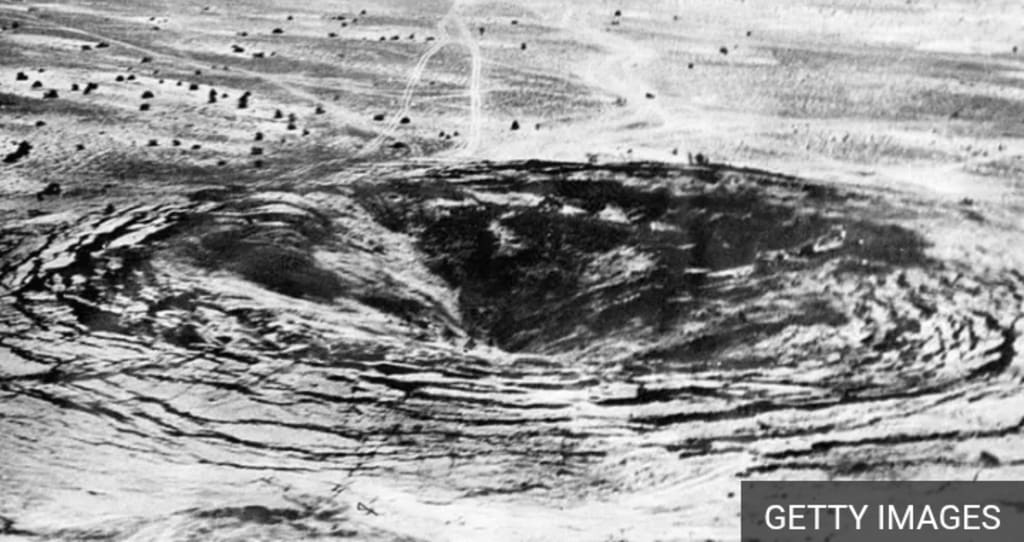
India's First Nuclear Test and the Broken Jeep: When the Bomb’s Creator Fell Face-First to the Ground Due to the Tremor
Exactly 51 years ago today (on May 18, 1974), India announced its first nuclear test. The following account is being republished to mark the occasion.
On the morning of May 18, 1974, All India Radio’s Delhi station was broadcasting the popular song from the film Bobby, “Hum Tum Ek Kamre Mein Band Hon, Aur Chaabi Kho Jaye” (“If you and I were locked in a room and the key got lost”).
At exactly 9 AM, the song was cut off and an announcement was made: “Please stand by for an important announcement.”
A few seconds later, the announcer’s voice came on: “At 8:05 this morning, India conducted an underground nuclear test for peaceful purposes at an undisclosed location in western India.”
One Day Earlier in London…
A day earlier in London, Indian Prime Minister Indira Gandhi’s Principal Secretary, P.N. Haksar, kept asking Indian High Commissioner B.K. Nehru, “Any news from Delhi?”
As soon as the news of the nuclear test arrived, Nehru could see the visible relief on Haksar’s face. He understood why Haksar had been so anxious.
Who Would Be Beheaded?
Five days before the test, on May 13, under the supervision of Homi Sethna, Chairman of the Atomic Energy Commission, Indian nuclear scientists began assembling the bomb.
On the night of May 14, the device was taken to an L-shaped underground shaft. The next day, Sethna traveled to Delhi for a pre-scheduled meeting with Indira Gandhi.
Sethna told her, “We have placed the device in the shaft. Now please don’t ask us to remove it, because it’s no longer possible. You can’t stop us now.”
Indira Gandhi replied, “Go ahead. Are you afraid?”
Sethna said, “Not at all. I just wanted to say, there’s no turning back from here.” After getting Gandhi’s approval the next day, Sethna returned to Pokhran.
He gathered the team and asked, “If the test fails, whose head will roll?” Bomb designer Rajagopal Chidambaram promptly responded, “Mine.”
Deputy leader P.K. Iyengar added, “No heads need to roll. If it fails, it means the laws of physics are wrong.”
The Jeep That Failed
On the morning of May 18, the desert heat in Pokhran was intense. A makeshift observation post had been set up five kilometers from the blast site.
Present were Homi Sethna, Raja Ramanna, Indian Army Chief General Bewoor, DRDO Chairman B.D. Nag Chaudhry, Deputy Leader P.K. Iyengar, and Lt. Col. P.P. Subharwal.
Nag Chaudhry had a camera around his neck and was continuously taking photos. Chidambaram and fellow designer Satinder Kumar Sikka were on another hill near the control room.
The electronic detonation team, led by Srinivasan and Pranab Dastidar, was inside the control room. The blast was scheduled for 8:00 AM.
But an hour earlier, scientist Virendra Singh Sethi’s jeep refused to start on the way to the test site for the final check. Time was running out. Sethi abandoned the jeep and walked 2 kilometers to the control room.
Sethna asked General Bewoor what to do about the broken-down jeep so close to the test site. Bewoor replied, “Oh, you can blow the damn thing up.”
Fortunately, Indian Army troops soon arrived with another jeep and moved the faulty one to a safe distance. Still, the test was delayed by five minutes.
“We Will Proceed”
Finally, a countdown began over the loudspeaker near the observation post. Sethna and Ramanna gave Pranab Dastidar the honor of pressing the trigger.
At the count of five, Dastidar switched on the high-voltage switch. Seeing the electric meter, Dastidar was shaken — it showed that only 10% of the required voltage was reaching the device. He panicked: “Shall we stop? Shall we stop?”
The countdown halted. But Dastidar suspected the reading was wrong due to moisture inside the shaft. He shouted, “No! We will proceed!”
According to George Perkovich in his book India’s Nuclear Bomb, Dastidar pressed the red button at exactly 8:05 AM.
“Krishna Lifted the Mountain with His Finger”
At the observation post, when Sethna and Ramanna heard the countdown stop, they thought the test had failed. Ramanna wrote in his memoir Years of Pilgrimage that his colleague Venkatashan, who had been chanting the Vishnu Sahasranama, stopped mid-prayer.
Everyone feared all their hard work had gone to waste. Suddenly, a huge sand column shot up from the earth and stayed suspended for nearly a minute. P.K. Iyengar later wrote, “It was a breathtaking sight. The legends of Krishna lifting a mountain with his finger started to seem real.”
Jitendra Soni, head of the system integration team, felt like a sand minaret had risen in front of him.
Fell Face-First to the Ground
At that moment, it felt like a massive earthquake struck. Sethna felt the earth shaking violently. But he was puzzled — why wasn’t there a blast sound? Or could he simply not hear it?
A second later, a faint explosion sound was heard. Chidambaram, Sikka, and their team began hugging each other. Chidambaram later said, “It was the greatest moment of my life.” Overcome with excitement, Sikka jumped off the observation post, spraining his ankle.
In the control room, Srinivasan felt like he was on a small boat in a stormy sea. Ramanna later wrote in his memoir, “I saw the sand mountain rise as if Hanuman (a Hindu deity) had lifted it.”
But he forgot in his excitement that the earth would soon shake. As he descended from the observation post, the ground trembled. Ramanna lost his balance and fell flat on his face.
Ironically, the architects of India’s nuclear bomb ended up face-first in the hot sands of Pokhran on the very day of their monumental success.
“The Buddha is Smiling
Now the next step was: how to convey this news to Indira Gandhi in Delhi?
Just for this purpose, the army had arranged a special hotline to the Prime Minister’s Office there. Soaked in sweat, Sethna managed to connect with the PM’s office after several attempts.
On the other end was the Prime Minister's private secretary, P.N. Dhar. Sethna said, “Dhar Sahib, everything has gone…” and right at that moment, the call got disconnected.
Sethna understood that Dhar might have thought the experiment had failed. He took the army jeep along with Lieutenant Colonel P.P. Subharwal and unwillingly drove toward Pokhran village, where the army telephone exchange was located.
Upon reaching there, Sethna slapped his forehead in frustration when he realized he had forgotten Dhar’s direct number.
Here, Subharwal came to his aid. Putting all his authority into his voice, he told the telephone operator, “Get me the Prime Minister’s Office.”
But his order had no effect on the operator. In plain Hindi, the operator asked, “Who are you?”
After much effort and back-and-forth, they finally managed to establish contact with the Prime Minister’s Office.
Almost shouting, Sethna uttered the famous code words: “Buddha is smiling.”
Prime Minister’s Residence
For the next 29 years after the incident, P.N. Dhar never told anyone that Sethna’s efforts had actually been in vain because Army Chief General Bewoor’s call had already reached him ten minutes earlier.
Dhar couldn’t ask him directly, as the phone lines could be monitored. So he asked, “How’s everything?”
Bewoor’s reply was, “Sab Anand hai” (Everything is blissful).
Dhar immediately understood that India’s nuclear test had been successful. He rushed to the Prime Minister’s residence. At that time, Indira Gandhi was meeting with common people in her lawn.
When she saw Dhar approaching, she stopped talking to the people and rushed toward him. Almost breathlessly, she asked, “What happened?”
Dhar replied, “Everything is fine, Madam.”
In his autobiography, Dhar wrote, “I still remember how her face lit up upon hearing this. The expression of victory could clearly be read on Indira Gandhi’s face.”
About the Creator
Keep reading
More stories from Ikram Ullah and writers in History and other communities.
The Titanic Mystery: Secrets Beneath the Frozen Sea
On the night of April 14, 1912, the RMS Titanic sailed calmly through the dark waters of the North Atlantic, carrying more than 2,200 souls and the dreams of a modern world that believed it had conquered nature. Labeled “unsinkable,” the Titanic was the pride of human engineering. Yet before dawn broke, the great ship lay shattered beneath miles of icy ocean. More than a century later, the Titanic remains not just a tragedy—but a mystery filled with unanswered questions.
By The best writer 4 days ago in History


Comments
There are no comments for this story
Be the first to respond and start the conversation.