


The Czechs are arguably the best and most innovative glass producers in the world.
From the glass itself, to the products they create from that glass, to the finishes and uses of those products.
Although glass was not invented in the Czech Republic, by the 15th century glass manufacturing was established in Bohemia by ethnic Germans from the Rhineland. The center of this industry became Jablonec nad Nisou.
Today, the manufacture of the raw product used to make the beads and buttons and ornaments of the Czech Republic is controlled mainly by PreciosaOrnela.

Glass.
The glass is formed into thick rods 3 feet long, for use by commercial beadmakers to make beads.

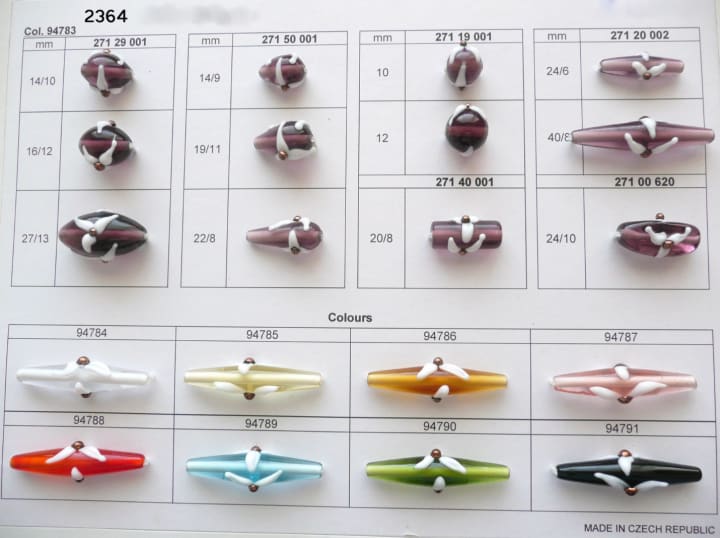
The glass factories also make thinner rods for use by lampworkers to create their beads. Some of the different types of glass are listed below:
a/ satin
b/ uranium glass has now been regulated by the Czech Government. A permit is required to produce it, and a secondary permit is required to use it. Glows under a black light.
c/transparent- see through.
d/ opagues – solid colors.
e/ opalescent glass, also known as German milk glass.
Bead makers then take the glass to make beads.
Beads – lampwork.
lampwork or wound beads were the first glass beads made, mainly for rosaries, then later for costume jewelry. The above samples are just a few of the thousands of lampwork beads available.
Pressed shapes.

Ammonite beads.
The graphite mold was invented and pressed beads were showcased for the first time at the world trade convention in Prague in 1832.

a/nailheads

Some of the first pressed beads were known as nailheads. Used extensively by the French for fashion embroidery on clothing, most nailheads were flat backed with a rough pressed facet on the top. The original color was black in response to the fashion of the day which was inspired by Queen Victoria’s mourning of the death of her husband. Later colors were added as were shapes such as fruit.

b/ druks/cubes/fantasy/animals/2 hole/
More traditional shapes were then created using the mold/pin technique, such as round (druk), cubes, flat squares, pyramid, animals (dog faces, cat faces, fish) and 2 hole beads. 3 hole beads were also created. Odd shapes were lumped under “fantasy” shapes. Imagination knew no limit.
Rocailles.

Small beads created by gravity and with air blown through a center mandrel, then cut and tumbled. Sizes range from a 1/0 through to a 22/0. By laying beads side by side (not hole by hole) the size is determined by how many beads are in an inch.
Although also discussed under faceted, rocailles were also handcut to create a different style of bead, such as hex cuts or charlotte cuts.
Hollow.
Using glass blowing techniques and also lampwork techniques, hollow beads were created.
Faceted.
To create another style of glass bead, the beadmakers began faceting the pressed shapes to look like cut and faceted stone beads being made in Germany at Idar-Oberstein.
a/ fire polish.
Because glass beads were cheap, the beadmakers could not afford to waste time hand polishing the surface of the facets, so they invented fire polishing. Basically this involved running the beads through a heat process to smooth out the rough surface of the facet.
rounds, olive, cathedral.
Starting with round beads being faceted to create what is now traditional fire polish beads, sizes range from 2mm to 24mm.
Then other shapes were faceted, such as olive shapes and rhondelles, then cathedrals or window beads.
b/.charlotte cuts/hex cuts.
As mentioned above under rocailles, seed beads were altered by being faceted. One cut facets on a size 13/0 became known as charlottes. Any other size was known as a one cut. Multi cut facets on a seed bead were hex cuts and 3 cuts.
c/ table cuts.
Another type of faceted bead invented by the beadmakers was the table cut. Instead of a revolving stone wheel grinding at a small part of the bead to create a facet, here there was a horizontal flat grinding surface both on the bottom and on the top with the pressed bead sandwiched in between.
d/ English cuts.
An early form of faceted bead created by the beadmakers was the English cut. Not actually hand faceted but pressed to look faceted.
Buttons.
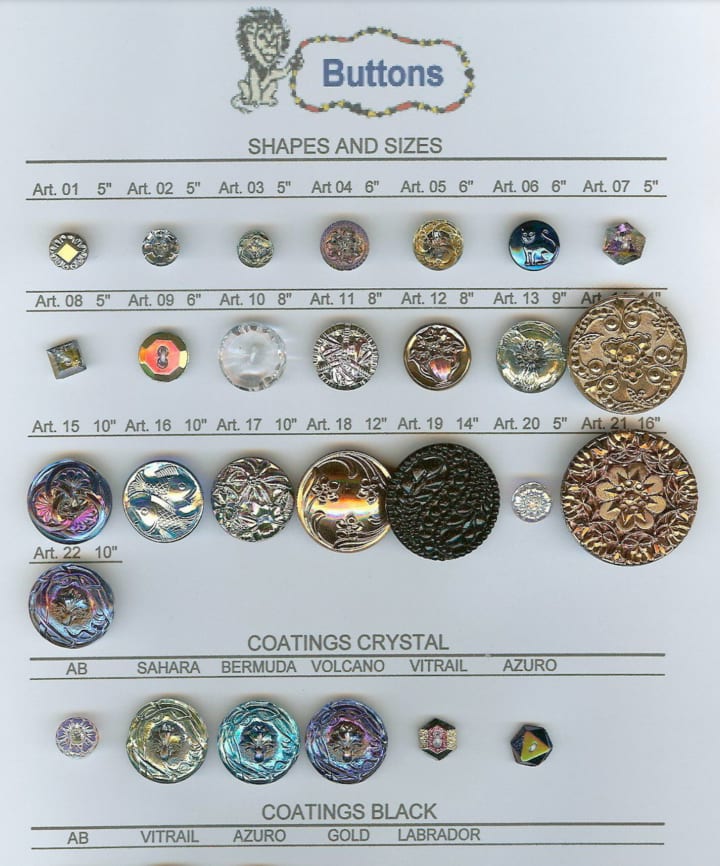
Glass buttons have been around just as long as glass beads, being made by the same lampwork technique as glass beads, but the first metal mold was used to create molded buttons in 1732, one hundred years before the first bead mold was invented.
a/Metal shank inserts.
At first, the design was molded and attached to a pair of pliers. The top portion was the design and the bottom portion had a slot for a metal shank to be placed in with tweezers, then when the hot glass was placed between the pliers and squeezed together the result was a glass button.

b/ Later a self shank button mold was invented whereby the entire button including the shank was pressed as one piece. No metal shank laboriously inserted one at a time.
Crystal .
Crystal was created by adding a larger quantity of lead into the glass to increase the refraction of light through the glass, making it sparkle and shine.
a/Chandeliers and prisms.
Light fixtures and chandeliers were the main reason for crystal prisms – to create a visually beautiful experience.
b/machine cut beads.
Taking it one step further, beadmaker Daniel Swarovski invented a machine to cut crystal into beads to create the same experience with beads as was being done with chandelier prisms.
Sculpture.
The use of glass was not just limited to beads and buttons, but also to create art work as stand alone sculptures.
a/ art.
b/glassware – vases, boxes, perfume bottles, nail files

Coatings/finishes .
a/. gold/silver/copper/AB/vetrail/lusters.
To further enhance the beauty of their creations in glass, the beadmakers used finishes on top of the glass beads and buttons to create even more exotic products. Metals were sprayed or painted on top of the beads or in creases in the design to produce etchmarks or coatings which altered the color or image of the bead and created a whole new look.
b/.Peacock/ with stencil designs.
One such creation was the stenciled peacock effect on the surface of the bead or button. Using vacuum technology the metal finish is applied to the glass such as vetrail or AB, but instead of just covering the entire surface a stencil is applied so only some of the surface is coated, creating designs on the surface.
c/. Travertine/ Piccaso.
Another technique used to create a coating on the glass surface is by placing the bead into a kiln and heating chemicals/ metals such as travertine along with wet oak wood to create thick smoke which applies to the glass as a smoky swirly coating.
d/.Pearlized.
One popular coating which has been around for quite a while is the pearl finish on glass beads. Here glass beads are strung on thick thread and dipped repeatedly, sometimes up to eleven times, into a thick pearl coating.
Marbles.
Glass marbles are also made in the Czech Republic, by hand using the lampwork technique.
Christmas ornaments.
Hollow bulbs are blown into round spheres or blown into a mold shape and glass designs added on top to create beautiful ornaments for the Christmas tree. In some cases metal coatings are blown inside the hollow beads or ornaments to create different effects.
The things that the Czech glass makers and bead and button makers can invent and do with glass seems to be endless and infinitely innovative.
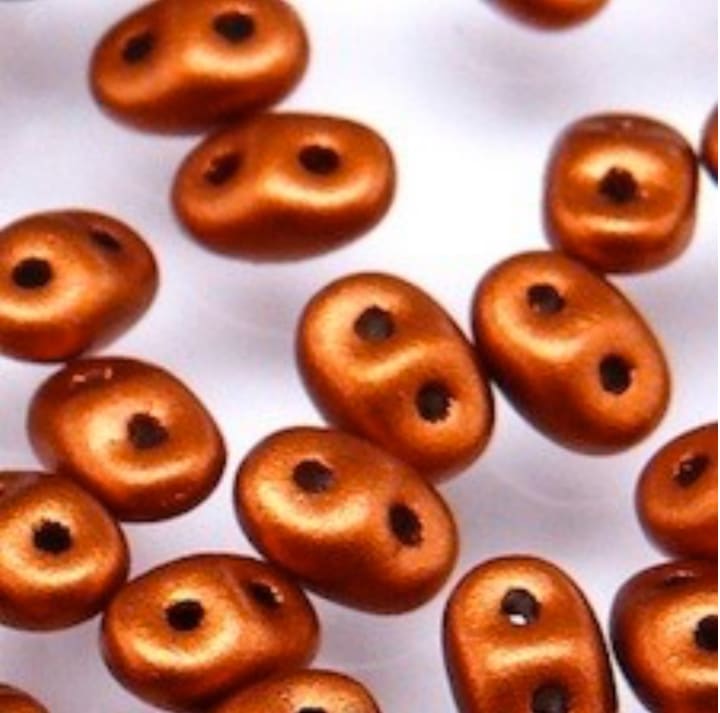
Just in the last couple of years have seen such new products as superduos, O’s, rizo’s, and the re-introduction of 2 hole beads in such shapes as daggers, flat squares, rectangles and diamond shapes, domed and so many others.
I wonder what the Czechs have in store for us beaders next? We will just have to wait and see.
About the Creator
Guy lynn
born and raised in Southern Rhodesia, a British colony in Southern CentralAfrica.I lived in South Africa during the 1970’s, on the south coast,Natal .Emigrated to the U.S.A. In 1980, specifically The San Francisco Bay Area, California.
Worst Mid-Air Crash in Aviation History part 1
It was evening over Delhi when two aircraft carrying a total of 349 people were moving toward each other in the sky. One of them was preparing to land at Delhi Airport, while the other had just taken off from Delhi. Both pilots were receiving instructions from the same air traffic controller, and a vertical separation of 1,000 feet had been maintained between them.
By Imran Ali Shah4 days ago in History
Belle of the Bayou
Bad move, cher. Not just the slip of her kitten heel on the rainy February cobblestones in the Fourth Ward. She got caught snooping. Detective Deleon clucked and strutted like a rooster in his rush to clear her from the scene, waving cigar smoke to and fro as he gesticulated amid the thick air of the speak easy. An experienced crime reporter, Marie knew better than to let the coppers catch her on the wrong side of the line, but curiosity had gotten the better of her.
By Maia Gadwall the metAlchemist6 days ago in Fiction




Comments
There are no comments for this story
Be the first to respond and start the conversation.