
Vlad the Impaler: Dracula's Real History and His Clash with the Ottoman Empire
Unraveling the True Story of the Prince of Wallachia, His Brutal Reign, and His Resistance Against Sultan Mehmed II
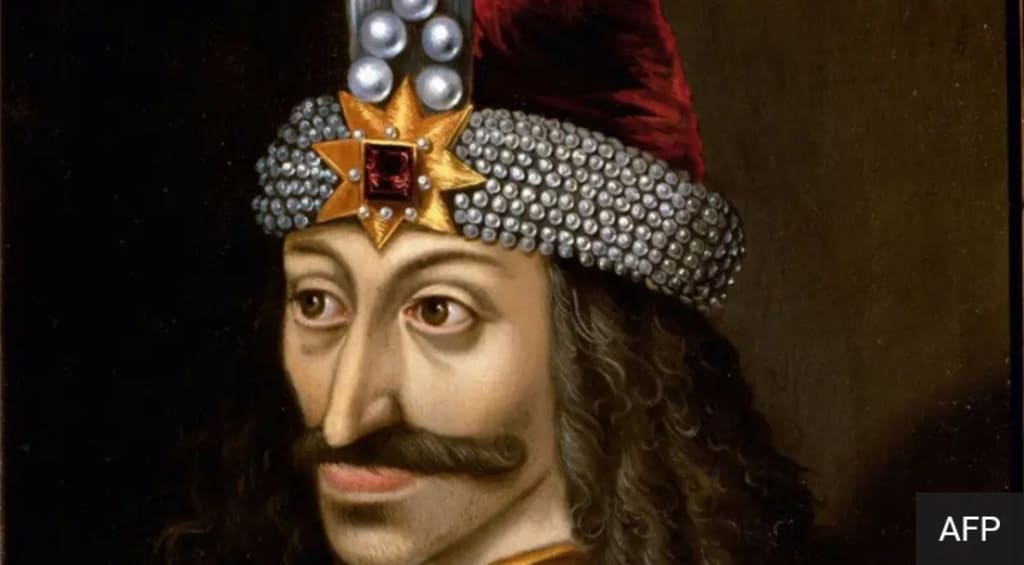
Who was Dracula originally, and what was his conflict with the Ottoman Empire?
The scene was a field where, in a semi-circular area spanning about a mile, nearly 20,000 stakes were driven into the ground, and on each one was impaled the mutilated corpse of a Turkish prisoner.
On the two tallest stakes were the bodies of Hamza Pasha, a regional official of the Ottoman Empire, and the Greek Katavolinos, who had been dead for several months. The remnants of their once-valuable clothing fluttered in the air, while the only scent in the atmosphere was that of decaying human flesh.
The Greek historian Chalcocondyles writes that this was the sight that greeted the vanguard of the Ottoman Sultan Mehmed II's army in June 1462, 60 miles from the city of Târgoviște in the European state of Transylvania.
When Sultan Mehmed II set out from Istanbul on May 17, 1462, to teach a lesson to Prince Vlad III Dracula, the ruler of the state of Wallachia across the Danube River in Europe, few would have thought that the campaign would end in such a way.
Historians Radu Florescu and Raymond McNally, in their book Dracula: Prince of Many Faces, His Life and Times, quote the Greek historian as saying that this scene so affected Sultan Mehmed that he said, "...it is very difficult to take his land from a man like this."
They wrote that for the night's stay, the Sultan had a deep trench dug around the Turkish camp, and the next day he ordered the army to retreat, saying that the area was not important enough to pay such a price.
Wallachia had previously been a tributary state of the Ottoman Empire and remained so after this campaign, but according to historians, its status could not be changed to that of an Ottoman province. The Sultan himself returned, but the campaign against Vlad Dracula did not end. He left Dracula's brother, Radu, with a part of the Turkish army.
As a result of this campaign, Dracula had to flee his state, and his younger brother Radu 'the Handsome', supported by the Ottoman Empire, took the throne with the help of the local nobility and those classes who were tired of Dracula's cruelties.
Historian Caroline Finkel, briefly mentioning the action against Wallachia in her book Osman's Dream: The History of the Ottoman Empire, writes that "due to the failure of the tributary state of Wallachia to provide the annual tribute and the subsequent provocative actions of its ruler Vlad Dracula, Sultan Mehmed ordered the crossing of the Danube in 1462 to restore order. After a successful operation, Vlad's brother Radul, who had been held hostage in Istanbul as a guarantee of Vlad's good behavior, was made the ruler in Vlad's place. Vlad himself fled to Hungary."
About ten years before the Sultan launched this campaign in Europe, he had already earned the title of 'the Conqueror Sultan' by conquering Constantinople, the last vestige of the powerful Byzantine Empire that had lasted for centuries. His empire had spread across more than one continent. This Sultan, who saw himself in the lineage of conquerors like Alexander the Great, now had his sights set far into Europe.
In this campaign in 1462, his target was Vlad Dracula, the ruler of the Ottoman tributary state of Wallachia, who, according to historians, had not appeared before the Sultan to pay tribute for three years.
Furthermore, historians like Florescu and McNally write that after the conquest of Constantinople, as well as "most of Bulgaria, Serbia, and Greece, the Sultan naturally considered making Wallachia a province of his empire, and to achieve this goal, he ordered operations in the regions of the Danube River, which flows from Germany eastward through several countries and into the Black Sea."
Historically, the Danube River had been an important route for those coming from the east with the desire for conquest in the west, and the state of Wallachia was located on the northern bank of this river. The ruling family of this state, with a population of less than a million, had a history of sometimes good and sometimes bad relations with the Ottoman Empire for generations. Florescu and McNally write that now the Sultan, displeased with the policies of the new ruler of the state, Prince Vlad III Dracula, decided to deal with the issue.
They wrote that war between Dracula and the conquering Sultan Mehmed II was inevitable; the only question was when. And "(the conqueror of Constantinople) Sultan Mehmed, having grown up together with Dracula, was well aware of the Sultan's desire for conquests."
Compared to Mehmed II's empire, Dracula's country was very small, but historians write that his sense of being a ruler was in no way less than that of Sultan Mehmed II. This was a time when the title of Dracula was an honor.
Not One, But Two Draculas
Before proceeding, let's mention history, where two Draculas are mentioned. One is the one whose name has been unusually prominent worldwide once again this year, as it is every year around the 'Dracula Day' celebrated on May 26th recently, and whose pictures are shared. This Dracula is depicted sinking his teeth into the neck of a victim, or looking towards the sky with blood dripping from his pointed fangs.
This series began after the publication of Bram Stoker's novel on May 26, 1897, in which this fictional blood-drinking character, Dracula, was introduced.
This character of Dracula might have been fictional, but the name Dracula was not entirely fictional. The prince called Dracula in history, who confronted the Sultan of the superpower of his time, became infamous on one hand for his cruelties, while on the other hand, he is considered a national hero in Romania.
This prince of Wallachia, a relatively small state, was called Vlad III Dracula. Dracula meant 'son of Dracul'. This prince is famous in history for being a ruler who impaled thousands of his own people and foreigners on stakes. For this reason, Vlad III Dracula is also known as 'Vlad the Impaler' in English.
Interestingly, history tells us that in childhood, the conquering Sultan Mehmed II and Dracula spent some time together, and at that time, they even had the same teacher. On one side was the prince and heir to a Muslim empire spread over different continents, and on the other side was the son of the ruler of a Christian state, one of the many tributary states of this empire in Europe. How did these two end up together under one roof? This will be discussed later, first, an introduction to the prince who was called Dracula.
Who was Vlad the Impaler?
According to Encyclopedia Britannica, Prince Vlad the Impaler, who ruled the state of Wallachia in the Danube region multiple times, his full name was Vlad III Dracula. He was born in 1431 and died in 1476. He was born in Transylvania and died in an area north of Bucharest, the capital of present-day Romania.
Romanian historians Florescu and McNally write that Dracula's era coincided with the time of 'two great Sultans' in the Ottoman Empire: Murad II (1421-1451) and Mehmed II (1451-1481), and they wrote that "(the conqueror of Constantinople) Sultan Mehmed II and our young prince (Dracula) grew up together."
Romanian historians write that both these Ottoman Sultans were highly civilized and worldly individuals. "They were far-sighted politicians who taught Europe a lesson in religious tolerance by sheltering Jews and other religious minorities at a time when the Roman Catholic Church was 'persecuting' them."
According to Encyclopedia Britannica, in 15th-century Europe, Vlad gained notoriety for his cruel treatment of his enemies. It is also written there that a group of historians believes that the Dracula of Bram Stoker's world-famous novel is actually this Vlad.
Vlad's father was Vlad II Dracul. He was given the title Dracul by Sigismund, the Holy Roman Emperor at the time, for his membership in the 'Order of the Dragon', which was formed to stop the Turkish invasion of Europe.
According to the encyclopedia, the word Dracul comes from the Latin word Draco, which means dragon. And Dracula means 'son of Dracul'. Thus, the son of Vlad II Dracul was named Vlad III Dracula. Historians also give various reasons for Dracula's title, one of which is that in the Romanian language, Dracul also means 'devil'.
According to Encyclopedia Britannica, Dracula lived in the Ottoman Empire from 1442 to 1448, and then he returned to Wallachia after the murder of his father and elder brother. Dracula faced opposition from the Wallachian nobility, including his younger brother, who was supported by the Ottoman Empire, in his attempt to take his father's throne.
He became ruler for the first time in 1448 but was soon overthrown, and then it took him eight years to regain his father's seat. In this second reign, he committed the atrocities that made him famous and earned him the name Vlad the Impaler.
This period ended in 1462 after the campaign of Sultan Mehmed II mentioned above, which is remembered for Vlad Dracula's 'forest of hanging corpses on stakes'.
History tells us that Vlad managed to regain the rule of his father's state for the third and last time in 1476, but in the same year, he was killed in a battle at the age of 45.
Vlad III Dracula and the conquering Sultan Mehmed II probably first met in 1442 when Dracula's father left him and his younger brother Radu 'the Handsome' in the custody of Sultan Murad II as a guarantee of his loyalty to the Ottoman Empire.
Historians say that at that time, Vlad III Dracula was eleven or twelve years old, and his younger brother Radu was about seven. Prince Mehmed was also about the same age as Dracula at that time.
The story is that by this time, Serbia and Bulgaria in Europe had come under Ottoman rule, and Sultan Murad II was preparing to deliver the final blow to the centuries-old Byzantine Empire.
Vlad II Dracul, as mentioned earlier, had become a member of the 'Order of the Dragon', formed for opponents of the Ottomans and the Roman Catholic Church, but Florescu and his fellow historian McNally wrote that he was a cunning politician, and as soon as his grip on the throne of Wallachia strengthened, he realized that the balance of power in the region favored the Ottomans.
Historians write that seeing the situation, immediately after the death of his patron, the Holy Roman Emperor Sigismund, Vlad II Dracul made a treaty with the Turks.
"Dracul and 300 of his companions appeared before Sultan Murad in Bursa, and in a magnificent ceremony, the Prince of Wallachia formally declared his obedience."
It is said that after some time, doubts arose in the heart of Sultan Murad (who, according to both historians, was a ruler who honored treaties) about Vlad II. When summoned, Vlad II appeared before the Sultan with his two young sons, Dracula and Radu. According to historians, at the city gate, Turkish soldiers chained them, and both sons were taken to a remote mountain fortress.
Vlad II Dracul remained a prisoner of the Sultan for about a year, during which time his elder son Mircea, who had good relations with the Sultan, sat on the throne of Wallachia.
Dracul was finally freed after swearing allegiance to the Ottomans on the Quran and the Bible. To prove his goodwill, Vlad II also left his two younger sons in Ottoman custody.
Dracula at the Ottoman Sultan's Court
Dracula's next six years were spent away from his parents in the Ottoman Empire. He could not speak the local language, and his religion was also different. "Surely, he must have felt that his own people had abandoned him."
Dracula remained in the Ottoman Empire until 1448, and his brother Radu until 1462.
The Difficulty for Wallachian Rulers
Wallachia was among those regions where, unlike in Europe, the throne was not inherited solely by the eldest son; all sons had the right to seek power. Therefore, if one son received the support of a major Western power like the Holy Roman Empire or the Kings of Hungary, the other would try to gain the support of the Ottomans.
This is reflected in the efforts of various members of the ruling family for the throne of Wallachia.
Florescu and McNally wrote that on the one hand, Vlad could not afford to anger the Holy Roman Emperor Sigismund by ignoring Catholic institutions, and he also knew that according to Wallachian traditions, it was necessary for any ruler to be Orthodox Christian.
The history of differences between Orthodox and Catholic Christians was very old and bitter. This was also one reason why it was very difficult for the Orthodox Byzantine Empire to get help from Roman Catholic Europe in its fight against the Ottoman Empire.
The Training of the Hostage Prince Vlad III Dracula at the Ottoman Court
When princes from small states came as hostages to the Ottoman court, one of the purposes was to make them loyal. History tells us that these princes were trained with the idea that if any of them became the ruler of their state in the future, their loyalty would be with the Ottoman Empire.
Good treatment of these foreign princes was conditional on their father's loyalty to the Ottoman Empire. Besides Dracula and his brother, two Serbian princes were also present at the Sultan's court during those days. As punishment for their suspected correspondence with their father, their eyes were gouged out, and "all this happened despite the tears of their 22-year-old beautiful sister, Princess Mara, who was the wife of Sultan Murad II at that time."
Dracula was trained by the best teachers of that era. According to historians, he already knew more than one European language, and now he had also mastered the Turkish language. Among his teachers, history mentions "the famous Kurdish philosopher Ahmed Gurani, who was also authorized to use the whip during the training of the Sultan's heir."
He was also taught the Quran, Aristotle's logic, and mathematics. Florescu and McNally write that Dracula was a difficult student who could not control his anger and was whipped several times. In contrast, according to historians, his brother received a lot of attention from both men and women at the court due to his good looks. The different characters of these two brothers and the separate treatment they received became the cause of intense hatred between them, which had far-reaching consequences.
Meanwhile, the Ottomans again became suspicious of the loyalty of Dracula's father, Vlad II, the ruler of Wallachia. The sword hung over the heads of both princes. However, no action was taken against them.
Historians say that they spent a long time in this uncertainty. Florescu and McNally write that this environment must have had a profound effect on Vlad Dracula. According to these historians, on the one hand, he must have felt that his father and elder brother had put his life in danger, and on the other hand, he could be killed by his hosts at any time.
In 1447, Vlad Dracula's father and brother were killed, victims of the politics of those European regions. Dracula was now free. He was made an officer in the Ottoman army, and the impression was given that the Ottoman Empire wanted to see him on his father's throne in Wallachia. Florescu and McNally write that Sultan Murad II was quite impressed with him.
Vlad Dracula, Ruler of Wallachia
Florescu and McNally write that in 1456, the sky was illuminated by a comet, and people predicted wars, epidemics, and natural disasters. It was during these days that the 25-year-old Vlad Dracula, after an eight-year-long struggle, succeeded in sitting on the throne of his ancestral state of Wallachia for the second time.
Florescu and McNally write that this time too, within a month, the Ottomans began to doubt his loyalty, and an envoy of Sultan Mehmed was sent to Wallachia. Dracula agreed to the Ottoman conditions at that time, but he did not repeat the mistake his father had made in 1442 by going to the Ottoman Empire himself.
Vlad Dracula's state was not very large but consisted of beautiful mountains, dense forests, lakes, and fertile plains. According to historians, his palace, the ruins of which still exist today, was destroyed and rebuilt several times by the Turks.
Vlad Dracula's Cruelties / When Vlad First Impaled Someone
All of Vlad Dracula's policies were aimed at consolidating power in his own hands within the state. Like some other states in Western Europe, he focused on creating an army whose loyalty was solely to him.
Florescu and McNally write that Dracula used to say that a prince who is weak at home cannot do as he pleases abroad, and therefore, for the first two years, he adopted a policy of appeasing his western neighbor Hungary and his eastern neighbor the Ottoman Empire in order to solve his domestic problems.
Due to the rapid succession of rulers, power had fallen into the hands of the local nobility, whom they called Boyars. History tells us that in the half-century after 1418, the rulers of Wallachia changed 12 times, meaning that on average, a ruler sat on the throne for two years.
Dracula realized that his nobility believed in keeping the Ottomans happy. In addition, supporters of the previous ruler of Wallachia were still present in the state, and Dracula still had to avenge the death of his brother Mircea.
Florescu and McNally, citing a 17th-century Romanian historian and the Greek historian Chalcocondyles, state that in 1457, when about 200 Boyar families and some important officials were gathered at his palace for Easter celebrations, they were arrested.
Dracula's soldiers impaled the older members among them through their bodies from bottom to top and left them hanging on stakes outside the city walls.
The healthy members of these families were taken to a distant mountain peak to repair the ruins of an old fortress from the time of their elders and forced to do hard labor. This fortress was called Dracula's Castle.
Historians say that for a tributary state ruler to build such a fortress was a violation of the orders of the two powerful neighbors, Hungary and the Ottoman Empire. It is said that there was a secret passage in this castle through which Dracula managed to escape in 1462 when he was overthrown.
Florescu and McNally write that during his reign, the old nobility of the region was almost eliminated through impalement or forced labor in Dracula's famous castle. The people who replaced them were 90 percent from the lower classes or those who were free peasants in the past.
Here's the English translation of the provided Urdu text:
Special Officials Who Impaled Enemies on Stakes
Dracula created a new position called 'Armaşi'. These Armaşi were only subject to Dracula's orders, and their job was to enforce the new justice system. They included Romanians as well as Hungarians, Turks, Serbs, Tatars, and some Gypsies. "Their salaries were very good, and they were not bound by any rules."
These were Dracula's 'axes', 'experts in impalement'. But Florescu and McNally state that this class also operated more out of self-interest than out of loyalty to Dracula, and when the exodus of people from his state increased in the final period of his rule, these Armaşi were also of no use. Besides the Armaşi, several armed units were also created during this period.
Historians say that "in his confused mind, cruelty and religion had become one, and he often used religion to defend his crimes."
The Incident of Driving Nails into Diplomats' Heads
Florescu and McNally, in their book, refer to a German figure of that time, Michael Beheim, who mentioned an incident of the arrival of some ambassadors from the Italian states at Dracula's court.
Michael Beheim wrote that, according to his information, these diplomats took off their large hats in reverence before Dracula, but kept the 'skullcaps' they wore underneath on their heads, saying that according to their tradition, even before the Sultan, the 'skullcap' was not removed.
The book further states that upon hearing this, Dracula ordered nails to be hammered in a circle into the 'skullcaps' on all of their heads, and while doing so, he kept saying to the ambassadors, "Believe me, I am only strengthening your tradition."
Whose Hero is Dracula?
While Dracula eliminated the nobility, he helped the peasants. After 1459, he stopped paying tribute to the Ottoman Empire, and in this way, the peasants were freed from this tax. In addition, he refused to give 500 boys to the Ottoman army. Historians state that boys were generally not taken from a tributary state anyway, but this was demanded of them.
Historians say, "It is said that in Dracula's time, the wealthy could not escape punishment by paying money, as was the case before... and for this reason, in response to the Ottoman attack in 1462, the peasants sided with Dracula."
History tells us that he would even go out in disguise at night to find out about the condition of the peasants. Florescu and McNally's book records a story from Romanian folklore that once, upon seeing a peasant wearing small-sized clothes, Dracula had his wife impaled on the spot for laziness.
The peasant pleaded a lot that he was happy with the woman, but Dracula said that the next wife he got would make him even happier.
History tells us that during his reign, women who had premarital sex and those who had sex with someone other than their husbands after marriage were given extremely severe punishments.
Stories are famous in Romania about how once, after treating a group of beggars well, he burned them all alive in the same room because these people wanted to live off the labor of others.
Sultan Mehmed II's Campaign Against Dracula
As mentioned earlier, Dracula had stopped paying tribute to the Ottoman Empire after 1459, and in addition to this, the Empire's
Sultan Mehmed II's Campaign Against Dracula
As mentioned earlier, Dracula had stopped paying tribute to the Ottoman Empire after 1459 and was also involved in what the Empire considered 'provocative' actions.
There were also contacts between the Ottoman Empire and Dracula, but during this time, two high-ranking Ottoman officials were killed by Dracula. Taking advantage of his fluency in Turkish, he had the gate of an Ottoman-occupied fortress opened, burned it down, and then a formal war broke out.
Dracula also sought help from other European powers in the name of religion, but due to local circumstances in some cases and historical differences between Orthodox and Catholic Christians in others, he did not receive a very good response. However, historians write that this did not deter him from confronting the Ottoman Empire.
He launched small-scale guerrilla operations throughout the region against the Ottoman Empire, while the Sultan himself was engaged in military campaigns in Asia at that time.
History mentions a letter written by Dracula to the Pope around this time, stating, "...we have killed 23,884 Turks and Bulgarians, not including those who were burned in their homes or whose heads our soldiers did not cut off."
Historians say that upon hearing about the deaths and losses inflicted by Dracula, the Sultan himself set out on May 17, 1462, to conquer Wallachia. Dracula urgently appealed to Europe for help, saying that if he were defeated, it would be dangerous for all Christians. But historians write that he did not receive the expected support.
Florescu and McNally write that the heat in 1462 was extremely severe. Dracula had sent the entire population to the mountains, forests, and swampy areas. After several days of travel, the Ottoman army did not get a chance to fight, and the problem of thirst was separate. Guerrilla attacks also caused significant losses to the Turks.
They wrote in their book that Dracula even launched a surprise night attack on the Sultan's camp with the intention of killing him, which failed. Finally, when the Sultan's army reached near Dracula's capital, they saw the scene that is most often mentioned in history: "Thousands of stakes driven into the ground in a semi-circle spanning a mile, with the rotting corpses of about 20,000 Turkish soldiers impaled on them."
Florescu and McNally write that Sultan Mehmed II returned the next day, but this did not mean that Dracula had won the war. The Sultan left Dracula's brother, Radu the Handsome, there with some Turkish troops so that he could win over the locals and, with the support of the nobility, take his brother's place on the throne. "In return, the Turks guaranteed the traditional autonomous status of the state."
They wrote in the book that the local population preferred Radu, with his promise to end the forced recruitment of boys into the army, over Dracula's cruel regime.
Dracula's Escape
Dracula fled and sought support from the King of Hungary, but he announced his support for Dracula's brother Radu and made a five-year treaty with Sultan Mehmed. Dracula was no longer a powerful prince; he only had the memory of past deeds.
The King of Hungary, reviewing the political situation on all his borders, arrested Dracula.
But a wave of protest against Dracula's arrest swept through Europe because just a few months earlier, he had become a hero to everyone for confronting and, according to them, 'defeating' Sultan Mehmed II.
The King of Hungary apparently tried to justify Dracula's arrest by presenting some letters supposedly from Dracula to Sultan Mehmed. In addition, people in the German regions had not yet forgotten the atrocities of his reign.
Florescu and McNally state that Dracula's status was not that of an ordinary prisoner; after a while, he even began to sit at the Hungarian court. Several times, the King of Hungary deliberately placed him in court during negotiations with Ottoman representatives. He remained imprisoned in Hungary in this way for 12 years.
Florescu and McNally, in their book, quote some officials of that time as saying that Dracula would have animals brought to his prison and try out on them the methods of punishment he had used on his prisoners in the past.
Dracula's Last Battle and Death
Meanwhile, the state of Wallachia slipped from the hands of Dracula's brother Radu, and he died in 1475. Hungary also began to consider putting Dracula back on the throne at this time.
Dracula again participated in several campaigns against the Turks in Bosnia with the King of Hungary and achieved successes. Historians write that King Matthias of Hungary extracted a promise from him to abandon the Orthodox faith and adopt Catholicism and supported his becoming the ruler of Wallachia for the third time.
Dracula ascended the throne for the last time in November 1476 and was killed in battle by the Turks the following month, in December. However, there are very different opinions about his final moments.
The Field of Human Corpses on Stakes: History and Vlad III Dracula
Historian Matei Cazacu, in his book Dracula, mentions a four to six-page booklet from 1463, believed to have been published in Vienna, titled The History of Voivode Dracula. Cazacu says that according to the anonymous author of this booklet, Dracula was the most violent and cruel ruler in history.
"The cruelties committed not only against his own people but also against others, such as Jews, Christians, Turks, Germans, Italians, and pagans, cannot be ignored."
Quoting this booklet, he wrote that Dracula made the punishment of impaling even more painful. Instead of a sharp point, he would keep the end of the stake blunt, drive it into the ground, and then seat people on top of it. Thus, under the pressure of human weight, the stake would slowly penetrate the body, and it would take two to three days for the person to die. "During this time, crows would even pluck out their eyes while they were fully conscious."
Cazacu writes that another contemporary account mentions that Dracula had created a forest of such stakes driven into the ground in front of his window, three kilometers long and one kilometer wide. "There were taller stakes for high-ranking Turkish officials and pashas."
Cazacu writes that even when considering the great tyrants of history, the things written about Dracula are extraordinary.
However, the introduction to the same book also mentions another booklet that tells us it was distributed in Russia at the end of 1486. "To our knowledge, it was never printed, but there were at least 22 handwritten copies. Here, Dracula is presented as a strict but just ruler, a wise and civilized ruler who strives to protect his country from the Turks."
The introduction to the book states that Vlad III was presented as a cruel ruler in Latin, German, Russian, and Balkan writings, and all of them depicted him according to their own ideological and political needs, and we need to evaluate this.
Regarding Dracula's own region of Wallachia, it is written that Vlad III was forgotten there over time. His mention reappeared, we are told, in the 19th century through old booklets and writings by German, Russian, and Hungarian historians.
For Romanian historians, the important question was how to reconcile the image of an extremely cruel prince on one hand with that of a person who showed great courage in confronting the conquering Ottoman Sultan Mehmed II on the other. "What to do? Ultimately, Dracula, or Vlad III, was recognized as a national hero for his services in defending Romania (which emerged as a modern state in 1918 with the unification of Wallachia, Moldavia, and Transylvania)."
About the Creator
Keep reading
More stories from Ikram Ullah and writers in History and other communities.
Buddha is Smiling: The Secret Message of India's Nuclear Triumph
India's First Nuclear Test and the Broken Jeep: When the Bomb’s Creator Fell Face-First to the Ground Due to the Tremor Exactly 51 years ago today (on May 18, 1974), India announced its first nuclear test. The following account is being republished to mark the occasion.
By Ikram Ullah8 months ago in History
Military Strength of Alexander the Great and the Chola Empire: A Historical Comparison
Though separated by more than a thousand years and operating in vastly different geographical and cultural contexts, both forces achieved extraordinary success through discipline, innovation, and strategic brilliance. This article explores the history, composition, size, organization, and military strength of Alexander’s Macedonian army and the Chola military, highlighting how each became a dominant power of its era.
By Say the truth 5 days ago in History

Comments
There are no comments for this story
Be the first to respond and start the conversation.