
Ayatollah Ali Khamenei: Iran's Supreme Leader and His Resilient Legacy
A Glimpse into Leadership, Challenges Confronted, and the Future of Iran's Political Landscape
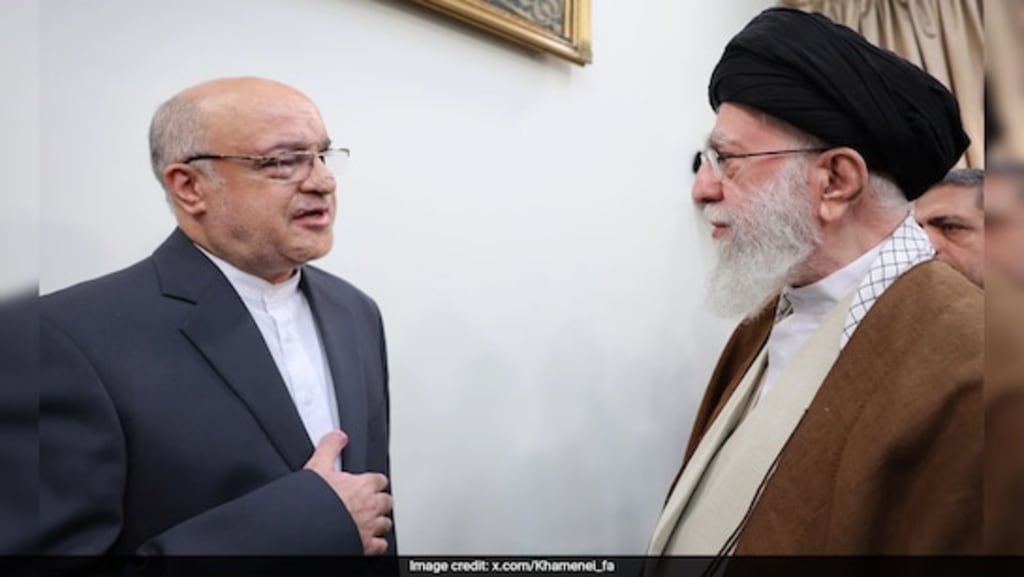
Ayatollah Ali Khamenei has been Iran's Supreme Leader since 1989. He sits atop this country with huge influence in this country's government, military, and institutions of faith. Most of this nation's foreign and domestic policy undertaken is through the leadership adopted by Ayatollah Ali Khamenei. His longevity and influence have placed him at the heart of the country's politics.
Born 17 July 1939, in Mashhad, Iran, Khamenei showed keen interest in religious studies and activism from his early years. He was one of the prominent figures behind the Islamic Revolution that led to the overthrow of the Shah of Iran in 1979. Having gained power with the revolution, Ayatollah Ruhollah Khomeini had different close officers to himself. Khamenei was one of the close officers of Ayatollah Ruhollah Khomeini. He has served in so many offices since the revolution, among them being President of Iran from 1981-1989.
It so happened that when Khomeini died in 1989, he left behind the position of the Supreme Leader of Iran-the most influential position within its political structure. Such a position allows him to wield quite a lot of influence over the three branches in a country's government: military, judiciary, and media. He also wields hegemony over Iran's foreign policy and her middle eastern relations with other countries.
Probably, the most important role of Khamenei is that he is Iran's spiritual and political leader to whom he still assigns a solution to all the most important matters, including security, foreign policy, or even religious guidance. Khamenei has taken up a policy of resistance by Iran against the West, especially the United States. This ranges from its nuclear program, which has proved to be a very contentious issue between Iran and other countries.
Leadership also defines him by his support to militant groups and movements in the Middle East. Iran has been a major supporter to groups such as Hezbollah in Lebanon, Hamas in Palestine, and the Assad regime in Syria. Such alliances, therefore, hence demonstrate broader strategic plays in the quest to project Iranian influence throughout the region and extend its reach of influence into its very adversaries through means of counterbalancing Western influences and their allies.
Domestically, he has faced issues such as street demonstrations and calls for change in Iran but stays in power due to political infighting and at the mercy of Iran's domestic security forces and strong ideological support from the religious factions. Most of his speeches call for the concept of saving Iran's Islamic Revolution and the pressures of resistance caused by foreign powers most of the times. Most Iranians subscribe to this notion of saving Iran's sovereignty.
Speculations about his health are also rife. Periodical health gossips have, over the recent years, been broken out as Khamenei gets aged. Lately, claims have surfaced suggesting that serious illnesses are befalling Khamenei, though many of these claims have been undermined by subsequent public appearance. Therefore, people hold on to believing him to still be active. It has generated much controversy around succession in Iran's leadership.
Speculation has raged over who may replace Khamenei when he can't or just chooses that he would no longer carry on in the position. There are no official announcements yet; however, some have speculatively pointed to his son, Mojtaba Khamenei, as the next in line. Little is known about Mojtaba but is believed to have substantial influence in Iran's political machinery. The principle of succession by heredity is rather controversial and, probably will provoke a conflict between political and religious elite in the country.
Despite all the controversy surrounding his health and succession, Khamenei remains a controlling force in the Iranian political system. His leadership continues to set and direct domestic as well as foreign policies for Iran. Challenges and pressure from within as well as from without will make decisions by Khamenei pivotal in determining the future of the country and its place in the world.
In short, Ayatollah Ali Khamenei has been the nucleus of Iran's political life for over three decades. His influence under his leadership has indeed riveted the orientation of the country regarding both domestic policies and foreign relationships. Although there had been certain antagonism to his leadership, Khamenei as the Supreme Leader still clutched the power with an iron grip. Whether it is the health or succession question, all this has remained speculative. Still, no discussion of Iran's future can be considered complete without mentioning his name.
About the Creator
Keep reading
More stories from Abhay kumar chauhan and writers in History and other communities.
The First Automotive Accident in the World: Historical Incident in Transport Modes
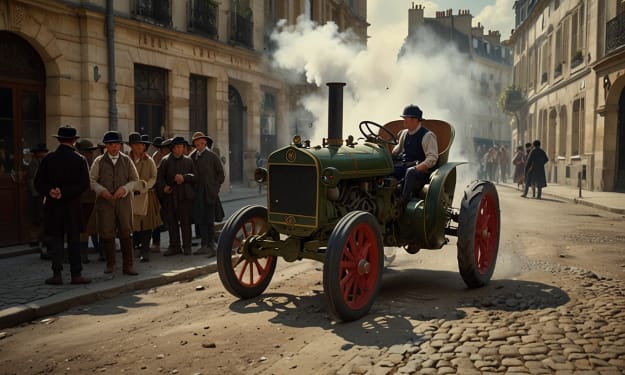
The first known car accident occurred in 1771. Modern road safety and automobile engineering as we know it today has only one particular day to its past. And that was the steam-powered tractor designed by Nicolas-Joseph Cugnot, the first automobile, crashing on the streets of Paris. It is rather difficult to imagine an automobile accident in a time when cars such as we understand them did not exist. Actually, the steam contraption, invented by Cugnot was one of the crucial moments in modern history. And the accident, though minor, became an historical event.
By Abhay kumar chauhanabout a year ago in History
When the Pyramids Learned to Breathe
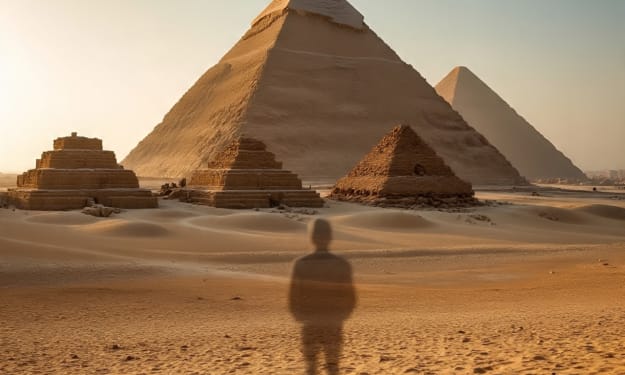
The desert was silent in the way only ancient places can be—not empty, but listening. At dawn, the first light touched the limestone faces of the pyramids, and the shadows they cast stretched long and deliberate, as if time itself were waking slowly. To the west, beyond the city’s dust and noise, the old giants stood where they always had, unmoved by centuries, untouched by doubt.
By LUNA EDITHabout 5 hours ago in History
World War I
The morning fog lay thick over the trenches of northern France, clinging to the earth as if it too feared what was about to happen. Private Thomas Hale pulled his coat tighter around himself, though it did little to stop the cold from seeping into his bones. He had been in the trenches for six months, yet the damp smell of mud, smoke, and fear still felt unfamiliar, like a nightmare he could not wake from.
By Maavia tahir7 days ago in History


Comments
There are no comments for this story
Be the first to respond and start the conversation.