courses
Tackle that seemingly endless selection of course offerings; a roundup of helpful resources and sound advice for selecting the best courses and acing them.
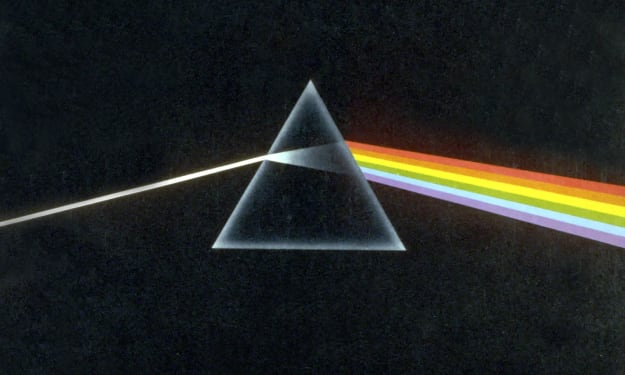
The Physics of Colors
Introduction: There are three main wavelengths visible to the eye. Red, Green, and Blue. They have wavelengths of approximately R 700nm, G 550nm, and B 470nm, respectively. These are referred to as the spectral colors because they are monochromatic. Any other color is either another similar wavelength between 300-1000nm (generous range) or a mix of at least two of these colors. Interestingly though there are only three primary colors of light. There are also different kinds of primary colors. Primary colors of light are not the same as primary colors of pigments.
By Talented Jester2 months ago in Education
Exploring the Multiverse: A Journey Beyond Our Universe
What Is the Multiverse? The multiverse refers to the possibility that multiple universes exist beyond our own. These universes—often called “parallel universes,” “alternate realities,” or “bubble universes”—may differ in:
By shahkar jalal2 months ago in Education
Exploring the Universe: A Complete Overview of Our Cosmic Home
What Is the Universe? The universe refers to all of space and time, including every form of matter, energy, and radiation. It contains everything we can observe with telescopes and instruments, as well as things that remain invisible, such as dark matter and dark energy.
By shahkar jalal2 months ago in Education
Top Exam Tips from AS/A-Level English Tutors to Secure an A*
Achieving an A* in AS/A Level English is challenging, as it requires significant effort due to the combination of multiple topics. Students often struggle with time management, essay structure, unseen texts, and detailed analysis. Online A-level English tutors use effective strategies that help students improve from a B to an A*. In today’s digital world, online tutoring is becoming more popular than traditional, onsite lessons. That’s where online tutoring platforms like Mixt Academy come in. They have experienced tutors who help you secure an A* through online one-on-one personalised sessions.
By Arshad Ali2 months ago in Education
THE PHIILOSOPHY OF MEDITATION - ALEXIS KARPOUZOS
The Paradox of Non-Striving in the Philosophy of Meditation: Agency, Awareness, and the Limits of Intentionality Meditation, a practice rooted in contemplative traditions, presents a paradoxical challenge for philosophical inquiry. In meditation, practitioners often aim for a state of effortless awareness—a state free from striving and intentional effort. Yet, meditation as a practice seems to require intentional effort to reach such a state. This paradox raises crucial philosophical questions about the nature of agency, intentionality, and selfhood. This paper explores the paradox of non-striving by examining the philosophical implications of meditation across different traditions, including Buddhist, Daoist, and phenomenological perspectives. The paper argues that the paradox invites a rethinking of agency as a dynamic, non-dualistic skill and suggests that non-striving is not the negation of effort but the cultivation of an effortless, fluid relationship to the present moment. The study of meditation, therefore, offers new insights into the nature of conscious experience, intentionality, and the self, challenging traditional distinctions between effort and non-effort. Meditation has become an object of both popular interest and philosophical inquiry, particularly in recent years. Beyond its applications in therapeutic and mindfulness practices, meditation has a long tradition as a path to self-awareness and liberation. A central theme across many contemplative traditions is the cultivation of effortless awareness, a state in which the practitioner is present in the moment without striving or attachment to goals. This ideal of non-striving is, however, paradoxical: in order to achieve such a state, one must often engage in deliberate effort. This tension forms the central paradox of meditation: how can one strive to reach a state of non-striving? This paradox is not just a theoretical curiosity; it points to fundamental questions about the nature of agency, intentionality, and the self. In particular, it challenges the dominant Western conception of agency as intentional, goal-directed, and willful. By examining the paradox from a variety of philosophical perspectives, this paper aims to illuminate the deeper philosophical issues at play and to reconsider how meditation might offer a new understanding of agency, intentionality, and the nature of consciousness itself.
By alexis karpouzos2 months ago in Education
Wormholes vs. Black Holes: Understanding the Key Differences
What Is a Black Hole? Definition A black hole is an extremely dense region in space where gravity is so strong that nothing—not even light—can escape. This boundary around it is called the event horizon, and anything that crosses it is permanently trapped.
By shahkar jalal2 months ago in Education
Understanding Black Holes: Definition, Formation, and Their Role in the Universe
What Is a Black Hole? A black hole is a region of space with gravity so intense that nothing—not even light—can escape its pull. Because they emit no light, black holes are invisible. Astronomers detect them by observing the effects they have on nearby stars, gas, and light.
By shahkar jalal2 months ago in Education