alexis karpouzos
Bio
Alexis karpouzos (09/04/1967, born in Athens) is a philosopher, psychological theorist and author. His work focuses mainly on creating an "universal theory of consciousness.
Stories (12)
Filter by community
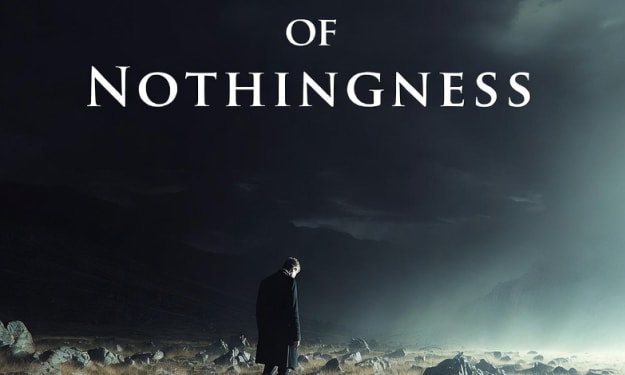
THE POST- ONTOLOGICAL THOUGHT AND THE ABYSS OF NOTHINGNESS — ALEXIS KARPOUZOS
The meta-ontological thought of Alexis Karpouzos is constituted at a level where the traditional distinction between ontology and nihilism collapses. The nothing, as it appears in this context, is neither the opposite of Being nor its limit, but the groundless condition of its appearance. It is a nothing that is not conceived metaphysically as lack, negation, or absence, but corresponds to the mathematical zero: neither positive nor negative, non-polar, and at the same time capable of encompassing all possible values without identifying with any of them. This nothing does not negate the world; it makes possible its indeterminate genesis.
By alexis karpouzosabout 17 hours ago in Education
THE MYSTICAL RELATIONSHIP BETWEEN BACH AND BEETHOVEN - ALEXIS KARPOUZOS
THE SECRET OF THE DIALECTICAL RELATIONSHIP BETWEEN BACH AND BEETHOVEN Music, as an art of time, constitutes the deepest field where consciousness meets the universe in its primordial ontological dimension, in its uninterpretable form. In this ontological dimension, the forms of music are not mere aesthetic expressions but ways of revealing Being. Two of the most pivotal ways of this revelation emerge through the music of Johann Sebastian Bach and Ludwig van Beethoven. Their comparison cannot be external; it constitutes a comparison of two anthropological and cosmological principles, two forms of relationship between Humanity and the World, two primordial possibilities of existence: necessity and freedom, cosmic order and human transformation.
By alexis karpouzosabout 17 hours ago in Art
THE PHIILOSOPHY OF MEDITATION - ALEXIS KARPOUZOS
The Paradox of Non-Striving in the Philosophy of Meditation: Agency, Awareness, and the Limits of Intentionality Meditation, a practice rooted in contemplative traditions, presents a paradoxical challenge for philosophical inquiry. In meditation, practitioners often aim for a state of effortless awareness—a state free from striving and intentional effort. Yet, meditation as a practice seems to require intentional effort to reach such a state. This paradox raises crucial philosophical questions about the nature of agency, intentionality, and selfhood. This paper explores the paradox of non-striving by examining the philosophical implications of meditation across different traditions, including Buddhist, Daoist, and phenomenological perspectives. The paper argues that the paradox invites a rethinking of agency as a dynamic, non-dualistic skill and suggests that non-striving is not the negation of effort but the cultivation of an effortless, fluid relationship to the present moment. The study of meditation, therefore, offers new insights into the nature of conscious experience, intentionality, and the self, challenging traditional distinctions between effort and non-effort. Meditation has become an object of both popular interest and philosophical inquiry, particularly in recent years. Beyond its applications in therapeutic and mindfulness practices, meditation has a long tradition as a path to self-awareness and liberation. A central theme across many contemplative traditions is the cultivation of effortless awareness, a state in which the practitioner is present in the moment without striving or attachment to goals. This ideal of non-striving is, however, paradoxical: in order to achieve such a state, one must often engage in deliberate effort. This tension forms the central paradox of meditation: how can one strive to reach a state of non-striving? This paradox is not just a theoretical curiosity; it points to fundamental questions about the nature of agency, intentionality, and the self. In particular, it challenges the dominant Western conception of agency as intentional, goal-directed, and willful. By examining the paradox from a variety of philosophical perspectives, this paper aims to illuminate the deeper philosophical issues at play and to reconsider how meditation might offer a new understanding of agency, intentionality, and the nature of consciousness itself.
By alexis karpouzos3 months ago in Education
Zen buddhism and Jacques Derrida - Alexis karpouzos
The Kyoto School and Jacques Derrida appear, at first glance, as distant interlocutors—one rooted in the Zen-infused meontology of 20th-century Japan, the other in the post-structuralist deconstruction of French philosophy. Yet beneath this geographic and methodological divide lies a profound convergence: both dismantle the Western "metaphysics of presence," revealing reality as a play of traces, negations, and interdependent arising. Nishida Kitarō’s basho (place of absolute nothingness), Nishitani Keiji’s śūnyatā (emptiness), and Derrida’s différance (difference/deferral) converge on a shared refusal of fixed centers, origins, or transcendental signifieds.
By alexis karpouzos4 months ago in Education
Bridging Zen Buddhism and Heidegger's Ontology - Alexis karpouzos
The Kyoto School represents one of the most profound intercultural philosophical movements of the 20th century, emerging from the intellectual ferment of Kyoto University in Japan. Founded by Nishida Kitarō in the early 1900s, this loose affiliation of thinkers sought to synthesize Eastern spiritual traditions—particularly Zen Buddhism—with the rigorous methods of Western philosophy. At its heart lies a radical exploration of "absolute nothingness" (zettai mu), a concept that echoes the Zen notion of emptiness (śūnyatā) while engaging deeply with existential themes in Martin Heidegger's work.
By alexis karpouzos4 months ago in Critique
Sacred and profane in Mircea Eliade's theory - Alexis karpouzos
In Mircea Eliade’s thought, religion is seen as a universal and fundamental aspect of human existence, characterized by the experience of the sacred and the profane. Eliade believed that religion originates from an irreducible experience of the sacred, which is common to most human beings. This experience seeks outward cultural expression in myths and rituals. He emphasized that religious phenomena must be understood as uniquely and irreducibly religious, expressing meaning on a religious plane of reference.
By alexis karpouzos5 months ago in History
THE POETRY OF FRIEDRICH HOLDERLIN - ALEXIS KARPOUZOS
Friedrich Hölderlin, a German Romantic poet and philosopher, is renowned for his profound and enigmatic poetry, which has significantly influenced modern philosophical thought. His work is characterized by a unique blend of poetic expression and philosophical inquiry, often referred to as "poetosophy". By bridging the gap between poetry and philosophy, Hölderlin’s work invites us to reconsider the ways in which we understand and experience the world.
By alexis karpouzos5 months ago in Education
Theater as Dream: From Ibsen to Artaud - Alexis karpouzos
The trajectory of modern theater in the West can be seen not merely as a progression in form or ideology, but as a psychic shift—a movement away from realism and toward an aesthetic of dream, disorientation, and affect. In the late 19th century, theater was dominated by the conventions of realism and naturalism, most famously embodied by Henrik Ibsen’s psychological dramas. Yet within a few decades, figures like Antonin Artaud would reject this mimetic impulse entirely, proposing instead a theater of cruelty—one that evoked raw emotion and bypassed rational discourse. This essay traces the evolution of modern theater as a reflection of the unconscious, from the psychological clarity of Ibsen to the surrealist ruptures of Artaud. It explores how theater came to resemble the dreamscape: fragmented, symbolic, disturbing, and affective.
By alexis karpouzos6 months ago in Journal
THE PHILOSOPHY OF FYODOR DOSTOEVSKY - ALEXIS KARPOUZOS
Fyodor Dostoevsky’s literary corpus presents a fertile ground for interdisciplinary analysis, particularly at the intersection of existential philosophy and psychoanalysis. His novels grapple with profound questions of human nature, morality, freedom, guilt, and redemption, while simultaneously portraying intense psychological landscapes. This academic issue centers on examining the internal conflicts of Dostoevsky’s characters through the lenses of philosophical existentialism—particularly the thought of Søren Kierkegaard and Friedrich Nietzsche—and psychoanalytic theory, drawing from Sigmund Freud, Jacques Lacan, and Carl Jung. At the core of Dostoevsky’s narratives lies a tension between rationalism and irrationalism, faith and nihilism, individuality and collective identity. Characters such as Raskolnikov (Crime and Punishment), Ivan Karamazov (The Brothers Karamazov), and the Underground Man (Notes from Underground) serve as case studies for this examination. These figures embody psychological fragmentation and the struggle for meaning in a world perceived as morally ambiguous or even absurd.
By alexis karpouzos6 months ago in Education
HERMANN HESSE : SELF- UNDERSTANDING AND ENLIGHTENMENT - ALEXIS KARPOUZOS
Hermann Hesse’s works often explore deep philosophical themes and the human quest for self-understanding and enlightenment. His writing draws heavily from Eastern philosophy, Jungian psychology, and Western existentialism, creating a rich tapestry of ideas that challenge and inspire readers. Hermann Hesse’s philosophical exploration in his works offers profound insights into the human condition, emphasizing the importance of personal experience, the integration of dualities, and the interconnectedness of all life. His writings encourage readers to embark on their own journeys of self-discovery, recognizing that enlightenment is a continuous, evolving process. Here, we’ll examine some of the key philosophical elements present in his most famous works.
By alexis karpouzos11 months ago in Critique
WE ARE THE UNIVERSE- ALEXIS KARPOUZOS
I am part of nature, and nature is part of me. I am what I am in my communication and communion with all living things. I am an irreducible and coherent whole with the web of life on the planet. Nature, the human community and the universe is connected with the Cosmos. We recognize the deep truth that I am the other. This expresses the concept from contemporary physics of “entanglement”, which is a quantum phenomenon. All atoms, all cells are connected, deeply.” The friendship is the connection we feel for each other, wherever he is, other people, animals, plants, stars. I am part of society, and society is part of me. I am what I am in my communication and communion with my fellow humans. I am an irreducible and coherent whole with the community of humans on the planet.
By alexis karpouzos5 years ago in Humans
THE INVISIBLE INTELLIGENCE- ALEXIS KARPOUZOS
Embracing our oneness with nature be key to our survival. The unity is the invisible Intelligence and is embedded in the rhythms and relationships that observed in nature, We are the work of this cosmic intelligence. What is good for the whole system? On Earth, to the web of life on the planet, what is good for the whole system is good for us all. However, what may be good for a few of us in the short term is not necessarily good for the whole system. Because a few can distort the dynamic, the structure of the whole, by biasing it to work for their immediate benefit, for greed, selfishness and vanity. So, let’s look at the whole system, let us act as if we are part of it—because we are. We are part of nature, and nature is part of the universe. This recognition is probably the deepest guidance we can have.
By alexis karpouzos5 years ago in Earth