Science
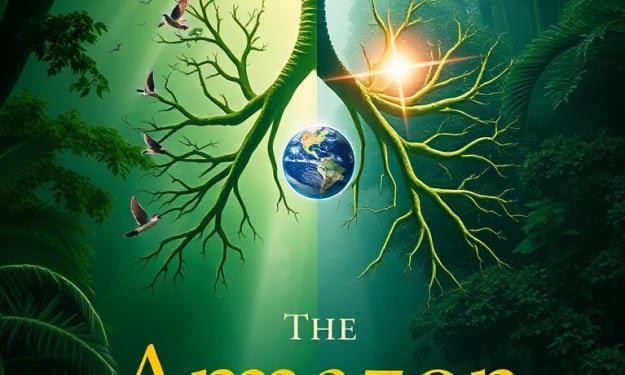
"The Amazon Rainforest: Earth’s Lungs and Guardian of Climate Balance"
Introduction: The Breath of Our Planet Often referred to as “the lungs of the Earth,” the Amazon Rainforest plays a vital role in maintaining our planet’s climate balance. Covering more than 5.5 million square kilometers across nine South American countries, the Amazon is more than just a vast green canopy—it’s a living system that sustains biodiversity, regulates atmospheric carbon, and safeguards global climate stability.
By Shamshair Khan Hasan Zai8 months ago in Earth
Beyond the Edge
The sun was a pale disc hanging low over the jagged horizon, casting long shadows across the vast expanse of the Erythrean Desert. Talia adjusted the straps of her pack, her eyes scanning the dunes for any signs of movement. The edge of the map—the point where all known geography ended—lay less than a day’s journey away. Beyond it, no one knew what existed. Some spoke of endless storms, others of a shimmering sea of glass. Talia had spent her life preparing to find out.
By Said Hameed8 months ago in Earth
The Enchantment of Korčula: A Tale of "Little Dubrovnik
The Adriatic Sea shimmered under the golden embrace of the setting sun as Luka Maras leaned against the weathered stone wall of Korčula’s old town. The island, often called "Little Dubrovnik" for its medieval charm, was alive with the hum of evening—laughter from waterfront cafés, the distant strum of a klapa choir, and the rhythmic lapping of waves against the ancient harbor.
By parves mosharaf8 months ago in Earth
Global Warming?. AI-Generated.
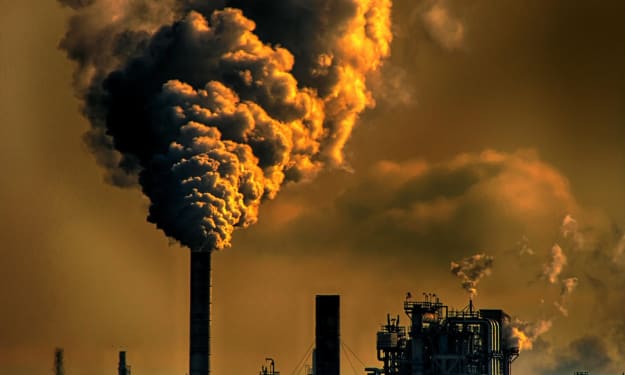
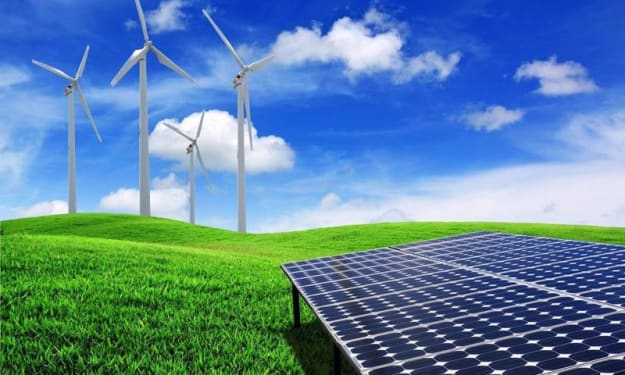
Introduction Global warming is no longer a distant threat; it is a present reality that is reshaping our environment, economy, and societies. Defined as the long-term increase in Earth’s average surface temperature due to human-induced greenhouse gas emissions, global warming has become one of the most critical environmental issues of the 21st century. The consequences of inaction are severe, including rising sea levels, extreme weather patterns, loss of biodiversity, and social disruptions. As such, addressing global warming is not only a matter of environmental protection but also one of global security and human survival. Causes of Global Warming The scientific consensus is clear: human activities are the dominant cause of global warming. The increase in greenhouse gases—such as carbon dioxide (CO₂), methane (CH₄), and nitrous oxide (N₂O)—is primarily due to industrialization, deforestation, and intensive agriculture. The "greenhouse effect," which raises global temperatures, is caused by these gases trapping heat in the atmosphere of the Earth. 1. Burning of Fossil Fuels: The primary source of greenhouse gas emissions is the combustion of fossil fuels for electricity, heat, and transportation. Coal, oil, and natural gas are heavily relied upon to power homes, factories, and vehicles, releasing vast amounts of CO₂ into the atmosphere. 2. Deforestation: Forests absorb carbon dioxide from the atmosphere and serve as carbon sinks. However, large-scale deforestation, particularly in tropical regions, reduces the Earth’s capacity to absorb carbon. In addition, when trees are burned or left to decay, the stored carbon is released back into the air. 3. Agricultural Practices: The use of livestock in modern farming practices, in particular, has a significant impact on greenhouse gas emissions. Methane, a potent greenhouse gas, is emitted by cattle and during rice cultivation. Fertilizers and manure management also produce nitrous oxide. 4. Emissions from Waste and Industry: Many industrial processes release greenhouse gases either directly through fossil fuel combustion or indirectly through chemical reactions. Moreover, landfills produce methane as organic waste decomposes. Impacts of Global Warming The effects of global warming are already being felt around the globe, with more severe consequences predicted in the coming decades. These impacts are interconnected, often amplifying one another. 1. Rising Sea Levels: As glaciers and polar ice caps melt, sea levels rise, threatening coastal cities and low-lying nations with flooding and erosion. Millions of people could be displaced as a result, and valuable land and infrastructure could be lost. 2. Events with Extreme Weather: Global warming increases the intensity and frequency of extreme weather events, including hurricanes, droughts, floods, and wildfires. These catastrophes result in death, damage to property, and strain on emergency response systems. 3. Loss of Biodiversity: Many species are unable to adapt to the rapid changes in climate. Ecosystems become unstable as habitats change or disappear, resulting in the extinction of numerous plant and animal species. Coral reefs, for instance, are severely threatened by warming oceans and acidification. 4. Public Health Risks: Rising temperatures contribute to the spread of infectious diseases, heat-related illnesses, and poor air quality. People who are most vulnerable, like the elderly and people who already have health problems, are particularly at risk. 5. Economic Consequences: The damage caused by climate change can have devastating economic effects. The most affected industries are tourism, agriculture, fisheries, and water resources. Developing countries, which have fewer resources to adapt, face the greatest challenges. Solutions and Mitigation Strategies While the outlook may seem grim, there are practical and effective strategies that can slow and potentially reverse global warming. These solutions require coordinated efforts at the individual, national, and international levels. 1. Transition to Renewable Energy: Replacing fossil fuels with renewable sources—such as solar, wind, hydro, and geothermal energy—is essential. Clean energy technologies are becoming increasingly cost-effective and can provide sustainable alternatives to carbon-intensive systems. 2. Energy Efficiency: Improving energy efficiency in buildings, vehicles, and appliances can significantly reduce emissions. Smart technologies and sustainable design practices help lower energy consumption without compromising comfort or performance. 3. Reforestation and Conservation: One of the most natural methods of absorbing CO2 is by planting trees and maintaining existing forests. Urban greening and sustainable land management practices also contribute to carbon sequestration and ecosystem health. 4. Sustainable Agriculture: Implementing eco-friendly farming practices, such as crop rotation, organic farming, and efficient water usage, can reduce emissions while enhancing food security. Reduced meat consumption and food waste also contribute to reducing agriculture's impact on the environment. 5. Climate Policy and International Agreements: Global cooperation is critical to tackling global warming. Agreements like the Paris Agreement aim to unite countries in limiting global temperature rise to well below 2°C above pre-industrial levels. Governments must enforce climate laws, invest in green technologies, and support climate adaptation initiatives. 6. Participation of the Public in Education: Raising awareness about climate change encourages individual and community-level action. People can contribute by conserving energy, using public transport, recycling, and advocating for environmental policies. Conclusion Global warming is a complex and urgent challenge that transcends borders, politics, and generations. The science is clear: human activity is changing the climate, and the consequences of inaction are severe. However, through innovation, cooperation, and determination, we have the tools to fight back. The path forward requires bold action and unwavering commitment from governments, industries, and individuals alike. Protecting the planet is our collective duty, not only for our own sake but also for the sake of the generations to come who will inherit our world.
By Minhaz uddin8 months ago in Earth
Mysterious Metal Mass Discovered Beneath Moon’s South Pole
A peculiar discovery at the moon’s south pole has astronomers buzzing with intrigue. Hidden within the vast Aitken Basin, a colossal impact crater, lies an enormous metallic object that’s challenging our understanding of the moon’s history. This enigmatic find, coupled with the region’s unique conditions, is fueling scientific curiosity and intensifying international interest in lunar exploration.
By KWAO LEARNER WINFRED8 months ago in Earth
NASA Astronauts Create Fake Moon on Earth to Master Lunar Photography for Upcoming Missions
NASA Astronauts Create Fake Moon on Earth to Master Lunar Photography for Upcoming Missions In a world increasingly fascinated by the cosmos few stories remind us of the deep humanity behind space exploration. Among them is a quietly captivating initiative astronauts building a “fake Moon” here on Earth not for science experiments or lunar landings but to perfect the art of moon photography. It might sound simple even whimsical but this project unveils layers of human emotion creativity and an unbreakable bond with the stars.
By Adnan Rasheed8 months ago in Earth